輸入
→觀測與修正
記錄 transits 與 angles,校正 clock、instrument、refraction 並更新 reference data。
風帆時代真實職業檔案 · 35
Nautical Astronomer · Astronomer Royal · Almanac Editor
把未來夜空預先變成按日期、時刻和子午線排列的資料,讓遠海船只可以借天空校正位置的人。
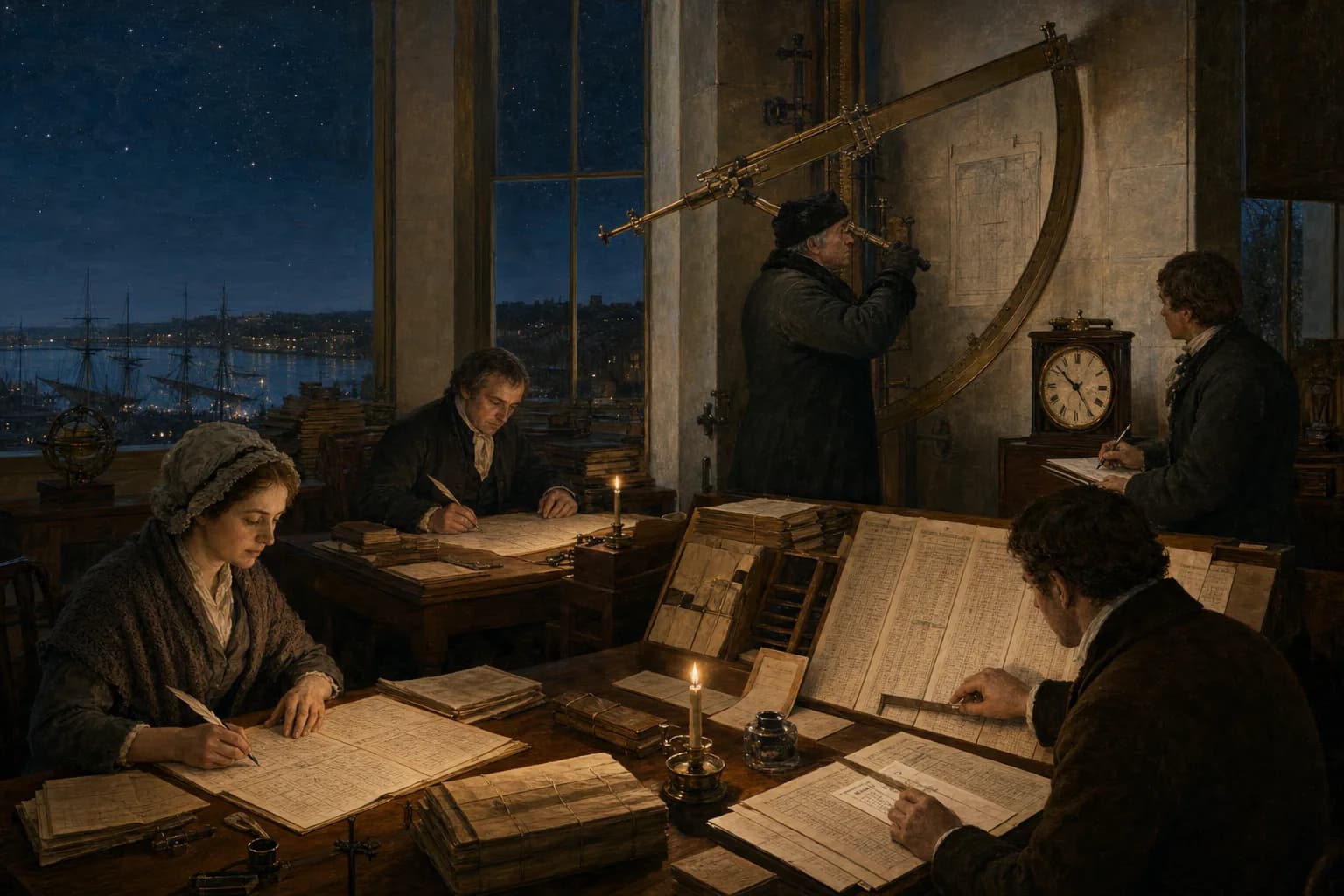
航海天文學家把天文臺觀測轉成未來日期的太陽、月亮、行星和恆星位置,讓船員可以用天空校正時間與船位。年度《航海曆》並非一位天文學家獨自算完:human computers 分擔算術,兩人獨立計算,再由 comparer 查詢差異,排印後還要逐頁校樣。航海者最後在搖晃甲板上完成觀測和查表,岸上生產的是一套可追溯的天空資料。
資訊進入、判斷形成、工作交接,構成一次完整的值班迴圈。
記錄 transits 與 angles,校正 clock、instrument、refraction 並更新 reference data。
確定 dates、times、bodies、source tables、precision、formats 和 instructions。
兩名 computers 獨立完成相同 packet,comparer 調查每一處 disagreement。
核對 dense numerical type、釋出 errata,並把年度 volume 及時送上船。
以 meridian observations、reference stars、clocks、instrument corrections 和 catalogues 為中心。
把 work parcels 與 source tables 發給居家 computers,雙算後集中 comparison。
以 future ephemeris、deadline、dense type、proof、errata 和艦船分發為中心。
控制 meridian instrument、clock、refraction、zero、level 與 repeated readings。
理解 star catalogue、solar/lunar theory、time system 與未來位置推算。
拆分 packets、凍結 source versions、規定 precision、duplicate work 與 comparer 流程。
逐列檢查 approved copy、metal type、proof、signs、dates、units 和 errata。
制度、資歷、推薦與機會共同塑造每個人的職業路徑。
從整潔抄錄、基礎算表、clock reading 和 nightly records 開始。
獨立完成計算 packet 或一組 instrument observations,並經 comparison 驗證。
處理 disagreement、reduce observations、維護 source methods 與訓練新人。
統籌 science、staff、budget、publication、patron 與艦隊級責任。
Astronomer 或 Astronomer Royal 設計 observing programme,維護 reference stars、Moon/Sun/planet observations、clocks 與 instrument corrections,並決定採用哪些 astronomical tables。Assistants 觀測和謄錄,computers 推算未來位置,comparer 獨立比對重複計算,editor 與 printer 形成年度 almanac。Sailing master / navigator 在海上量 altitude 或 lunar distance、記錄 ship time、做 clearing 與 interpolation,最終把結果與 dead reckoning、lead line 和 chart 交叉檢查。
一位人物可以跨段:Nevil Maskelyne 既親自試驗 lunar-distance method,又作為 Astronomer Royal 監督 almanac;但職業責任仍不同。天文臺數字錯誤會被整批覆制,computer 錯一位數會汙染一頁,printer 倒置 type 會製造新錯,navigator 也可能量錯 limb、記錯時刻或用錯日期。把整個鏈條寫成“天文學家發明經度”既不準確,也失去最有遊戲性的質量控制。
Charles II 的 warrant 要求 John Flamsteed 精確修正“天體運動表”和 fixed stars 的位置,以求經度並改進 navigation。Royal Observatory Greenwich 因而不是後來偶然服務海軍的純理論機構,而是英國首個國家資助的科學研究機構。Flamsteed 四十餘年積累超過五萬次 Moon 與 star observations,家人和 assistants 又參與 reduce、compile 與出版星表。
Lunar-distance idea 把月亮相對背景星的位置當作快速移動的 clock hand。如果天文臺能提前說明某個 Greenwich time 月亮應離某顆星多少角度,遠海觀測者就能從實測角距反查 Greenwich time;但前提是 star catalogue、lunar theory、observatory time 與儀器誤差都足夠可靠。早期星位或月表偏差並不是小小學術瑕疵,會直接變成 longitude error。
十八世紀觀測者使用 mural quadrant、transit instrument、zenith sector、telescope、micrometer 與精密 pendulum clocks 等不同器具。測一顆星透過 meridian 的時刻可以建立 right ascension;測它相對 horizon 或 zenith 的角度可以約束 declination。Assistant 可能在 clock 旁報秒、另一人讀刻度並立即記錄,避免觀察者把視線從 telescope 移開。具體 instruments 隨 Astronomer Royal 和年代更新,不能把十九世紀 transit circle 倒放進 1760 年。
每個 reading 還要處理 collimation、level、zero、refraction、clock rate 和重複觀測。雲、霧、震動、溫度、燈光、刻度質量與人的 reaction time 都會改變結果。天文學家會觀測 reference stars、比較多夜資料、記錄儀器調整和拒絕異常點;這樣產生的是 observatory ledger,仍需 reduction 才能成為 catalogue 或 predictive table。
Raw observation 要從 apparent reading 修正儀器與 atmospheric effects,並換入一致的 time 與 coordinate framework。Star catalogue 提供 reference positions;太陽與月亮的複雜運動則依賴 mathematical tables 和不斷改良的 theory。第一批英國 Nautical Almanacs 的 lunar positions 使用 Tobias Mayer 的 tables,Board of Longitude 還獎勵 Mayer 的遺孀,說明 almanac 是跨國、跨代知識供應鏈,不是 Maskelyne 從零獨創。
Editor 先定義每年要計算的日期、Greenwich times、celestial bodies、precision、interpolation 形式和 supplementary tables,然後把 work parcels、source tables 與 instructions 發給 computers。預測必須提前足夠久交付 printer,意味著天文學家一面觀測當下,一面生產未來一兩年的資料;發現新 table 或系統誤差時,還要決定何時切換演算法,避免不同分冊或人員混用。
《Nautical Almanac》的數字量超過 Astronomer Royal 和一名 assistant 可以負擔的範圍。Maskelyne 時期通常有約四到九名 computers,由 Board of Longitude 付費並由 Astronomer Royal 監督。入職重點是 literacy、numeracy、熟練使用 mathematical / astronomical tables、attention to detail 和 neat handwriting;完整 astronomy knowledge 甚至不被視為必要條件。許多人住在 London 以外,在家按 packet 工作。
同一組 lunar positions 或 distances 分給兩名獨立 computers,結果由 comparer 逐項核對。兩份相同並不絕對證明正確——可能共用錯誤 source 或 method——但不一致能迅速暴露 arithmetic、抄寫和 interpolation 問題。Comparer 決定回算哪一步、向誰發 query、是否接受 rounding;Malachy Hitchins 長期擔任這一崗位,表明 checking 不是 junior 順手完成的尾活,而是獨立專業。
首期 volume 為 1767 年提供 lunar distances,並列 Sun、Moon、planets、selected stars 的位置和其他 astronomical phenomena。關鍵 lunar table 按 Greenwich time 三小時間隔給 Moon centre 到 Sun 或合適亮星的角距;航海者在相鄰表值間 interpolation。Maskelyne 同時釋出 Tables Requisite,給出 refraction、parallax corrections、instructions 和 worked examples,以減少每位 navigator 從理論重建演算法的負擔。
一本 almanac 必須明確 calendar date、meridian、time convention、angle units、signs 與 rounding。跨午夜、閏年、月相、星名或 hemisphere 的模糊都會產生大錯。編輯還要協調 paper、type、table rules、signatures 與 delivery deadline;密集數字的 metal type 可能被倒放、換列或漏行,所以 printer's proof 要再次逐頁與 approved copy 對照。標註勘誤能修復已知錯,卻無法確保遠海每艘船都收到 correction。
Navigator 用 octant / sextant 測 Moon centre 或 limb 到列出的 Sun / star 的 apparent angular distance,同時取得兩天體 altitudes。接著校正 index error、dip、refraction、semi-diameter 與尤其顯著的 lunar parallax,把 observed distance “clear”到地心幾何關係;再在 almanac 三小時表值間 interpolation,求對應 Greenwich time。Local apparent time 可由 Sun 或 stars 得到,二者時間差按每小時 15° 換算 longitude。
實際甲板會搖、horizon 會霧、Moon limb 會模糊,完整 calculation 也很長。Maskelyne 自己的海試表明 lunar method 可顯著改善 dead reckoning,卻不意味著普通船員都立即掌握。Marine timekeeper 逐漸可靠和便宜後,可把攜帶的 Greenwich time 與 local time 比較;但 chronometer 仍需星表、Sun data、observations 與 rate checking。船上常並用 lunars、timekeeper、dead reckoning 和 landfall,而不是一次技術替代全部舊方法。
Almanac 的錯誤可能來自 observation、theory、source table、computer arithmetic、copying、comparer judgment、editorial layout 或 print shop。最危險的不是明顯荒謬值,而是看起來合理、能透過粗略檢查的單個 digit。團隊因此儲存 instructions、work sheets、paired results、queries、approved copy、proofs、accounts 和 errata,讓數字可以沿生產鏈追溯。
制度失去連續性同樣危險。Maskelyne 1811 年去世後,almanac 的監督與知識交接出現問題,早十九世紀曾因錯誤過多而聲譽下降;這說明準確性不能只依賴一位強勢 editor 的個人記憶。遊戲中的核心並非“智力屬性越高,表格自動正確”,而是選擇獨立計算預算、處理 disagreement、凍結 source version、趕印期限以及是否公開勘誤。
Astronomer 往往接受 mathematics、natural philosophy 與 observational astronomy 訓練,透過大學、教會、patron、Royal Society 或 observatory assistantship 進入;晉升需要可靠 observations、published tables、儀器判斷和行政能力。Computer 的門檻不同,可以從 teacher、clergyman、surveyor、mathematical practitioner 或家族訓練進入,以清楚數字和準時 packet 建立信譽,再升為 comparer、assistant 或獨立 table maker。
Mary Edwards 長期為 Nautical Almanac 計算,並培訓或帶領女兒參與;她的工作最初可被丈夫名義遮蔽,後來又直接被 Board 認可。Work-from-home 與 piecework 擴大了人才來源,也把紙張、取暖、疾病、家庭協作和署名不平等藏到官方成書之外。收入來自 official salary、Board of Longitude computation payments、按 work parcel 計酬、出版或教學;地位最高的 Astronomer Royal 與大量算表者之間,工資、可見度和職業保障差距很大。
career.nautical-astronomer
他在天文臺觀測並校正恆星、太陽、月亮和行星資料,選擇理論表、組織未來位置計算和年度航海曆,使船上觀測能對應參考時間與天體位置。
是專門用紙筆和數學表進行大量計算的人類崗位。Nautical Almanac computers 按工作包計算 ephemeris 資料,並由另一人獨立復算和 comparer 核對。
第一期為 1767 年資料而編,title page 記 1767;印製工作在 1766 年進行,現有研究指出成書到 1767 年初才從 printer 收到。
航海者測月亮與太陽或亮星的角距並清除視差、折射等影響,再從表中反查 Greenwich time,與本地天文時比較;每小時差相當於 15° 經度。
仍需要。Chronometer 攜帶參考時間,但航海者仍要用太陽、恆星等資料求 local time、latitude、檢查 rate 和完成其他 celestial reductions。
參與過。Mary Edwards 長期擔任付費 computer,並有女兒協助或繼續這項工作;家庭勞動和署名方式讓這類貢獻長期不顯眼。