INPUT
→Break communication
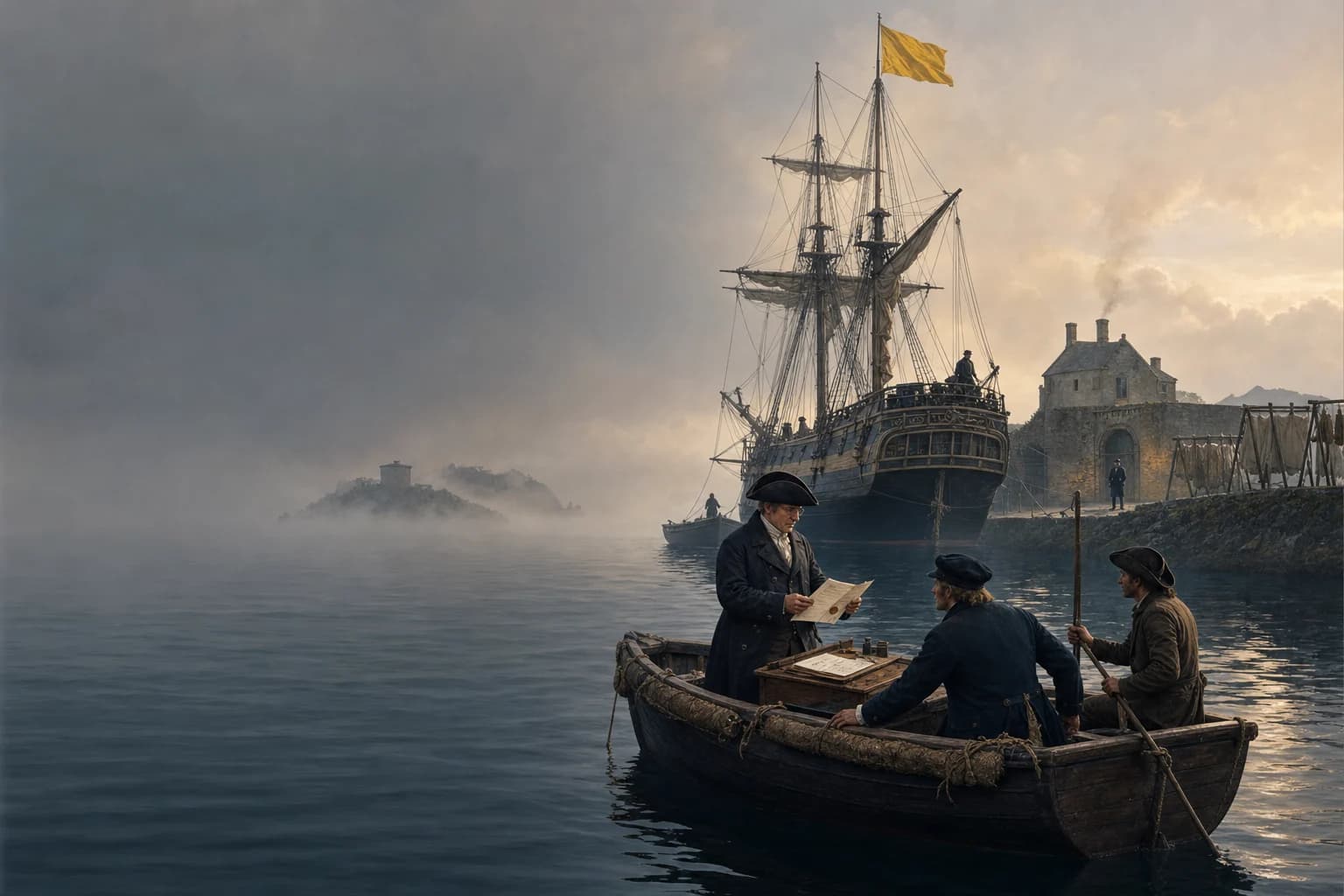
Read the signal, direct the vessel to quarantine anchorage and stop unauthorized contact.
A real Age of Sail career dossier · 24
Quarantine Officer · Health Officer · Sanitary Magistrate
The official at the contact line between maritime trade and city who turns incomplete evidence into an enforceable, reviewable health boundary.
Quarantine officer is a useful umbrella, not one office shared by every era and port. Health magistrates, medical officers, quarantine superintendents, customs officers, clerks and lazaretto guardians could divide the work. An arrival first broke communication at a designated anchorage and submitted its bill of health, route, calls, sickness and deaths. Officials combined epidemic news at origin, contact during passage, symptoms aboard and local law to classify vessel, people and goods: free pratique, observation, lazaretto transfer or stricter isolation and cleansing. Quarantine was not always forty days and no single yellow flag decided it. Duration, signal, disease theory and enforcement authority varied by state, port and century.
 Open full image↗
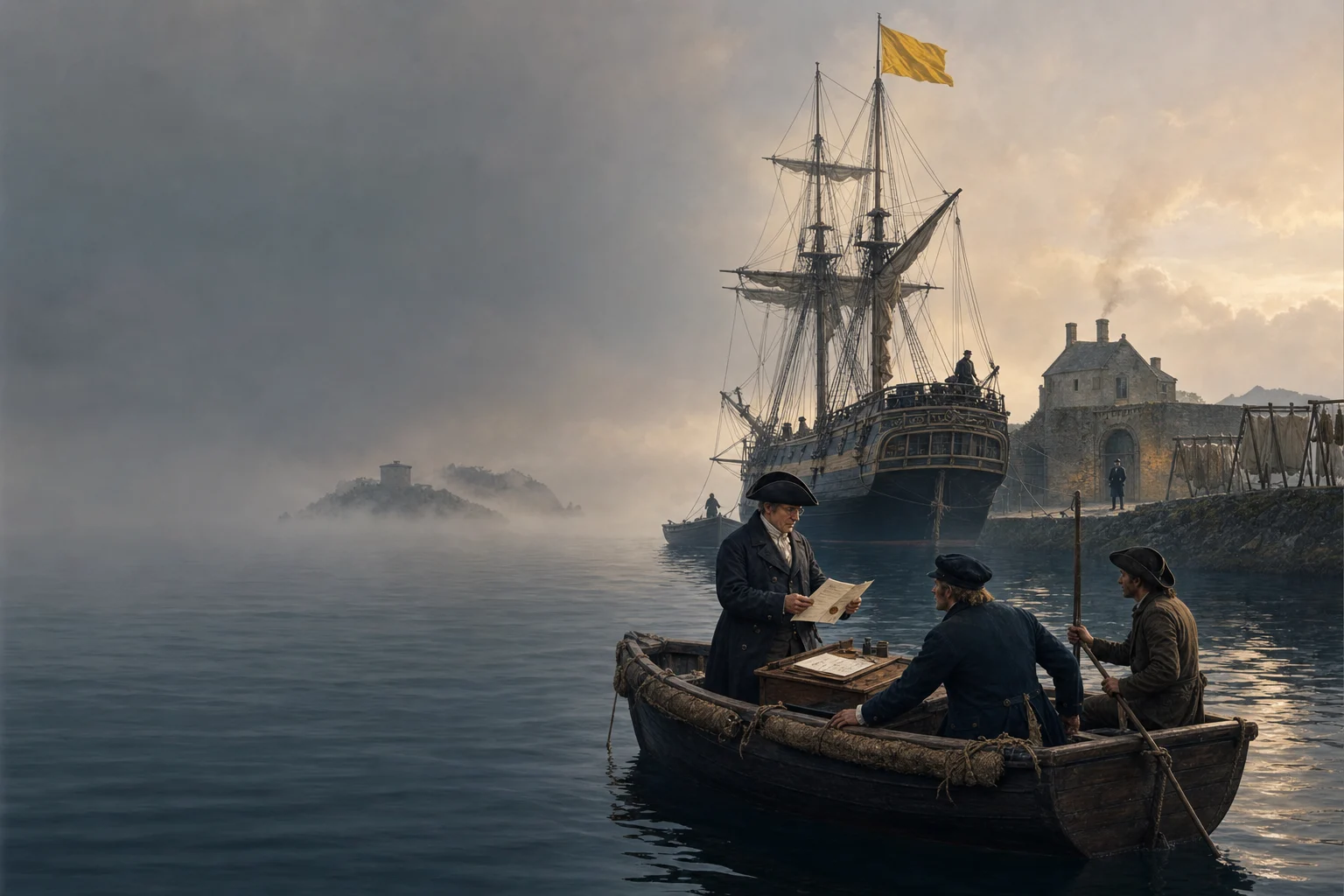
The banner crops and darkens this artwork. This plate preserves the complete composition; click it to view the image on its own.
↗Information arrives, judgment forms, and work passes on through a complete watch.
Read the signal, direct the vessel to quarantine anchorage and stop unauthorized contact.
Receive the health bill and rebuild call, contact, illness, death and cargo chronology.
Join physician observation to epidemic intelligence and classify vessel, people, goods and baggage.
Arrange lazaretto, guard, supply and treatment, re-examine and issue limited or full pratique.
Managed connected trade through health passes, epidemic intelligence and zoned lazarettos.
Controlled anchorage, signal and goods under period statute through customs and quarantine officers.
City, state and later federal powers could overlap among physician, board and customs.
Cross-check bill, log, calls, crew change, case and death chronology.
Recognize symptom and living condition while stating the limits of period diagnosis.
Place sick, suspected, contact, goods and staff without creating a fresh contact chain.
Write a reviewable decision across city risk, human need, cargo loss and lawful power.
Institutions, experience, patronage, and opportunity shaped each person’s route.
Register arrival, case, cargo and zone while learning law and contact chain.
Manage one detained party or conduct questions and papers from an inspection boat.
Assess risk and independently advise detention and pratique.
Manage facility, staff, budget, inter-port intelligence and epidemic response.
Venice and related systems used a health magistracy to direct maritime cordons, health passes, islands and enforcement. An eighteenth-century Mediterranean lazaretto could have a captain or prior, physician, clerk, guardian and porter hierarchy. Britain at different moments used customs and quarantine officers, local health boards and physicians, while American ports divided city, state and federal authority.
This dossier uses Quarantine Officer for the occupational core of investigating and enforcing isolation at a port-health boundary while retaining those variants. A medical officer might interpret symptoms, a magistrate or board hold detention authority and a guardian watch one party. A character requires appointment and law; medical skill alone cannot close a port.
A liable vessel waited at outer harbour, river mouth or quarantine anchorage and reported status by flag, lamp, gun or another local signal. A British order around 1788 required a yellow flag by day and a main-topmast light by night, but that cannot become a global rule for all dates. Modern Q-flag meaning also differs.
Harbourmaster or pilot assigned anchorage, a guard boat restricted unlicensed approach and water and food crossed a controlled point. Whether the officer boarded depended on system and risk: questions and documents could begin boat-to-rail before a physician boarded. Premature landing, crew exchange, discharge or private letter destroyed the contact record.
Mystic Seaport notes that the bill of health was a common ship's paper by the late eighteenth century, giving vessel, master, cargo, destination and people and carrying signatures of collector, naval officer or equivalent authority. A clean bill reported no known plague or infectious disorder, a suspected bill reported rumour or adjacent risk and a foul bill acknowledged infection at origin.
The officer also reconciled later calls, sea contacts, passengers, crew list, log and sickness and death dates. Anglo-American correspondence in 1803 pointed out that a vessel excluded from Philadelphia could still carry papers about that city's health, exposing the gap between certificate and actual passage. Altered dates, omitted calls or a replacement certificate demanded questions rather than instant guilt.
A boarding physician might observe fever, rash, vomiting, diarrhoea, jaundice, swelling, respiratory distress and dehydration and inspect berthing, water, waste and separation of the sick. Early officials had no modern laboratory and did not understand every pathogen or vector. Plague, yellow fever, cholera, smallpox and general ship fever could be confused.
Health offices therefore relied on letters among ports, consular reports, declarations and epidemic news. Risk exceeded the patient visible today: region of origin, passage length, last exposure, death aboard, material cargo and credibility all mattered. The officer recorded fact, inference and legal basis instead of presenting one glance as an absolute diagnosis.
Eighteenth-century Mediterranean offices distinguished patente netta, sospetta and brutta according to origin and neighbouring outbreaks and adjusted isolation. The etymological quaranta giorni cannot become one forty-day timer. Ports used different periods, could restart from last contact or case and sometimes credited time already spent at sea.
Free pratique was administrative permission for normal communication and discharge, not a medical promise of permanent zero contagion. An authority could grant full or limited pratique for selected people, goods or operations. New symptom, illicit contact or false document could trigger reassessment, with a written decision communicated to harbour, customs and trade interests.
A developed lazaretto was more than one plague house. It divided sick, suspected and apparently healthy parties, guards, staff, warehouse yards and parlatorio. John Howard's 1789 survey describes dwellings, separated courts, stores and airing yards. Guardians confined with travel parties also followed an exit procedure.
Patients might enter hospital wards, apparently healthy travellers another enclosure, crews remain aboard or move by group, and mail, baggage and cargo receive separate registers. Mixing sick and suspected created fresh exposure. An 1821 account of plague in Malta criticized failures to separate categories and enforce instructions. Spatial plan was an occupational instrument.
Early Mediterranean rules treated textile, wool, hide, fur and paper as more capable of retaining contagion and required unpacking, ventilation, sun, smoke, washing or longer detention. Metal, sealed container and other materials might follow another procedure. Research in Social History of Medicine shows that material class shaped lazaretto architecture and routine.
Modern knowledge cannot certify all those practices. Sulfur, vinegar, smoke, heat and compulsory unpacking could damage goods and workers and miss the real route. The mosquito vector of yellow fever particularly resists a simple cargo-fumigation story. A dossier records what officers thought, what they did and what it cost rather than making purification perfect magic.
Quarantine authority controlled health communication and detention, customs controlled duty, prohibition and legal clearance, and harbourmasters controlled anchorage, movement and berth. A customs collector might sign health papers and a health office use a customs warehouse without collapsing all three occupations.
A ship could pass health yet remain under customs hold or have cargo papers without pratique. The master declared route and deaths, surgeon provided clinical notes, and clerk and interpreter preserved paper and testimony. The quarantine officer translated that evidence into a decision with legal source, spatial arrangement and named recipients.
A mistaken release could introduce epidemic; excessive or disordered detention depleted food, water, medicine and health and caused spoilage, freight loss and unemployment. St Helen's Pest House opened in 1764 for plague-risk ships, showing physical British provision, but a building alone did not guarantee staffing, supply or care.
Quarantine has also been racialized, colonial and protectionist. Papers and waiting periods could vary through diplomacy, class, bribery and fear. A credible system gives detainees appeal, reinspection, supply and record channels and discloses who profits from detention fee, warehouse, guard or damaged cargo. Evidence and proportionality must constrain the officer's coercive choice.
career.quarantine-officer
Investigate an arrival's health papers, passage, contacts, sickness, deaths and cargo and issue a lawful decision for pratique, observation, lazaretto transfer or stricter detention with harbour, customs and medical staff.
A paper issued by authority at the departure port describing the known disease state there and commonly identifying vessel, master, people and destination. It was not a guarantee for the later passage.
Clean reported no known epidemic at origin, suspected reported rumour, neighbouring outbreak or questionable contact, and foul reported an infected origin. Exact categories varied by jurisdiction.
No. Forty days influenced the word and many regimes, but actual time varied by port, disease, source, last contact, days at sea and a new case.
No by function. Quarantine controlled health communication, customs duty and legal goods, and harbour management anchorage and traffic. A local office could combine personnel while the authorities remained distinct.
No. It was official permission to communicate and discharge based on available evidence, not a medical guarantee of no future case.