INPUT
→Register arrival
Confirm vessel, master, draught, origin, cargo class, condition and need.
A real Age of Sail career dossier · 20
Harbourmaster · Port Master · Dockmaster · Master Attendant
The official who keeps an entire port moving under scarce tide, space and time without commanding any one vessel.
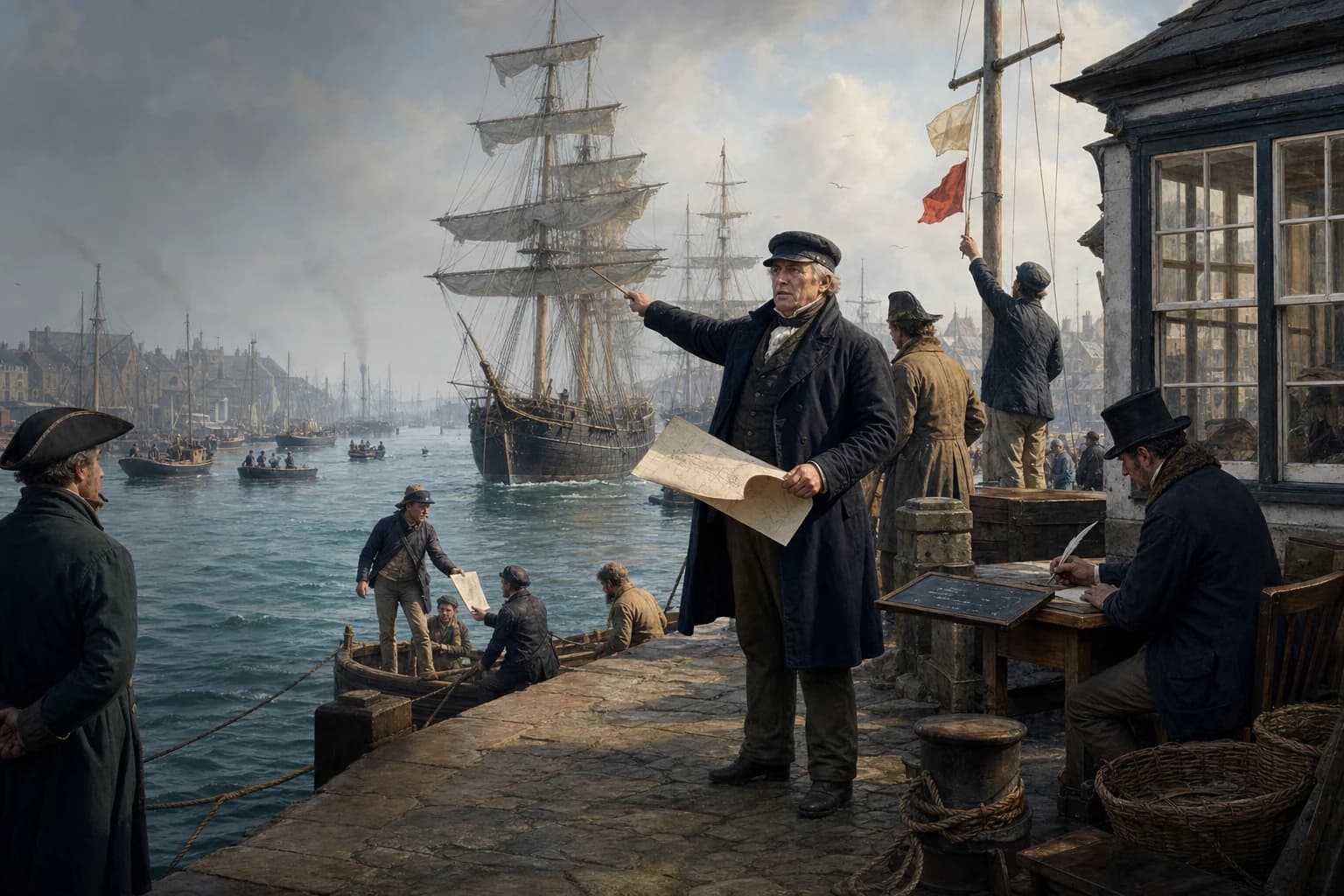
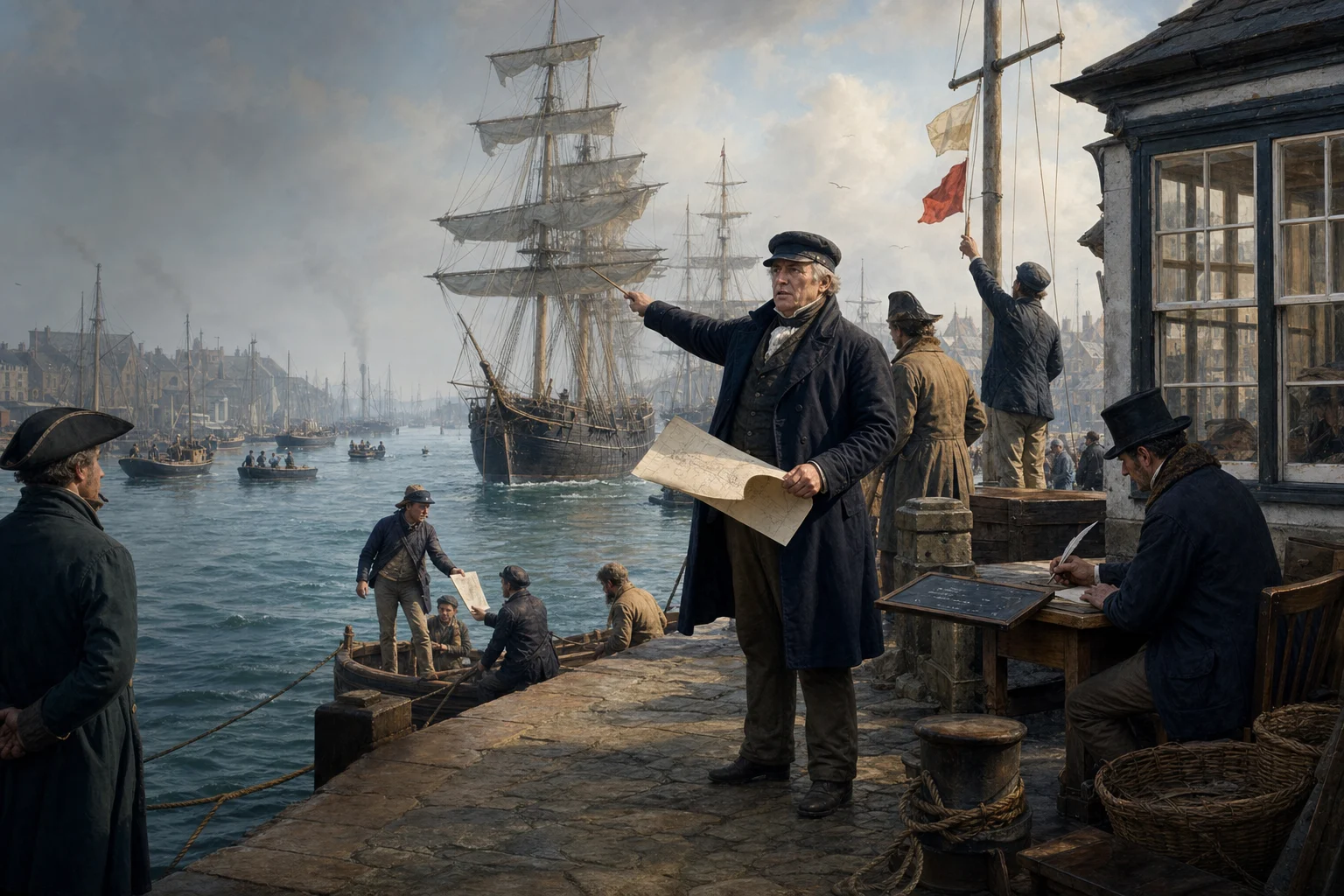
A harbourmaster managed shared water, anchorages, berths and vessel movement rather than one ship. Under locally granted authority, the office registered arrivals, assigned places, ordered shifts, coordinated pilots and boats, kept channels and working berths usable, and recorded fees, casualty and disobedience. Title and power were not universal: harbourmaster, port master, dockmaster, master attendant, guild or civic officer could divide the work, and some old ports appointed a formal harbourmaster only in the nineteenth century. A pilot supplied local navigation to one ship; customs examined and taxed cargo; the harbourmaster coordinated how all vessels occupied limited harbour space.
 Open full image↗
The banner crops and darkens this artwork. This plate preserves the complete composition; click it to view the image on its own.
↗Information arrives, judgment forms, and work passes on through a complete watch.
Confirm vessel, master, draught, origin, cargo class, condition and need.
Join tide, berth, channel and shore resource into anchorage or berth.
Send movement sequence by signal and boat and record acknowledgement.
Replan delay and danger and report fee, casualty and refusal.
Coordinated anchorage, quay, lighter and tidal arrival and departure.
A dockmaster focused on lock, basin, berth and loading sequence.
Master attendant or port master might combine yard, state vessel and policing work.
Combine draught, tide, turning room, cargo and shore resource into a sequence.
Recognize parted line, fire, grounding, wreck, obstruction and dangerous adjacency.
Build acknowledgement through flag, light, bell, boat and written instruction.
Maintain arrival, berth, fee, incident and order registers with reasons for priority.
Institutions, experience, patronage, and opportunity shaped each person’s route.
Build local water, vessel, rule and record experience.
Patrol, carry order, register and allocate simple berths.
Receive formal authority from port, municipality, navy or colonial office.
Move from dispatch into wider district, infrastructure and rule governance.
Portuguese Ceuta maintained and expanded a lookout system. Local heritage research describes atalaia, atajadore, escuta and almocadém personnel watching the ground beyond the walls; a facho gave warning, while a bell recalled people outside. In this record facho need not mean a distant bonfire: it is described as a bottomless basket raised to different heights for danger or calm.
Lookouts and beacon posts existed more widely on the southern shore, but the scene in which a fire across the Strait makes wall and anchorage answer together lacks sufficient contemporary support. This dossier therefore confirms Ceuta's own observation, alarm and recall chain without inventing a unified cross-Strait signalling protocol. Trade and war did share port space, but each signal, watcher and order needs evidence.
A harbour could have anchorage and rules long before a fixed title. Newlyn supported fishing for centuries but appointed its first harbourmaster with the enlarged harbour in 1887; Liverpool's c.1846 Dock Master's Office reflects management specialized around enclosed docks.
Naval, colonial and commercial ports differed. Port Jackson combined Harbour Master and Master Attendant in 1821; guild, corporation or admiralty officers could divide related work. This dossier follows harbour-traffic management, not a claim that every sixteenth-century port had one uniformed official.
A port held arriving deep-sea vessels, ships loading, lighters, fishing craft, warships and boats together. The harbourmaster needed depth, tide, turning room, moorings and shore facilities to place draught safely and keep channels and emergency margin open.
An empty berth could remain unusable while the previous ship cleared, warehouse or labour waited, tide prevented a shift or another vessel's lines barred passage. Allocation was a moving sequence rather than a one-time placement map.
An arrival reported identity, draught, origin, cargo class and need; the port assigned anchorage or berth through signal, boat or order. Port Jackson records explicitly place movement between anchorages and proper berthing under the harbourmaster.
Wind, tide, collision, grounding or emergency arrival forced replanning. After a movement order, the master retained crew and manoeuvre responsibility, a pilot advised on local water and boat crews carried orders or lines. Harbour authority coordinated; it did not steer every ship remotely.
Pilot answered how this ship should pass local water; harbourmaster where and when it could occupy space; customs examined manifest, goods and duties; quarantine authority decided isolation for health risk. Small ports might combine people while large ports separated institutions.
National Archives port books were customs records of merchant, master, goods and tax, not berth books. A separate 1831 harbour-master fee receipt at Mystic Seaport shows masters paying port service. Record creator and office must match the claimed power.
Tools included harbour plan, tide table, arrival register, berth slate, fee book, signal flag, bell, lantern and boat. Western Australian Museum preserves an image of the harbour master's boat, evidence that the office inspected buoy, mooring, obstruction and vessel position afloat.
Signal failed without a watch or shared rule; fog, night and language could require close messenger service. The register named order time, carrier, master's acknowledgement and completion, preserving evidence for collision, delay fee or refusal.
Mystic Seaport receipts show harbour-master tonnage fees and associate the office with mooring, berthing and schedules for loading and discharge. Advancing perishable cargo could save a market while making another ship pay wage, lighterage or demurrage.
Gift, local power and military priority could distort discretion. A credible system published queue, charge and emergency rule, recorded every override and reconciled fees. Reputation was not licence to sell the berth twice.
A parted cable, grounding, fire or wreck could close the channel and endanger neighbours. The harbourmaster marked danger, sent boats, shifted nearby vessels and called pilot, salvager, fire party or civic authority. Tow, jettison and hull sacrifice still involved master, owner and law.
Afterward came position, tide, weather, signal, witness, damage and action. Later statutes codified removal, dangerous goods and lights more fully; they trace institutional development rather than proving every early official had identical coercive power.
Port Jackson's master attendant also supervised convict labour and controlled boats used against escape. Harbour control could join traffic, state logistics and surveillance. Landing permission and priority followed institutional power, not safety alone.
Career design must expose source of authority and avenue of appeal. The official might prevent a hazardous arrival or enforce discriminatory restriction, colonial prohibition or military requisition. Throughput cannot be the only outcome: safety, fairness, coercion and affected communities also matter.
career.harbourmaster
Ceuta had an organized lookout and alarm system, with sources naming the facho and alarm bell. In this context facho could be a raised basket signal rather than a fire. Evidence is not sufficient for one synchronized fire protocol across both shores, so the dossier limits the claim to Ceuta's documented local warning chain.
Usually no. A pilot supplied local-water expertise and the master manoeuvred the ship; the harbourmaster assigned anchorage, berth and movement order across the port.
They could overlap. A harbourmaster usually covered wider harbour and anchorage; a dockmaster concentrated on docks, basins, locks and berths. Local organization might combine them.
Customs normally examined and taxed cargo. A harbourmaster could collect local harbour dues or service fees, which were not the same as customs duty.
No. Port master, master attendant, guild or civic officer could divide the function, and some old ports created the formal office only in the nineteenth century.
By flag, lamp, bell, harbour boat, messenger or written order, with method varying by port and period. A register could preserve issue and acknowledgement.
Senior experience as master, pilot or port officer, followed by local appointment, was common. Rules, writing, arithmetic, tide judgment and dispatch mattered; no international qualification existed.