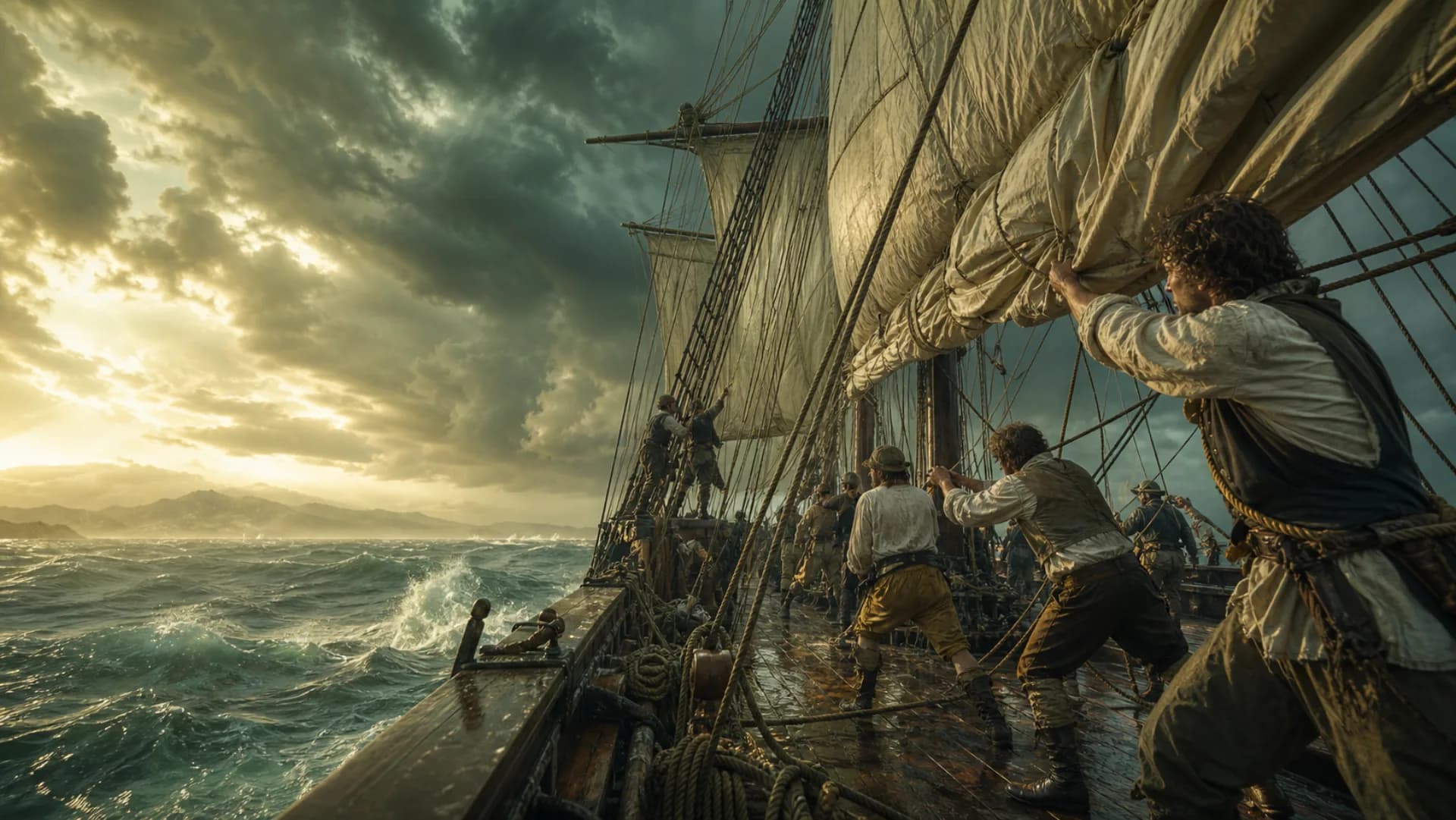
 galleon
The whole port works before the tide falls
Square sails
The main sail plan provides power on long downwind passages.
Broadside
Rows of guns make the ship’s side its principal direction of fire.
Sterncastle
The raised stern contains command and living spaces.
A port connected sea transport to a land market
After arrival, a vessel needed a safe channel and berth, transfer of people and goods, inspection, storage, taxation, contracts and new water, food, canvas, cordage and timber. A port was transport infrastructure, warehouse district, market, administration and repair base at once.
Its mix depended on function. A large ocean port, fishing harbour, river port and naval base did not employ the same complement, even though they shared core movement and supply work.
Pilots, harbour officers and boatmen solved the final mile
Shoals, tide, narrow channels and traffic made harbour approaches hazardous. Local pilots supplied place-specific knowledge; harbour officers allocated anchorages and berths; lighters and boats transferred goods, people and water where deep-draught ships could not reach a quay.
Ocean navigation did not replace local expertise. A sailing master who crossed an ocean might still hire a pilot for an unfamiliar estuary, while the port maintained channels, marks and order.
Cargo handling, warehousing and customs controlled entry to market
Labourers moved cargo from hold to quay, while organized stowage had to account for sequence, weight, fragility and stability. Goods could enter transit warehouses for sorting by owner, destination and tax status. Keepers, clerks and guards preserved quantity and title.
Customs officials inspected manifests, valued goods, collected duties and investigated prohibited trade. Historic dock districts placed warehouses, excise offices, guards, sailmakers and chandlers within the same working landscape.
Supply and repair converted an arrival into another departure
Chandlers sold provisions, cordage, canvas, grease, tools and daily necessities. Carpenters, caulkers, sailmakers and riggers repaired voyage damage; dockyards and dry docks handled deeper work below the waterline.
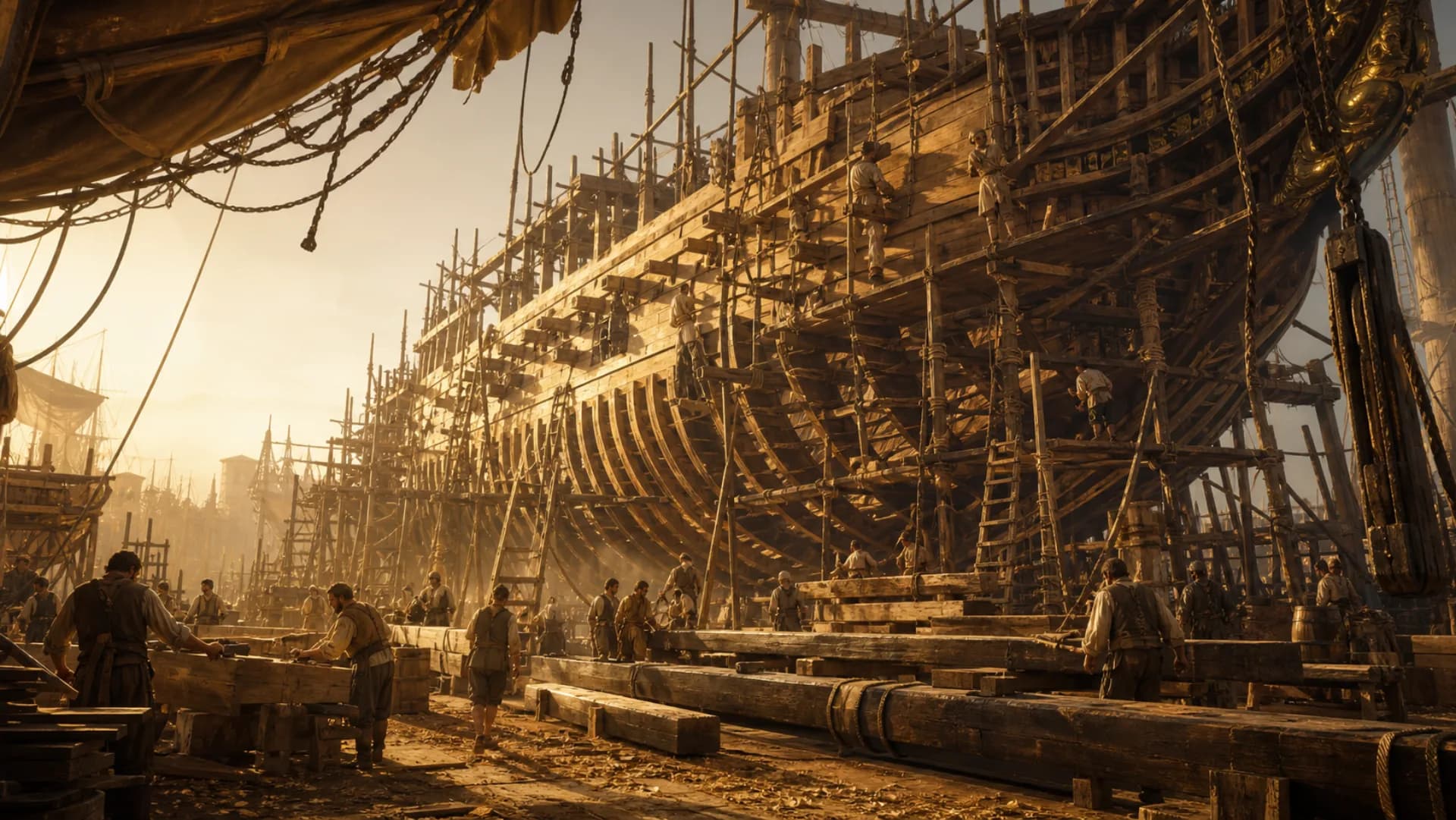
Royal dockyards were organized industrial communities with master shipwrights, harbour managers, finance and stores clerks, caulkers, joiners, carpenters, riggers, sailmakers and labourers. Fleet power depended on continuous shore labour.
Merchants, insurers, clerks and courts moved invisible cargo
Before loading came finance, charter and purchase; after landing came sale, settlement and claims. Merchants, brokers, factors, accountants, notaries, insurers and lenders connected one hull to credit across ports.
War and privateering could send ship and cargo into admiralty or prize proceedings. Documents, flags, ownership and testimony determined whether goods completed a voyage as lawful property. Physical handling and paper rights were both port work.
Questions
Continue exploring this subject
Were dock workers the only workers in an old port?
No. Ports required pilotage, harbour control, barges, warehouses, customs, supply, repair, shipbuilding, commerce, insurance and law as well as physical cargo labour.
How did a harbour pilot differ from a sailing master?
A sailing master managed navigation across the voyage; a pilot offered detailed local knowledge of a harbour, river, shoal or tide.
What did a ship chandler sell?
Depending on place and period, provisions, water, cordage, canvas, grease, tools, lamps, personal goods and repair materials.
Why did cargo pass through warehouses?
Goods needed counting, inspection, duty assessment, secure storage and sorting by owner or destination before entering the market.
Did naval and commercial ports employ the same trades?
They overlapped, but naval bases emphasized fleet supply, ordnance, administration and large dockyards; commercial ports emphasized cargo, markets, customs and private documentation.
Sources
Continue the research
- Ports and Harbour Heritage ProjectsHistoric England
- Life at a Royal Naval DockyardRoyal Museums Greenwich
- Maritime and Naval Buildings Listing Selection GuideHistoric England
- Warehouses and General Offices at the West India DocksHistoric England
- Merchant Navy ships’ records: crew lists, musters and log booksThe National Archives
 02
02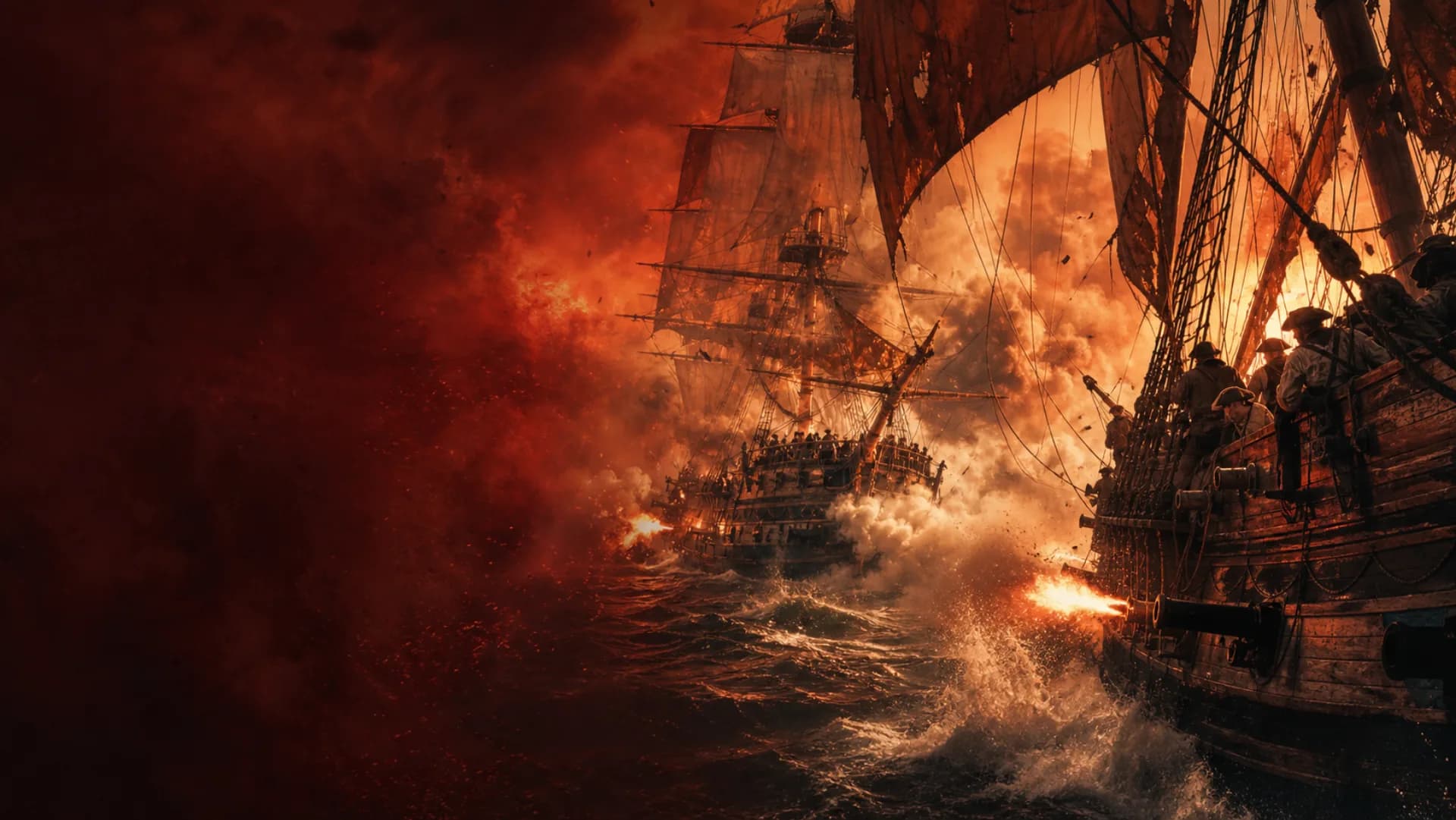 03
03