 logbook
A neutral hull carries British goods, while bill of lading and master contradict each other
PRIZE DOCKET · CAPTURE IS NOT JUDGMENT
Split the “enemy ship” into the property and claims a court actually heard
This is an evidence desk, not a verdict generator. Question marks remain because nationality, enemy character, neutrality, blockade and contraband depend on the period law and complete facts.SHIP → MARSHALPAPERS → REGISTRYCLAIMANTS → APPEARPAPERS + ANSWERSHULL ≠ EACH LOTRESTORE / CONDEMNREGISTER · CHARTER · LOGControl and voyageRESTORE?B/L · INVOICE · LETTERSBeneficial ownershipFURTHER PROOFB/L · MANIFEST · ROUTEEnemy property / contrabandCONDEMN?Prize jurisdiction adjudicated captured property rather than the crime of piracy
Prize jurisdiction determined the legal status of vessels and goods seized in war. The UK National Archives separates it from the High Court of Admiralty's criminal and ordinary civil business: the court might condemn ship, cargo or both as lawful prize, or find for neutral or friendly owners and declare them not lawful prize. Proceedings commonly centered on identified property and used the vessel's name as the cause title—an in rem structure. A master or merchant appeared to claim the property, not necessarily as a criminal accused.
A piracy trial asks whether a person committed an offence and deserves punishment. A prize cause asks whether belligerent seizure can mature into lawful confiscation. The same sea encounter, armed vessel and papers might matter to both, but jurisdiction, parties, issues and remedies differ. Customs forfeiture, sanctions enforcement, smuggling, salvage and collision also have their own legal bases. Calling every state detention of a ship a prize proceeding erases the necessary setting of war and belligerent capture.
From bringing-in to filing, hull, cargo and papers entered judicial control
The British Naval Prize Act 1864 made the opening sequence concrete. A ship brought as prize into a port within the court's jurisdiction was to be delivered without breaking bulk to the court marshal, or, where none existed, the principal customs officer, and held subject to court orders. The captors then brought the ship papers to the registry with practical speed. An officer who witnessed their recovery swore that they remained as taken, without fraud, addition, subtraction or alteration, or explained their absence under oath.
Once that affidavit was filed, a monition cited interested people to show why the ship should not be condemned. The 1939 Prize Court Rules still styled condemnation as an in rem cause and supplied different claim forms for a master, agent, managing owner and neutral government. The process was therefore not a captor's unilateral victory report. The court took custody, gave public notice and created one docket in which the capture claim and claims for restoration could be tested.
Colors were a clue; registry, voyage, cargo and beneficial ownership supplied evidence
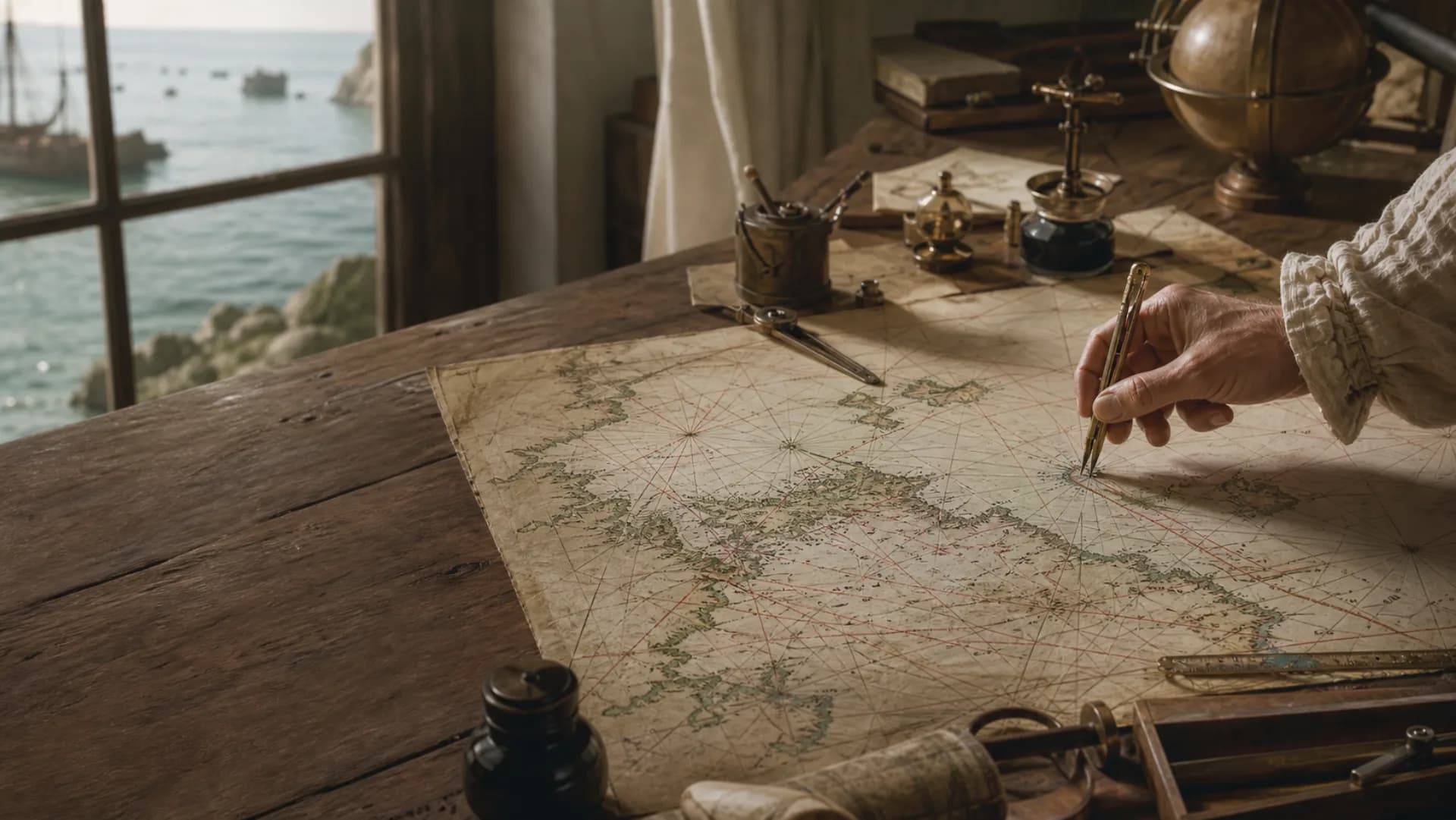
Ship papers anchored early prize evidence. A register and pass might speak to nationality or protection; a charter party identified the charterer and voyage terms; bills of lading and manifests connected shippers, consignees, goods and destination; a log recorded course and encounter; accounts and private letters might expose commercial relationships behind formal names. The HCA 32 archive typically preserves court papers separately from ship's papers impounded at capture, many written in French, Spanish, Dutch and other languages.
Neutral colors did not automatically neutralize every cargo, just as enemy colors did not necessarily give every personal item one result. Under the law and treaties then applicable, a court might investigate title to the hull and each cargo lot, origin and destination, blockade breach, contraband and concealed enemy interest. Destruction, concealment or substitution of papers could count against a claim, yet a contradiction still needed interpretation. Owners, charterers, insurers and cargo interests routinely crossed borders; flag alone was never a complete commercial identity.
Crew interrogatories, capture narratives and original papers formed a challengeable chain
The captor stated when and where the vessel was met, how chase and stopping occurred, who took the papers, whether the holds were opened and how the prize reached port. The captured master and principal crew answered sworn standing interrogatories about vessel, nationality, ownership, route, cargo, documents and enemy connections. The Dalton file preserves both a capturing officer's affidavit about papers and the American captain's testimony about identity and commission, showing how two kinds of account could be compared in one cause.
Historical jurisdictions developed intricate rules for further proof, presumptions and shifting burdens; no single modern flowchart can supply a universal answer. A reproducible analysis ties each conclusion back to evidence: who spoke in what capacity, who recovered the original and when, where a translation came from, whether inventory matched bills of lading and whether an owner claimed in time. Even a sound chain did not decide the law by itself. The court still applied the domestic enactments, law of nations and treaties then in force.
Condemnation, restoration and sale occupied different procedural moments
Condemnation was the judicial determination that a hull, cargo or identified part could be confiscated as lawful prize; it was not another word for surrender at sea. Restoration returned property that should not be condemned. Hull and goods might receive different outcomes, and separate merchants could claim individual lots. Before final judgment, deterioration, expense or perishability could justify appraisal and sale under court control, but converting an asset to money did not mean the captor had already won.
A cause could also involve recapture, prize salvage, competing joint captors, costs and damages. Results varied with time and jurisdiction. Restoration did not automatically promise compensation, while condemnation did not send the gross auction price straight to the boarding party. The Prize Courts Act 1894 organized jurisdiction and enforcement among British and overseas courts, underscoring that prize was a national judicial network rather than a ship captain's improvised tribunal.
Covadonga and Dalton show how a capture became an archive
After George Anson's squadron seized the Spanish Manila galleon Nuestra Señora de Covadonga and its silver in 1743, he still had to prove lawful capture before the High Court of Admiralty in London. About one hundred administrative papers and private letters taken from the ship served as exhibits. Their survival now reveals crew, passengers and trans-Pacific commercial ties. They were not collected at sea for future historians; preservation was an accidental legacy of property litigation.
When the American privateer Dalton reached Plymouth after British capture in 1776, the court used its commission, congressional instructions and the captain's testimony to determine enemy character, then condemned it as good prize. Both cases also show the court's setting: it belonged to the captor's legal order, whose recognition of war and domestic statutes shaped categories, while private mail entered state archives through compulsion. In the rare modern Estelle litigation, Israel's Supreme Court ordered release after delayed proceedings and emphasized that transfer of title required judicial authorization—procedural control remained central.
Questions
Continue exploring this subject
Did a prize court try pirates?
Generally no. It adjudicated a vessel, cargo or other captured property and asked whether wartime seizure supported confiscation. Criminal responsibility for piracy belonged to a different proceeding.
Did an enemy ship belong to the captor immediately after seizure?
Possession began at sea, but disposable legal title normally depended on prize adjudication. The captor preserved vessel and papers, brought them in and invoked competent jurisdiction.
Why did prize courts care so much about ship papers?
Registers, bills of lading, charters, manifests, logs and correspondence connected nationality, voyage, goods, owners and enemy interest more fully than temporarily displayed colors.
Did the court always condemn the whole ship and every cargo lot together?
No. Hull and cargo could be separated, and different owners could make different claims. The outcome might be complete or partial condemnation, restoration or another court-controlled disposition.
Are prize court and prize money the same thing?
No. Prize court is the tribunal or jurisdiction. Prize money is a possible downstream distribution after judgment, sale and the allocation rules then applicable.
Sources
Continue the research
- High Court of Admiralty recordsThe National Archives (UK)
- Naval Prize Act 1864UK Legislation
- Prize Courts Act 1894UK Legislation
- The Prize PapersThe National Archives (UK)
- The papers of Nuestra Señora de CovadongaThe National Archives (UK)
- The American privateer and the secret copy of the Declaration of IndependenceThe National Archives (UK)
- Supreme Court orders release of ship captured attempting to break Gaza blockadeLaw Library of Congress
- Prize Court Rules 1939UK Legislation
 04
04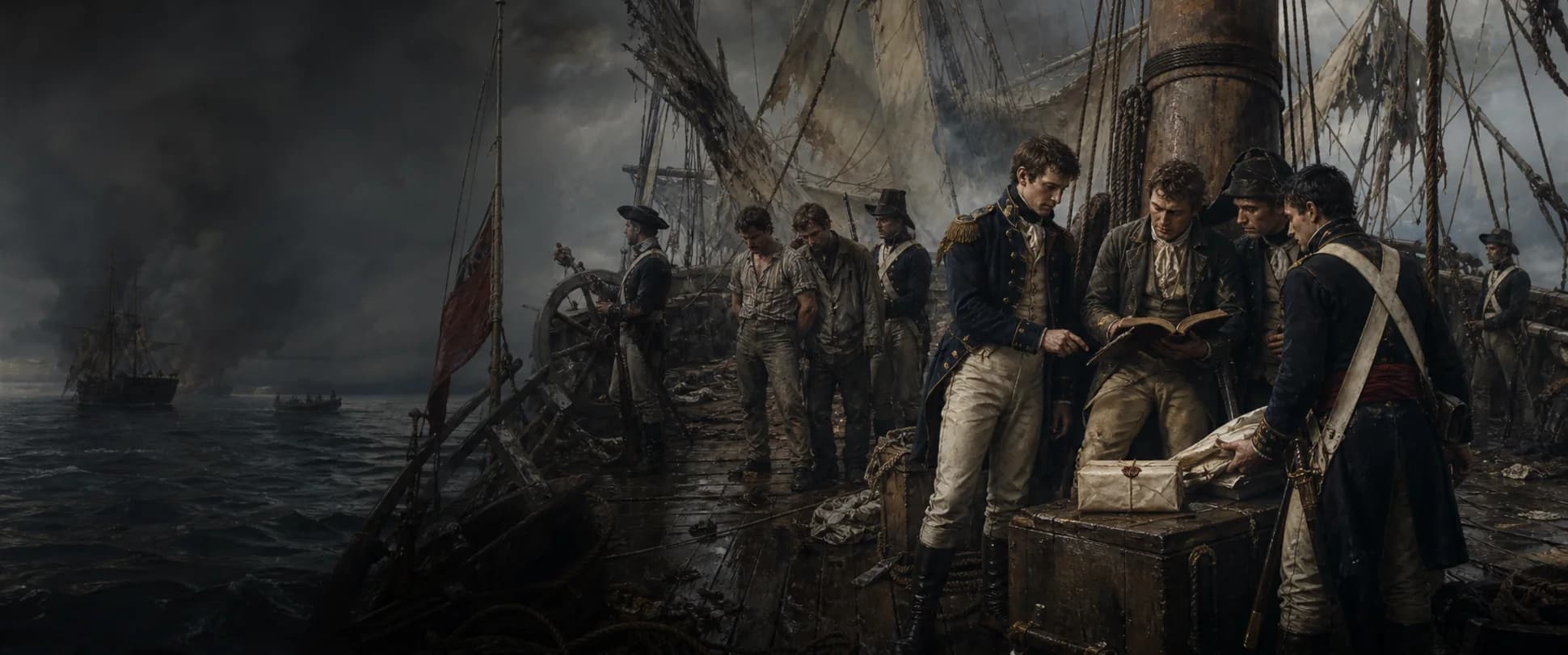 05
05