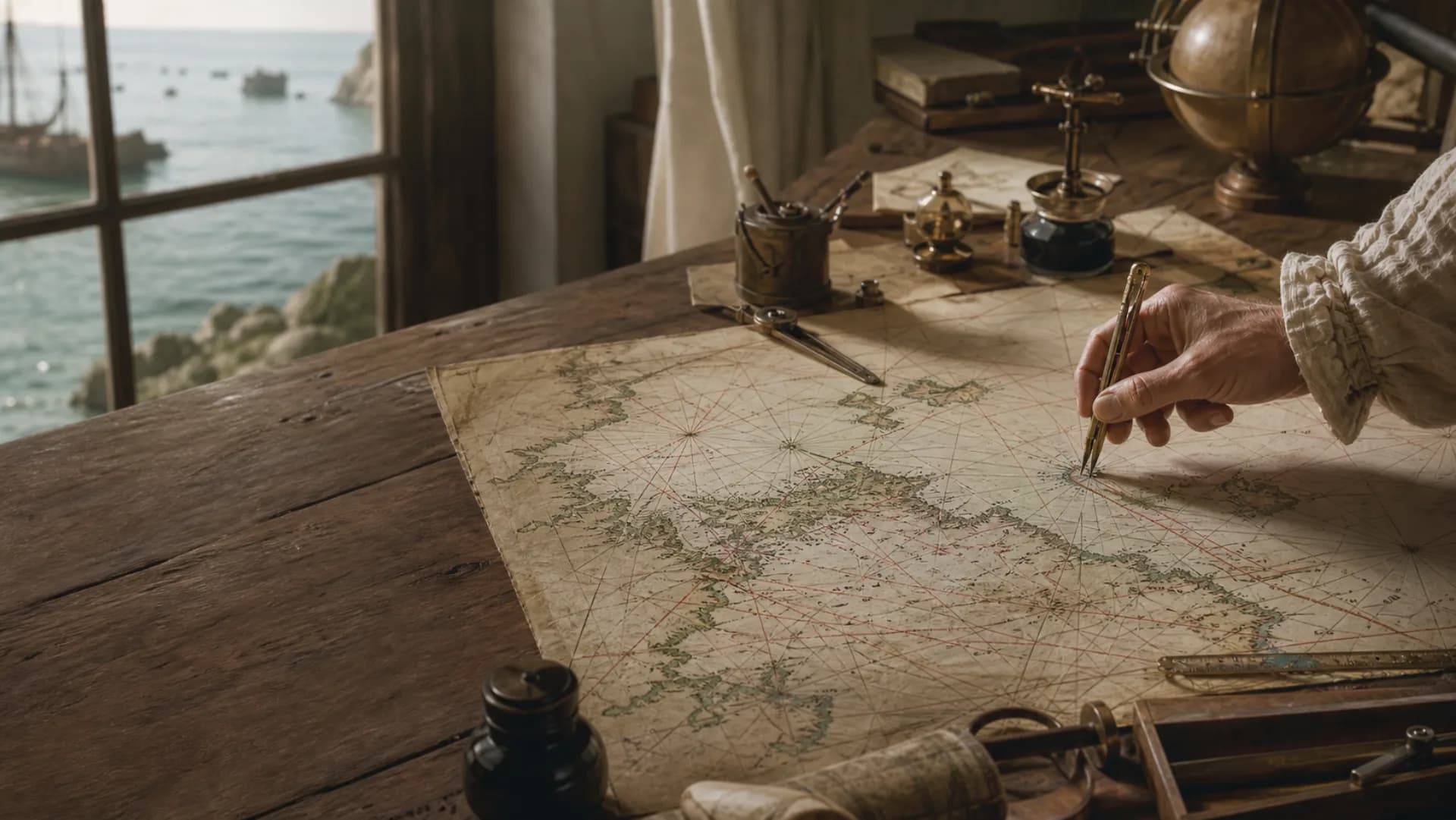
 logbook
The last log entry ends at midnight
Course WNW
A continuous course record supports dead reckoning.
Speed 6 kn
The knot comes from the historical use of a log line and timer.
Wind rising
Changing weather alters sail handling and watch decisions.
The log divided a trackless voyage into time that could be handed on
Beyond land, a wake vanished almost as soon as the ship made it. Position had to be carried forward from the last reliable fix by accumulating course, speed and elapsed time. If the record broke, the next watch could no longer see where the estimate had begun.
A log fixed observations to watches and dates. Wind, heading, speed, sail changes and turns became the starting point for the next decision; after the voyage, the same entries supported reports, accounts and disputes. Even the English word log recalls the log-and-line once used to estimate speed before the result was written down.
A watch officer’s wind can return to a map centuries later
Many eighteenth- and nineteenth-century logs recorded wind direction, strength and weather day after day. The crews wrote those details for sail handling, dead reckoning and relief of the watch—not for a future climate archive.
Once thousands of records survive, scattered observations can be assembled again. Date, estimated position and weather language allow researchers to reconstruct parts of past ocean conditions. The records are not flawless sensors: vocabulary, instruments, procedure, copying and missing pages all shape the evidence. Their strength is traceability, not perfection.
The official log and the private diary remember different ships
An official log first asks how the vessel was run: why course changed, when gear failed, how an accident was handled and who made a decision. It belongs to a chain of watchkeeping and responsibility.
A private diary is more likely to preserve fear, boredom, conflict and unfamiliar shores. Two documents can describe the same storm without telling the same story. Read together, one traces the ship as an institution while the other brings back the people living inside it.
Questions
Continue exploring this subject
Why is ship speed measured in knots?
Traditional log lines carried marks at set intervals. Sailors counted how many ran out during a timed interval, and knot became the name of the speed unit.
Who wrote the ship’s log?
Practice varied by period and service. A captain, officer of the watch or designated clerk might be responsible; the defining point is that the log belonged to the ship’s official record system.
Are historical logbooks reliable?
They are important primary sources, but recording rules, instrument error, copying, omissions and the writer’s position still need to be examined.
Sources
Continue the research
- Log and lineRoyal Museums Greenwich
- New Interactive Map Visualizes Ship LogbooksLibrary of Congress
 03
03