 crew
crewRecruit a crew that can actually return
Sailing
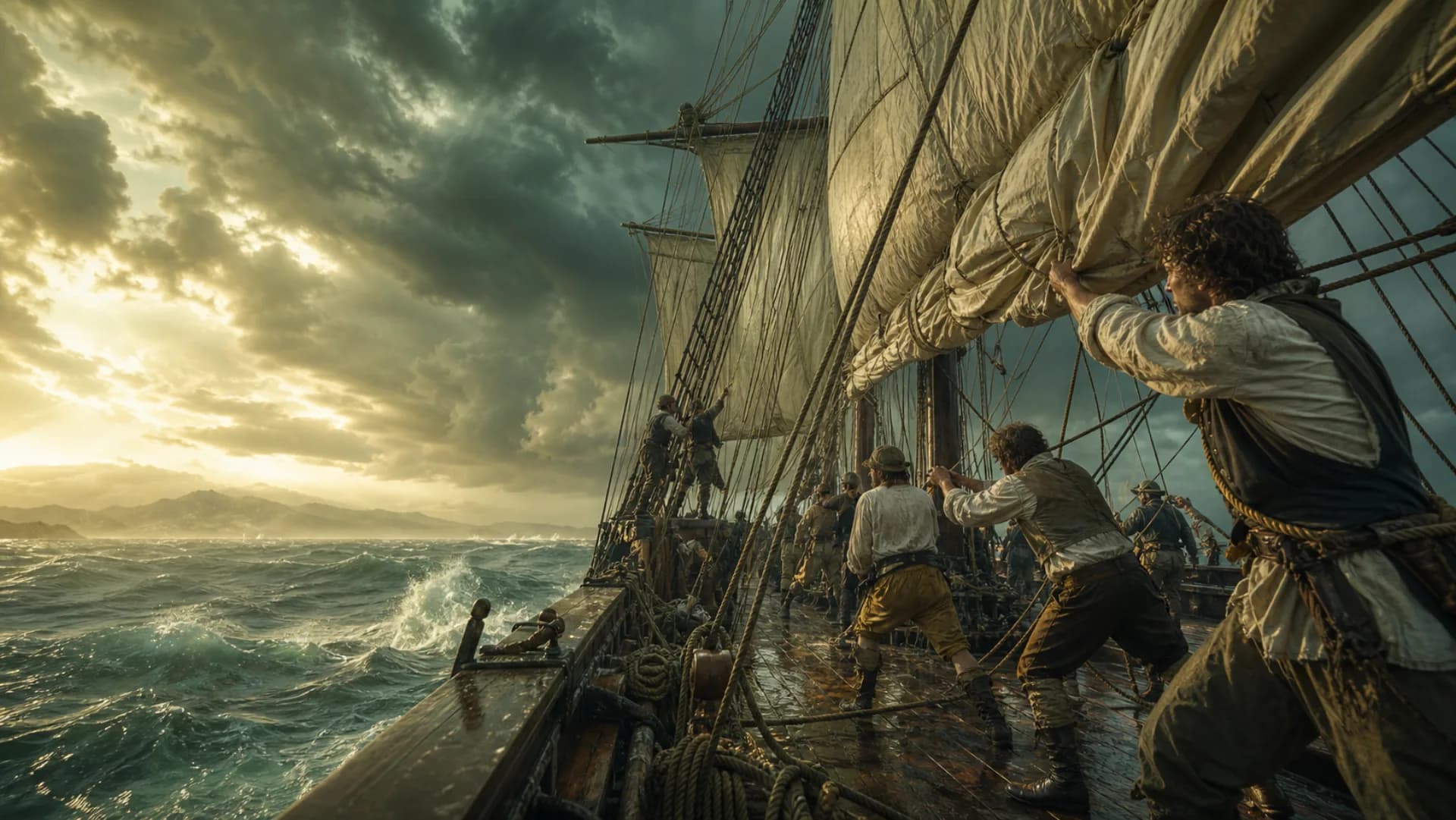
Sail handling, steering and lookout work keep the ship moving.
Maintenance
Carpenters and sail-and-rope specialists continually address wear and damage.
Stores
Food, water, cooking and hygiene determine the voyage’s practical limit.
Command, navigation and watchkeeping kept the vessel moving
A captain or merchant master held responsibility for the mission, discipline and vessel. A sailing master converted charts, compass courses, soundings, speed and observations into a route. Mates organized watches, while helmsmen, lookouts and leadsmen supplied continuous execution and information. A ship was not driven by one pair of hands; it moved through a round-the-clock chain of reports and orders.
Titles cannot be aligned across every period. A seventeenth-century merchant master might be commander, navigator and part-owner. In a developed national navy, a captain and sailing master could divide supreme command from professional navigation. Small vessels combined duties that a large warship assigned to separate people.
- Command: captain, master or skipper
- Navigation: sailing master, navigator and local pilot
- Watchkeeping: mate, helmsman, lookout and sounding crew
- Records: logbooks, muster rolls, courses and weather observations
Boatswains, seamen and repair specialists kept a wooden ship working
The boatswain supervised rigging, anchors, deck equipment and the labour of seamen. Able seamen handled sails, steered, kept lookout, anchored, maintained the deck and worked boats. Ordinary seamen learned through the same tasks, amid hard physical labour, exposure, falls and disease.
The carpenter inspected hull, masts, yards, rudder, pumps and leaks. Sailmakers and riggers maintained canvas and cordage; coopers repaired the casks that preserved water and provisions. At sea there was no dockyard on call. Tools, stores and skill bought the vessel enough time to reach land.
Warships added gunnery, arms, marines and deeper hierarchies
A warship also had to maintain guns, secure powder, repair small arms, send signals, board or land troops and remain under control after taking damage. Gunners, armourers, marines, officers and departmental mates therefore expanded the complement beyond the core labour of sailing.
Merchant ships could be armed and privateers could carry large gun crews, but a state navy had to train and supply specialists repeatedly across a fleet. Even then, one person did not perform only one task: battle stations reassigned seamen to guns, boarding parties, sail handling and damage control.
Medicine, food, stores and accounts were part of seaworthiness
Large warships and some long-distance merchantmen carried surgeons and assistants; a small vessel might have only a medicine chest and limited experience. The cook worked with deteriorating food, scarce fresh water and a dangerous fire. A purser or comparable officer managed provisions, clothing, pay, inventories and records.
These occupations controlled labour and endurance even when they never touched the helm. Infection could collapse the watch bill, contaminated water could weaken everyone, and bad accounts could exhaust supplies before the next port. Crew management meant redundancy, rations, rest and morale as well as names beside jobs.
Ports, dockyards and commerce connected one voyage to the next
On arrival, a vessel needed pilots, harbour officers, bargemen, labourers, warehouses, customs officials and chandlers. Dockyard shipwrights, carpenters, caulkers, ropemakers, sailmakers, smiths and labourers built and repaired the material vessel. No crew could sail indefinitely on the stores loaded at one departure.
Merchants, supercargoes, factors, interpreters, clerks and brokers moved goods into markets. Owners, investors, insurers, notaries, lawyers and courts dealt with capital, title and loss. The maritime economy was therefore a chain of work running between sea and shore, not a list confined to the muster book.
A desirable career depended on skill, status, earnings and risk
Sailing masters, pilots and carpenters derived value from scarce expertise. Able seamen and repair trades could find work across more vessels. Captains, owners and merchants had higher earning ceilings. War increased demand for gunners, carpenters, surgeons and trained seamen, while a busy port expanded cargo, customs and repair employment.
Any ranking needs a date, country and employment system. High pay could hide a qualification barrier; high profit could come from capital exposed to total loss; heavy recruitment could reflect mortality and desertion. A career atlas reveals those trade-offs instead of declaring one timeless winner.
Questions
Continue exploring this subject
Was the boatswain the captain?
No. The boatswain normally supervised rigging, anchors, deck equipment and the work of seamen under the ship's command structure.
Did every sailing ship carry a surgeon?
No. Large warships and some long-distance vessels did, while smaller ships might carry no dedicated medical practitioner. Provision depended on vessel, voyage and institution.
Did ordinary seamen only haul ropes?
No. They handled sails, steered, kept lookout, anchored, maintained decks, worked boats and could serve at guns or in combat.
Which Age of Sail jobs were most desirable?
Navigation, pilotage and carpentry offered scarce skills; command and ownership offered higher status and earning potential; able seamanship and repair trades offered broader employment. Each came with different barriers and risks.
Did merchantmen and warships use the same jobs?
They shared core sailing and repair work, but warships supported larger gunnery, arms, discipline and combat departments. Merchant vessels emphasized cargo, cost and commercial agency and more often combined duties.
Do port occupations count as maritime careers?
Yes. Pilotage, cargo handling, warehousing, customs, supply, ship repair, shipbuilding, rope and sail manufacture, insurance and maritime law all made voyages possible.
Sources
Continue the research
- Life at sea in the age of sailRoyal Museums Greenwich
- Roles on Board Merchant Ships during the Seventeenth CenturyUniversity of Exeter Centre for Maritime Historical Studies
- Officers of Peculiar SkillNaval History and Heritage Command
- Merchant Navy ships’ records: crew lists, musters and log booksThe National Archives
- Life at a Royal Naval DockyardRoyal Museums Greenwich
- Act providing a Naval Armament, 1794Naval History and Heritage Command