 crew
crewThe same sailors step aboard three different vessels
Sailing
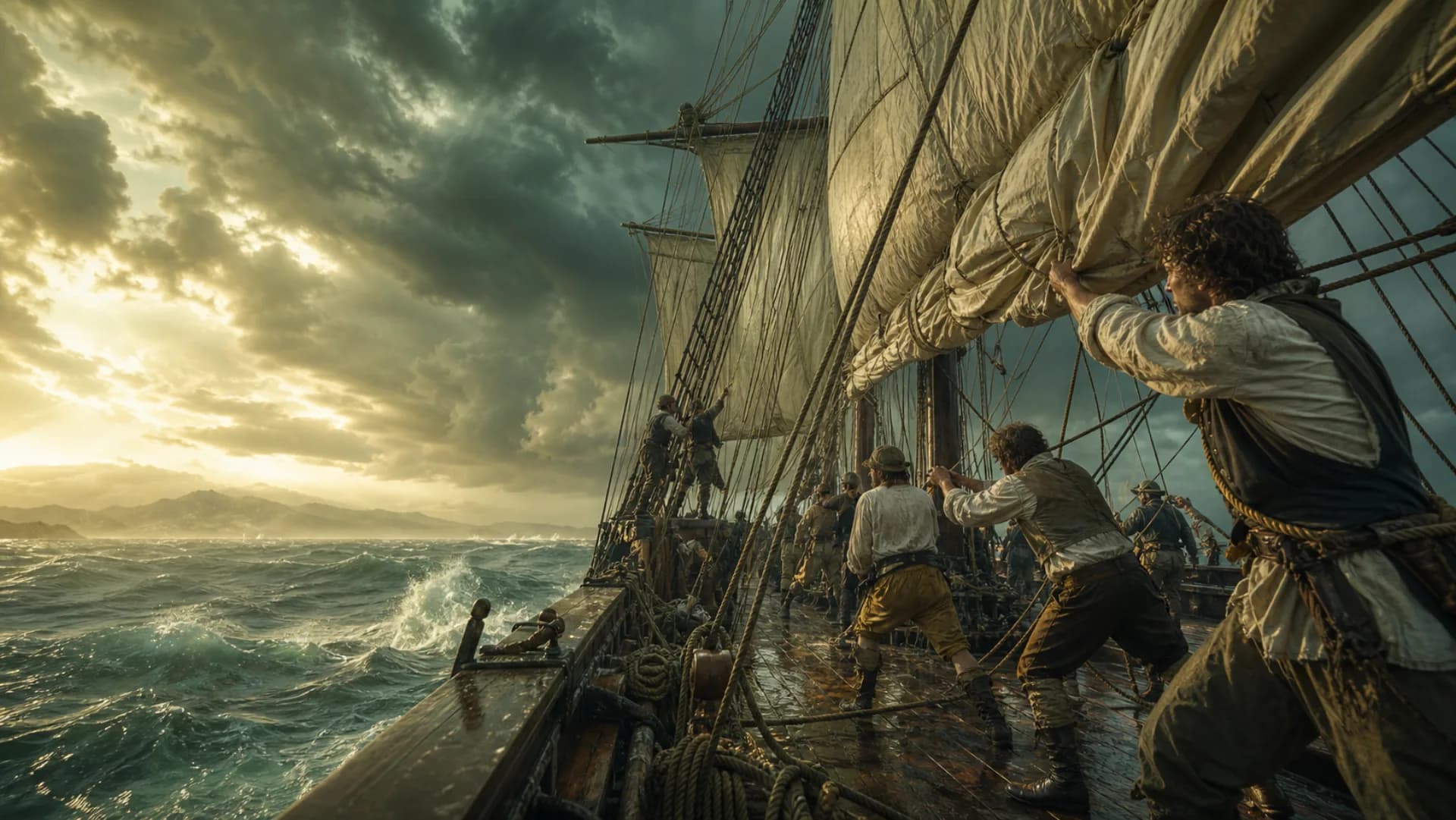
Sail handling, steering and lookout work keep the ship moving.
Maintenance
Carpenters and sail-and-rope specialists continually address wear and damage.
Stores
Food, water, cooking and hygiene determine the voyage’s practical limit.
Mission determined how many jobs a ship supported
A merchantman existed to deliver people and cargo profitably, so owners avoided unnecessary wages and smaller crews combined duties. Comparative seventeenth-century records show different titles in Italian, Dutch, English and French shipping and considerable flexibility in who handled accounts, cargo and discipline.
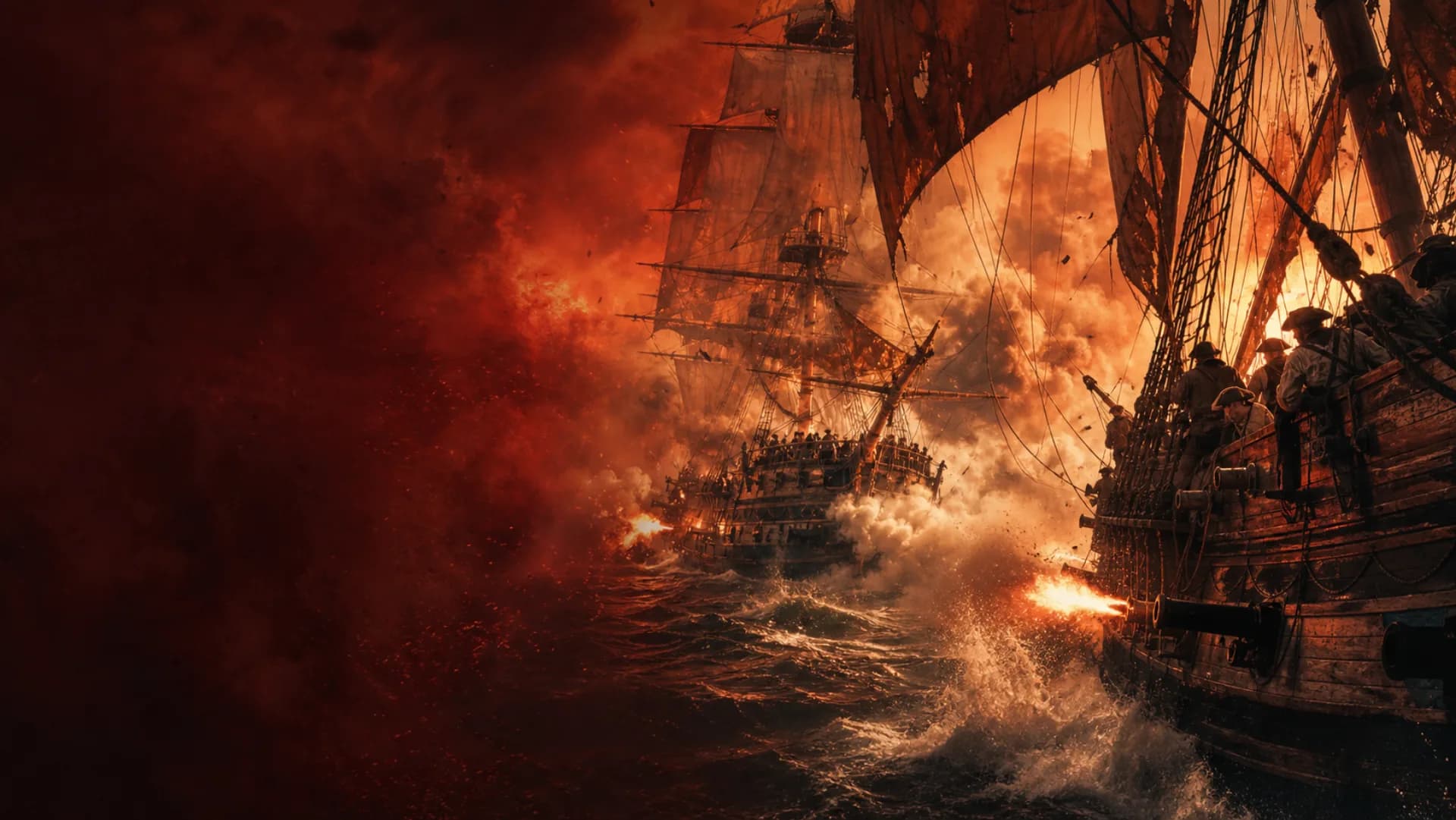
A warship deliberately approached combat and required guns, magazines, arms, signals, marines and repair stores. Pirates needed navigation, maintenance and gunnery too, but did not simply reproduce a state navy's authority and pay structure.
Merchantmen concentrated navigation and commerce in fewer hands
A merchant master could direct sailing, discipline and the owner's interests. A supercargo represented merchants in loading and sale; when no purser or clerk sailed, the master, mate or boatswain could absorb financial and stores duties.
Crew lists and agreements tied real people to particular voyages, jobs and terms of service. Short or small voyages supported fewer specialists; the work remained but was assigned to fewer names.
Navies formalized specialist departments
The 1794 United States naval establishment named a sailing master, purser, boatswain, gunner, sailmaker, carpenter, midshipmen, mates, marines and graded seamen. It is one institutional example, not a worldwide template, but it shows why a fighting ship carried deeper specialization.
Gunners controlled ordnance, carpenters prepared battle repair, boatswains directed deck labour, sailing masters navigated and commissioned officers commanded. Layers supplied supervision and simultaneous action that a lean merchant complement could not sustain.
Pirate discipline could redistribute authority without abolishing it
Pirates drew on former merchant and naval skill. Some early eighteenth-century Atlantic crews used articles to set shares, disability compensation, discipline and selection of leaders. A quartermaster might represent the crew or supervise distribution outside battle.
Evidence from particular crews does not establish a universal pirate democracy. Violence and coercion remained central, and quartermaster meant different work in pirate, merchant and naval settings. The word alone cannot establish rank.
Compare functions before translating titles
Ask who selected the mission, who navigated, who directed deck labour, who controlled weapons and who managed cargo or provisions. All three vessel types performed most of these functions, but authority, staffing and reward differed.
Popular crew charts often collapse centuries and services into one role list. A sound comparison identifies vessel, date, voyage and source before explaining what a title meant there.
Questions
Continue exploring this subject
Did pirate ships carry navigators and carpenters?
They needed navigation and repair skill, but titles were not fixed. One person could combine duties or retain experience acquired in merchant or naval service.
Was a pirate quartermaster the first mate?
Not automatically. In some pirate crews the quartermaster represented crew interests or oversaw distribution; naval and merchant uses of the title could concern watches, steering or stores.
Why did merchant ships carry fewer gunners?
Cargo capacity and wages were commercial costs. Warships made combat their mission and maintained guns, ammunition and training continuously, while armed merchantmen varied by route and threat.
Did a naval captain personally navigate?
The captain retained command, but a large sailing warship often employed a sailing master and assistants for professional navigation.
Could pirate crews vote out a captain?
Some recorded crews limited or selected captains through articles and crew decisions. The evidence does not make that arrangement universal.
Sources
Continue the research
- Roles on Board Merchant Ships during the Seventeenth CenturyUniversity of Exeter Centre for Maritime Historical Studies
- Officers of Peculiar Skill: Warrant Officers in the Royal Navy and Early U.S. NavyNaval History and Heritage Command
- Act providing a Naval Armament, 1794Naval History and Heritage Command
- Life at sea in the age of sailRoyal Museums Greenwich
- Pirate myths debunkedRoyal Museums Greenwich
- The Life and Trial of Anne BonnyLibrary of Congress
 03
03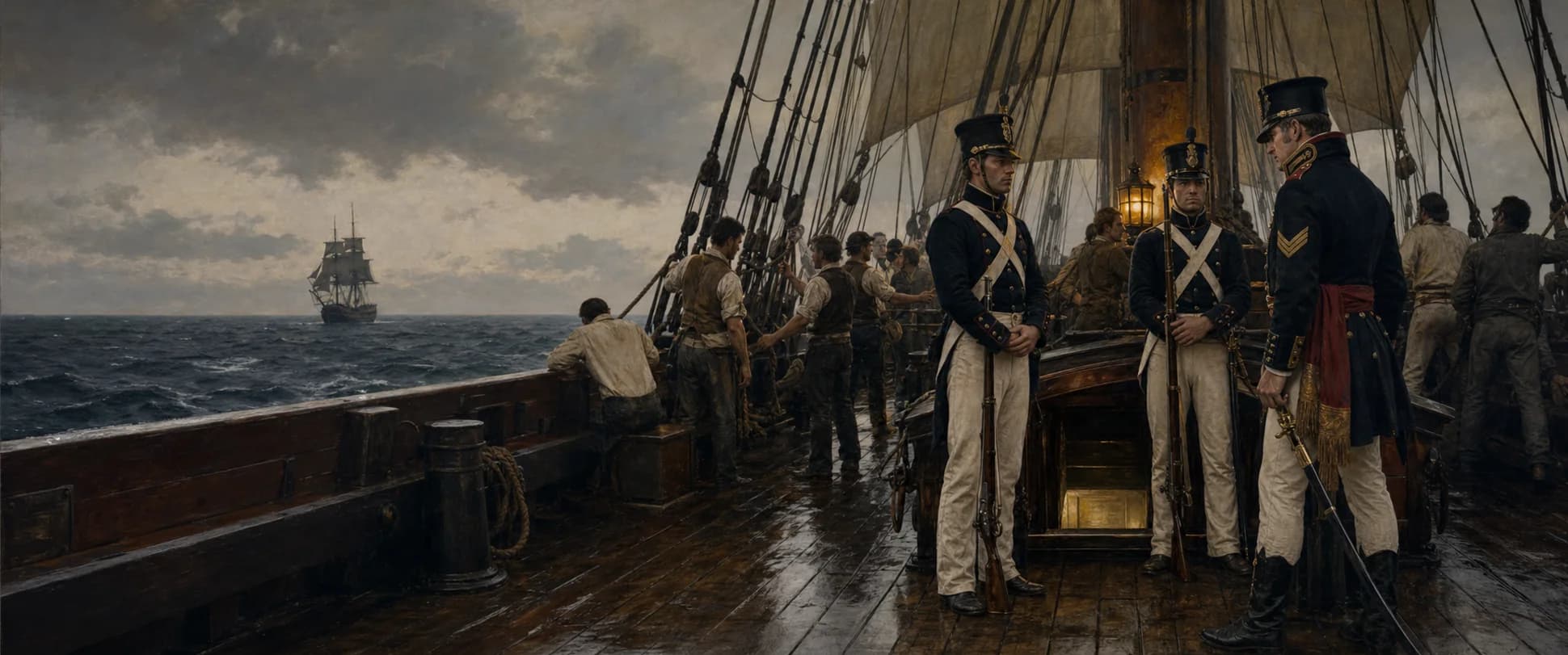 04
04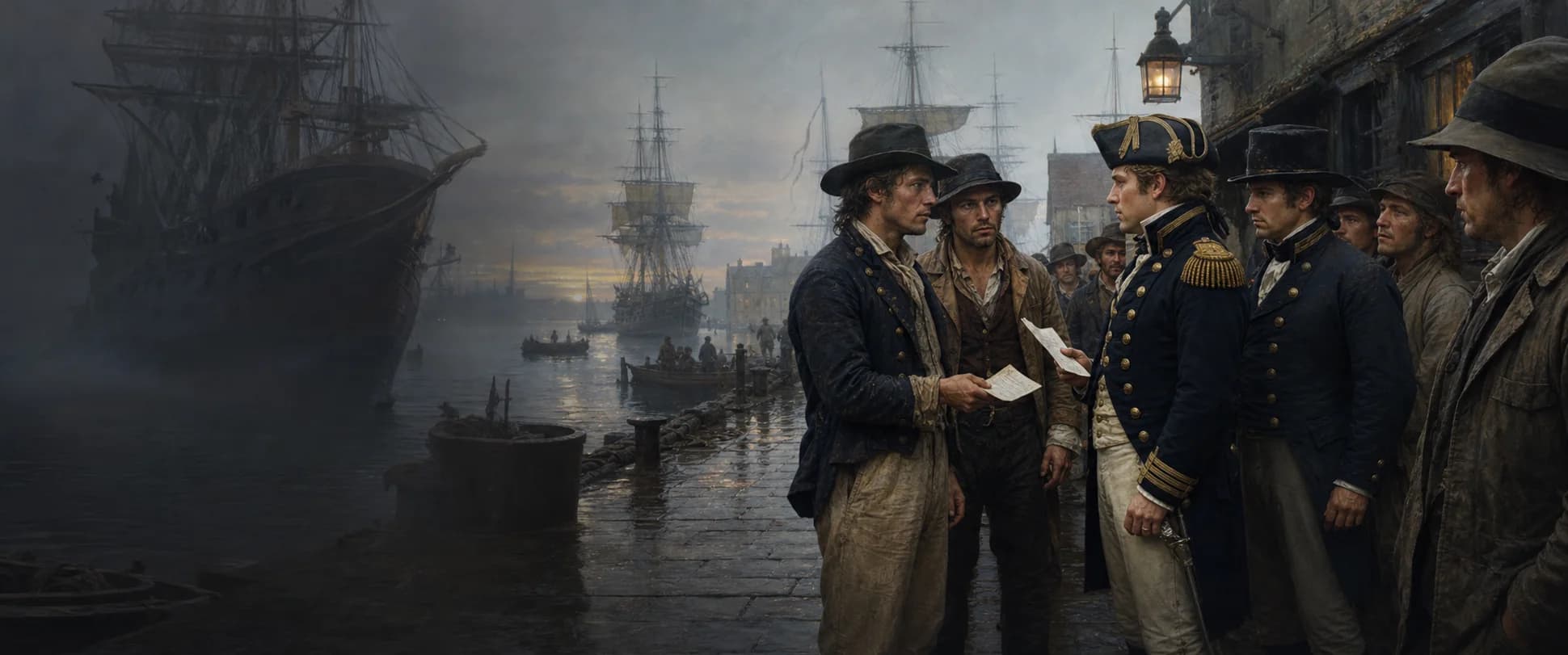 05
05