 crew
crewA stranger ignores the recognition signal and the watering party is overdue ashore
Sailing
Sail handling, steering and lookout work keep the ship moving.
Maintenance
Carpenters and sail-and-rope specialists continually address wear and damage.
Stores
Food, water, cooking and hygiene determine the voyage’s practical limit.
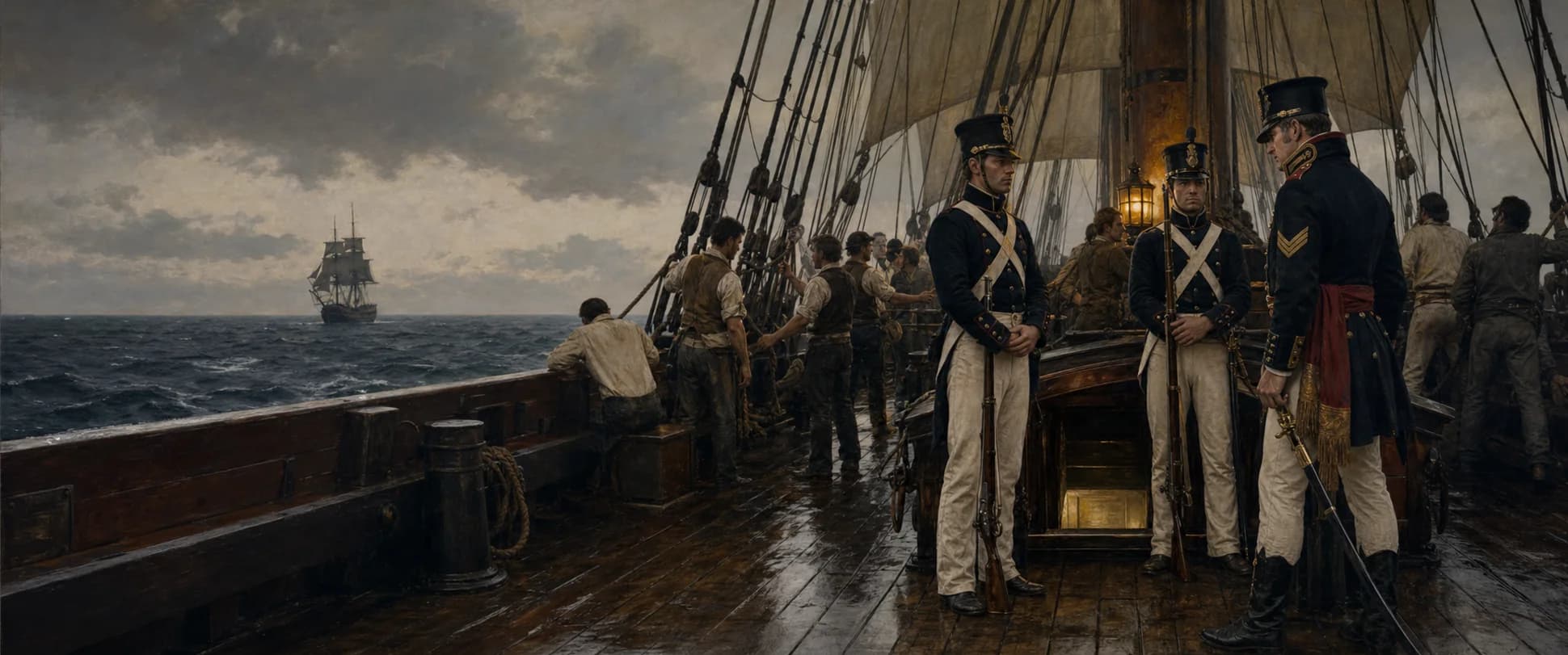
Marines were an organized military detachment, not a name for every armed sailor
British Royal Marines, United States Marines and other naval infantry grew through different institutions. The US Naval Act of 1794 assigned forty or fifty marines to its two frigate sizes, evidence that a large state warship could treat them as a distinct body. A merchantman, privateer or small naval vessel might rely on armed seamen for similar violence without carrying marines at all.
Their main identity was trained infantry afloat. They usually did not work the ship aloft, but learned cramped decks, moving musketry, boats and naval orders. Constitution records also put marines at capstan or guns. A division of primary responsibility did not forbid every task shared with the ship's company.
Sentries turned hatchways and doors into controlled boundaries
A ship had no street or barracks wall; doors, ladders and hatchways were its checkpoints. Marine sentries guarded approaches to the captain's cabin, magazine, spirit room, prisoners and gangway and challenged people who lacked authority. A marine officer or sergeant maintained arms, appearance and drill while the officer of the watch directed immediate service.
Calling this shipboard police can overstate exclusivity. The master-at-arms, ship's corporals, watch officers and department heads also enforced order. A marine guard contributed an armed and consistently organized body partly outside the sailors' watch organization, useful for routine security and moments when command feared disorder.
Small-arms fire attacked exposed people but did not replace naval artillery
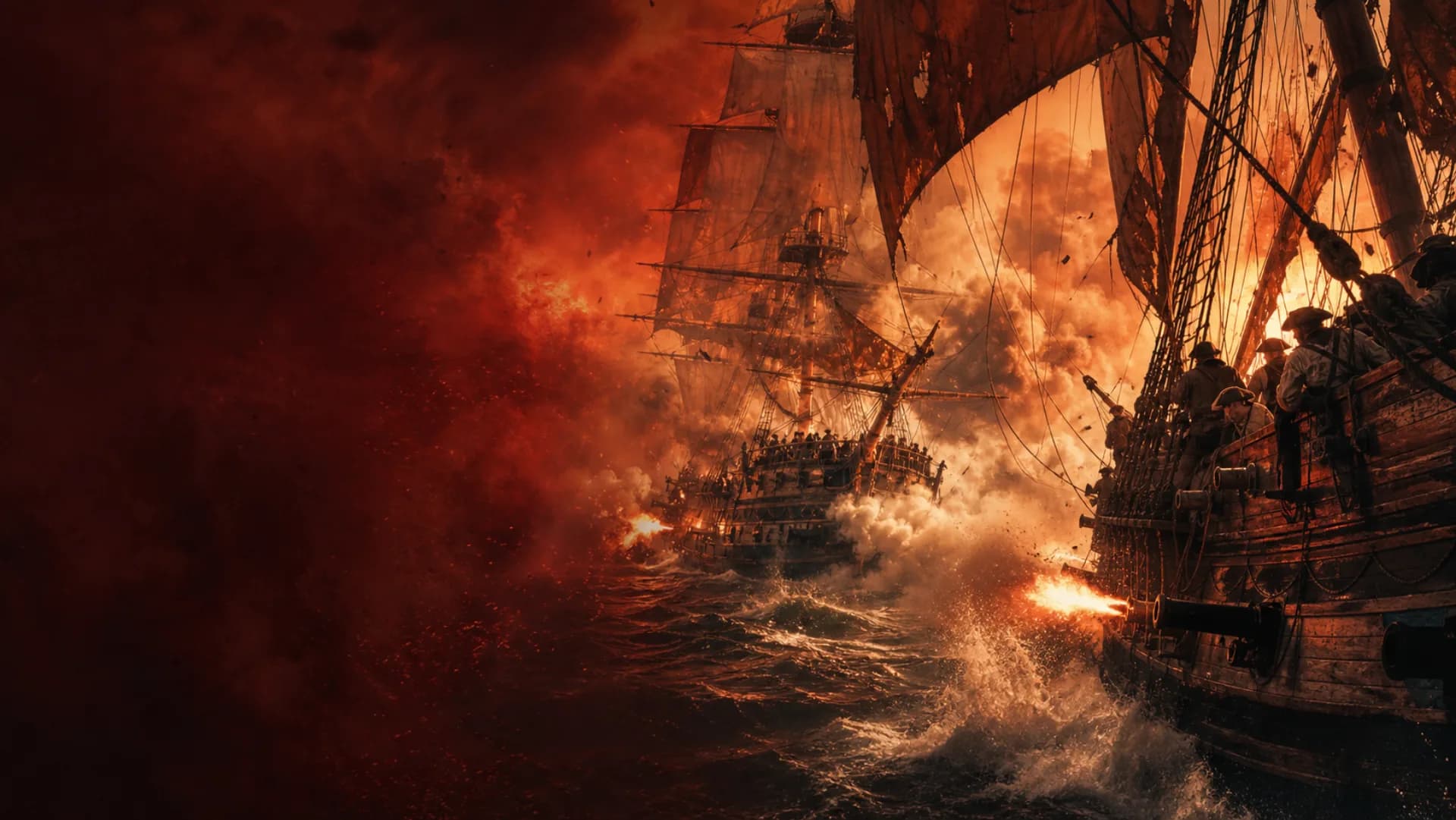
At close range, marines in the waist, behind bulwarks or in fighting tops fired on helmsmen, officers, gun crews and boarders. Their platforms moved and powder smoke obscured aim. A single marksman deciding battle belongs only to cases with evidence, not a general picture of reliable long-range sniping.
Cannon damaged hull, rig and concentrations of people; musketry kept exposed decks under pressure. When hulls touched, marines defended their own rail or covered a chosen crossing point while sailors with pikes, pistols and cutlasses boarded. A boarding force needed seamen who could lash vessels, move through rigging and take control of the captured ship as well as infantry.
Boats carried temporary landing forces whose strength ended at the surf line
Marines went ashore for reconnaissance, watering guards, raids, destruction, protection of property or support to an amphibious attack. Cutter, launch and barge capacity, tide, surf and a route back limited the party, while naval gunfire could be masked by ground beyond the beach.
Landing parties commonly mixed marines, armed seamen, gunners and craftsmen. Sailors rowed, kept the landing craft available and performed technical destruction; marines supplied pickets, formation and fire. Constitution's Puerto Plata operation depended on multiple boats, seamen and marines together. Naval infantry remained dependent on naval transport.
Prisoner guard and drill consumed the detachment before and after action
After surrender, marines guarded prisoners, weapons and critical hatchways while sailors searched papers, transferred people and repaired damage. Captives could outnumber the original ship's company just as fire, wounded men and broken rigging demanded hands. Victory did not return the guard to routine immediately.
Daily arms drill, sentry rosters and weapon care were therefore operational preparation rather than ceremony alone. Damp attacked locks and powder; cramped spaces required known assembly points; drum and fife could reinforce orders and work rhythms. Marines offered a ready armed body, but its effect depended on maintained weapons, coordinated officers and seamen keeping the platform afloat.
Questions
Continue exploring this subject
Did marines work the sails?
Usually not as their principal duty. Constitution's War of 1812 marines were not sent aloft, although they could work capstan, guns and other deck tasks.
Were marines the boarding party?
Boarding was only one mission, and boarding parties normally mixed marines with armed seamen. Marines also stood sentry, drilled, guarded prisoners and protected sensitive spaces.
Why put marines in fighting tops?
Height gave fire onto an exposed deck, but the platform moved and smoke obscured aim. Their purpose was suppression, not universally precise sniping.
Did every sailing warship carry marines?
No. Large state warships were more likely to carry a formal detachment. Small naval craft, merchantmen and privateers often used armed sailors instead.
Who enforced discipline: marines or the master-at-arms?
Both could contribute. Marine guards supplied armed sentries, while master-at-arms and ship's corporals handled internal policing within the wider command chain.
Sources
Continue the research
- Marines aboard USS ConstitutionUSS Constitution Museum
- George Cline, Marine PrivateUSS Constitution Museum
- Arms and ArmamentUSS Constitution Museum
- Act Providing a Naval Armament, 1794U.S. Government Publishing Office
- Regulations for the Internal Government of USS Congress, 1815–1816United States Naval Academy
- Officers of Peculiar SkillNaval History and Heritage Command
 01
01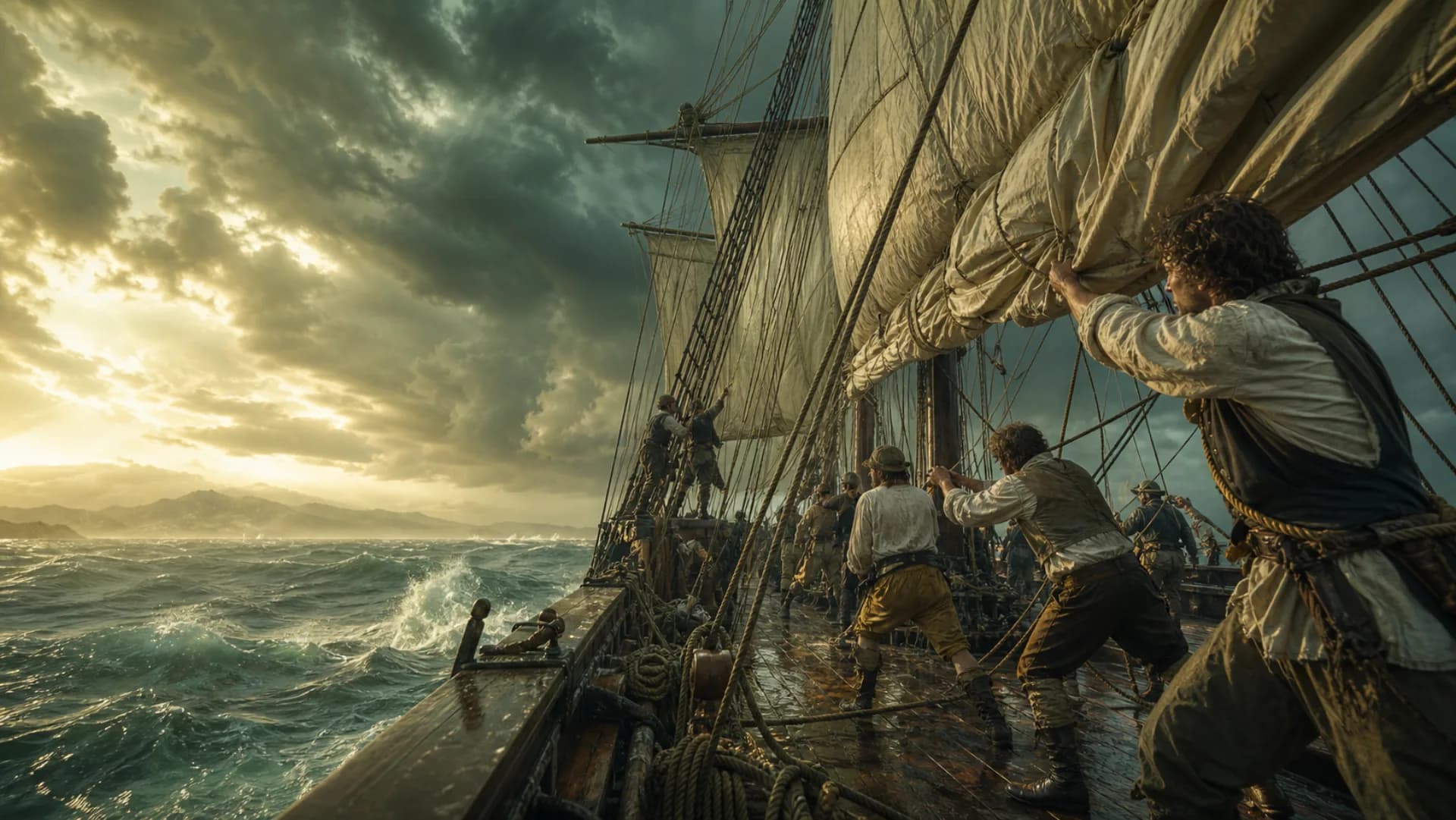 03
03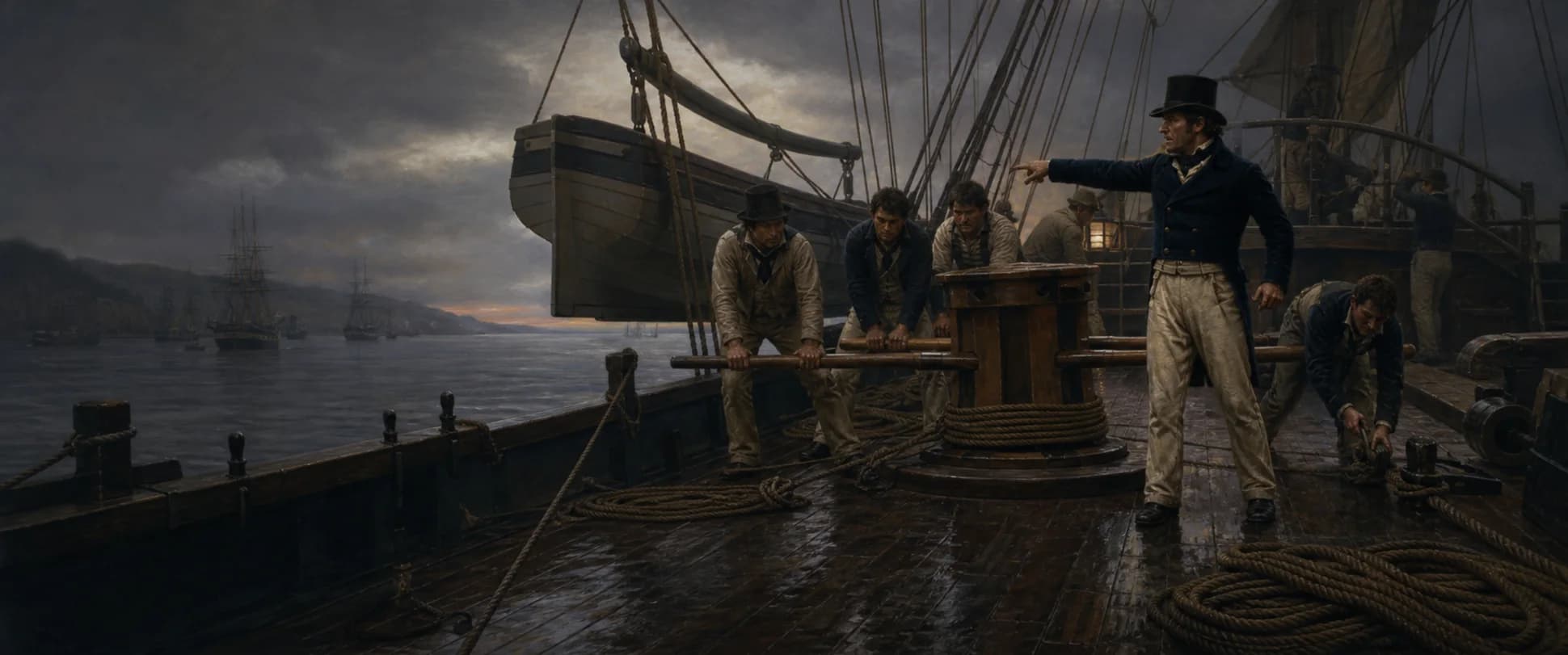 04
04