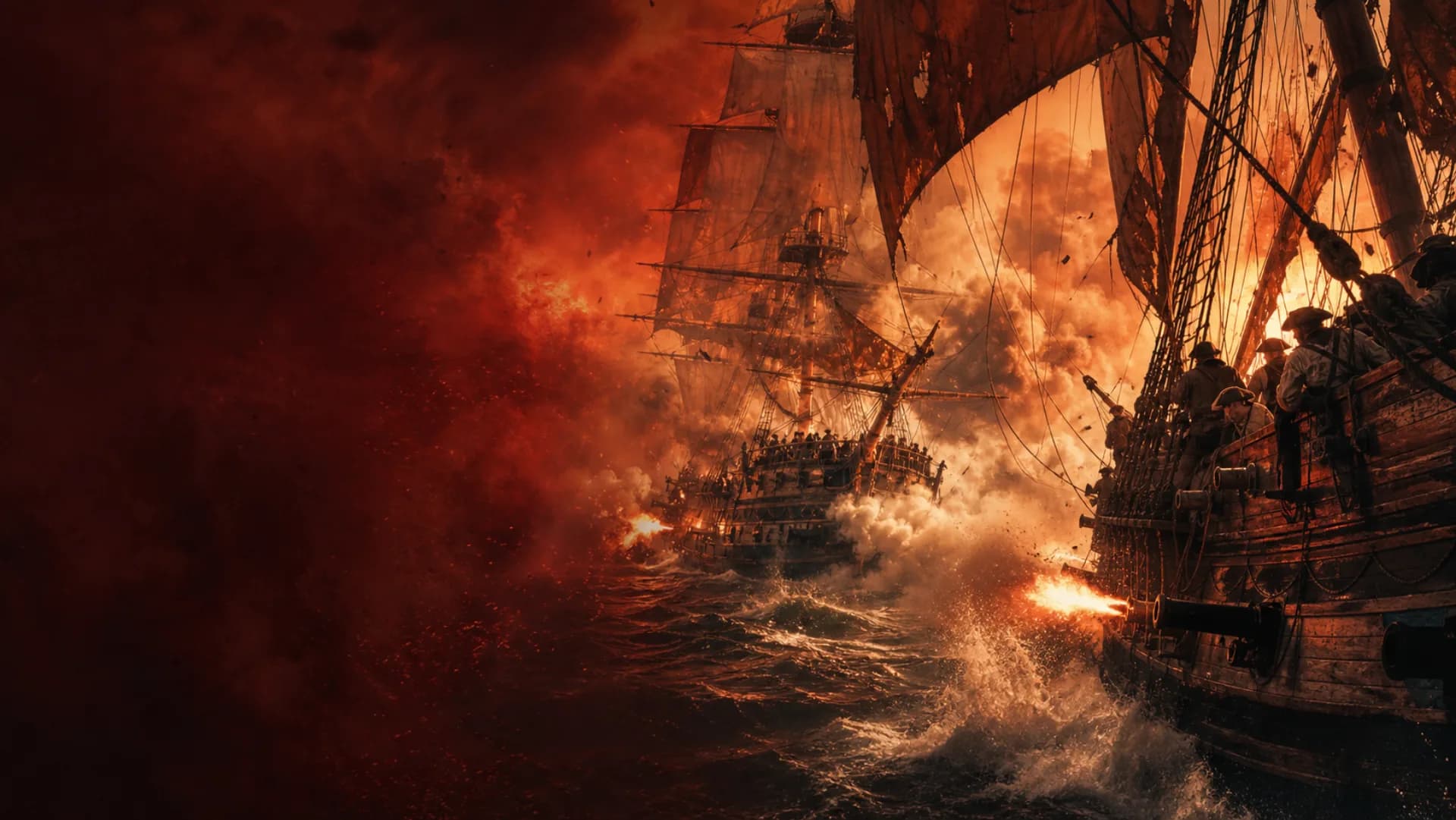
 cannon
The enemy’s mainmast is down
Hull
Round shot concentrates damage on timber planking and structure.
Rigging
Chain shot is better suited to attacking masts, sails and rope.
Crew
Grapeshot spreads its effect across an exposed deck at close range.
The first problem was not fighting. It was catching the other ship
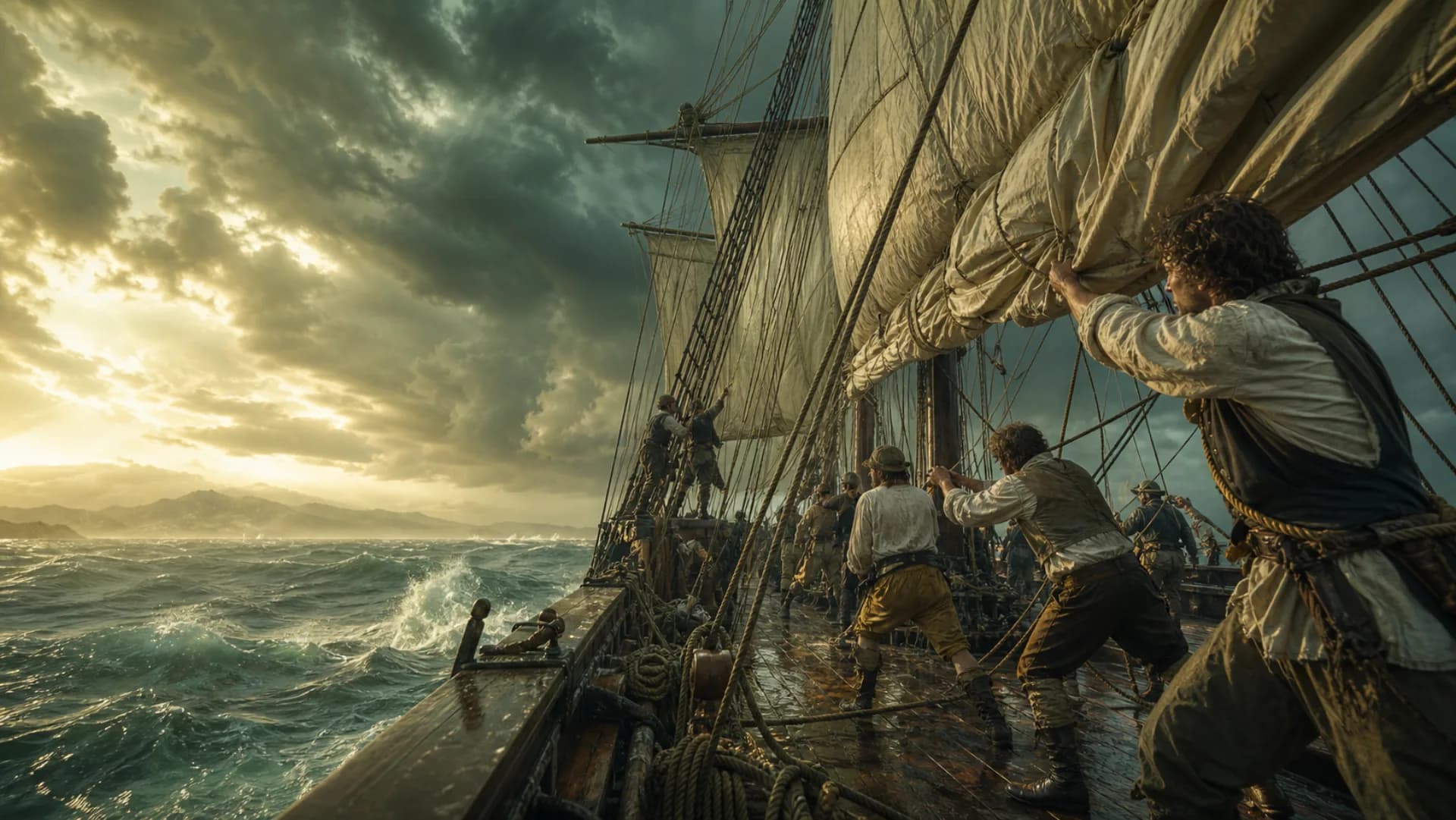
Before boarding could begin, two decks were separated by a shifting strip of sea. The target could turn, accelerate or use the wind to escape. The attacker had to choose an approach that closed the distance without offering the enemy an easy shot or a clear route away.
Wind direction, speed and the inertia of heavy hulls decided whether the final yards could be closed. Gunfire might first be directed at the rudder, rigging or people on deck to make the target harder to handle. A misjudged approach, however, could smash the attacker’s own bow, spars or standing rigging.
The leap that dominates a dramatic scene was therefore the end of a long chain of shiphandling decisions. Boarding became possible only when one side had lost mobility—or deliberately chose not to open the distance again.
Touching hulls was not enough; the sea was already pulling them apart
A scrape along the rail did not create a stable bridge. Both hulls continued to roll, surge and press against one another. The gap could open without warning, then slam shut on the next wave. For the people crossing it, securing the ships often mattered more than jumping bravely.
Grapnels and lines held the target while sailors crossed by the rails, spars, rigging or temporary gangways. Defenders cut lines, pushed away hooks and used height, netting and deck clutter to protect the few places where an attacker could gain a foothold.
Those entrances were narrow, so numerical advantage could not arrive all at once. A small group of defenders might contain many attackers at the rail. Only after the first boarders secured space on deck could the struggle spread into a close-range fight across the ship.
Boarding aimed to capture value, not merely destroy it
If the only goal was to sink a vessel, closing to boarding distance was rarely the safest method. Attackers accepted the risk because the hull, cargo, documents, prisoners or intelligence might be worth more intact. That calculation mattered especially in privateering, customs enforcement and attempts to retake a captured ship.
The calculation could change by the minute. Fire might climb into the rigging, one hull might already be flooding, or enemy reinforcements could appear. Lines that secured a prize could also bind the victor to a ship becoming too dangerous to save.
Boarding was therefore not the inevitable ending of a gunfight. Suppress and close, cross and capture, or cut free and withdraw: the choice depended on the value of the prize and on how much time both ships still had.
Questions
Continue exploring this subject
Did every naval battle end in boarding?
No. Many engagements in the age of naval artillery were decided through manoeuvre and gunfire. Mission, distance, ship condition and command judgment determined whether boarding made sense.
Was boarding simply a jump onto another ship?
No. The crossing came after suppression, approach and an attempt to secure two moving hulls. Defenders also placed obstacles and fought to break the connection.
Why not just sink the enemy ship?
A captured vessel, cargo, documents, prisoners or intelligence could be more valuable than wreckage, particularly in privateering and enforcement operations.
Sources
Continue the research
- Naval weapons collectionsRoyal Museums Greenwich
- Life at sea in the age of sailRoyal Museums Greenwich
 03
03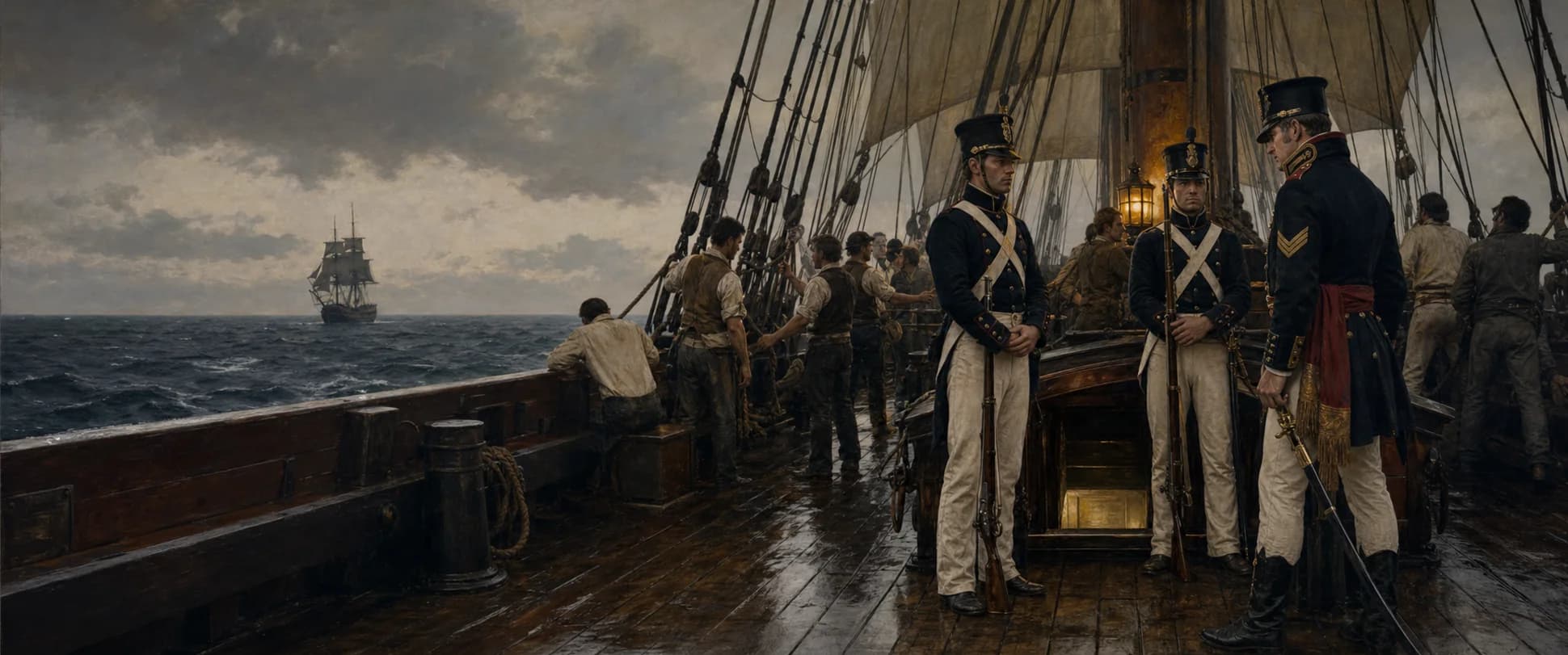 04
04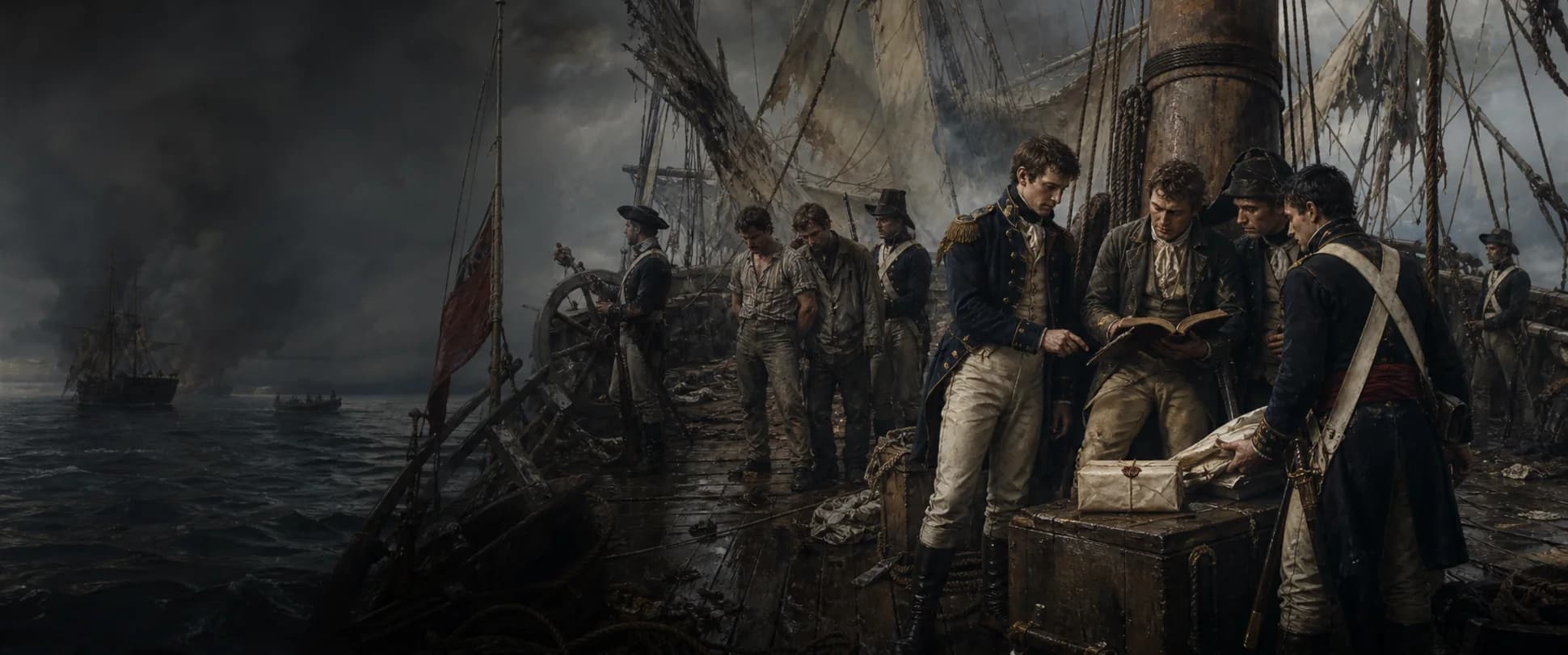 05
05