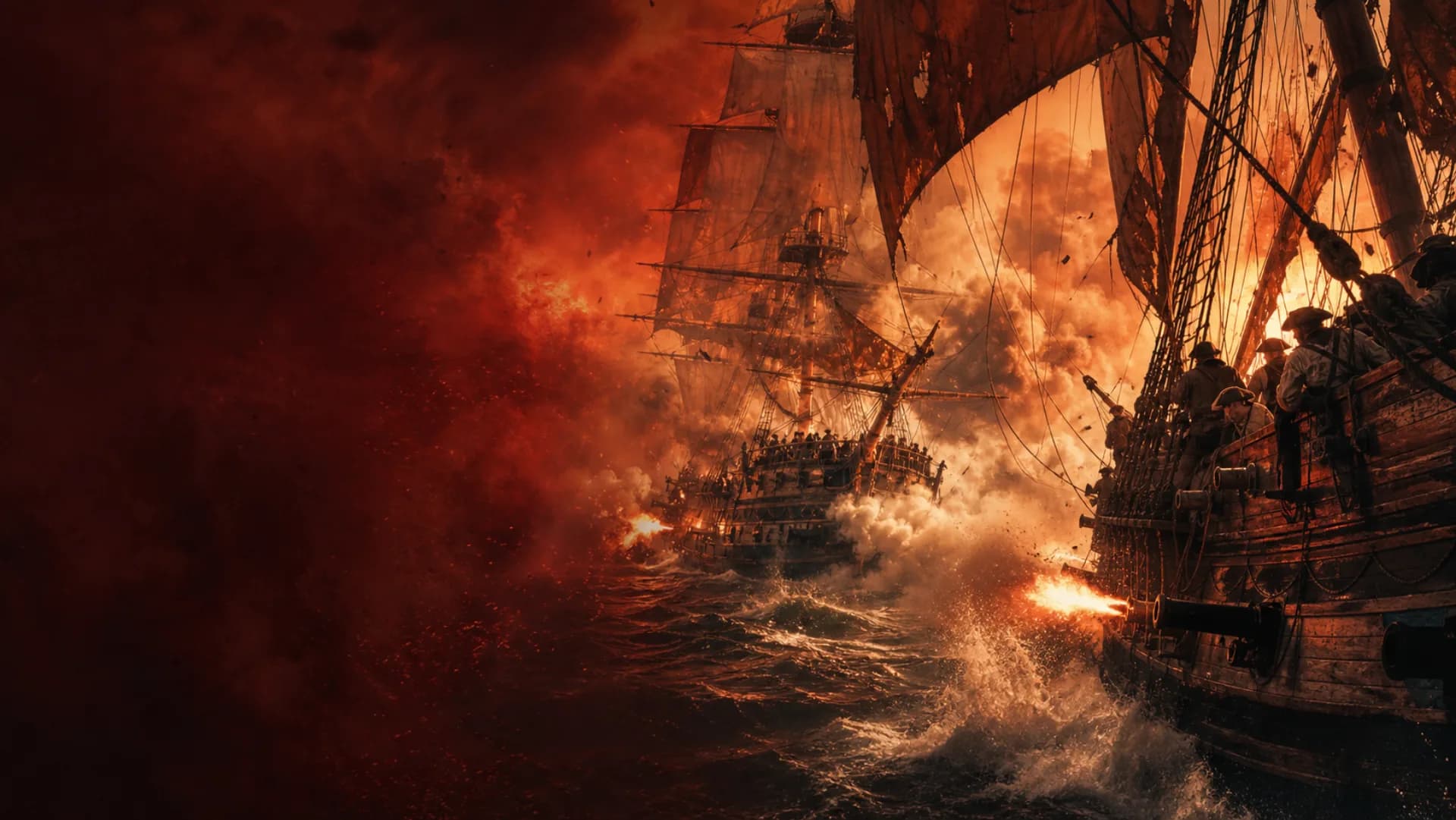
 cannon
The gunport is open
Hull
Round shot concentrates damage on timber planking and structure.
Rigging
Chain shot is better suited to attacking masts, sails and rope.
Crew
Grapeshot spreads its effect across an exposed deck at close range.
Round shot concentrated a gun’s impact in one iron ball
Round shot was the most direct design: a dense ball left the muzzle carrying the energy of its weight and speed into one point of impact. Against a wooden hull it might punch through planking, split timbers or smash a gun carriage and nearby fittings.
The ball was only part of the danger. Wood struck at high speed could burst into jagged splinters and sweep through a crowded gun deck. A shot did not have to pass through the whole ship to disable equipment or kill the people around it.
Its regular shape made flight more stable than that of special rigging shot, but stability did not mean precision. Both ships moved, the gun platform rolled, and powder quality, bore condition and crew handling all changed the result. Round shot concentrated force; where that force landed remained uncertain.
Chain shot traded range for a chance to tear through the rig
Chain shot linked two metal pieces with a chain; bar shot used a rigid connection for a related purpose. After leaving the muzzle, the irregular assembly could rotate and spread across a wider path, increasing its chance of catching canvas, rope or a spar.
The aim was not a neat hole in the hull. Torn sails and severed rigging could slow a vessel, rob it of steering power or force it out of formation. A ship might remain afloat and still be unable to continue the fight on its own terms.
The awkward shape also created drag and unstable flight, limiting useful range and accuracy. Chain shot expressed an intention to attack mobility; it was not a magical pair of shears guaranteed to cut down a mast from afar.
Grapeshot turned one gun into a close-range spread
Grapeshot bundled several smaller iron balls into a single load. Once clear of the muzzle, the balls separated: instead of sending all their energy into one point, they covered a broader area. Their clustered appearance gave the ammunition its name.
That spread was especially dangerous to exposed groups. Crews working guns or lines, defenders gathered near the rail and boarding parties closing over a short distance could all be caught in it.
As range increased, the pattern opened and each small ball carried less effect than a full round shot. Grapeshot was therefore not the first choice for breaking a main hull at distance. It was a weapon for a close, decisive moment—one meant to empty part of a deck rather than sink the ship beneath it.
Questions
Continue exploring this subject
Could chain shot cut down a mainmast with one hit?
It could seriously damage rigging or spars, but screen portrayals of reliable long-range dismasting are exaggerated. Range, calibre, impact point, sea state and chance all affected the result.
Are grapeshot and canister shot exactly the same?
Both produced a spread of projectiles, but historical names, containers and shot sizes varied by period and source.
Would round shot make a wooden ship sink at once?
Not necessarily. The impact point, damage above or below the waterline, damage control and sea conditions determined the outcome. Many hits disabled a ship before they threatened to sink it.
Sources
Continue the research
- Drake handling cardsRoyal Museums Greenwich
- Naval weapons collectionsRoyal Museums Greenwich
 03
03