 galleon
A galleon cannot make the choice for you
Square sails
The main sail plan provides power on long downwind passages.
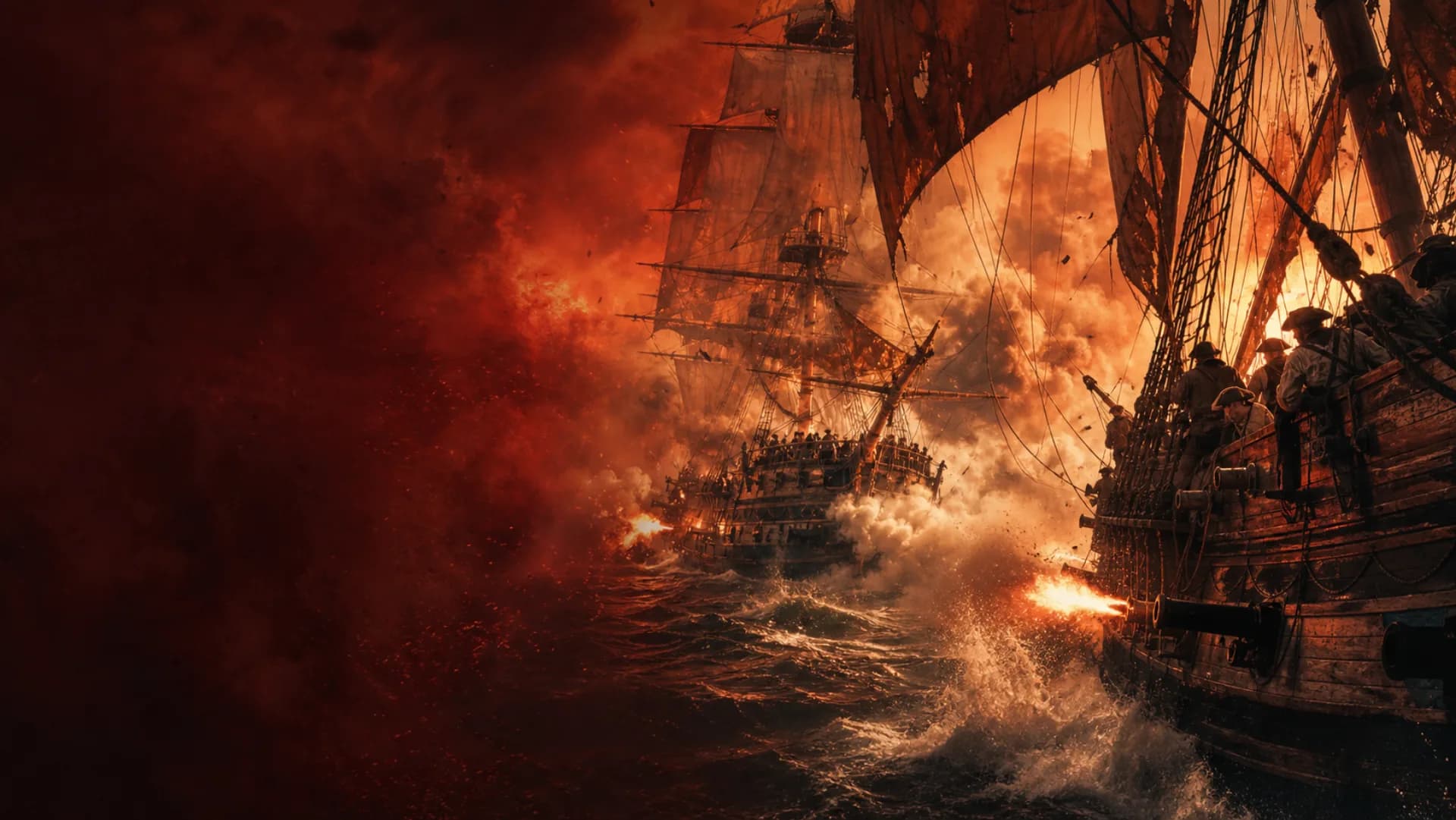
Broadside
Rows of guns make the ship’s side its principal direction of fire.
Sterncastle
The raised stern contains command and living spaces.
The famous treasure-ship silhouette is only one chapter
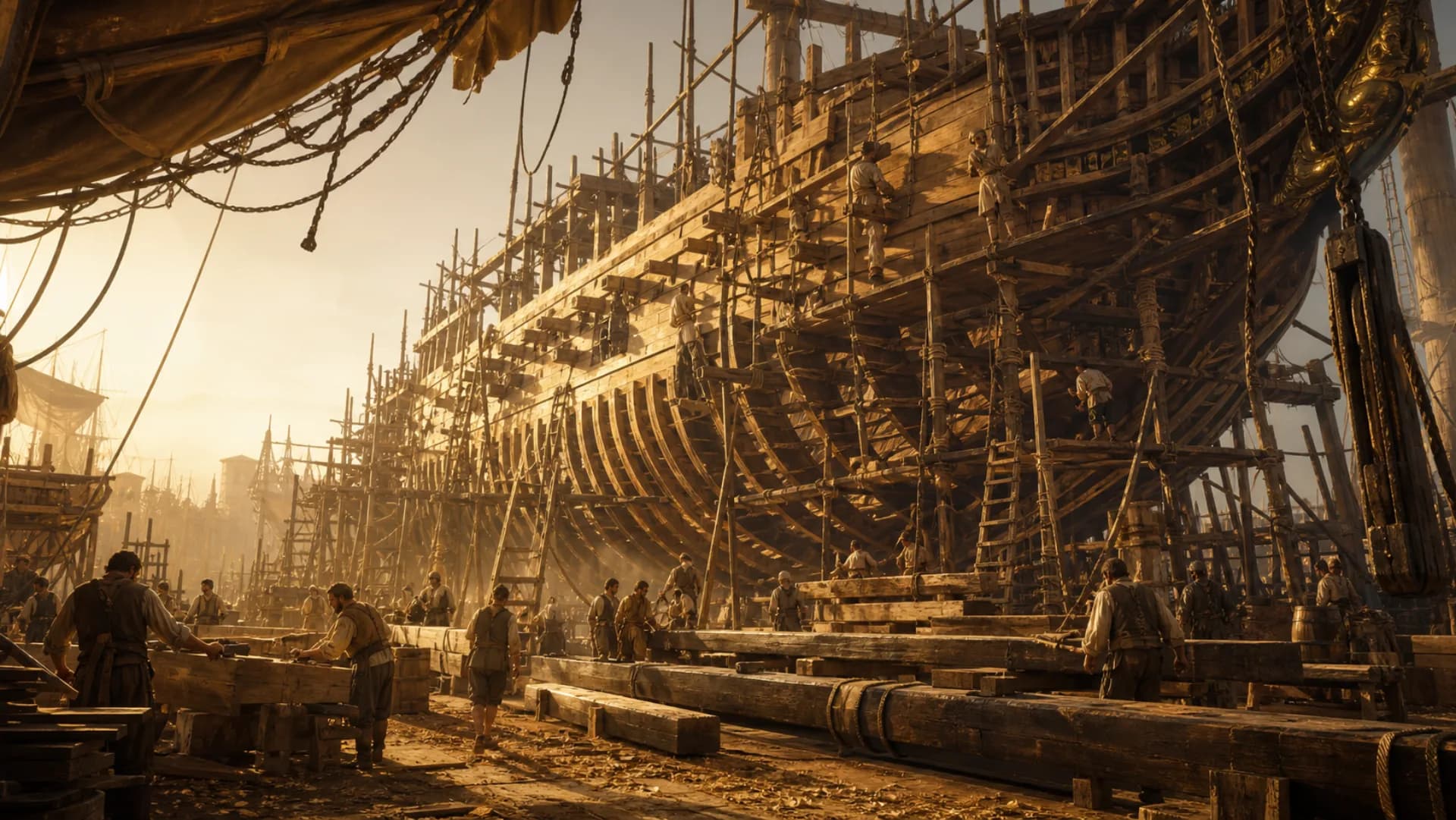
Galleon often evokes the Spanish treasure fleets: a high stern, rows of gunports and precious metal crossing the Atlantic. That image belongs to the history, but Portugal, England, the Netherlands and other maritime powers also built and changed vessels called galleons.
The type developed through practice rather than one invention. Hulls tended to lengthen and the towering forecastle to come down, improving handling while allowing guns to be arranged more effectively along the sides. Shipbuilding knowledge, ocean trade and naval war pulled the form in the same broad direction without producing one fixed plan.
Silver or powder in the hold gave the same hull a different life
An ocean voyage demanded cargo space, water, food and endurance, plus weapons against attack. War placed more guns, ammunition and fighting men aboard, taking space and weight from cargo and stores. A galleon could be fitted around either emphasis, which is why merchant and warlike uses cannot be separated into two unrelated hulls.
Each choice carried a cost. More guns meant carriages, shot and crews; more people meant more provisions. Cargo, firepower, stability and range competed inside the same vessel. Gun count alone says little without gun position, training, ammunition, weather and the way the ship was handled.
One wreck returns the broad name to a particular ship
The Spanish galleon San José, built late in the seventeenth century and sunk in battle in 1708, was roughly forty metres long, displaced more than a thousand tonnes and carried dozens of guns according to Colombian project material. Those figures make one vessel concrete; they do not define every galleon.
San José carried cargo while moving inside an armed imperial system, neatly resisting a simple choice between merchantman and warship. The category gives an outline. Building records, voyage history and archaeology reveal how different the individuals could be.
Questions
Continue exploring this subject
How many masts did a galleon have?
Three or more were common, with square sails forward and a lateen or other fore-and-aft sail aft, but rigs varied with region, date and vessel size.
How did a galleon differ from a carrack?
Galleons were generally longer, lower at the bow and more systematically adapted to broadside guns, but the types overlap through a long evolution rather than a clean dividing line.
Was every galleon a treasure ship?
No. Some sailed in precious-metal and trade fleets; others served war, escort and transport. Galleon refers to a vessel type, not a fixed cargo.
Sources
Continue the research
- GalleonThe Mariners' Museum and Park
- Historia del Galeón San JoséMinisterio de las Culturas de Colombia
 02
02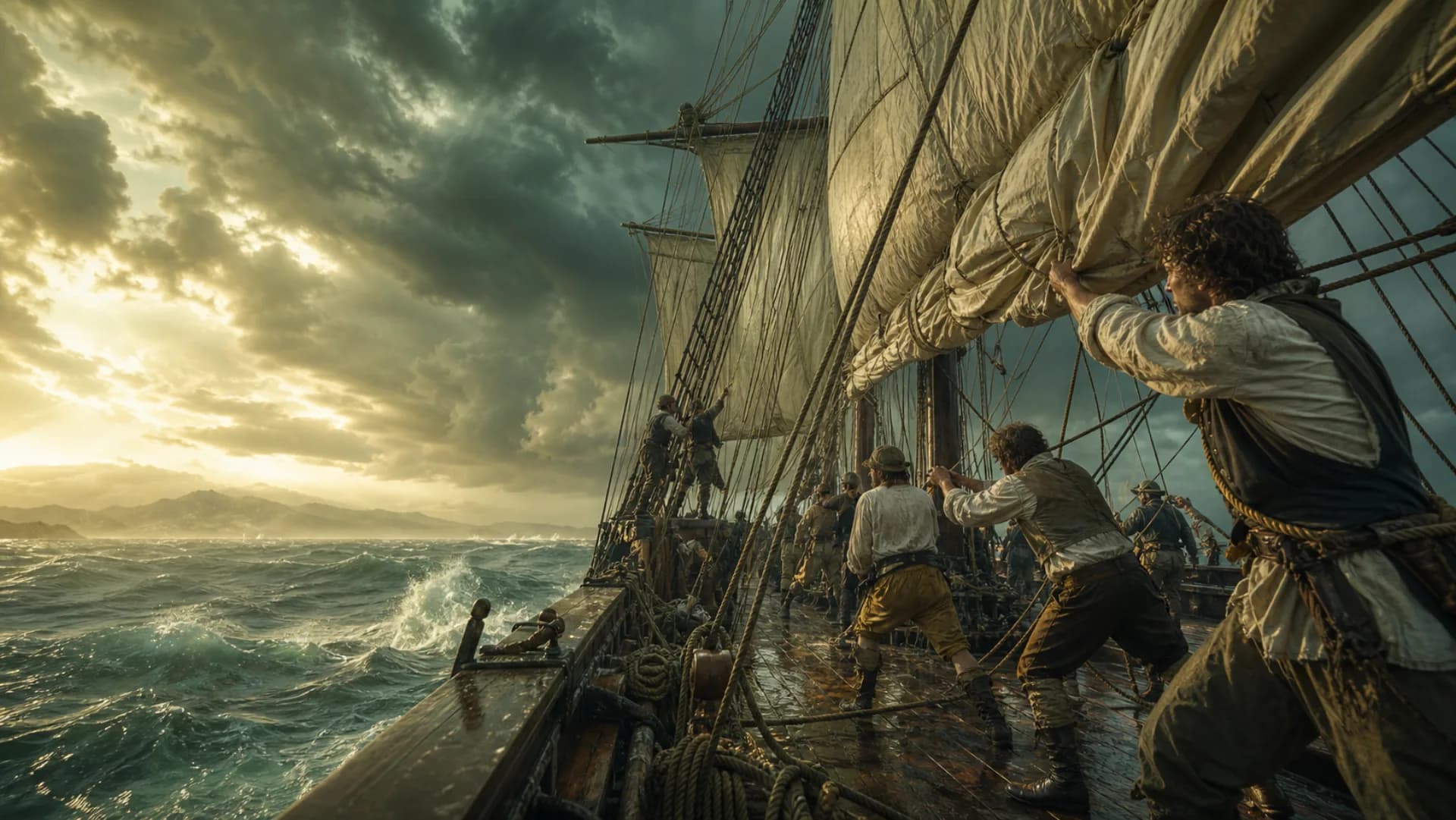 03
03 04
04