 01
01Beyond the Chart
Beyond the Chart
A turn-based naval roguelike. Build a command deck, recruit crew and carry each hard choice into the next sea.
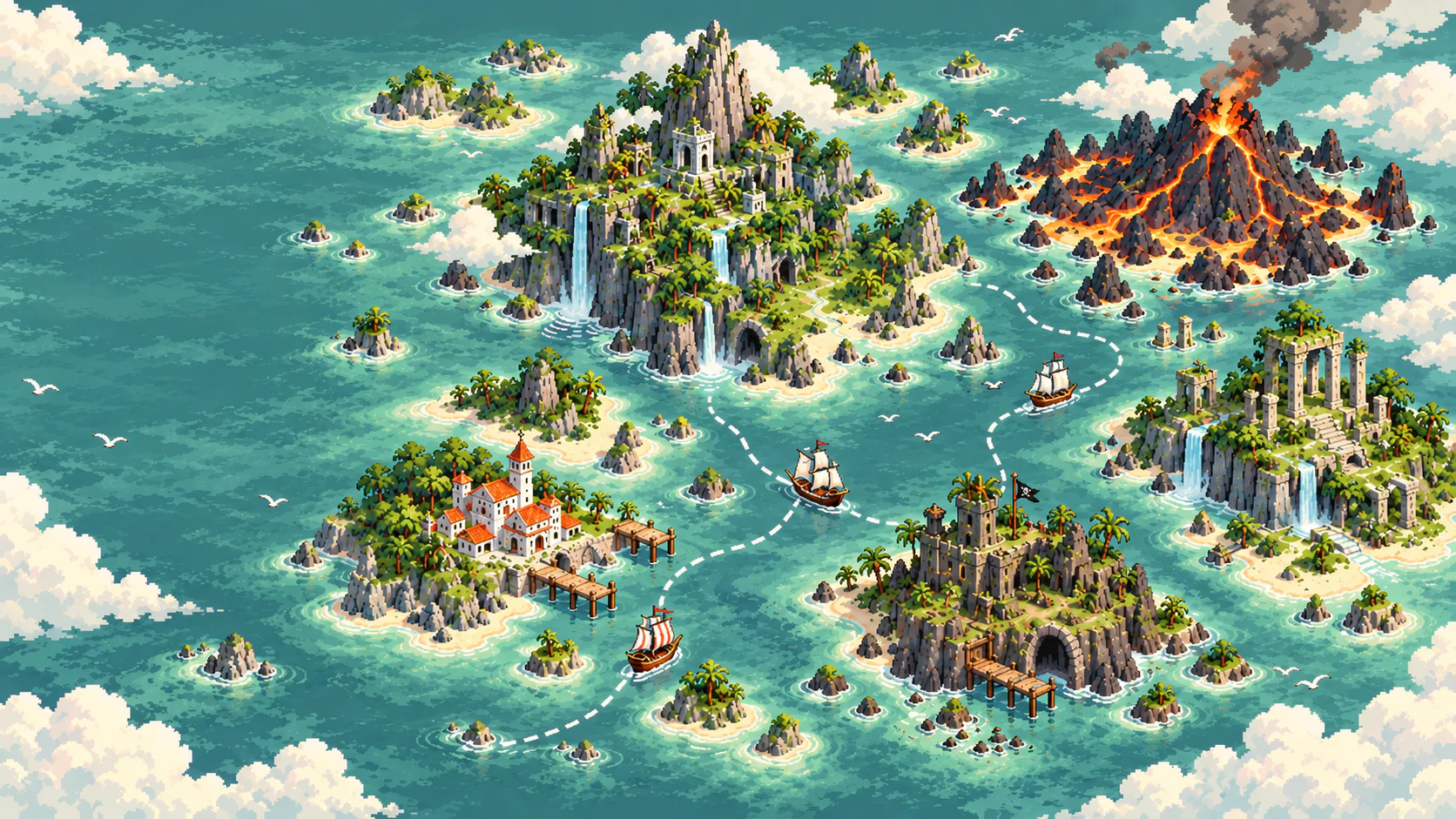
AGE OF SEAS / WORLD MAP
Play in your browser 01 / 05
A turn-based naval roguelike. Build a command deck, recruit crew and carry each hard choice into the next sea.
01 / PLAY ON THIS PAGE
Preparing the battle…
A free 2 vs 2 naval battle. Command your flagship and ally, sink the enemy fleet or break through the blockade. Read the full rules ↗
02 / Choose your voyage
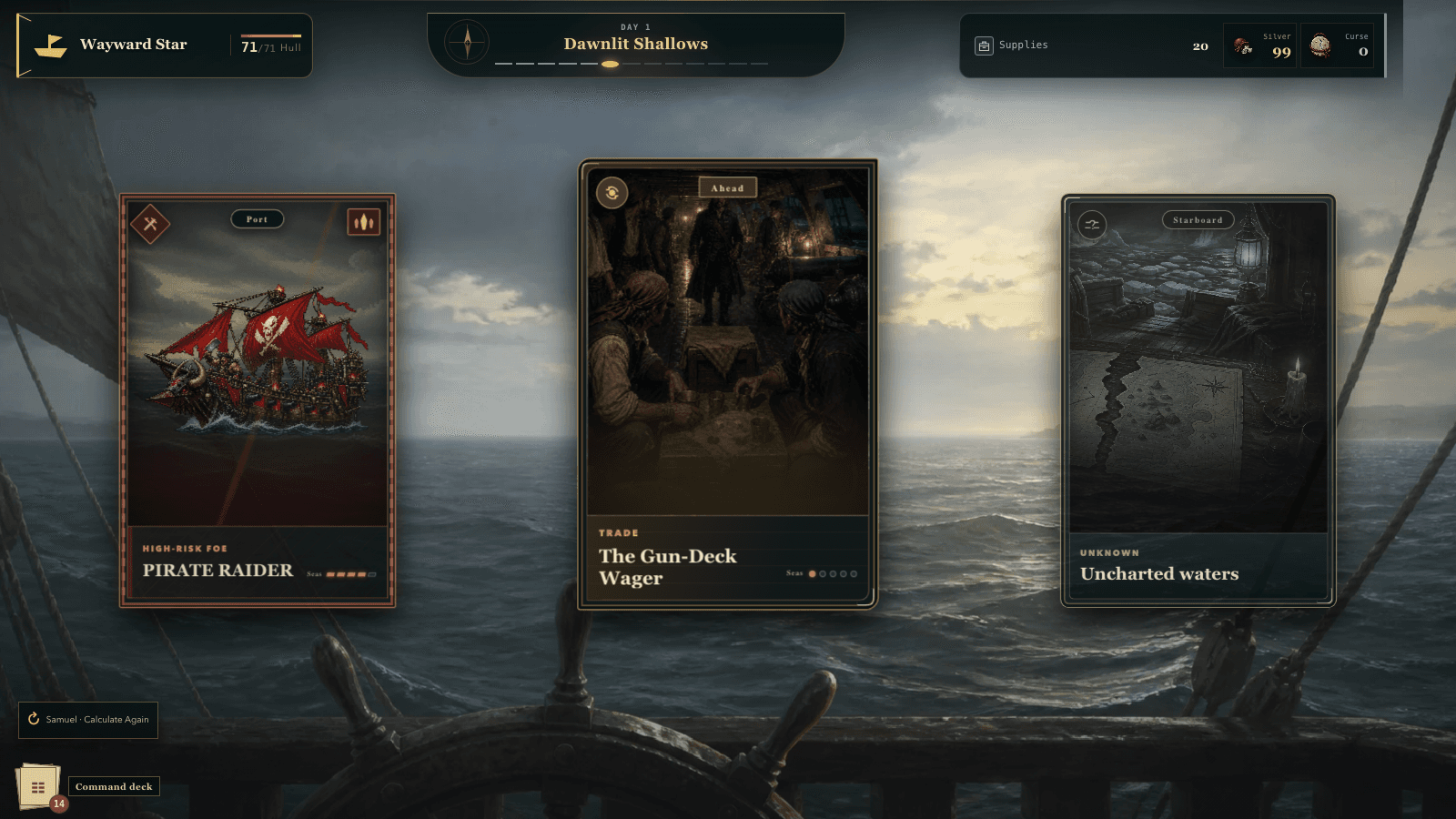
01A turn-based naval roguelike. Build a command deck, recruit crew and carry each hard choice into the next sea.
 02
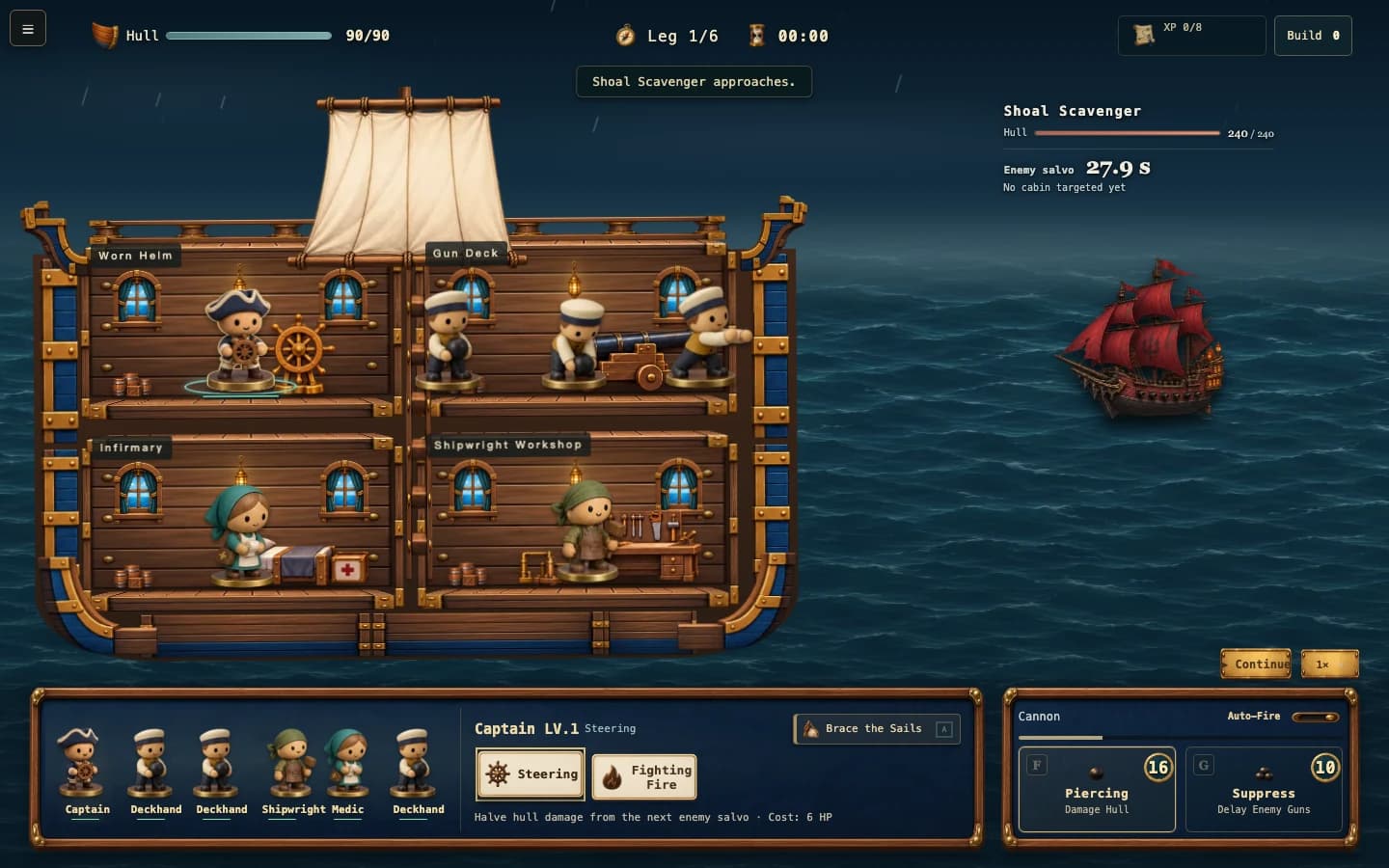
02Move six companions between ship stations, survive enemy fire and bring a battered vessel home.
 03
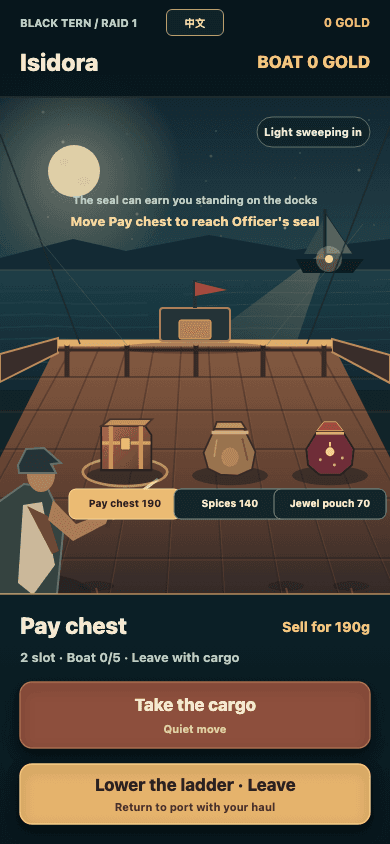
03Raid merchant ships, escape patrols and decide what becomes of your loot.
 04
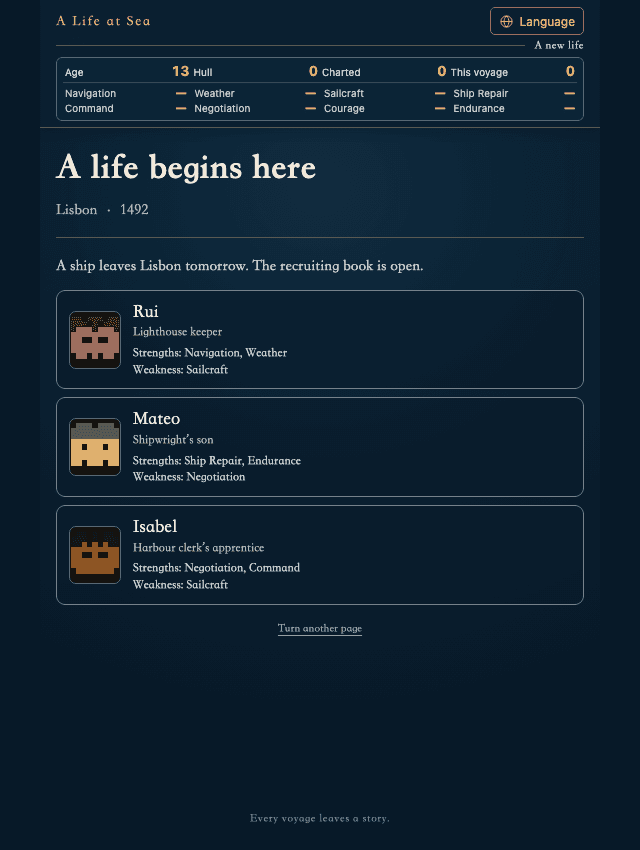
04Choose a background, build eight skills, take a companion and ship, then live a captain’s career.
03 / ABOUT THE GAMES
Age of Seas is a collection of single-player sailing, pirate and naval games you can play in your browser. Command a ship in a short battle, build a captain through life choices, escape with stolen cargo or keep a crew working through a dangerous voyage. Each game has its own rules and a different kind of decision to make.
Start with the naval battle on this page, or choose one of the longer voyages. A Life at Sea follows a sailor's career; Black Tern follows a pirate life; Beyond the Chart combines turn-based naval combat with deckbuilding; Salt & Oath gives you real-time control of a ship's crew, with pause to plan your orders. Complete runs are available free, with new-run limits explained in each game.
04 / A LIFE AT SEA / CAPTAIN CAREER
Choose a young sailor in Lisbon and grow them through story decisions. Your starting background, eight developing abilities, companion and ship shape the risks you can take. This sailing career simulator follows the person aboard the vessel, from youth to discovery, retirement or loss at sea.
Five young sailors have different strengths and first events. Each recruiting page offers three; read their cards before committing.
Youth choices build Navigation, Weather, Sailcraft, Ship Repair, Command, Negotiation, Courage and Endurance, and leave remembered experiences.
Take a companion and ship, choose a route and answer sea crises. Explore landfalls and decide when another discovery is worth the risk of continuing.
05 / FIND YOUR GAME
Choose by the decisions you enjoy. A quick ship battle, a text-based life and a naval deckbuilder ask different things of the player.
| Game | Your main decision | Pace | Start here if you enjoy |
|---|---|---|---|
| Naval Battle ↗ | Steer, time a broadside and order an ally in a 2 vs 2 ship fight. | Real-time · Up to 60 seconds | Direct ship combat and short sessions |
| A Life at Sea ↗ | Build a sailor's abilities and choose how to live a captain's career. | Text adventure · At your own pace | Character growth, story choices and exploration |
| Black Tern ↗ | Pick cargo, escape the patrol and choose what the loot changes in port. | Short raids · A continuing pirate life | Pirate heists, trophies and risk versus reward |
| Beyond the Chart ↗ | Read enemy intent, build a command deck and refit one ship across a run. | Turn-based · Roguelike voyage | Card combinations and deliberate naval strategy |
| Salt & Oath ↗ | Move companions between ship stations and balance firepower with survival. | Real-time with pause · Six battles | Crew management and shipboard tactics |
06 / HOW IT PLAYS
The sea creates different problems in each game. Read the current situation, make a decision and carry its consequences into the next encounter.
In Career, a route choice and a crisis draw on the captain you have grown. Your abilities, companion and ship condition matter alongside the chance to discover more. Returning to port can let a surviving captain prepare for another expedition.
Read the sailing career guide →Beyond the Chart gives you time to read an enemy's intention and choose command cards. Your deck, installed modules, crew and relics change through the voyage, so an immediate battle decision also belongs to the build you are developing.
Explore the pirate roguelike card game →Salt & Oath tracks people inside the ship. Moving someone away from incoming fire can leave a station short-handed; treating injuries and controlling damage compete with loading the guns. Pause when you need time to arrange orders.
Learn real-time crew tactics →07 / GAME GUIDES
Use these game guides to understand a choice before making it. Start with character building, a specific combat style or a browser pirate voyage.
Compare sailor backgrounds and shape a character through youth, companions and ship choices.
02Understand the eight abilities and how youth decisions and port preparation develop them.
03Read crises, explore landfalls and decide whether to continue or return to port.
04See how ship condition, command cards and enemy intent shape a naval encounter.
05Explore Beyond the Chart's pirate voyage and find the right game for your preferred pace.
06Compare opportunities and hazards before committing your ship to the next route.
08 / FAQ
You can play complete runs free. Free starts have daily and weekly limits, shown in each game; an unfinished life or voyage can be resumed where that game supports it. Age of Seas PRO costs $7.99 once and unlocks unlimited new runs across the games.
No download is needed for these browser games. Open a game's page to find its play button, controls and available language options.
The games have browser interfaces for mobile and desktop. Naval Battle has on-screen controls, while Career uses story choices. For games with more ship or crew information, a larger screen can make the layout easier to read.
In A Life at Sea, choose a young sailor with an existing background, then shape their abilities and experiences through decisions. You can select a companion and ship later. Character building happens through the life you play; there is no free-form starting stat editor.
The games focus on decisions, stories and combat. Naval Battle includes helm and sail settings; other games use route choices, cards or crew orders. They do not offer a full manual sail-trim and seamanship training simulation.
They are separate games. Naval Battle is a short real-time ship fight, Beyond the Chart is a turn-based naval deckbuilder, and Salt & Oath is a longer real-time crew tactics voyage with pause.
A Life at Sea saves the current life in the browser where you play it. Return with the same browser to continue; clearing the site's data removes that local save. Check each other game's own instructions for its save options.
09 / Choose your voyage