 crew
crewThe lee shore is closing while a man drifts astern
Sailing
Sail handling, steering and lookout work keep the ship moving.
Maintenance
Carpenters and sail-and-rope specialists continually address wear and damage.
Stores
Food, water, cooking and hygiene determine the voyage’s practical limit.
Deck routine translated an officer's order into a vessel ready to answer it
Cordage loaded and unloaded on every watch, timber alternately dried and soaked, canvas chafed and people and stores crossed the working deck. The boatswain held responsibility for anchors, cables, sails, rigging, boats and their stores; his mates called and directed hands while the officer of the watch chose the navigational moment. Able and ordinary seamen executed the work, but this did not create one universal historical rating called deck worker.
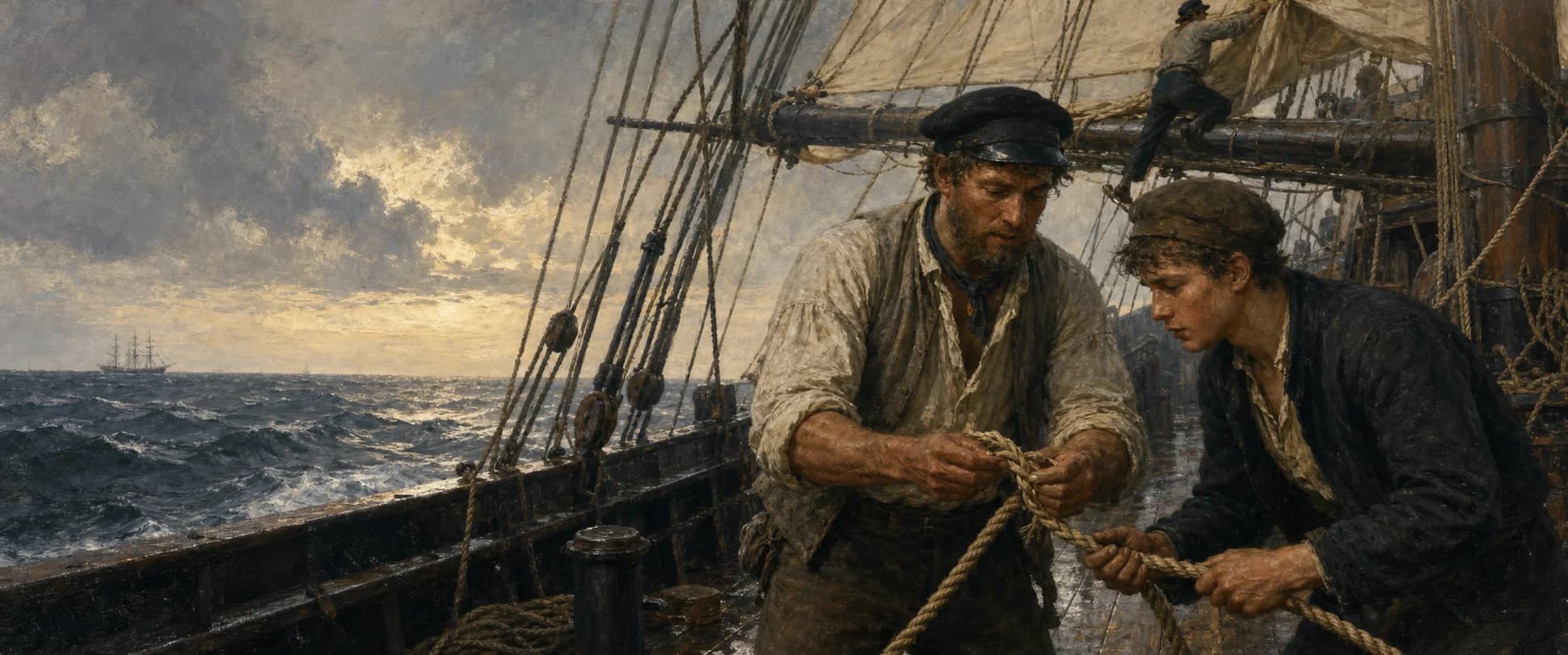
Coiling line, opening drainage, securing casks, inspecting blocks and washing decks looked repetitive in calm weather. Their purpose appeared when a turn, squall or urgent boat launch arrived. A foul coil could jam as it ran, loose gear became a missile in a roll, and blocked scuppers trapped water on deck. Cleanliness here was first a condition of access and control.
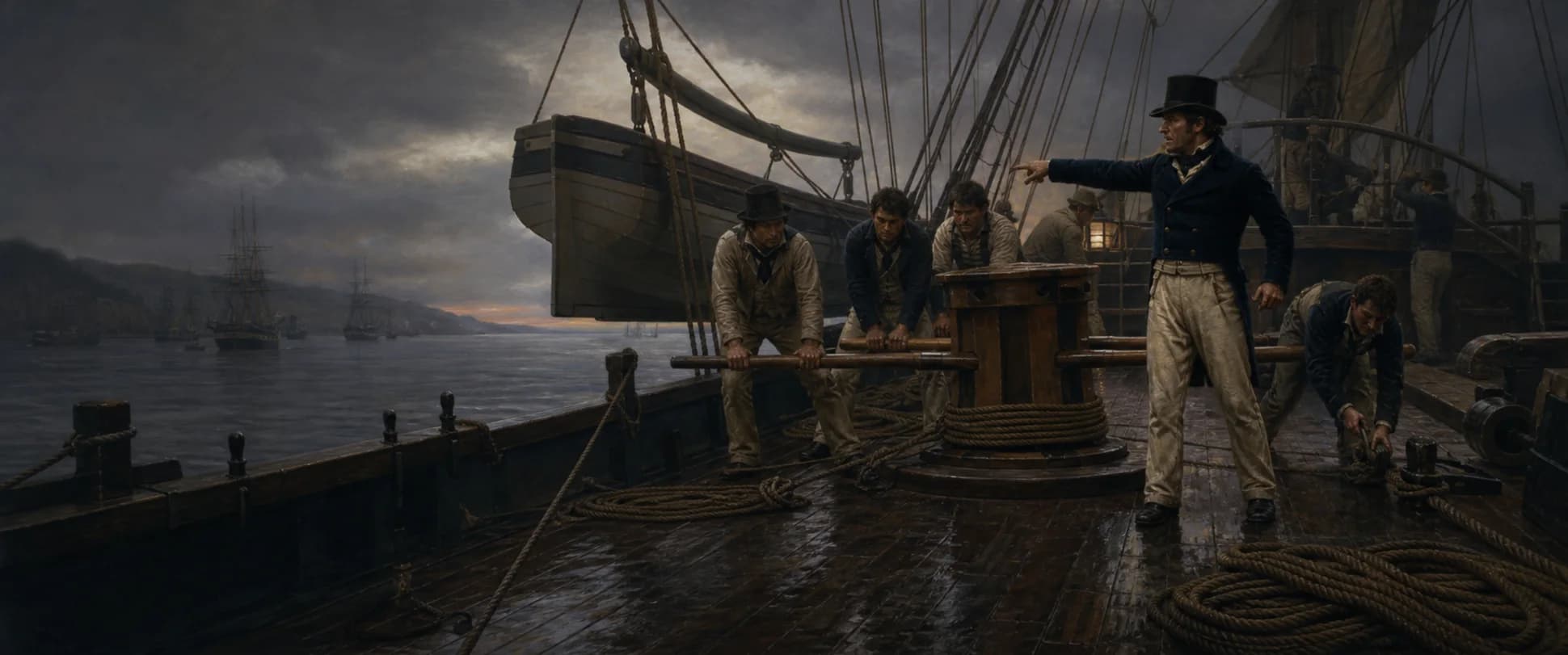
Letting go began with choosing ground, then controlling heavy gear as it ran
The officer and navigator compared depth, tidal range, bottom, wind and sea, distance off hazards and the circle the ship would describe. Holding depended on anchor design, seabed, the way the fluke entered and the length and direction of cable—not weight alone. Before the order, hands cleared the path, checked cable, stoppers and machinery and kept bodies away from a line that might surge.
Anchor and cable then had to run under control rather than drag capstan, rail or sailor with them. The vessel moved astern so cable lay out and pulled the anchor more nearly along the bottom. Bearings, soundings and the lead of the cable showed whether it had bitten or was dragging. A change of tide could swing the hull and foul a cable around anchor, keel or another mooring.
Weighing brought the ship toward the anchor before trying to break it out
Capstan or windlass hauled wet cable aboard while stoppers held each gain. Sail, helm or boats helped the ship move along the cable, reducing the task from towing the whole hull to lifting once the cable stood nearly upright. Breaking the anchor out was followed by catting, securing and clearing cable; getting under way did not happen at one shout.
Large vessels carried several anchors for different purposes. Kedging sent a lighter anchor ahead in a boat and hauled the ship toward it. It could shift a becalmed vessel, assist in narrow water or help refloat a grounding, but only over short distances and at high cost in people, boat capacity and time.
A ship's boat was transport, work platform and tactical craft before it was a lifeboat
Launch, cutter, barge, gig and yawl varied by service and date. They moved officers, pilots, water and mail; towed the mother ship; sounded approaches; recovered people; inspected strangers and carried landing forces. A coxswain ordered the boat, but the ship's command still defined the mission.
Launching meant freeing covers and gripes, loading oars, rudder, boat hooks, line and mission equipment, then keeping both lifting points balanced. A rolling ship could put one end in the sea early and wrench the boat sideways. Recovery required coming alongside a moving wall, hooking on and hoisting between crests. In hard weather, sending a boat could be more dangerous than the problem it was meant to inspect.
Cross-trained hands had to switch from maintenance to competing emergencies
Able seamen took difficult helm, boat and rope positions while ordinary seamen learned under supervision. Scrubbing, scraping, coating, checking rope ends and assisting craftsmen kept waterways open and revealed wear before failure. These were part of seamanship because the equipment had to remain identifiable and reachable in darkness or rain.
The hard decision came when work collided: a lee shore called for anchors, a man overboard called for a boat and a squall called for sail reduction. Officers and boatswain decided priorities, retained enough hands at helm and running cable and cancelled a boat mission when necessary. Good deck organization meant reliable reassignment and handover, not one person repeating one chore forever.
Questions
Continue exploring this subject
Did a sailing ship simply throw its anchor overboard?
No. The crew selected ground, prepared cable and stoppers, controlled the run, paid out an appropriate scope and then checked bearings, depth and cable lead for dragging.
Why did weighing anchor need a capstan and so many people?
Anchor and wet cable were heavy and the seabed resisted. Machinery supplied leverage while separate hands hauled, stopped cable, handled sail and secured the anchor.
Were ship's boats mainly lifeboats?
No. Their routine work was transport, watering, towing, sounding, boarding and landing. They could rescue people but often could not carry the entire ship's company.
What did kedging mean?
A boat carried an anchor ahead and the ship hauled on its cable to move in calm, confined water or during refloating. It was slow, short-range and labour intensive.
Why wash a wooden deck so often?
Beyond hygiene, cleaning kept routes and drains open, reduced slipping and decay and exposed loose fastenings, worn rope and damaged timber.
Sources
Continue the research
- Ranks + Rates: BoatswainUSS Constitution Museum
- Good CallUSS Constitution Museum
- Whaleboats for ConstitutionUSS Constitution Museum
- The Kedge-Anchor; or, Young Sailors’ AssistantProject Gutenberg
- The Seaman's FriendProject Gutenberg
- The Elements and Practice of Rigging and SeamanshipSmithsonian Libraries and Archives
 01
01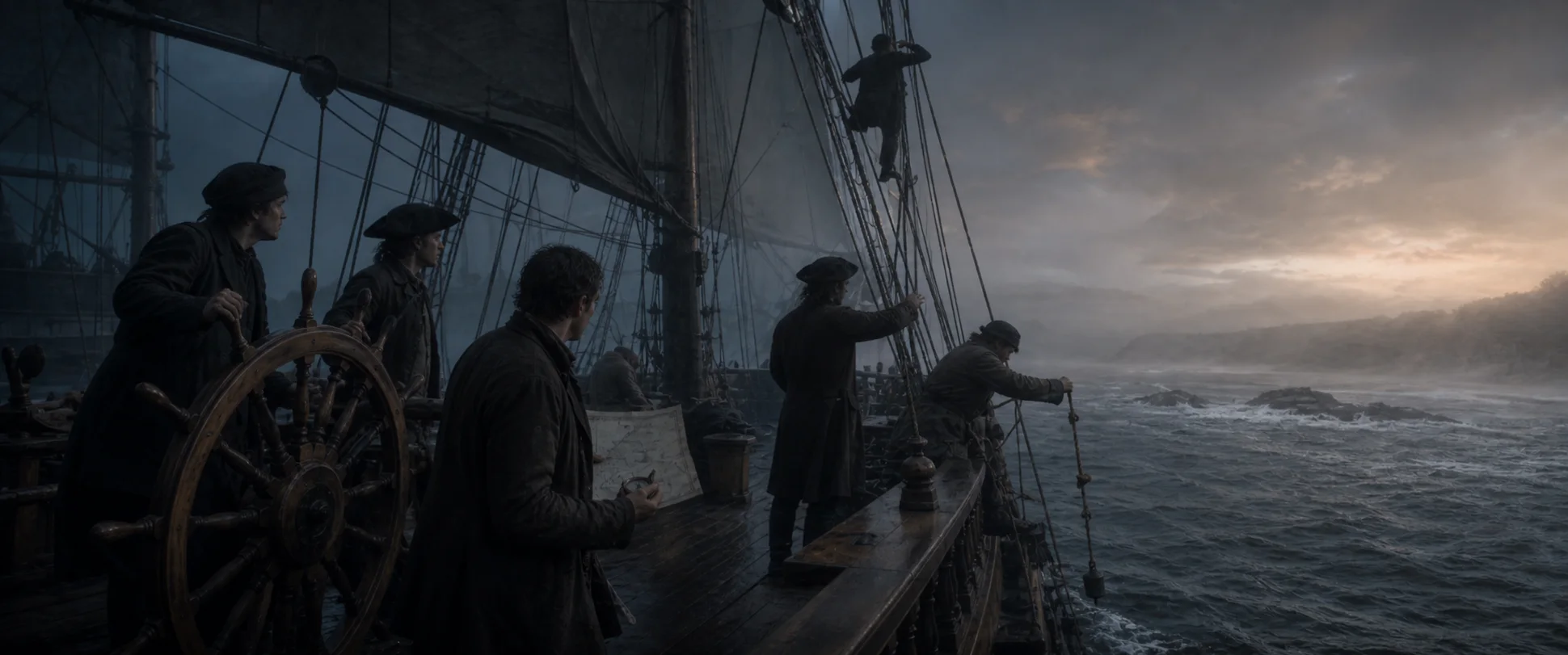 02
02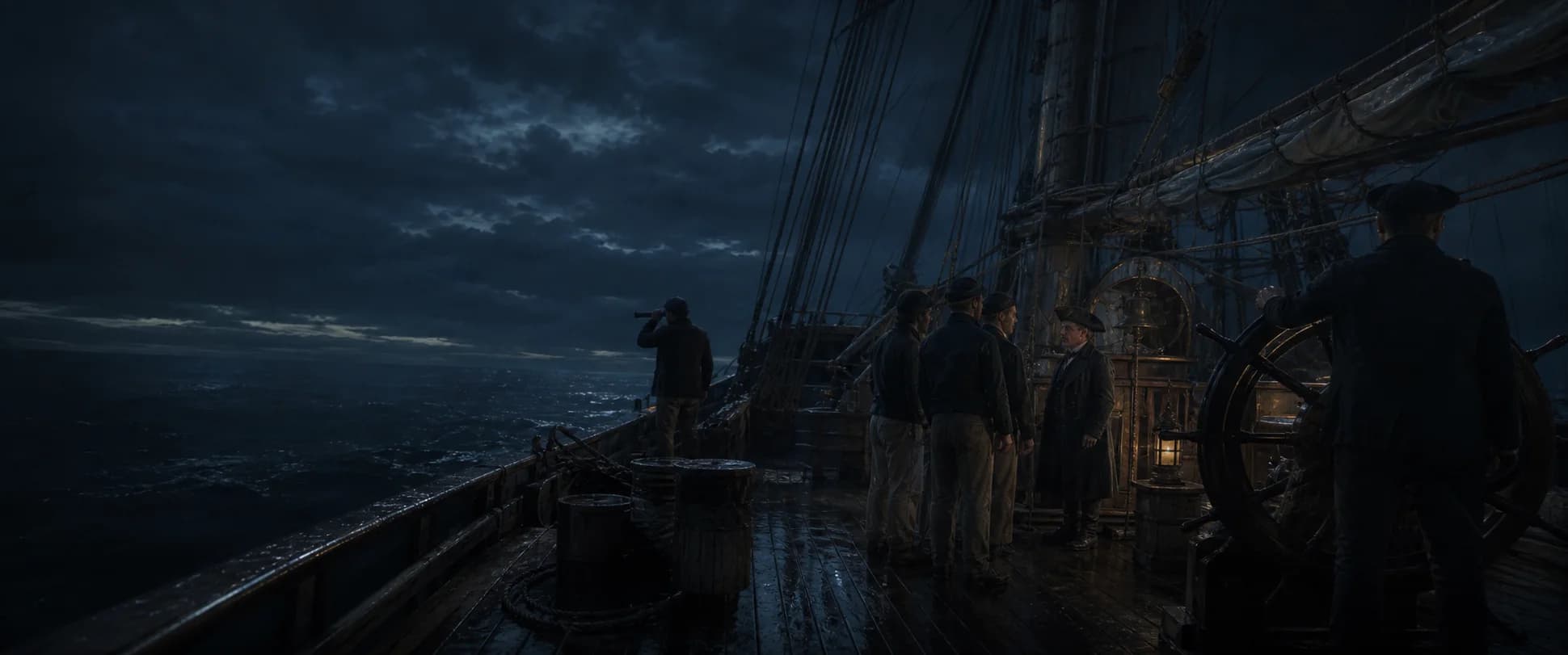 03
03 04
04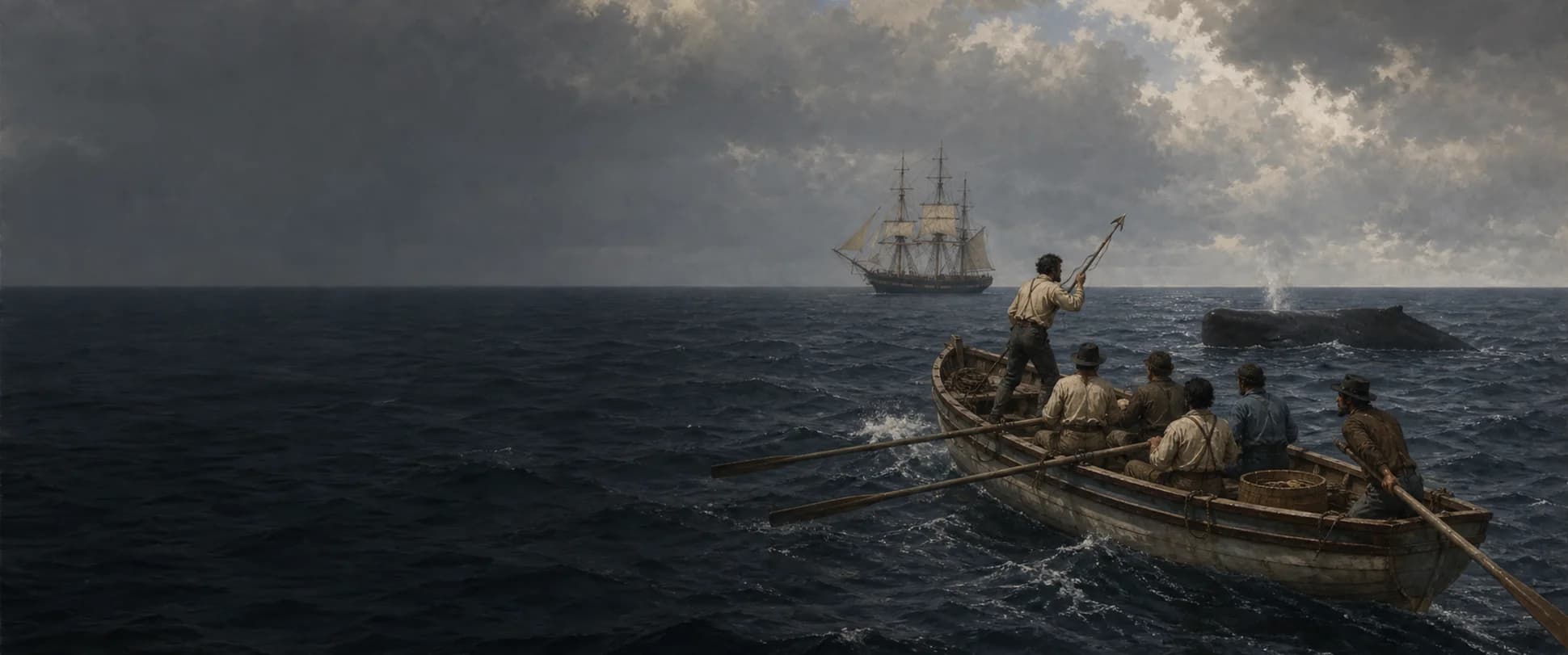 05
05