 crew
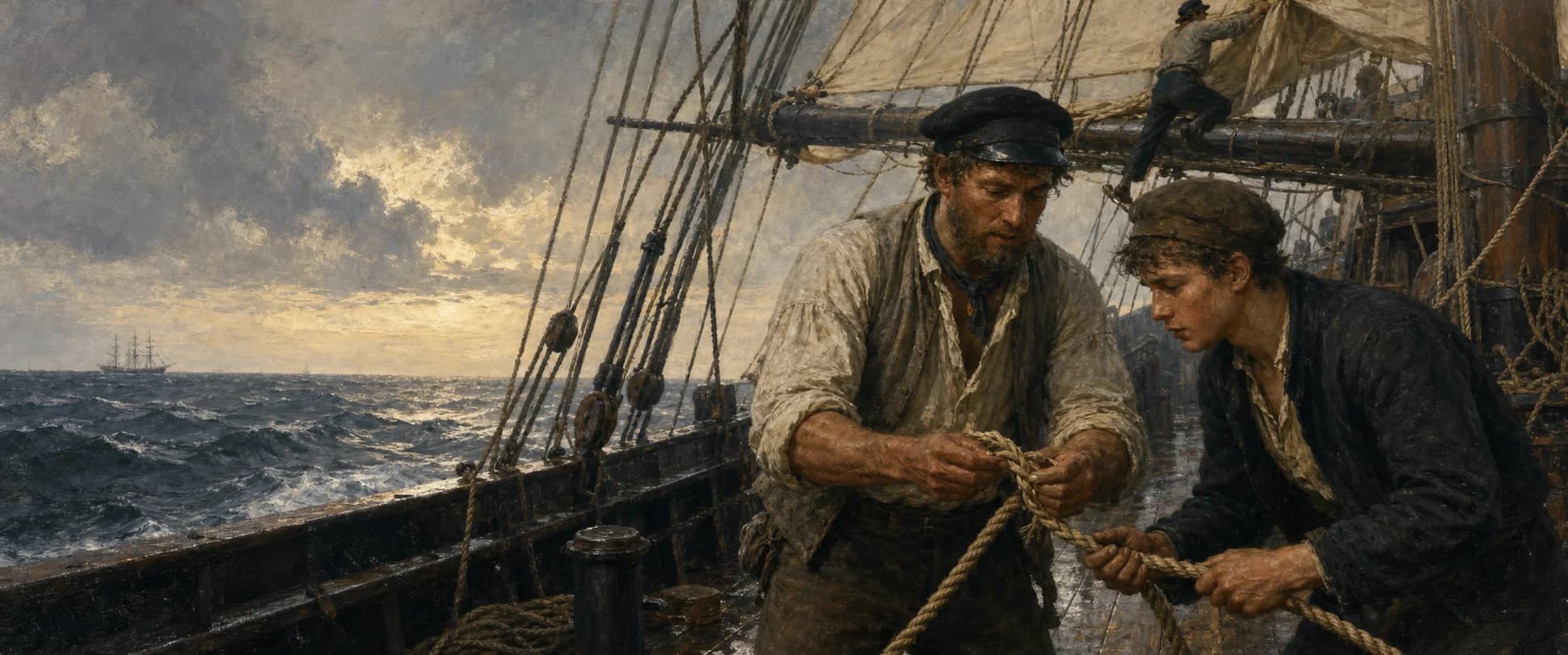
crewThe squall line is closing and the best topman has just been injured
Sailing
Sail handling, steering and lookout work keep the ship moving.
Maintenance
Carpenters and sail-and-rope specialists continually address wear and damage.
Stores
Food, water, cooking and hygiene determine the voyage’s practical limit.
The distinction rated contracted skill and pay, not merely strength or years at sea
Nineteenth-century English-language merchant crews commonly distinguished able seamen, ordinary seamen and boys or green hands. Ordinary meant short of the complete standard, not limited to sweeping. Able meant fit for expected seaman's work rather than simply able-bodied. The shipping articles used the claim to organize wages and the crew's capacity.
Dana described American merchant practice and warned that a deep-water ship demanded more than a short-route coaster. Navies also used landsman, apprentice and national ratings. The evidence gives a practical comparison, not one timeless global certificate.
An able seaman had to hand, reef and steer when conditions became difficult
The familiar phrase covered making and furling sail, reducing it in rising wind and holding a course. An AB knew principal standing and running rigging, reeved lines, sent spars up or down, worked boats and took the bunt or earing on important sails. Heavy weather and a difficult helm exposed whether the claim was real.
No AB replaced every specialist. The rating meant the watch officer could assign a complex routine job and expect anticipation, error detection and care for less experienced hands. Particular helmsmen, topmen and marline-spike workers still stood out among able seamen.
An ordinary seaman already worked the watch but needed support at the highest-risk stations
Dana expected an ordinary seaman to steer and box the compass in ordinary circumstances, know the ship's rigging, handle lighter sails, make common hitches and bends and perform simple rope work. He might take a corner on a small yard but not displace an AB at the hardest bunt or earing on a great course or topsail.
The boundary was often one of operating envelope. Both worked in fair weather. As the ship became hard to steer, canvas flogged and orders arrived quickly, the ordinary hand needed closer direction and checking. Repeated safe performance under pressure, not one dramatic storm, justified the higher rating.
Overrating offered wages at signing and transferred danger to the whole watch
A merchant seafarer could contract at the rating he claimed. Incompetence discovered offshore meant someone else had to take the wheel, line or yard. Dana wrote that a false claim could be reduced to the proper grade and wages, with further deductions for deception and the resulting loss of service.
Owners could also underrate workers to suppress pay or demand work beyond a fair grade. A muster or wage book is therefore both a skill clue and a labour document. Logs, casualties and later voyages are needed before two letters become a full biography.
Progress came from working across the vessel, not memorizing an isolated knot list
The ordinary seaman rotated through helm, lookout, sail, boat, anchor and maintenance until he understood where each working line led, how canvas loaded and why orders came in sequence. Boatswains and experienced hands taught by demonstration, correction and graduated responsibility. Small crews offered broader exposure; large ships provided more specialized stations.
Reliable work in fair and foul conditions, support for green hands and competent rope repair approached the able standard. An AB could later seek boatswain's mate, sailmaker, carpenter's mate or mate work, but able seaman was also a durable occupation. Not every skilled deck worker was an unfinished officer.
Questions
Continue exploring this subject
Was an ordinary seaman a complete beginner?
No. He normally had watch, helm, sail and knot ability beyond a green hand, but had not proved the complete AB range in difficult work.
What defined an able seaman?
Hand, reef and steer was the shorthand. Full competence also included rigging, responsible sail stations, rope work, spars, boats and independent work in heavy weather.
Was an AB always older?
No. Rating followed experience and ability more than age. A trained young seafarer could outrank an older first-voyage hand.
Could an ordinary seaman steer?
Yes, in normal circumstances. A hard-steering vessel or severe weather called for the strongest helmsmen.
How long did promotion to AB take?
There was no universal historical duration. Voyages, vessel, training, demonstrated work and employer judgment mattered before later national rules formalized sea time.
Sources
Continue the research
- The Seaman's FriendProject Gutenberg
- The Sailor's Word-BookProject Gutenberg
- Officers of Peculiar SkillNaval History and Heritage Command
- Ranks + RatesUSS Constitution Museum
- Two Years Before the MastProject Gutenberg
- Life at sea in the age of sailRoyal Museums Greenwich
 01
01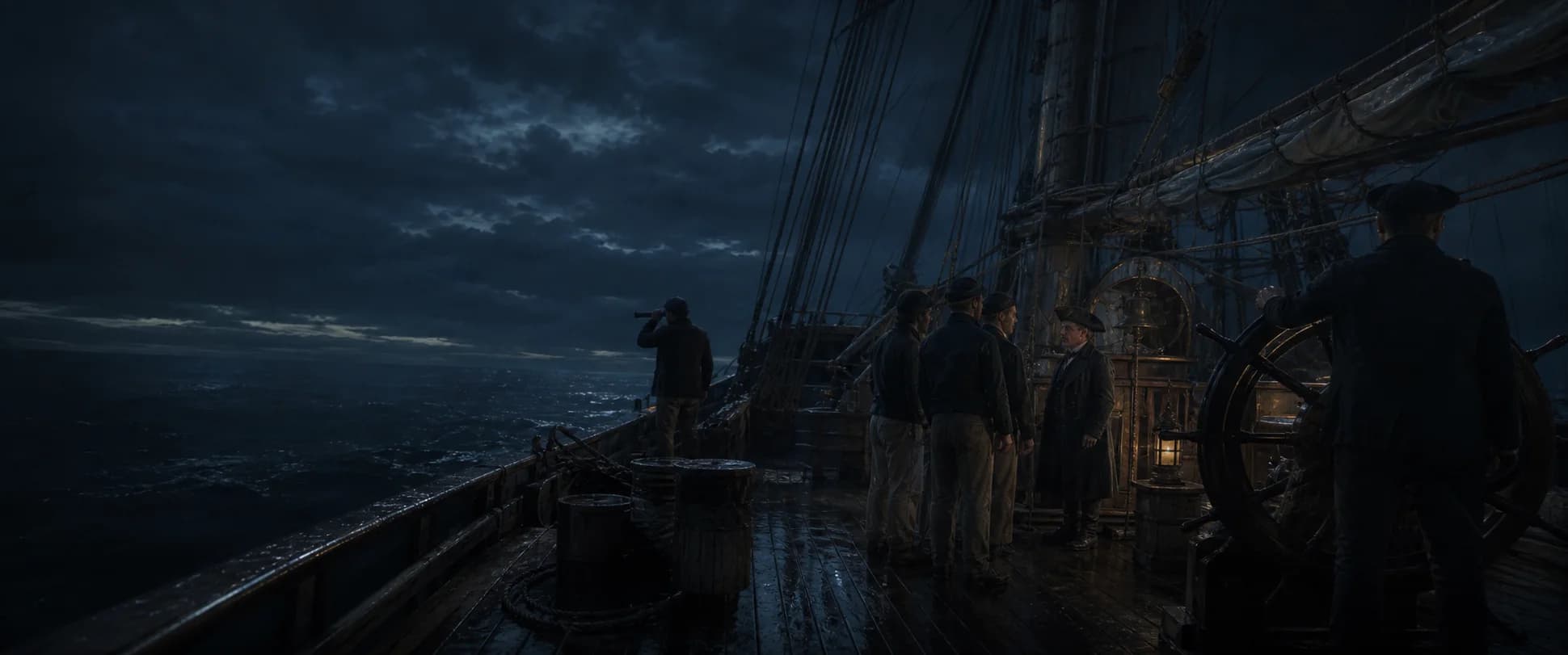 03
03 04
04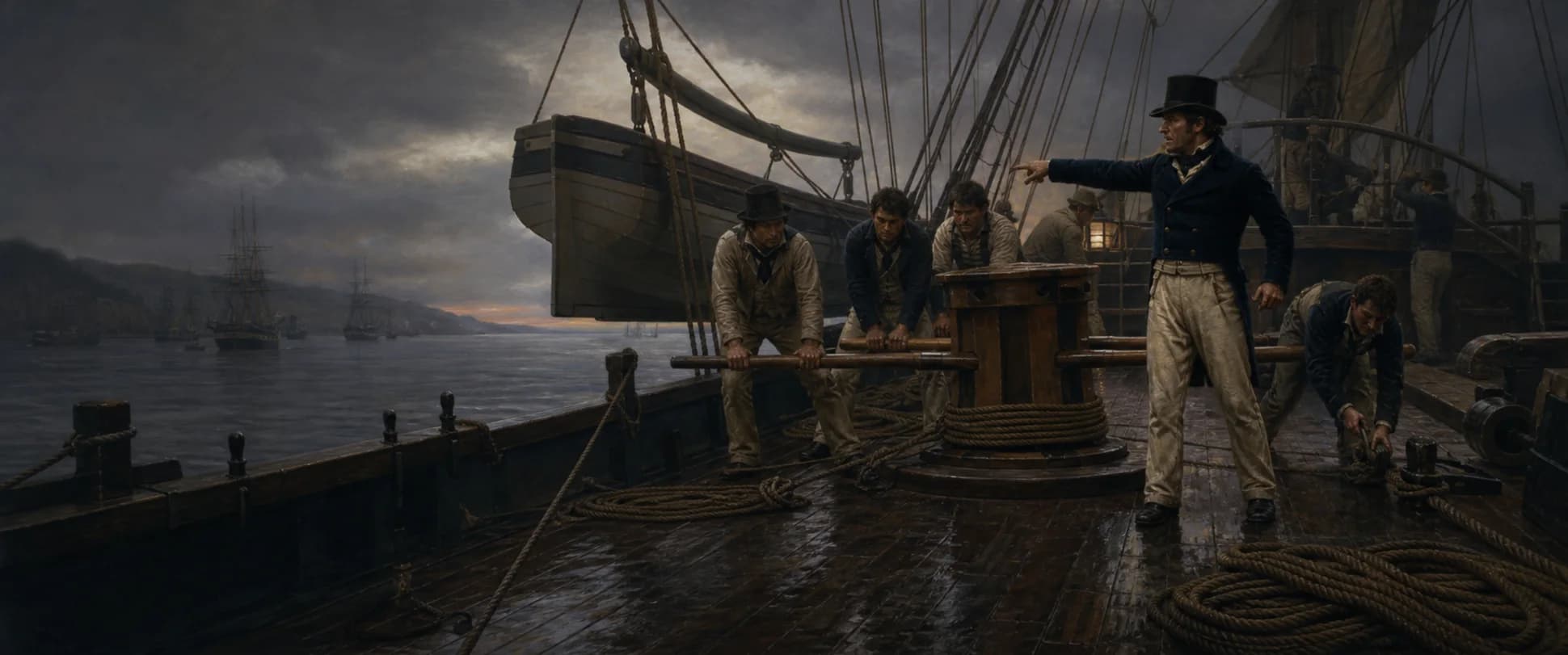 05
05