 compass
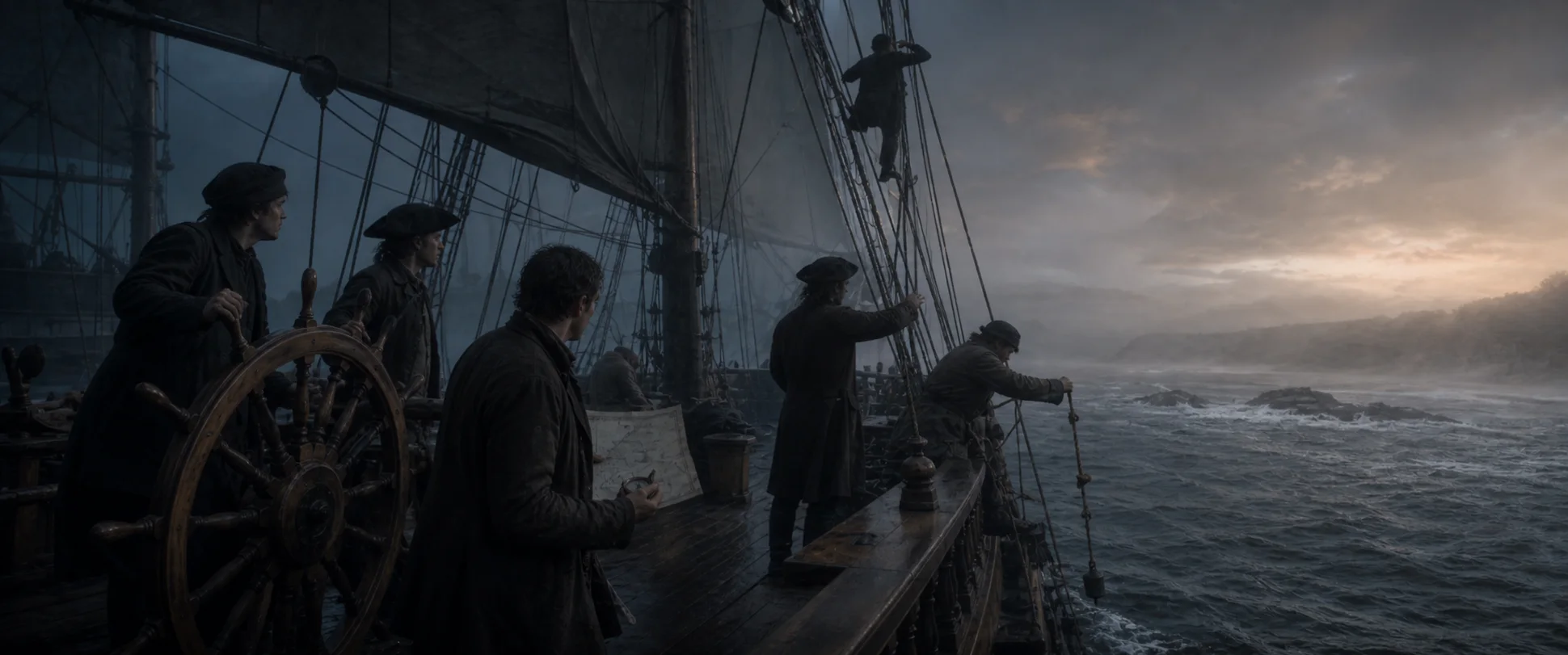
The lead falls from twelve fathoms to nine, but the shore remains hidden
North
Magnetic north still differs from geographic north.
East
Compass points divide the circle into usable steering commands.
South
A stable reading can still be affected by the ship’s motion.
West
Heading must be recorded together with speed and time.
The lookout moved danger from the horizon into the command chain
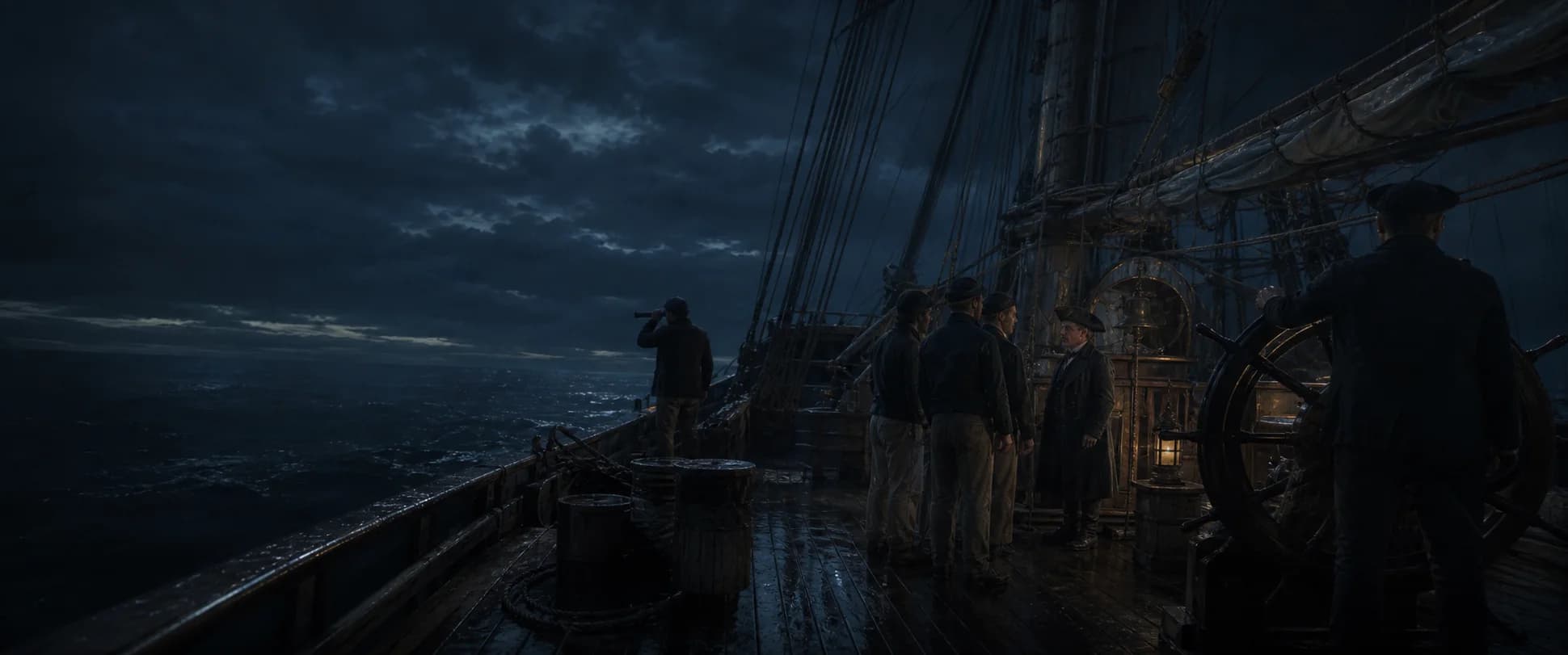
Keeping lookout meant systematic search rather than casual gazing. A watchkeeper scanned ahead, abeam and astern for sails, land, lights, debris, broken water and weather, then reported relative bearing and identifying detail without delay. A sighting that never reached the officer of the watch had not yet become navigational information.
Glare, rain, moonless darkness and the vessel's own canvas left blind sectors. Height extended the horizon but exposed a lookout to motion, weather and obstructing rigging. A large ship could cover several stations; a small crew had to rotate limited eyes. Effective lookout joined perception, practiced language and a receiver ready to act.
The helmsman held an ordered heading, not the final track
At wheel or tiller, the helmsman watched the compass and the bow's response, applying small corrections to keep the ordered course. Waves knocked the head aside, while wind pressure and unbalanced canvas changed helm load. Skilled steering anticipated the swing instead of waiting for a large error and chasing it with larger movements.
Compass heading was not the track drawn over the seabed. Variation, deviation, leeway, current and steering error all displaced the vessel. The helmsman made an order repeatable; the watch officer and navigator judged whether that order still carried the ship through safe water.
Log and glass turned an impression of motion into cumulative distance
The chip log, marked line, reel and sandglass required coordinated hands. A drag board was streamed astern, line paid out, and the marks passing during the timed interval were counted. The result estimated speed through the surrounding water and entered dead reckoning with course and elapsed time.
Wet line stretched, glasses varied and sea state altered the operation. Even a perfect reading did not reveal current carrying the whole water mass. One cast was an input, not a position. Repetition, written record and later comparison with a landmark or celestial observation made accumulated error visible.
The lead line reported depth and, sometimes, the nature of the bottom
A sounding lead descended until it touched bottom. Distinctive materials and knot patterns on the line let a leadsman read depth by touch in darkness and spray. Tallow in the hollow beneath the lead could bring up mud, sand, shell or gravel to compare with a chart or sailing direction.
Sounding continued while approaching shoal water, making land in fog or crossing an uncertain channel. A decreasing series could matter more than one isolated number. The watch officer also had to allow for draught, swell, tide, speed and turning distance; waiting for a dangerous call before changing course could already be too late.
The officer of the watch compressed many reports into one executable decision
Course, log reading, sounding, lookout report, wind, canvas and standing orders converged on the watch officer. The next decision might be to continue, alter course, shorten sail, ready an anchor, double the lookout or call the captain. The officer did not have to decide every difficult question alone, but had to recognize when routine authority had ended.
Sailing masters, captains and mates divided these duties differently across navies, merchant services, periods and vessel sizes. The robust model is therefore a loop, not one universal rank chart: observe, report, decide, execute, then observe again. A safe landfall emerged only while every link continued to work.
Questions
Continue exploring this subject
Who actually drove an age-of-sail ship?
The helmsman handled the steering gear, the watch officer ordered the course, a sailing master or navigator managed route and position, and the captain held final command. One person could combine roles on a small vessel.
Why did a lookout report a bearing?
Relative bearing located a target around the vessel and helped the watch judge whether it was opening, passing or remaining steady as range closed.
Did a sounding lead measure only depth?
It could also collect a bottom sample in tallow, letting a navigator compare mud, sand, shell or gravel with chart and sailing-direction descriptions.
Why could dead reckoning be wrong after measuring speed?
A chip log mainly measured motion through local water. Current, leeway, compass and timing error still separated the estimated course from the actual track.
When did the officer of the watch call the captain?
Night orders varied, but deteriorating weather, poor visibility, an unfamiliar sighting, landfall or unexpected soundings commonly required prompt escalation.
Sources
Continue the research
- Knots: measuring speed at seaRoyal Museums Greenwich
- Log and lineRoyal Museums Greenwich
- Sounding machineRoyal Museums Greenwich
- Practical Sailing and Motor-BoatingLibrary of Congress
- Two Years Before the MastProject Gutenberg
 01
01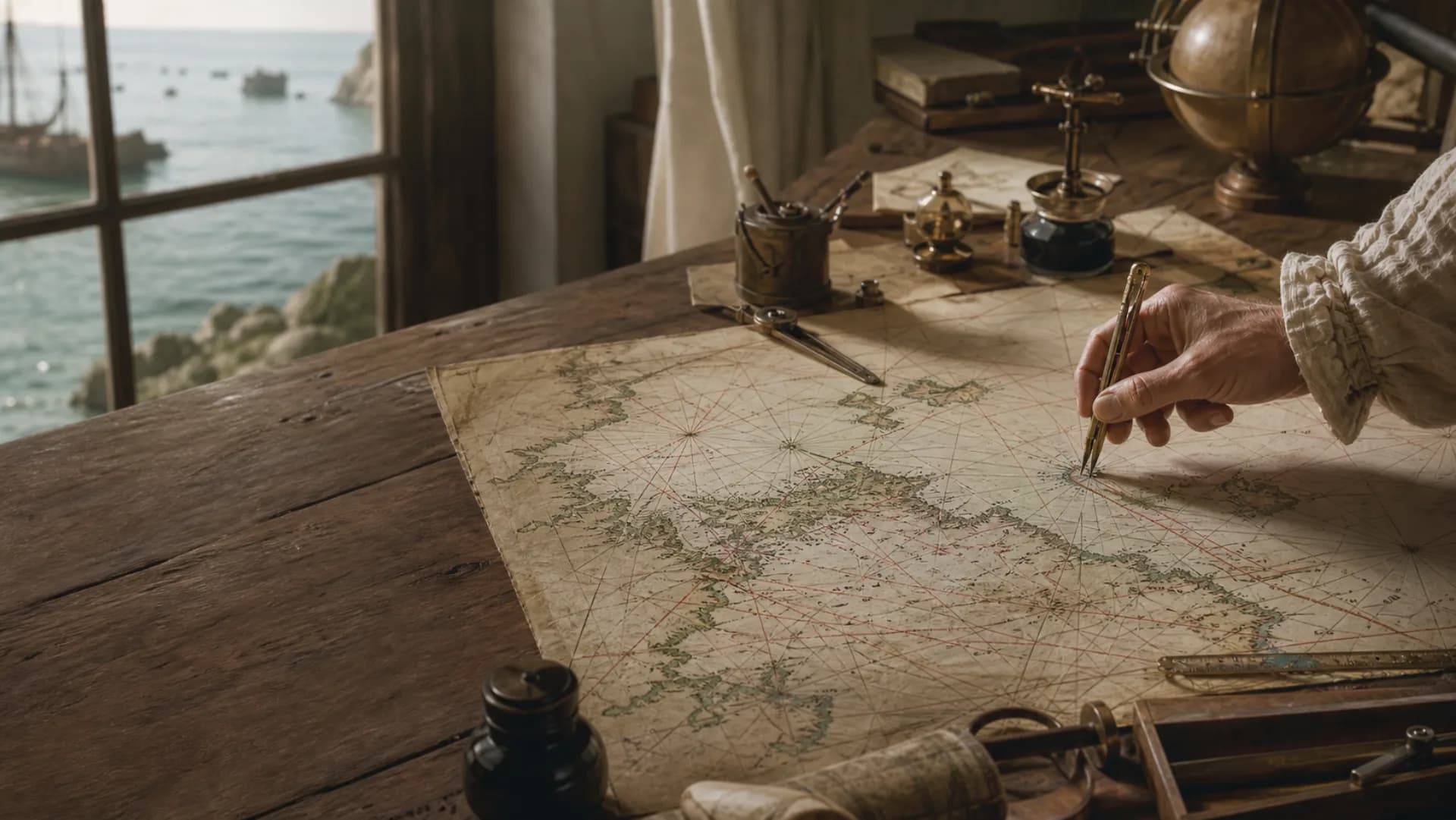 02
02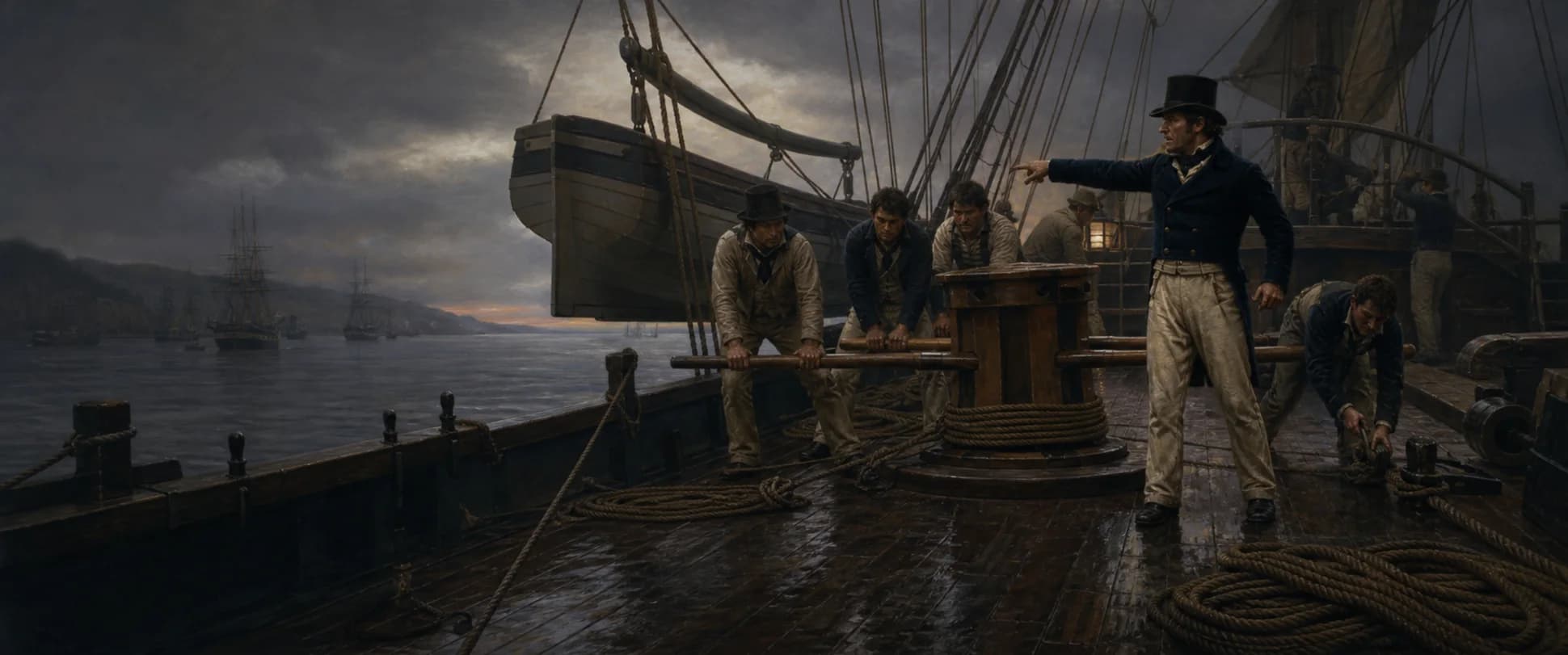 05
05