 crew
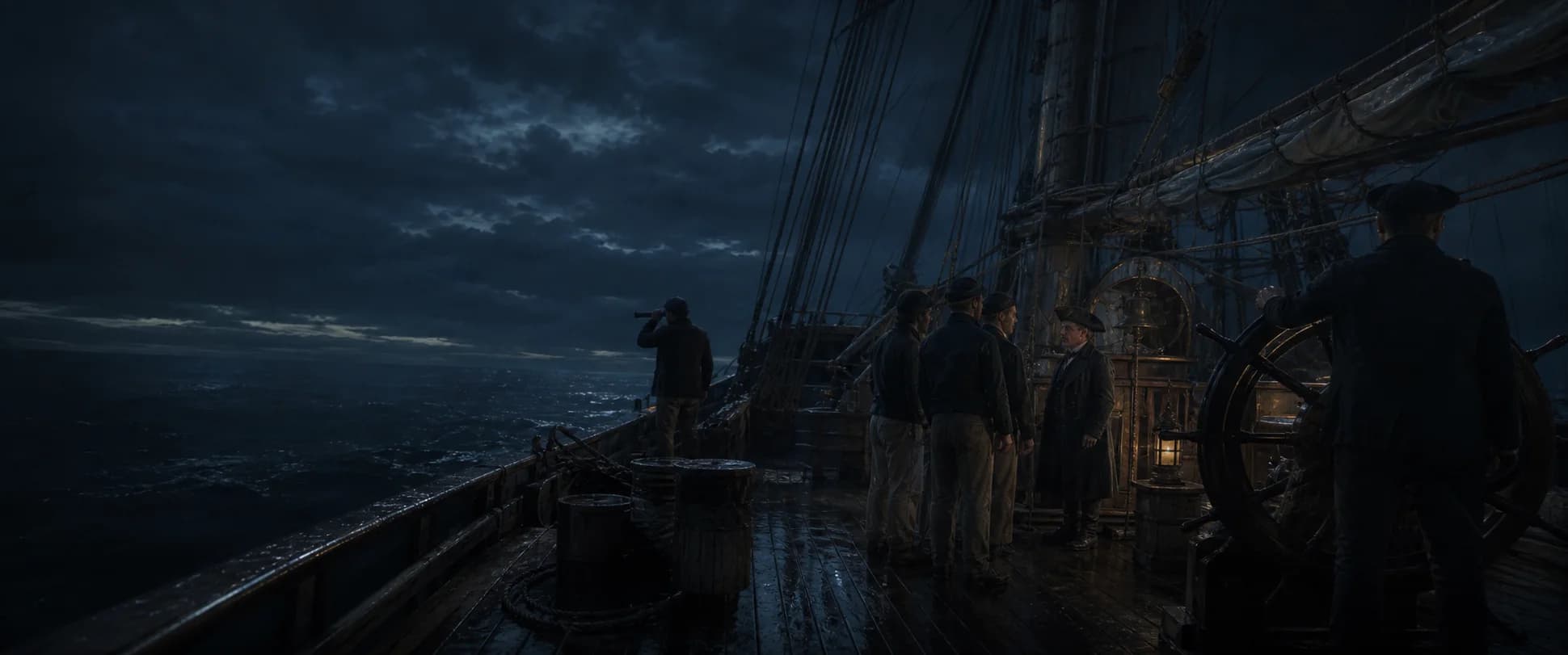
crewEight bells have sounded and an unknown light appears through the fog
Sailing
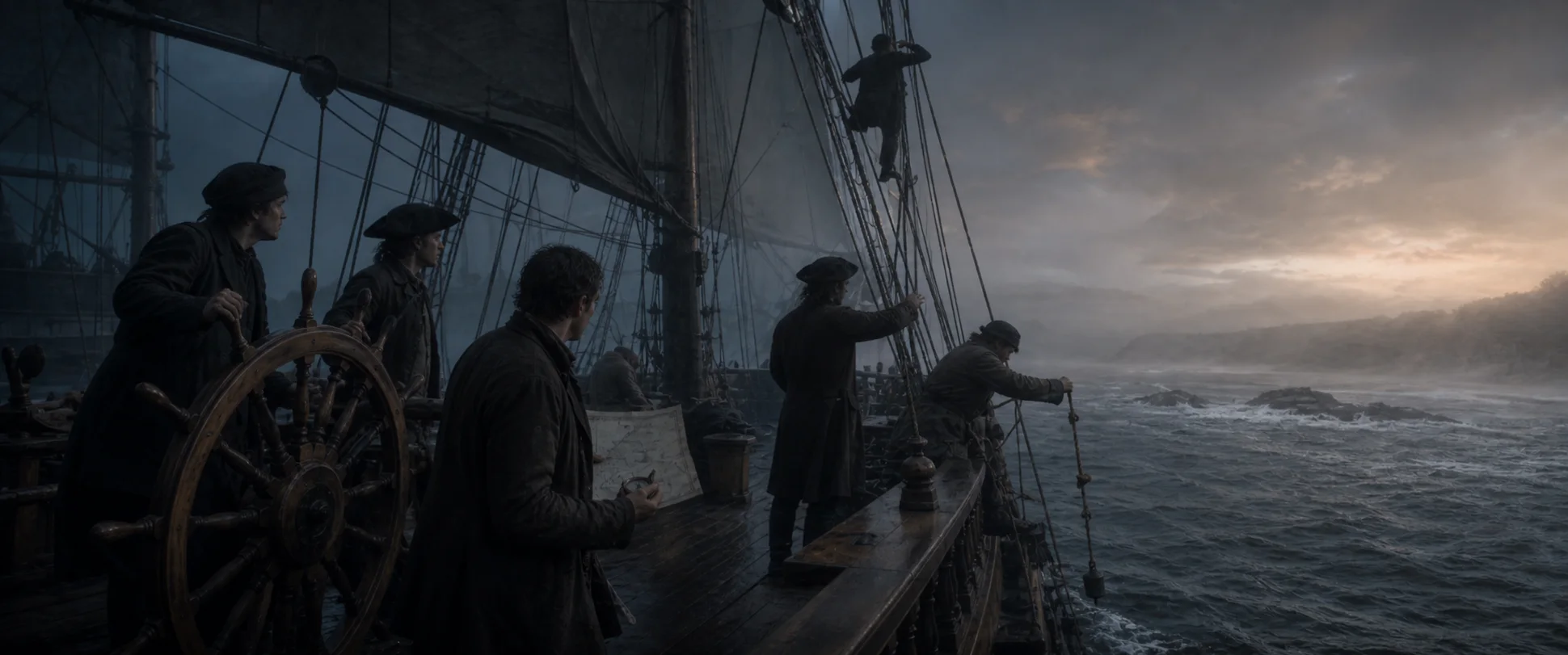
Sail handling, steering and lookout work keep the ship moving.
Maintenance
Carpenters and sail-and-rope specialists continually address wear and damage.
Stores
Food, water, cooking and hygiene determine the voyage’s practical limit.
Two watches sustained a chain of responsibility that could not stop
A vessel did not stop advancing when most of its people went below. Someone had to keep the ordered course, scan ahead and aloft, monitor wind and canvas, and decide when the captain must be called. Dividing the working company into port and starboard watches became common in the Royal Navy and many merchant services: one group held the deck while the other received a limited interval below.
Watch named both the time period and the people responsible for it. A large warship could subdivide the two groups and record every station in a watch bill; a small merchant vessel merged more duties among fewer hands. Day workers such as carpenter, sailmaker or cook sometimes stood outside the ordinary night rotation, yet an all-hands evolution or emergency still brought them out.
- On watch: mate or officer, helmsman, lookouts and enough hands for the working sails
- Below: the other watch, liable to be recalled at any moment
- Day workers: carpenter, sailmaker and cook varied by vessel and service
- Overall command: the captain might stand no fixed watch but remained answerable for critical decisions
Four-hour turns and two dog watches moved the night duty each day
Richard Henry Dana's account of an 1830s merchant voyage describes the first, middle and morning watches running eight to midnight, midnight to four, and four to eight. The late-afternoon four-to-eight period could be split into two two-hour dog watches. That made seven turns rather than six equal four-hour blocks and shifted who inherited each night period on the following day.
The arrangement did not eliminate fatigue. Four hours below also contained the climb down, food, wet clothes and an attempt to sleep in a moving berth; bad weather could repeatedly call the resting watch back. Some merchant crews worked all hands through much of the day and kept strict watch-and-watch chiefly at night. Rotation kept the vessel functioning before it guaranteed anyone modern continuous rest.
Ship's bells measured progress through a watch, not one unique clock time
In a traditional four-hour watch, the bell advanced every half hour from one stroke to eight; eight bells completed the watch, and the count then began again. Four bells told a sailor that two hours of the current watch had passed. It did not identify a unique civil time unless the sailor also knew which watch was being stood.
The bell broadcast a shared rhythm through darkness and obstructing decks, supporting relief at the wheel, heaving the log, meals and watch changes. Sandglasses, observations, chronometers and logbooks carried more exact timekeeping. Details could vary by vessel, harbour routine and later service, but the working distinction remained: the bell organized the crew while instruments and records supported navigation.
A sound relief transferred the ship's present condition
The relieving watch needed the ordered course, sail plan, wind and sea state, recent lights or sail sightings, the captain's night orders, and any gear or steering problem that required attention. Helmsmen and lookouts were relieved station by station while the mate took responsibility for the deck. Waking people without transferring the situation could break the vessel's memory within minutes.
The log preserved observations that had to outlive a spoken handover. Course, speed, weather and sail changes let the navigator continue from the last accepted position and let command review when a deviation or failure began. Oral reports drove the next action; written entries preserved a voyage that could be reconstructed. Each prevented a new watch from starting blind.
All hands was the system's safety valve—and its fastest route to exhaustion
A sudden squall could require rapid shortening of sail; a tack, anchoring evolution, fire, man overboard or serious leak could exceed one watch's strength. A pipe or shouted call then brought all hands up and suspended the ordinary division. Preassigned stations reduced argument when the deck was dark, loud and moving.
Repeated calls consumed the crew quickly. Fatigue degraded lookout, steering and rope work and could produce yet more emergencies. Captain and mates therefore managed a limited reserve of alertness as well as labour: when everyone was indispensable, when one watch could recover, and how to re-establish rotation after the immediate danger passed.
Questions
Continue exploring this subject
How long was a watch aboard an age-of-sail ship?
Four hours was common in the Royal Navy and many English-speaking merchant services, with two-hour dog watches in the late afternoon. Other states, periods, vessels and harbour routines differed.
Why were dog watches used?
Splitting the late-afternoon four-hour period into two shorter watches shifted the daily sequence, keeping one group from inheriting the same night hours throughout a voyage.
Did eight bells always mean eight o'clock?
No. Eight bells primarily marked the end of the current four-hour watch. The watch itself supplied the civil-time context.
Did the captain stand watch like an ordinary seaman?
A captain commonly stood no regular part of the two-watch rotation, but retained total responsibility and was called for important changes in weather, navigation, sail state or traffic.
Could the off watch keep sleeping during a storm?
Not necessarily. Shortening sail, tacking, anchoring or dealing with a casualty could trigger an all-hands call and interrupt the normal rest period.
Sources
Continue the research
- Two pocket-books of watch bills, mid-nineteenth centuryRoyal Museums Greenwich
- Port and starboardRoyal Museums Greenwich
- Two Years Before the MastProject Gutenberg
- British Royal Navy LogbooksLibrary of Congress
- Life at sea in the age of sailRoyal Museums Greenwich
 01
01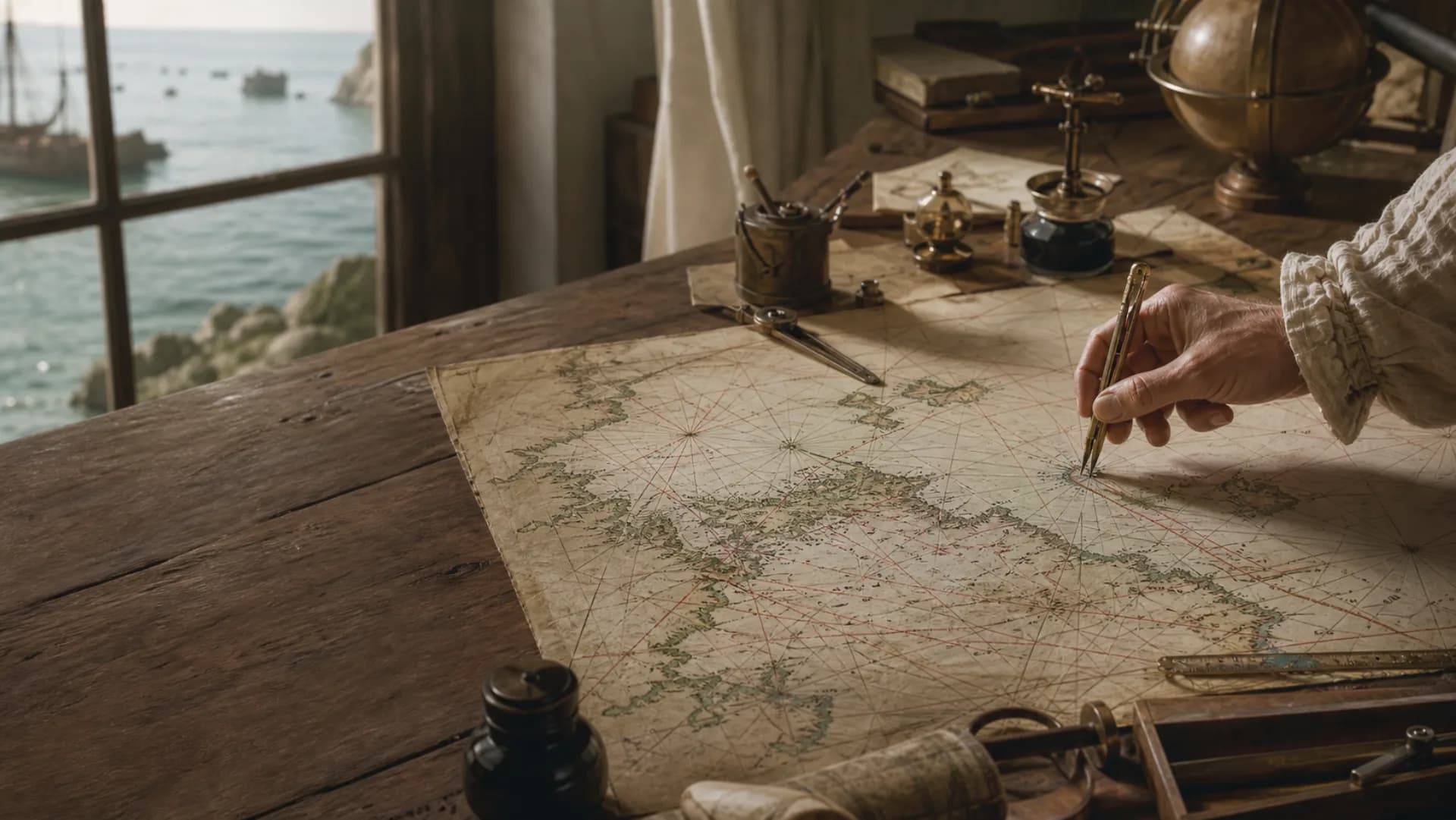 02
02 03
03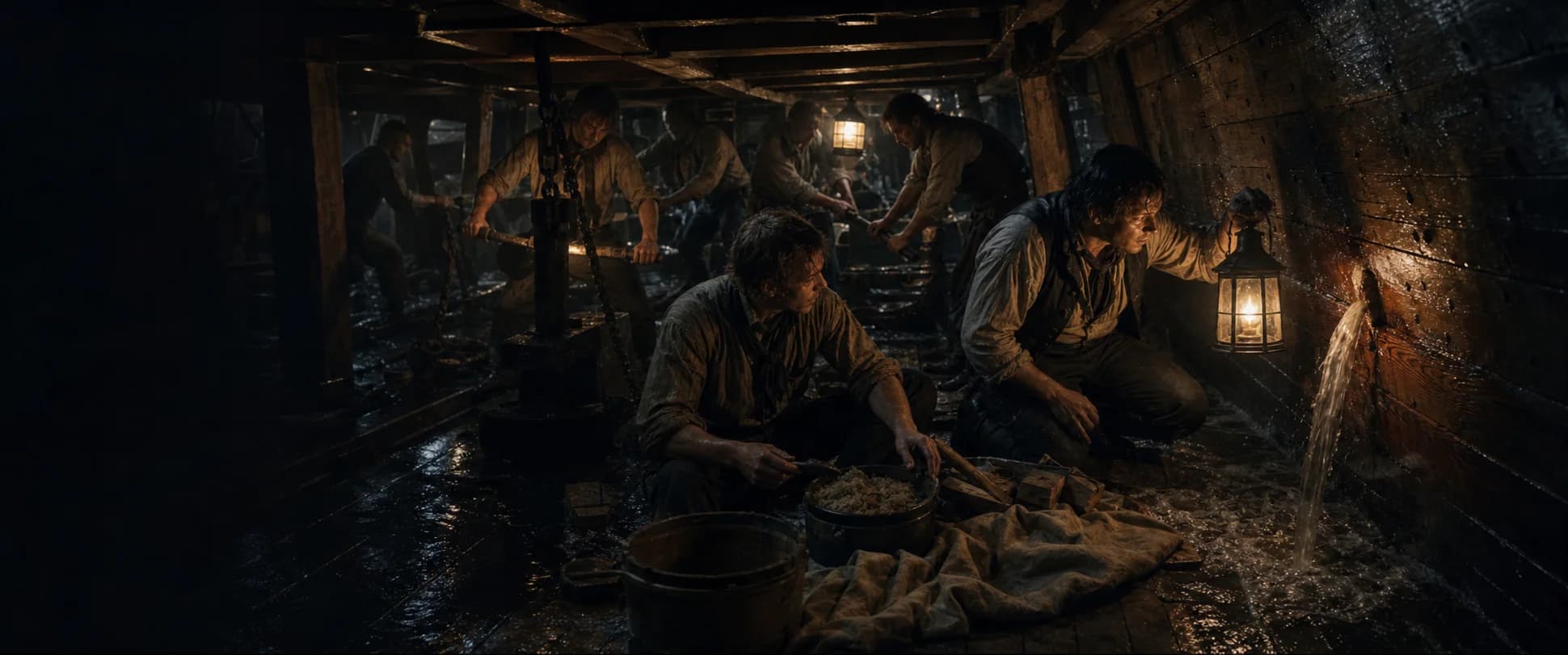 04
04