 ship structure
The pumps have matched the leak, but the mainmast cracks again
Mast
Masts and rigging transfer sail loads into the hull.
Deck
Deck beams help the hull resist transverse deformation.
Keel
The main longitudinal member forms the structural baseline of many wooden sailing ships.
The first repair often removed load before touching the break
Driving full canvas on a cracked mast enlarged the split with every roll and gust. Speed kept water loading damaged rudder fittings; shifted cargo sustained heel and complicated pumping and sail handling. The first response was therefore often to shorten sail, alter heading, secure weight or send top hamper down.
That response joined watch officer, carpenter, boatswain and working hands. One group managed the vessel's motion, another assessed damage, and others brought tools and material. Stabilizing the environment before approaching the failure kept repairers from spending their strength on a target that was still tearing itself apart.
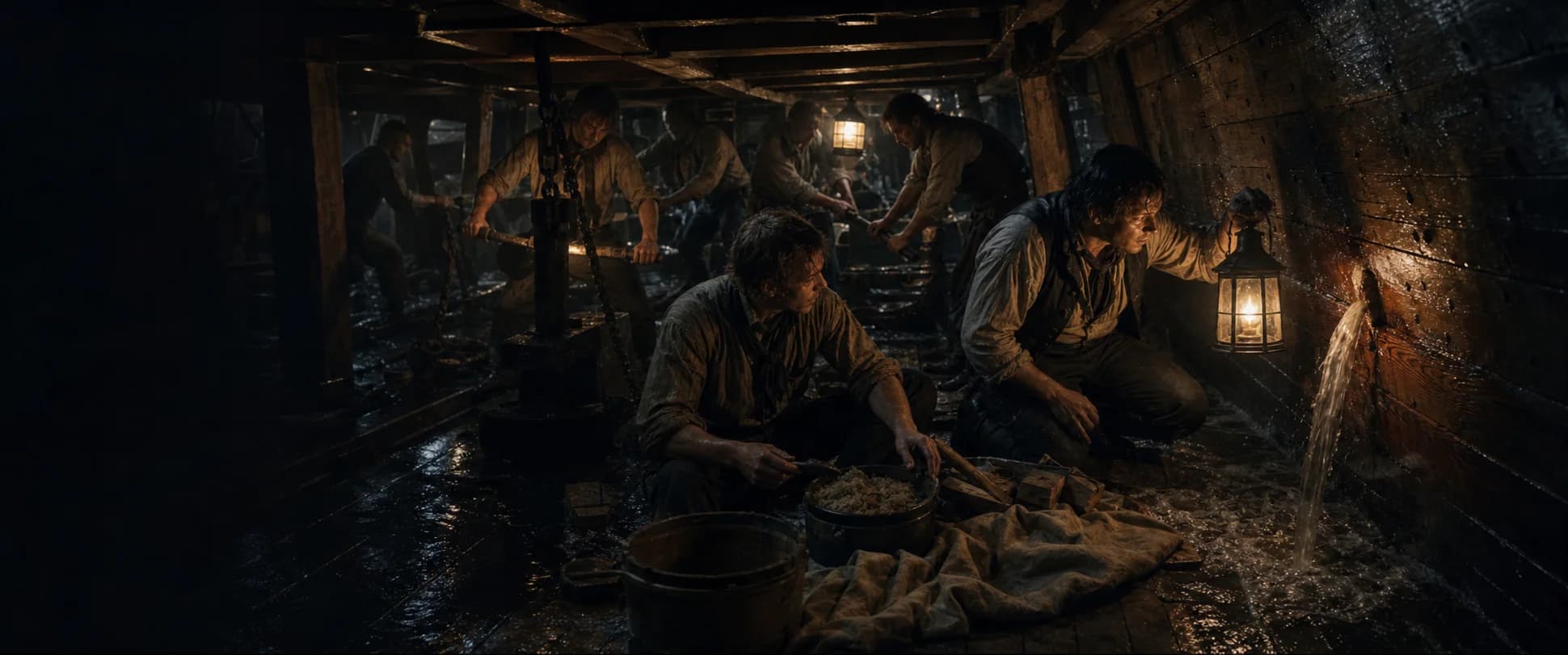
Leak response combined locating, slowing and continuous pumping
Water could enter through opened seams, collision damage, the stern around rudder fittings or timber strained by heavy weather. Bilge level showed the result while the carpenter used location, hull damage and external events to search for the source. Depth below the surface and the water already inside both influenced the rate.
Oakum, wedges, boards and compressible packing could address accessible defects. For a breach difficult to reach from within, strengthened canvas or an old sail could be hauled over the outside, where water pressure helped hold it against the hull. A nineteenth-century seamanship manual recommends this expedient to reduce inflow. Fothering and pumping worked together because either alone might sustain only a narrow balance.
The pumps measured how much time remained
Hand-powered bilge pumps turned continued flooding into continued labour. The carpenter or watch measured the bilge and compared levels across pumping cycles. A falling level showed discharge exceeding inflow; a steady level was only a fragile equilibrium; a rising one demanded more pumping, less inflow or preparation to ground or abandon ship.
Pumps could themselves fail. Bilge refuse, splinters and cargo debris blocked suctions; seals and valves wore; tired crews produced less output. Clean bilges, maintained pumps and people left to relieve the first gangs were damage-control measures taken before a casualty. Using every person at once could leave no one for the next hour.
A lost rudder, mast or sail called for a workable temporary system
Rudder damage might be met by securing the head, restoring wheel ropes or arranging spars, hawsers and drag devices for temporary steering. A sprung mast or yard was unloaded before being fished with timber and rope; an upper structure that could not be preserved might have to be cut away before it brought more rigging and hull down with it.
Torn canvas was patched or replaced, and failed rope spliced or rerouted through spare tackles. A jury rig succeeded when it produced a controllable heading, reduced rolling and carried the ship toward shelter—not when it resembled the original plan. Temporary systems normally imposed lower speed and a much narrower safe range of wind and sea.
Fire turned ventilation, fresh water and powder into linked hazards
Timber, canvas, cordage, grease and powder allowed fire to cascade. A nineteenth-century merchant fire station bill called for reducing low sail, closing hatches to cut draught, smothering flame with wet canvas or bedding, and organizing pumps, hose and bucket supply. A steady person remained at the helm so the ship's relation to wind could still be controlled.
Water poured inside also threatened stability, while powder and combustibles might need to be isolated, drowned or thrown overboard. A written station bill decided before smoke and panic who steered, sealed openings, supplied water and prepared boats. Damage control was never merely a carpenter's private repair job.
Questions
Continue exploring this subject
Could pumps alone save a leaking wooden ship?
Pumps bought time. If inflow continued to exceed discharge, the crew still had to slow the leak, reduce hull stress, reach shoal water or prepare to abandon ship.
What did fothering a sail mean?
Reinforced canvas or an old sail was drawn over the outside of a breach so water pressure held it against the hull and reduced inflow. It was an expedient, not a permanent repair.
What was a jury rig?
It was a temporary sail or steering arrangement assembled from available spars, canvas, rope and tackles to restore minimum control and movement.
Why shorten sail before strengthening a sprung mast?
Canvas transmitted wind load into mast and rigging. Removing that load reduced bending and shock while the crew secured or removed the damaged structure.
Why not simply open a hatch and throw water on a shipboard fire?
Opening a compartment could feed the fire with air. The response had to coordinate ventilation, water, steering, powder isolation and boat preparation.
Sources
Continue the research
- The Kedge-Anchor; or, Young Sailors' AssistantProject Gutenberg
- The Elements and Practice of Rigging, Seamanship, and Naval TacticsCambridge University Press
- History of Warrant Officers in the US NavyNaval History and Heritage Command
- Cutty Sark crew and their jobsRoyal Museums Greenwich
- Two Years Before the MastProject Gutenberg
 01
01 02
02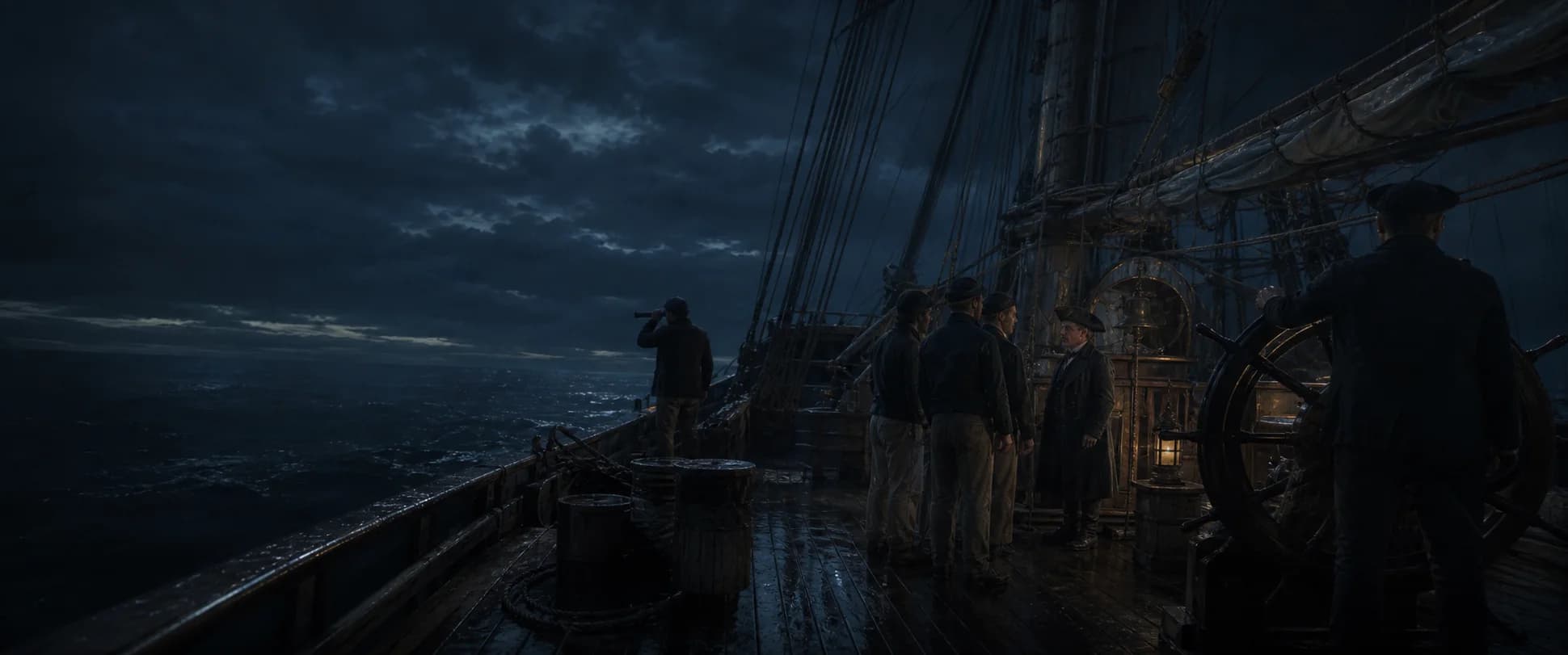 03
03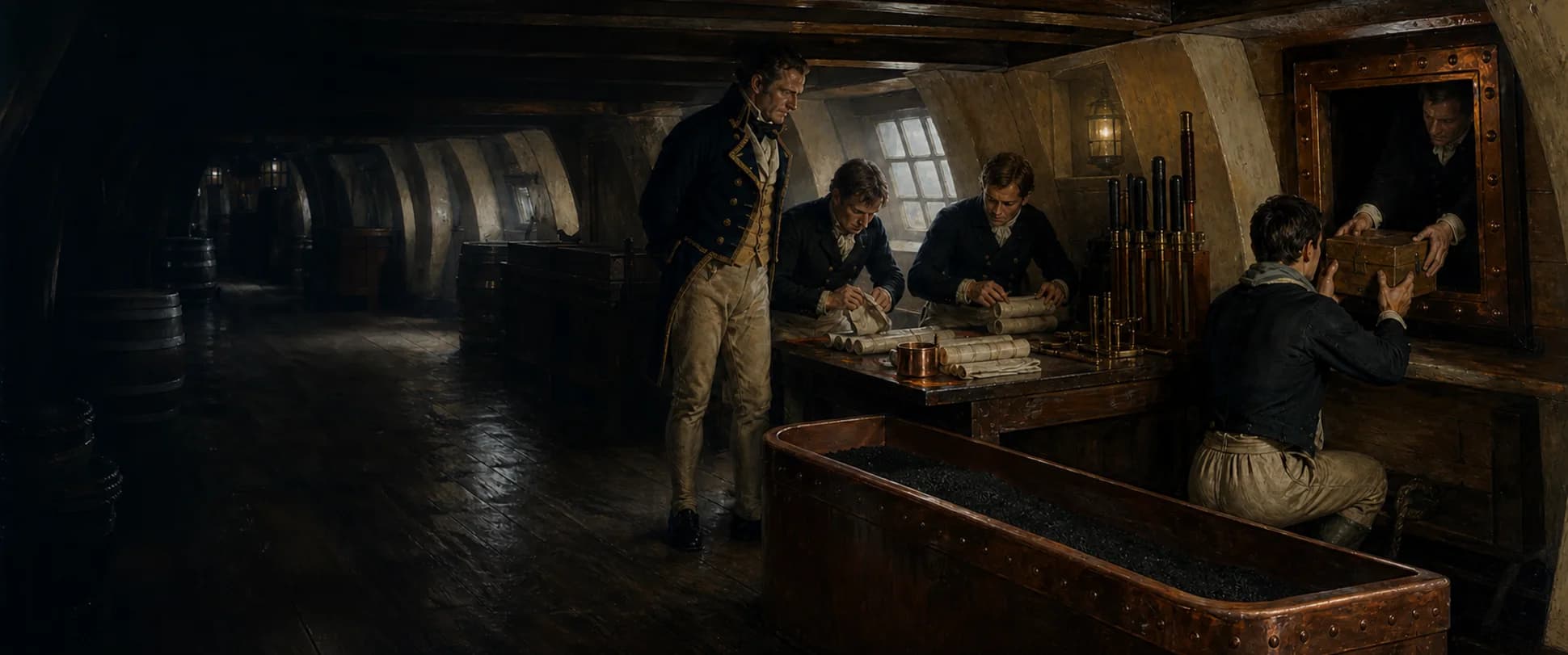 05
05