 ship structure
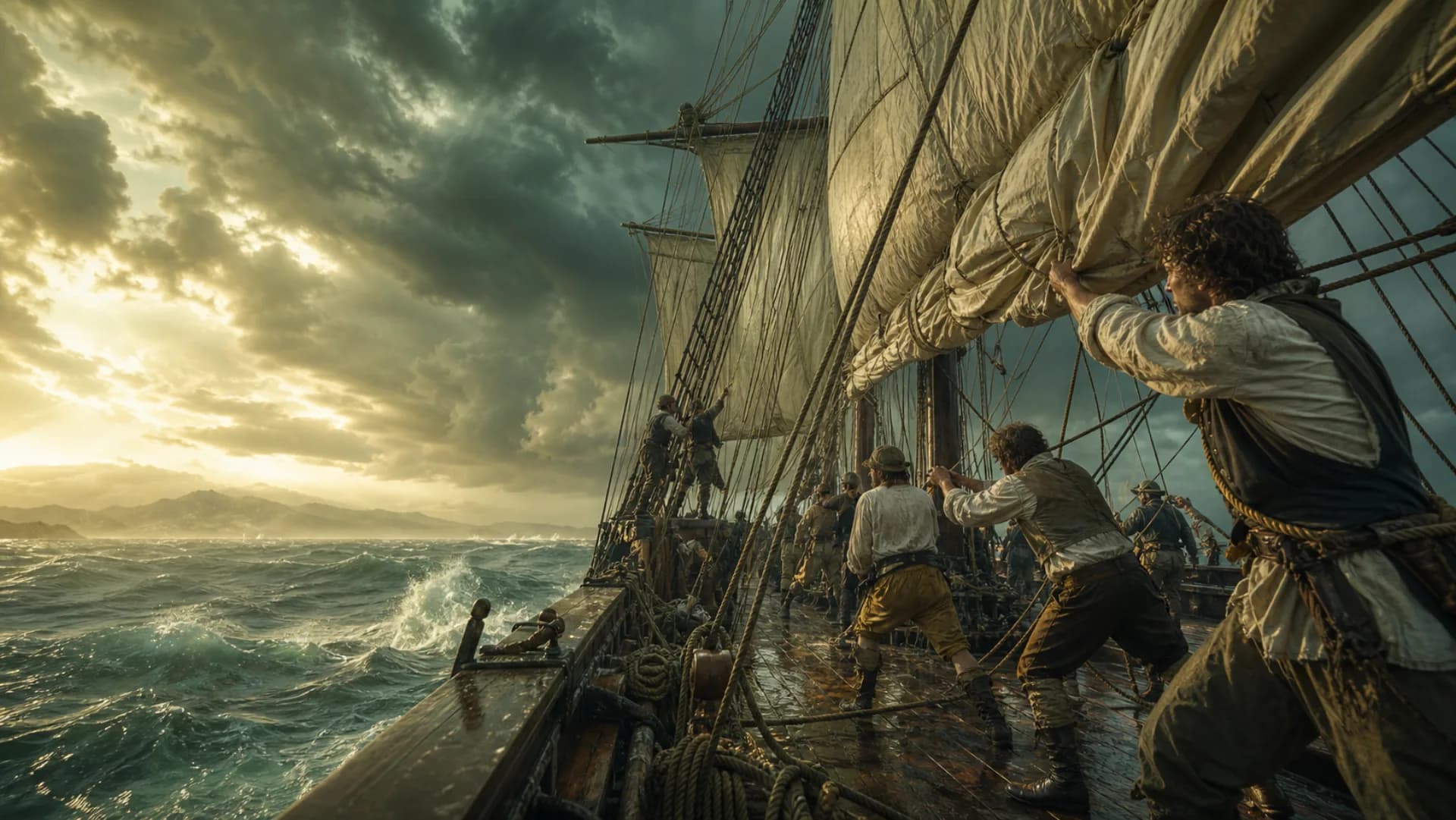
The first squall has torn the topsail
Mast
Masts and rigging transfer sail loads into the hull.
Deck
Deck beams help the hull resist transverse deformation.
Keel
The main longitudinal member forms the structural baseline of many wooden sailing ships.
Take power out of the rig—but leave enough to steer
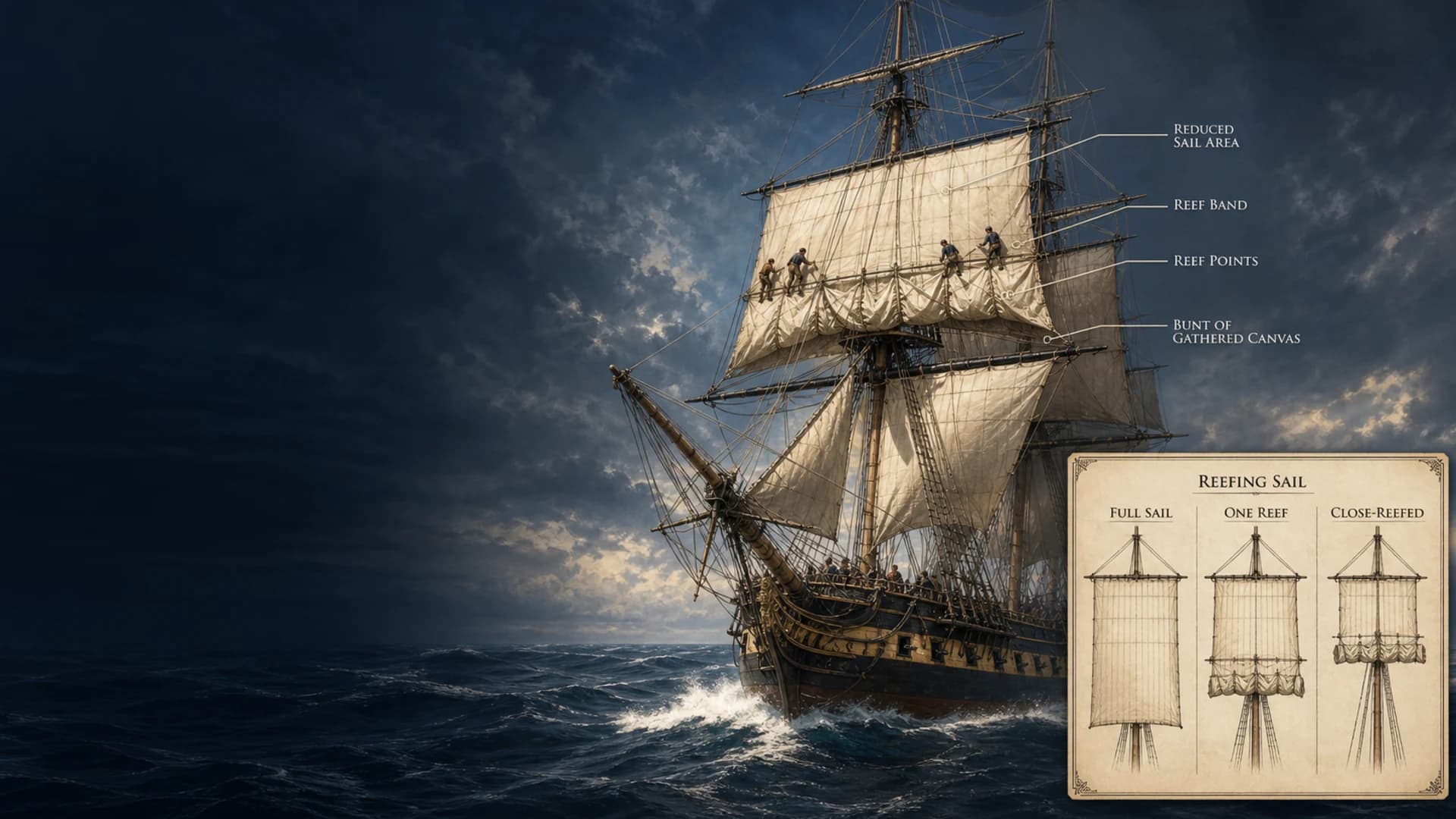
As wind rose, the sail area that normally produced speed began feeding dangerous loads into yards, masts, rigging and hull. A strong gust could tear canvas, carry away a spar or press the vessel into a deep heel. Crews shortened sail in stages or set smaller, stronger storm canvas. The later the work began, the more dangerous it became aloft.
Stripping every sail at once was not always safer. Without way through the water, the rudder might lose authority and the bow could no longer be held in a useful relation to the waves. The aim was not zero force, but force small enough to survive and large enough to preserve control.
The sea was visible on deck; loose weight below could be just as deadly
When the ship rolled, barrels, guns, stores and ballast were accelerated with it. A heavy object that broke free moved toward the low side, dragged the centre of gravity farther over and made recovery from the next roll more difficult.
Water found hatches, seams and damaged planking. As flooding grew it added weight, and water moving freely across a compartment further reduced stability. Storm preparation therefore ran below as well as aloft: lash heavy gear, secure boats and hatches, clear pumps and bilges, and keep pumping watches continuous.
Head to sea, run before it or heave to? The ship and the water decided together
Running with the waves could reduce violent impacts at the bow and preserve speed, but a following sea might lift the stern and turn the ship broadside. Heaving to tried to balance sail, rudder and hull at low speed, though the method and its usefulness varied with rig and vessel.
Sea room changed every option. Offshore, the ship might have space to drift; near a lee shore, that same drift carried it toward shoal water and rock. Storm tactics were not one heroic order. They were judgments repeatedly revised around hull, damage, wind, wave and coast.
Questions
Continue exploring this subject
Was it safest to take in every sail?
Not always. A vessel with no power might be unable to hold a safer attitude to the sea. The useful amount of sail depended on hull, rig, wind, waves and available sea room.
Why could shifting cargo capsize a ship?
Moving weight shifted the centre of gravity and reduced righting ability. Loose heavy objects and the free-surface effect of liquid were especially dangerous.
Could sailors predict a storm?
They watched cloud, wind, swell and other signs, especially before barometers became common, but the range and reliability of warning were far below modern forecasting.
Sources
Continue the research
- What are the Roaring Forties?NOAA Ocean Service
- Real-Time ObservationsNOAA Marine Navigation
 01
01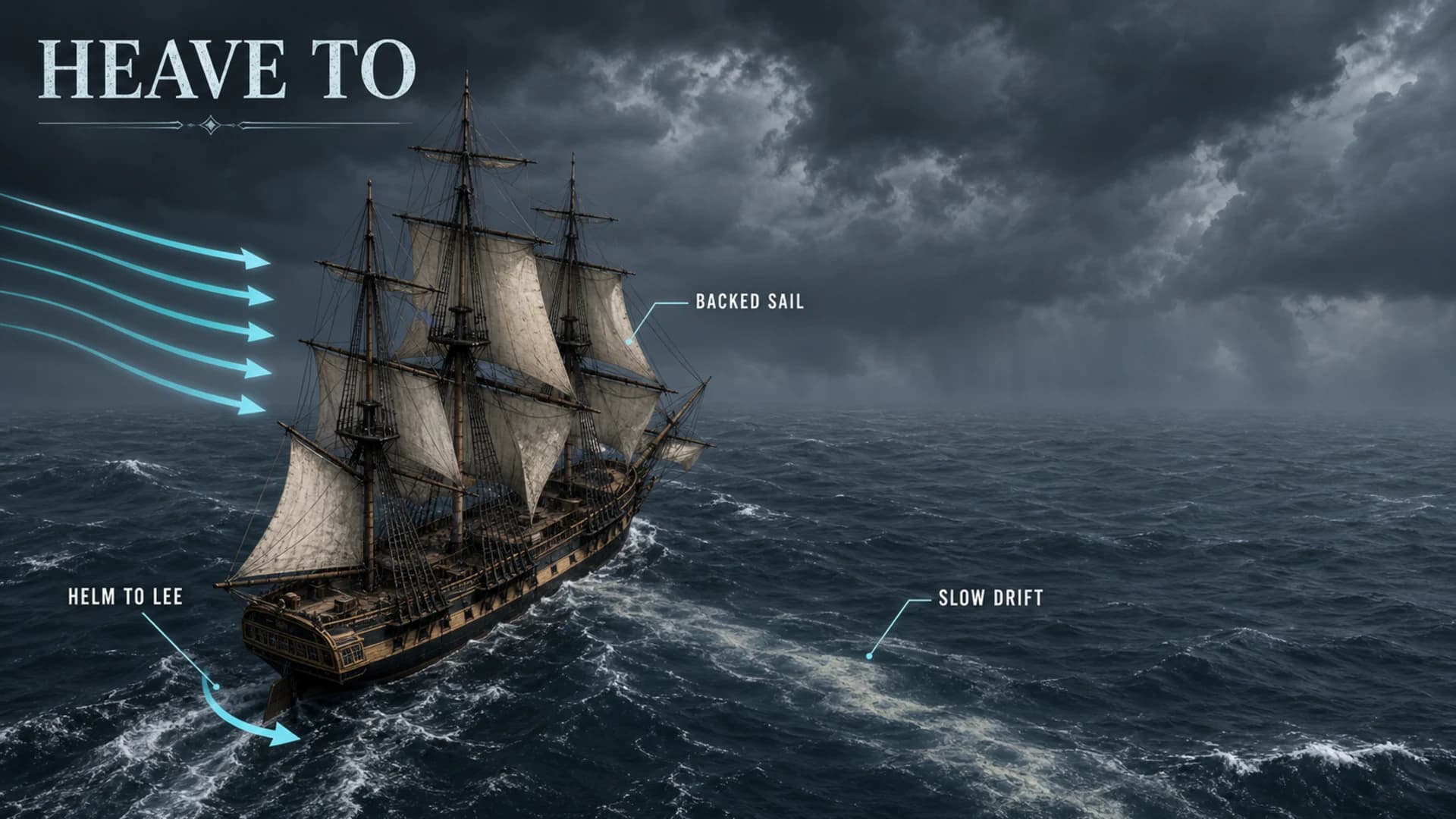 02
02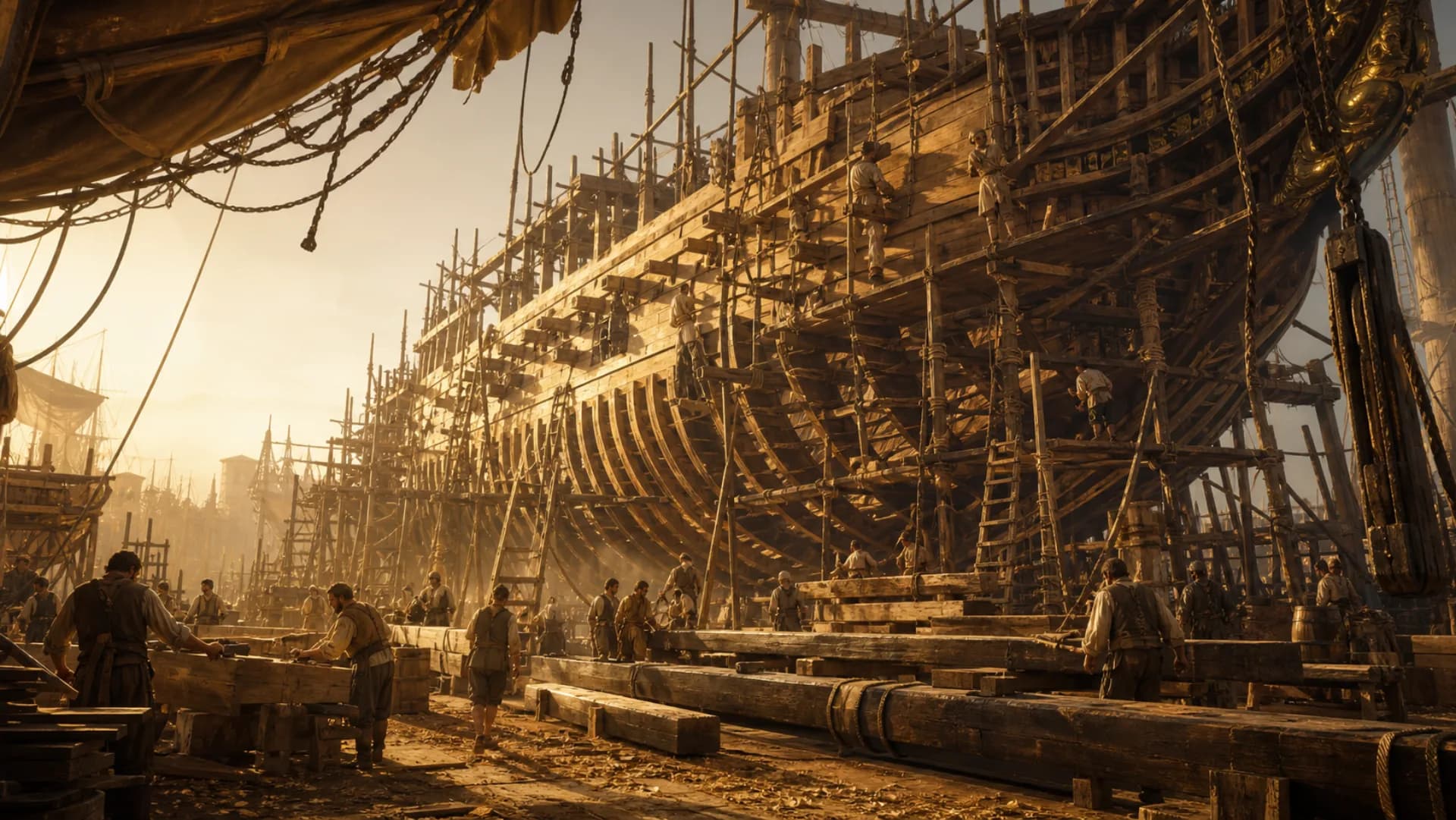 05
05