 logbook
A contract waits on the tavern table
Course WNW
A continuous course record supports dead reckoning.
Speed 6 kn
The knot comes from the historical use of a log line and timer.
Wind rising
Changing weather alters sail handling and watch decisions.
Wages were only one part of maritime income
Merchant seamen might sign by month or voyage and receive an advance, rations or other contractual terms. Navies used wage and ration schedules. Privateering and wartime service could add shares from lawful captures; owners and commercial agents might participate in trading profit.
Those components were not equally secure. Advances could support a family or create debt; naval pay could arrive late; prize proceeds depended on capture, adjudication and distribution. Nominal pay and money actually received must be separated.
A 1794 schedule captures one institution, not the whole era
The United States naval act of 1794 assigned different pay and rations to captains, lieutenants, sailing masters, surgeons, pursers, boatswains, gunners, sailmakers and carpenters. It provides a reliable internal comparison.
It cannot stand for Portuguese commerce, Dutch shipping or British privateering across three centuries. Currency, route, deductions, provisions and shares must remain attached to their original date.
Merchant wages and naval opportunity came with different constraints
Royal Museums Greenwich notes that late eighteenth-century British merchant pay could exceed naval pay, while naval seamen might hope for prize money. War expanded demand but also battle, coercive recruitment, long absence and delayed wages.
Crew lists and agreements preserve positions, joining and leaving dates and sometimes causes of departure. They reveal careers across voyages, although they do not by themselves describe every day's work.
Advancement converted experience into trusted responsibility
Ordinary seamen learned sail handling, steering, anchoring, lookout and maintenance. Able seamen were expected to perform demanding deck work reliably. Boatswain, carpenter, sailmaker and gunner tracks added craft skill, stores accountability and supervision.
Mate, sailing-master and commissioned paths also required literacy, arithmetic, navigation, records, recommendation or examination. Officer training and advancement from the lower deck were not one ladder, and social background constrained access.
Captain was not the natural destination of every trade
A carpenter could build a career afloat and ashore without seeking command. Pursers advanced through business competence, surgeons through medicine and pilots through local knowledge. These were parallel professions, not failed captaincies.
Command depended on entrusting someone with vessel, people, cargo or state mission. Capital, licence, appointment, patronage and voyage record mattered alongside seamanship. The career map branched between deck, craft, navigation, commerce, medicine and commissioned authority.
Questions
Continue exploring this subject
Were sailors paid monthly?
Some were, while others contracted by voyage. Advances, rations, shares and rewards could accompany wages, so the original agreement or regulation matters.
Did all naval sailors receive prize money?
A lawful capture could produce shares after condemnation and sale, but not every voyage captured a vessel and ranks received unequal portions.
How did an ordinary seaman become an able seaman?
Through sea experience and reliable competence in sails, steering, anchoring, lookout, maintenance and boat work. Rating practices varied by service.
Could a seaman become a sailing master?
Yes in some systems, but navigation mathematics, observation, records, recommendation and sometimes formal appointment created a substantial barrier.
Did every captain rise from the lower deck?
No. Merchant, naval and privateering routes differed; officer education, ownership, family capital, patronage or previous specialist rank could all lead to command.
Sources
Continue the research
- Act providing a Naval Armament, 1794Naval History and Heritage Command
- Life at sea in the age of sailRoyal Museums Greenwich
- Merchant Navy ships’ records: crew lists, musters and log booksThe National Archives
- Officers of Peculiar Skill: Warrant Officers in the Royal Navy and Early U.S. NavyNaval History and Heritage Command
- Ranks + RatesUSS Constitution Museum
 03
03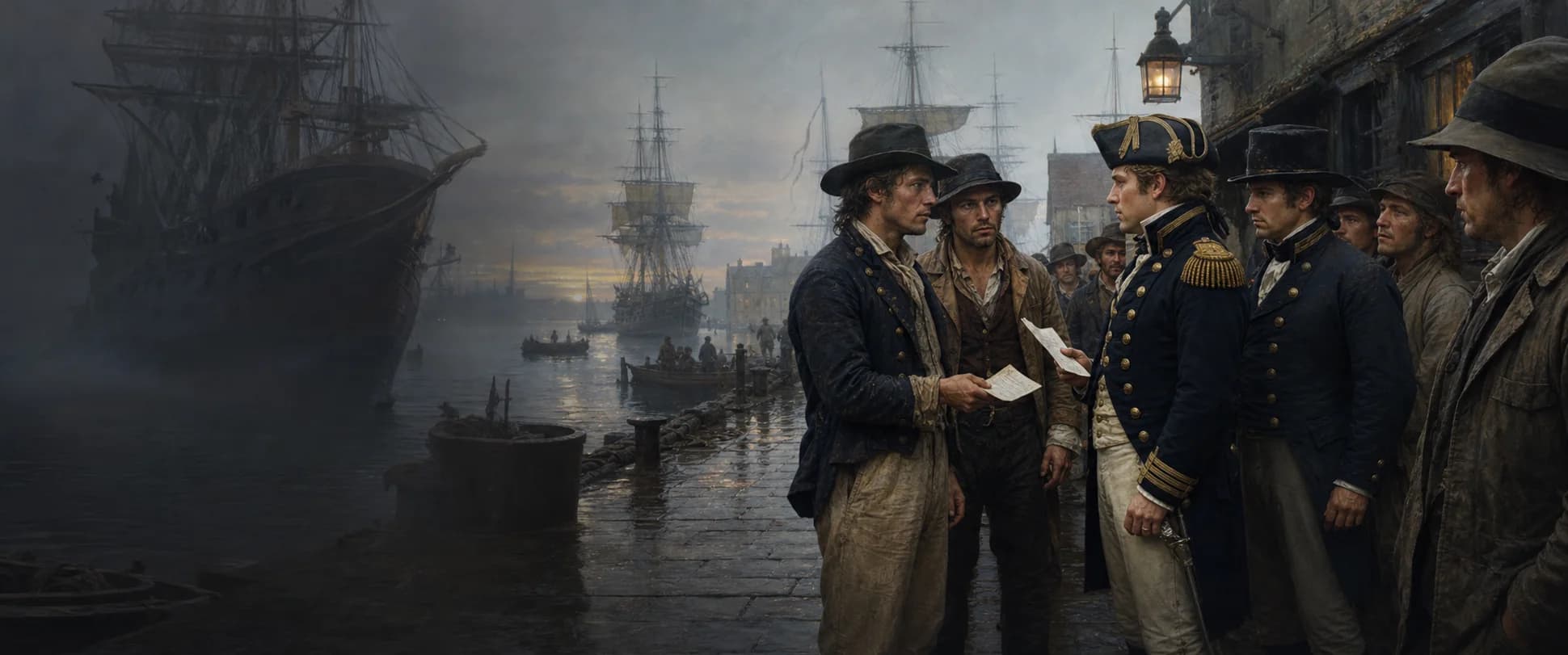 04
04 05
05