 crew
crewA recruiting sheet does not disclose the price
Sailing
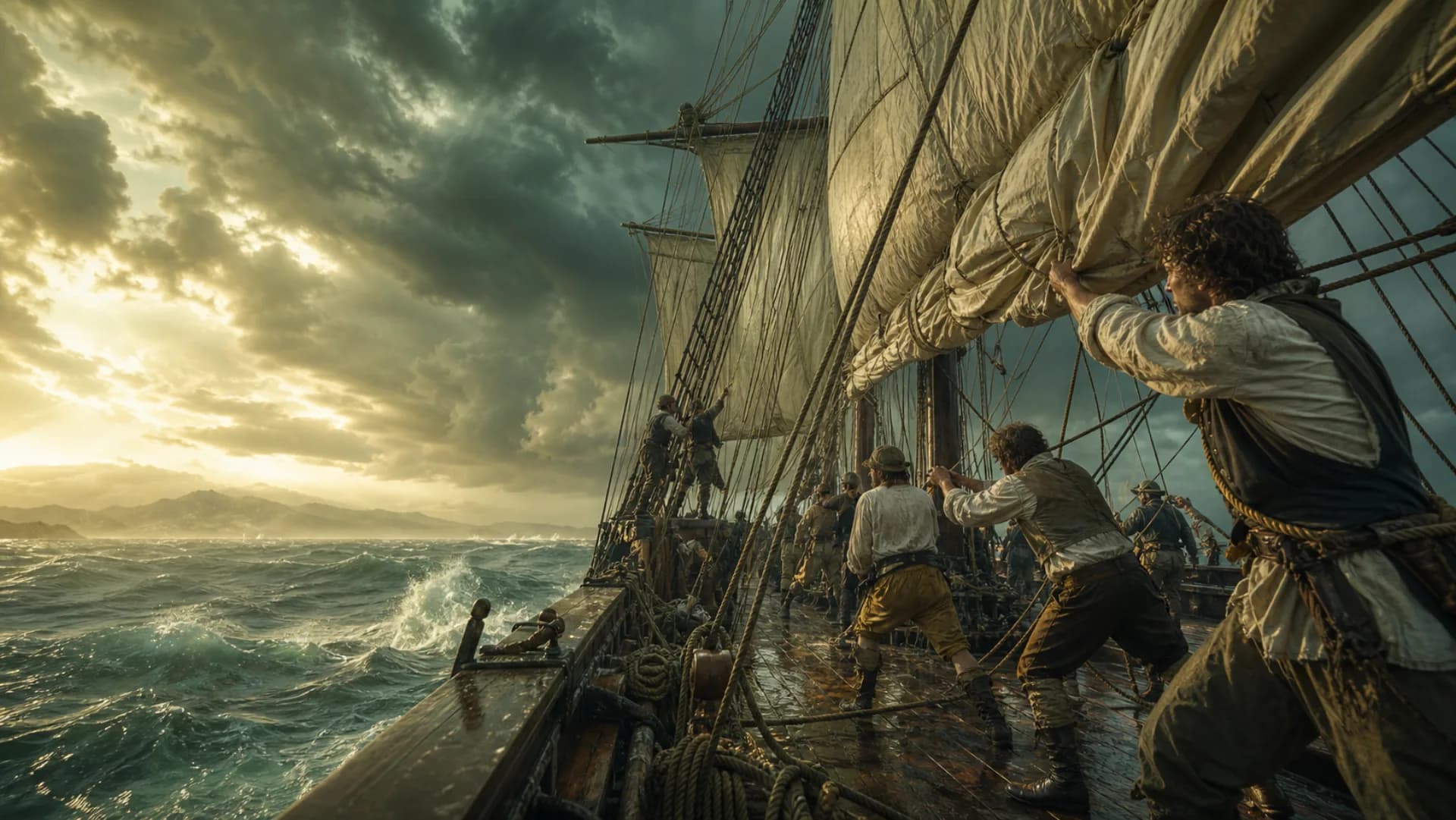
Sail handling, steering and lookout work keep the ship moving.
Maintenance
Carpenters and sail-and-rope specialists continually address wear and damage.
Stores
Food, water, cooking and hygiene determine the voyage’s practical limit.
Desirable can mean six different things
Merchant vessels sought safe, profitable delivery; warships needed gunnery, discipline and damage repair; ports and yards employed crafts across many ships. Skill scarcity, pay, status, stability, promotion and survival therefore need separate comparisons.
The same title did not guarantee the same position. A merchant master might be part-owner and commercial agent, while a naval captain and sailing master divided command from navigation. Country, date, vessel and employment system come before a ranking.
- Scarce expertise
- Cash and additional shares
- Command and social standing
- Breadth of employment
- Route to advancement
- Physical, legal and financial risk
Navigation, pilotage and carpentry carried scarce expertise
A sailing master combined charts, compass, soundings, speed, observations and logs into a route. A pilot possessed local knowledge of a particular harbour or river. Neither role was simply steering: the helmsman executed a course while navigation specialists decided how it should change.
A carpenter could inspect and repair hull, spars, rudder, pumps and shot damage beyond reach of a shore yard. Sailmaking, rigging and coopering also travelled between ships and yards, although small crews commonly combined formal posts.
Command, ownership and trade raised the ceiling and the loss
Captains could receive more than wages through agency, cargo ventures, ownership shares or prize proceeds. Owners and merchants participated more directly in trading profit. None of those returns was secure: loss of ship, spoiled cargo, price movements, wartime seizure and debt could erase a voyage's gains.
Master, captain, skipper, patron and owner overlapped differently across European ports. A neat modern separation between investor, professional captain and employee cannot be projected onto every early modern voyage.
One naval pay table is evidence, not a universal salary chart
The United States naval act of 1794 listed sailing masters, surgeons, pursers, boatswains, gunners, sailmakers and carpenters with distinct pay and rations. It reveals status and relative valuation inside one institution at one date.
It cannot price the whole Age of Sail. British naval wages, merchant contracts, rations, deductions, delayed payment and prize shares produced different outcomes. Historical comparison preserves currency and date rather than converting one schedule into a timeless leaderboard.
The answer changes with a worker's objective
Carpentry and repair offered portable craft skill; literacy, mathematics and sea experience opened navigation and mate positions; capital and commercial credit opened ownership and agency. Ordinary seamanship was more accessible but demanded years of dangerous physical labour.
A desirable job was therefore a relationship between training, local demand and acceptable risk. Historical evidence can reconstruct opportunity; it cannot name one winner outside a particular society and voyage.
Questions
Continue exploring this subject
Who was the highest-paid person aboard an Age of Sail ship?
It varied by service and date. Command, navigation and medicine often outranked ordinary seamen in formal pay, while owners, captains and merchants could also earn through shares, commission or trade.
Why was a ship's carpenter valuable?
Wooden vessels leaked and suffered damage to hull, spars, rudder and pumps. A carpenter carried survival-critical repair skill beyond reach of a dockyard.
Was ordinary seamanship easy employment?
Fleets often needed manpower, but vacancies did not imply good conditions. Seamen faced hard labour, disease, injury, delayed pay and sometimes coercive recruitment.
Did merchant sailors earn more than naval sailors?
In some periods and places merchant wages were more attractive, while naval service added rations, institutional status and possible prize money. A valid comparison needs a specific date and route.
Could a good navigator automatically become captain?
No. Navigation helped, but command also depended on discipline, commercial or legal responsibility, qualification, patronage, ownership and the confidence of an employer or state.
Sources
Continue the research
- Life at sea in the age of sailRoyal Museums Greenwich
- A Short Account of the Several General Duties of Officers, of Ships of WarNaval History and Heritage Command
- Officers of Peculiar Skill: Warrant Officers in the Royal Navy and Early U.S. NavyNaval History and Heritage Command
- Act providing a Naval Armament, 1794Naval History and Heritage Command
- Roles on Board Merchant Ships during the Seventeenth CenturyUniversity of Exeter Centre for Maritime Historical Studies
- Merchant Navy ships’ records: crew lists, musters and log booksThe National Archives