 crew
crewShoal water, a headwind and a pursuer arrive together
Sailing
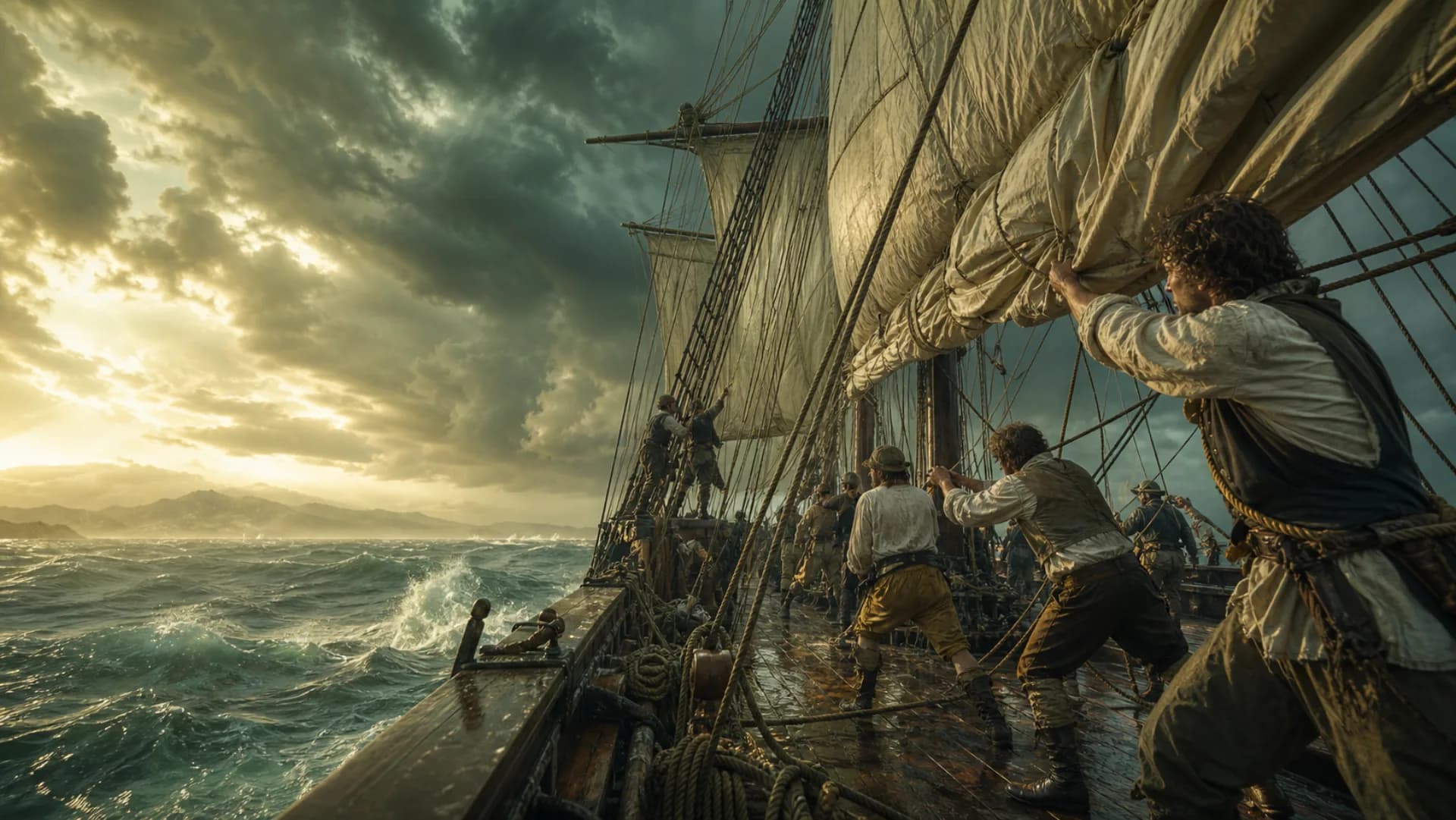
Sail handling, steering and lookout work keep the ship moving.
Maintenance
Carpenters and sail-and-rope specialists continually address wear and damage.
Stores
Food, water, cooking and hygiene determine the voyage’s practical limit.
The captain decided why the vessel acted and answered for it
In a developed naval service, the captain commanded mission, discipline and battle. A merchant master or captain could also represent owners in contracts, cargo and port business. Supreme command meant final authority and responsibility, not permanent possession of the wheel.
Seventeenth-century comparison shows captain, master, skipper, patron and owner overlapping differently between ports. The modern captain cannot be projected unchanged into every document.
The sailing master converted observations into a workable route
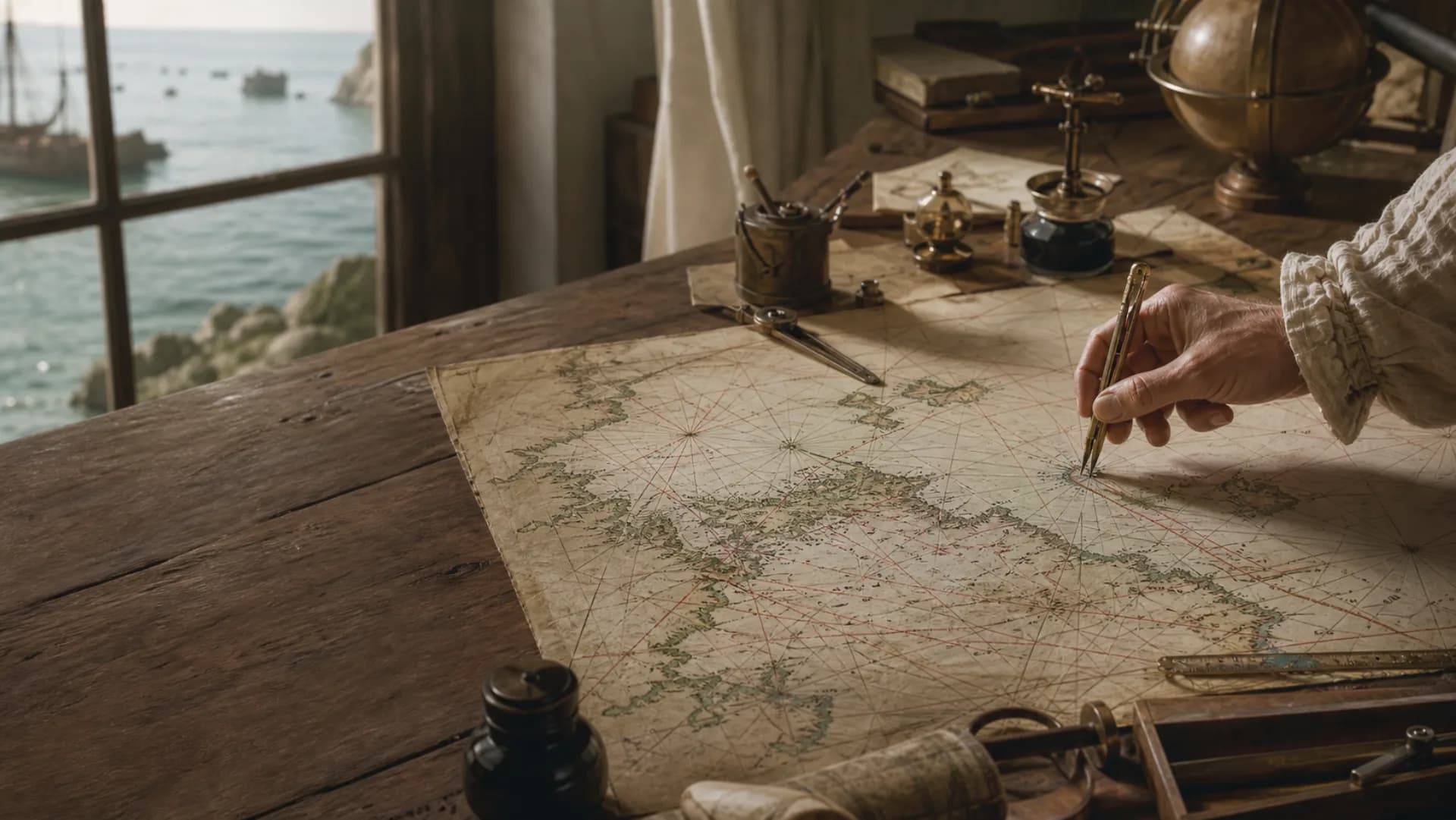
A sailing master was commonly an experienced navigator and seaman. He understood the vessel under different conditions, maintained navigational records and advised command on safe handling and route.
He did not need to steer every watch. Helmsmen executed courses; lookouts and leadsmen supplied observations; the sailing master integrated their work. A small merchant master might perform all of those responsibilities himself.
The boatswain made rigging, anchors and deck labour function
The boatswain held rigging, cordage, anchors, sails, boats and associated stores and supervised seamen at deck work. Historical regulations emphasize both material accountability and direction of labour.
He was a senior technical leader, but did not normally replace the captain's command or the sailing master's navigation. His expertise lay closest to execution: assigning hands, preparing anchors and keeping the working gear ready.
One harbour approach shows the three offices together
The captain decided whether mission risk allowed entry. The sailing master combined chart, soundings, tide, wind and pilot advice into a route. The boatswain prepared anchors and directed the sail and deck parties. Helmsmen and lookouts kept the information moving.
Battle made the same distinction visible: command chose engagement, navigation maintained position, and deck leadership executed manoeuvre and repair. The question was not who could 'drive' the ship best but how intent, judgment and labour connected.
Small crews merged work and languages resisted exact translation
A small vessel could not afford three full departments. The master might navigate and trade, a mate might keep watches, and the boatswain might absorb cargo or discipline work. Fewer titles did not remove the underlying tasks.
Master can mean overall merchant commander in one source and professional sailing master in another. Pilot, skipper and quartermaster shifted too. Date, original word and institution matter more than a tidy universal rank chart.
Questions
Continue exploring this subject
Was the boatswain the captain?
No. The boatswain normally supervised rigging, anchors, deck equipment and seamen under the captain and officers.
Was the sailing master the helmsman?
No. A helmsman steered an ordered course; a sailing master handled professional navigation and advised how the vessel should be sailed.
Did captains need navigation skill?
They needed enough understanding to command and judge advice, but large warships could assign daily professional navigation to a sailing master.
Was the first mate above the sailing master?
The answer depends on service and period. A mate belonged to the command and watch system, while a sailing master could hold senior specialist status; cross-system ranking is unreliable.
Why do some records use master without captain?
Merchant masters could already be the vessel's commanders, while captain developed differently across military and commercial settings.
Sources
Continue the research
- Roles on Board Merchant Ships during the Seventeenth CenturyUniversity of Exeter Centre for Maritime Historical Studies
- History of Warrant Officers in the US NavyNaval History and Heritage Command
- General Orders, USS Independence, 1815Naval History and Heritage Command
- Navy Regulations, 1814Naval History and Heritage Command
- Life at sea in the age of sailRoyal Museums Greenwich
 02
02