 crew
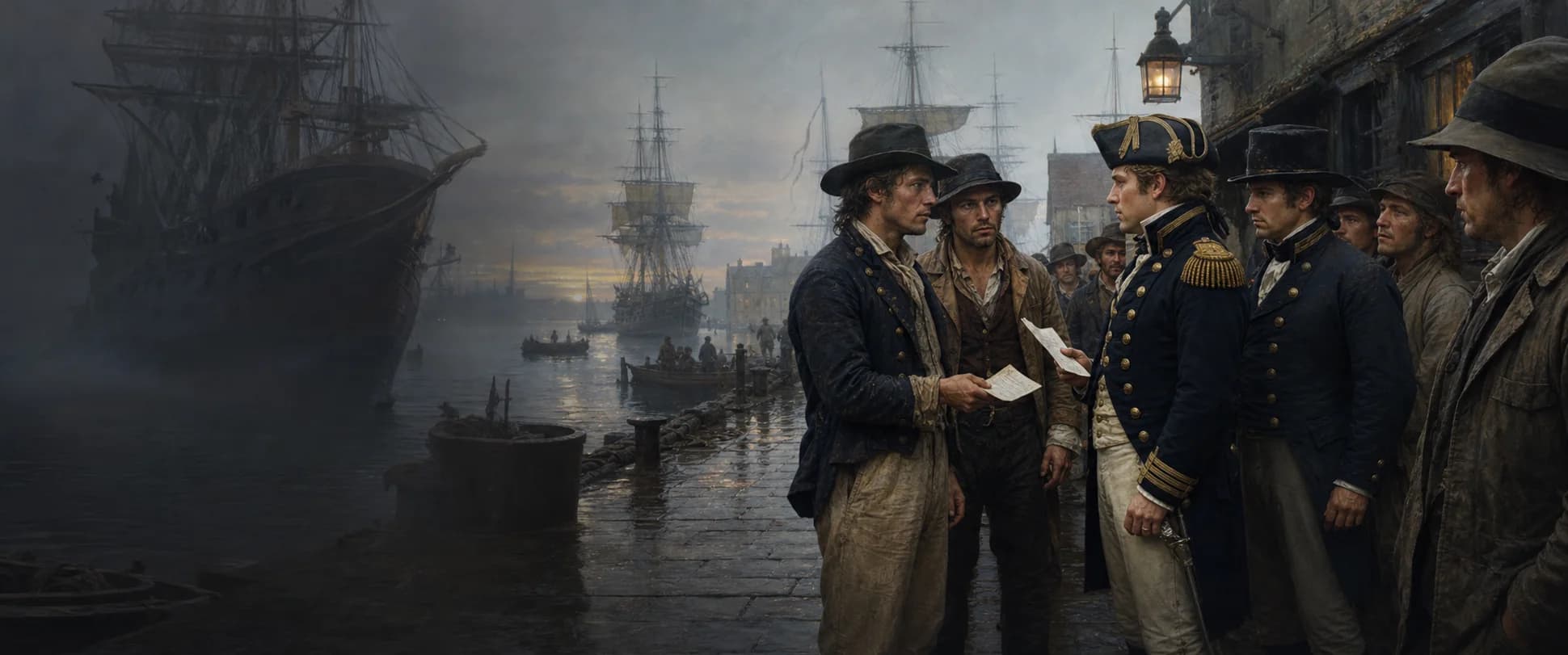
crewThe press brings an able seaman aboard, but he insists his protection is valid
Sailing
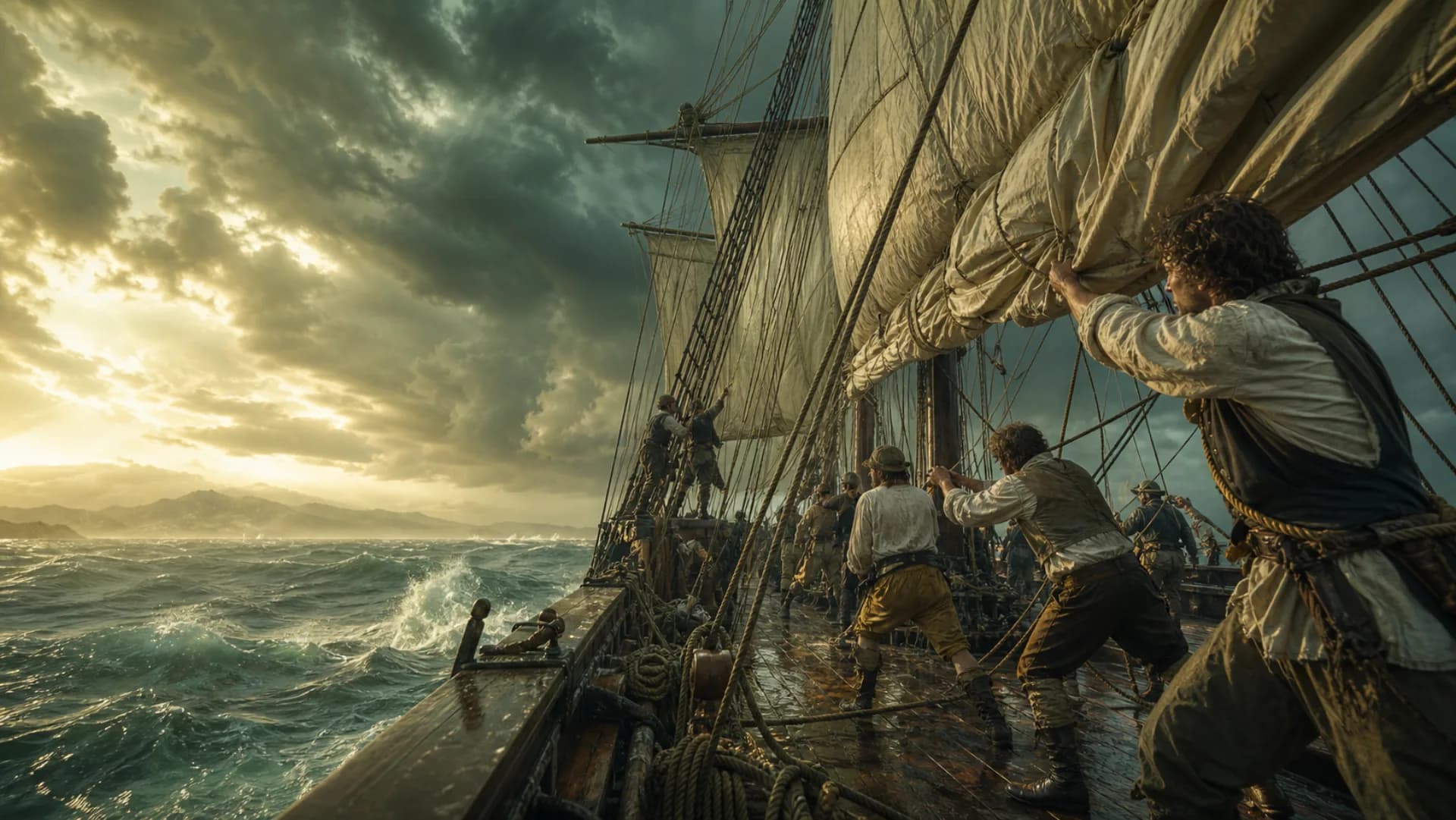
Sail handling, steering and lookout work keep the ship moving.
Maintenance
Carpenters and sail-and-rope specialists continually address wear and damage.
Stores
Food, water, cooking and hygiene determine the voyage’s practical limit.
Impressment was a manpower system; the press gang was only its most visible instrument
The Royal Navy expanded with startling speed when Britain entered a major war. Bounties, volunteers and ordinary recruiting repeatedly failed to supply every skilled hand. The Crown claimed a prerogative to compel seafaring subjects, while Parliament altered the rules in successive periods. Impressment names that system. A press gang was a shore party led by an officer or other authorised person to identify and deliver men; the two terms are not exact synonyms.
Nor was this one institution shared by every navy throughout the Age of Sail. Britain used it most extensively during its long wars with France. Other states relied on conscription, maritime registration, quotas or compulsory service under different laws. The useful boundary here is British naval practice from the later seventeenth century to 1815, with the Anglo-American nationality dispute that grew from it.
A port impress moved from authority to identification and custody—and every stage could be contested
Armed with a warrant or local order, a party searched quays, taverns, lodging houses and waterfront communities. Seamen, watermen, lightermen and fishermen were particularly useful. A surviving order of 1705 names those trades and calls for young, healthy men. The object was readily usable maritime labour, not simply the random drunken victim of later fiction. A stopped man might present an apprenticeship, occupational, age, health or protection document for a magistrate or naval officer to judge.
Rules shifted, and enforcement never matched them cleanly. Wartime urgency, bounties, local influence and suspicion of forged papers exposed exempt or unsuitable people to seizure. Hiding, flight, resistance and community rescue were part of the same system. A hot press could also drive precisely the skilled sailors needed by merchant shipping out of a port. It imposed fleet demand directly upon households and the maritime labour market rather than turning an efficient recruiting switch.
Boarding merchant ships carried the dispute from the waterfront to nationality itself
British warships stopped merchant vessels to recover naval deserters and men Britain continued to regard as subjects. British law could treat allegiance by birth as stronger than later American naturalisation. American sailors saw removal from an American or neutral ship as an attack on free navigation and chosen citizenship. Birthplace statements, protection certificates, crew lists, accents and even bodily marks entered the inquiry, but none could reliably untangle a mobile Atlantic workforce.
Pressure for hands and fear of desertion widened the boarding officer's net. Native-born Americans could be taken when their evidence was rejected. The American language of “Free Trade and Sailors’ Rights” therefore joined commercial passage to the right to refuse British service, making impressment an important cause of the War of 1812. It was not the war's only cause, and the Treaty of Ghent did not settle the issue directly.
An impressed man was not an unpaid captive, yet naval service denied him an ordinary right to leave
Once mustered, an impressed sailor entered a rating, wage and ration system and worked within the watches, sail handling and battle organisation of a warship. An experienced hand might be rated able; a landsman needed instruction. Pay did not convert coercion into a voluntary contract. The sailor could not choose to leave at the end of his preferred voyage, and arrears, deductions, long foreign deployments and strict punishment made loss of liberty more costly.
Desertion was the clearest escape and made the Navy still more determined to recover deserters. A family might learn only slowly which ship had received a man, who could then vanish into another muster after transfer. Officers faced a related operational problem: compelled men still had to cooperate in battle and bad weather. Fear could produce obedience, but excessive violence damaged trust, retention of skill and performance under emergency pressure.
Practice ceased after 1815; that does not turn coercion into picturesque folklore
With the end of the Napoleonic Wars, demand for British naval manpower collapsed and impressment fell out of use. Arguments about the legal power and a possible revival continued into the nineteenth century. A Commons debate in 1834 openly described concealment, emigration, resistance and inefficiency produced by the press. Disuse followed the scale of war, political opposition and changing recruitment together, not a single clean repeal of every old authority.
Fiction often compresses the institution into a King's shilling hidden in a tankard, or confuses it with shanghaiing in later American merchant ports. The sound evidence is less tidy: warrants, muster books, protections, statutes, diplomatic papers and personal records. They reveal state coercion justified by military need. Wages, seamanship or later promotion cannot erase the involuntary entry into service.
Questions
Continue exploring this subject
Are a press gang and impressment the same thing?
Not quite. Impressment was the compulsory recruiting system; a press gang was a party that found, detained and delivered men ashore. Taking men during a warship's merchant-vessel search was also impressment without being the work of a shore gang.
Were impressed sailors paid?
They normally entered the Navy's muster, wage and ration systems according to rating. They still lacked a free right to resign, and arrears, deductions, deployment and prize settlement affected what they actually received.
Did the Royal Navy randomly seize men with no sea experience?
The preferred targets had maritime experience, but changing rules, manpower pressure and enforcement failures also swept in labourers, landsmen and men who claimed an exemption.
Why were American sailors impressed by Britain?
Britain denied that some native-born subjects could shed allegiance through American naturalisation, while boarding officers also rejected or misread evidence. Native-born Americans could consequently be taken as well.
Was a press gang the same as shanghaiing?
No. The press belonged chiefly to state-authorised naval recruitment. Shanghaiing usually describes fraud, debt or violence used to put men aboard nineteenth-century American merchant ships. Both coerced labour, but under different institutions.
Sources
Continue the research
- Press gangsUK Parliament
- Orders and instructions to impress men, 1705Royal Museums Greenwich
- Research guide M2: Press gangs and impressmentRoyal Museums Greenwich
- Impressment and the War of 1812U.S. National Park Service
- The Capture of Chesapeake and Sailors’ RightsNaval History and Heritage Command
- Impressment of Seamen debate, 1834UK Parliament · Hansard
 01
01 03
03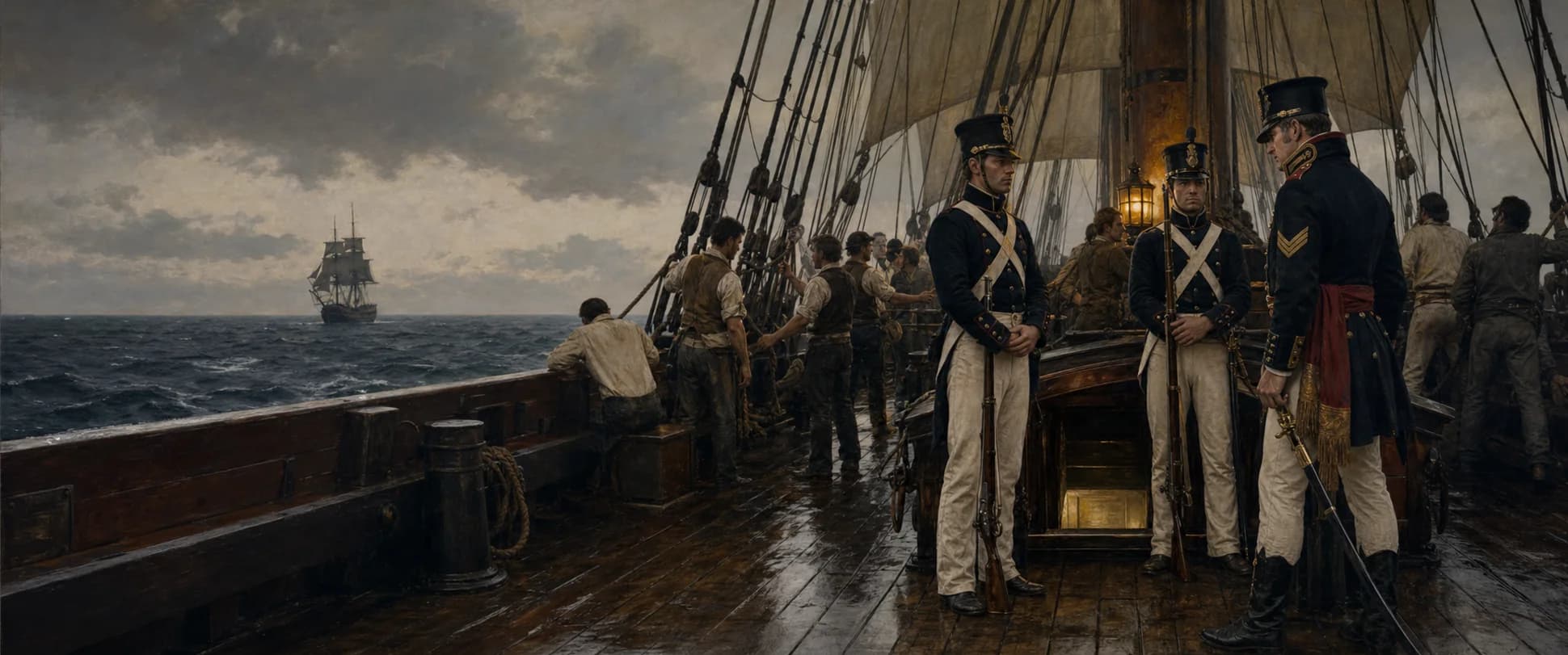 04
04