 crew
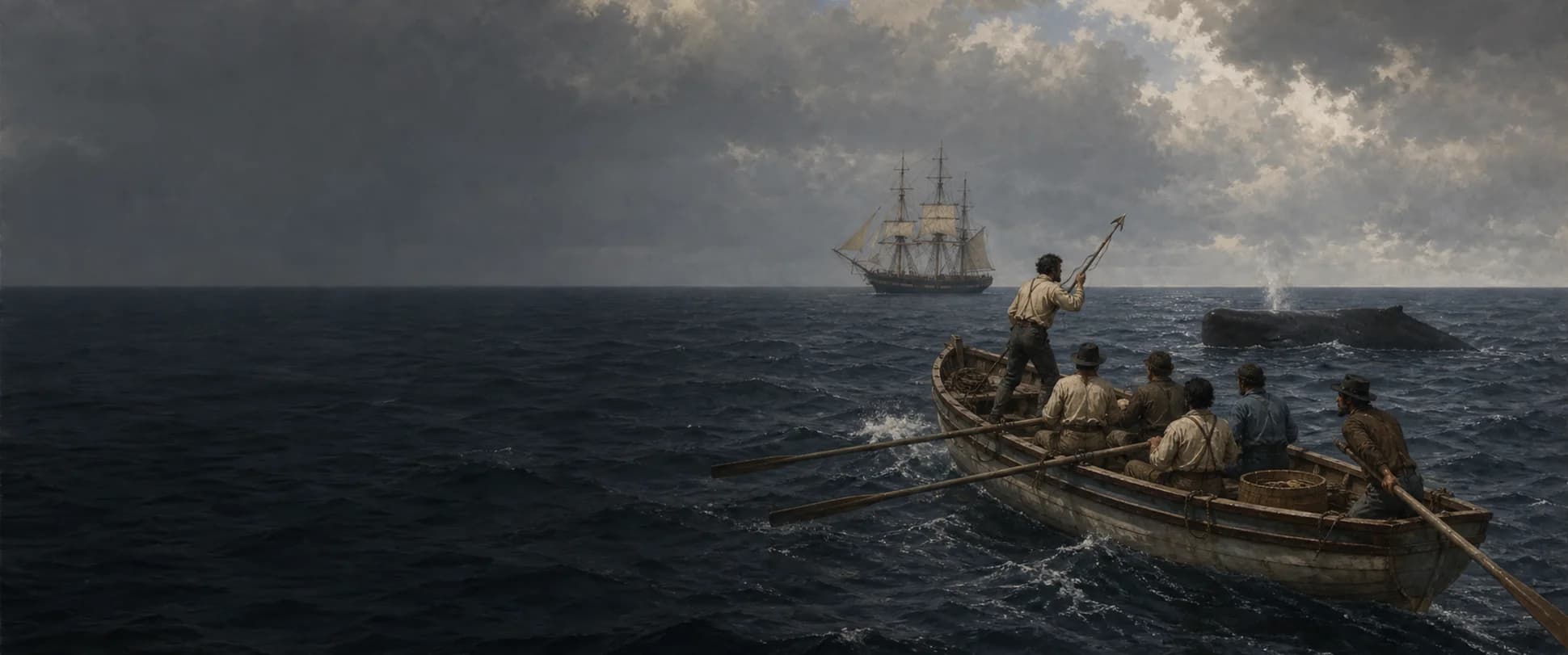
crewThree boats are down when fog erases the mother ship's last mast
Sailing
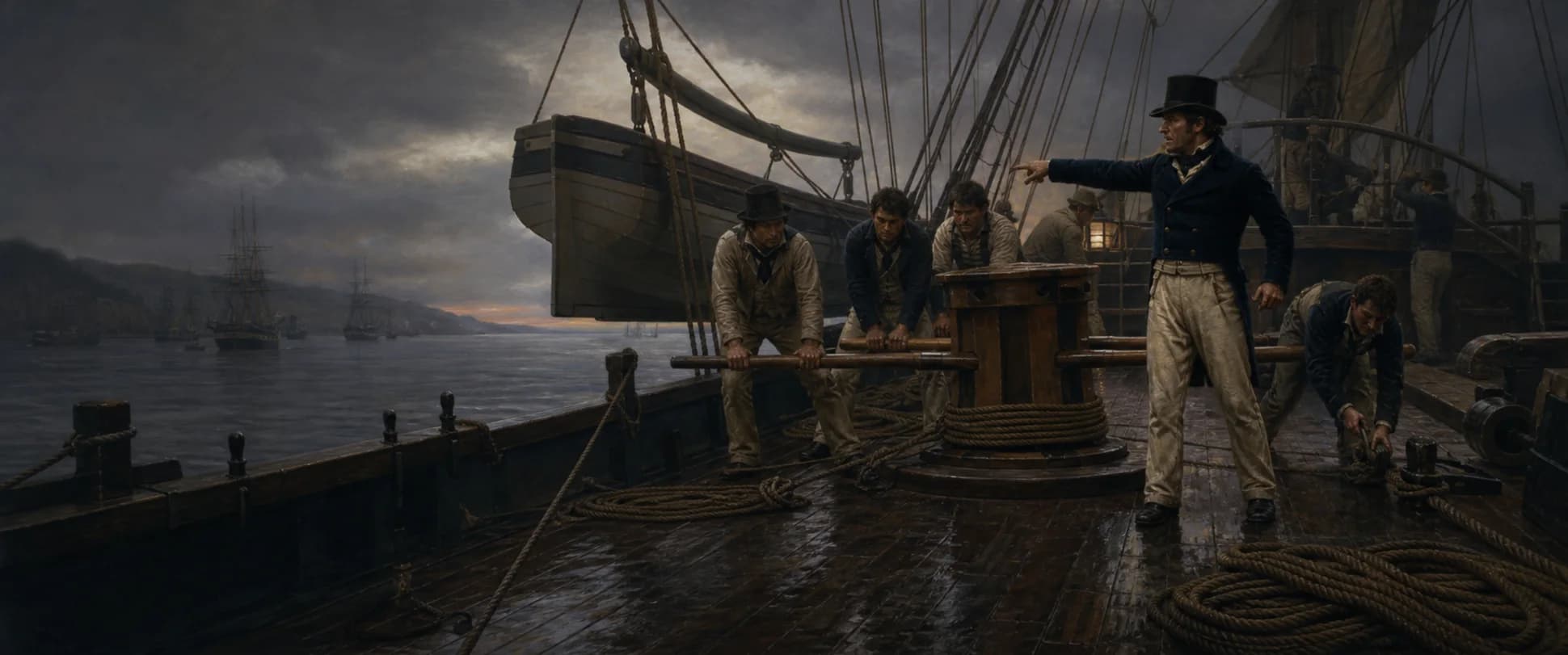
Sail handling, steering and lookout work keep the ship moving.
Maintenance
Carpenters and sail-and-rope specialists continually address wear and damage.
Stores
Food, water, cooking and hygiene determine the voyage’s practical limit.
The pelagic whaleship was sailing vessel, boat carrier, processing plant and warehouse
An American whaleship could remain away for years with three to five whaleboats, tiers of casks, spare irons and deck tryworks. Its people still stood watches, handled sail, repaired rigging and kept the boats ready. For weeks without a sighting, work resembled that of another ocean-going vessel. A spout, fluke or breach seen from the masthead abruptly changed the ship from passage routine to a pursuit.
This was not a romantic duel between one man and a giant animal. It was an industry that killed whales for oil, baleen and other saleable matter on a vast scale, with lasting depletion. Its workers also faced injury, disease, debt and hard hierarchy. Explaining their jobs documents a historical labour system; it does not revive or celebrate commercial whaling today.
Six people compressed command, striking, boat handling and propulsion into one whaleboat
In a common American arrangement, the boatheader—usually the captain or a mate—commanded at the stern with a long steering oar. The boatsteerer, also called the harpooner, pulled the bow oar and rose to dart the whale iron when close. Four more hands rowed and managed sail, line and gear. Terms and arrangements varied across time and place; this later American vocabulary cannot simply be assigned to every Basque, Dutch, British or shore fishery.
The iron chiefly fastened whale, line and boat rather than killing at once. A sounding or fleeing whale pulled line from its tubs at dangerous speed. Friction could smoke; a turn around a limb could drag a man out; a tail or jaw could destroy the light boat. The crew wetted line, controlled its run and backed clear while fog, sea state and distance from the mother ship determined whether a sound strike became a fatal separation.
The exchange of positions after the strike separated the harpooner's job from the mate's
After the iron held, the boatsteerer moved aft to steer while the boatheader went forward and waited to use the lance at close range. The exchange put the most experienced commander in charge of the final approach and killing, while the man who had just made the explosive dart controlled the boat. Popular images often let one “harpooner” perform the entire hunt; the real action depended on every person in the boat.
An iron could draw out, a whale could sink, line could be lost, or the hull could be stove. A successful killing might leave the boat too far from the ship to return safely. Even an unsuccessful chase consumed strength, water, gear and daylight. Once recovered, the crew repaired planking, sharpened tools and coiled line for a second lowering that might come the same day.
Once the carcass reached the starboard side, pursuit became round-the-clock industrial work
Heavy chains held the whale alongside. Men on a cutting stage used spades to peel immense blanket pieces of blubber, which tackles lifted to the deck for mincing. Brick tryworks and iron pots rendered the fat into oil; cooled oil went into casks prepared by the cooper and down into the hold. Baleen, spermaceti and other materials were retained according to the species and market.
Oil and blood made the deck treacherous while edged tools, suspended weight, sharks, smoke and scalding liquid occupied the same workspace. A sea could throw hot oil over the hands, and fire could spread from the tryworks into a wooden ship. Cleaning, cask repair and gear preparation followed before masthead watch resumed. Taking a whale was the midpoint of production, not the end.
The lay turned wages into a share of a voyage that might consume several years
American whaling commonly paid a lay rather than a monthly wage. After the return and agreed costs, each rank received a fraction of proceeds: the captain and mates commanded larger lays, with boatsteerers, artisans and foremast hands below. Family advances, port spending, clothing and purchases from the slop chest accumulated against the account. A poor catch or heavy costs could leave little after years away.
Whaleship crews crossed racial and national lines without enjoying equal power or treatment. A capable boatsteerer might rise to mate; Mystic's Scoresby journal preserves one route from harpooner to master. That was possibility, not a standard outcome. Race, origin, patronage, injury, a captain's report and debt altered the ladder, while every return rested on the lives of hunted animals and workers carrying the risk.
Questions
Continue exploring this subject
Were harpooner and boatsteerer the same job?
Usually in nineteenth-century American usage. The man darted the iron from the bow, then moved aft to steer after the strike. Other fisheries used different names and arrangements.
Did the harpoon kill the whale?
The hand-darted whale iron chiefly fastened the animal to line and boat. The boatheader or mate normally used a lance during the later close approach.
How many people crewed a whaleboat?
A common nineteenth-century American crew had six: a boatheader, a boatsteerer and four oarsmen. Vessel, region and period could alter the arrangement.
How was whale oil made at sea?
Blubber was cut from the carcass alongside, hauled aboard, minced and rendered in tryworks pots. The cooled oil was then stored in casks below.
Were whalemen paid monthly wages?
American offshore whaling commonly used a lay, a rank-based fraction of voyage proceeds. Advances, clothing and shipboard purchases could reduce the final settlement.
Sources
Continue the research
- Life Aboard a WhaleshipNew Bedford Whaling Museum
- Vessels and TerminologyNew Bedford Whaling Museum
- Whales and HuntingNew Bedford Whaling Museum
- Whale Hunt and ProcessingU.S. National Park Service
- Pursuing the WhaleSmithsonian National Museum of American History
- Charles W. Morgan Crew ListsMystic Seaport Museum
 01
01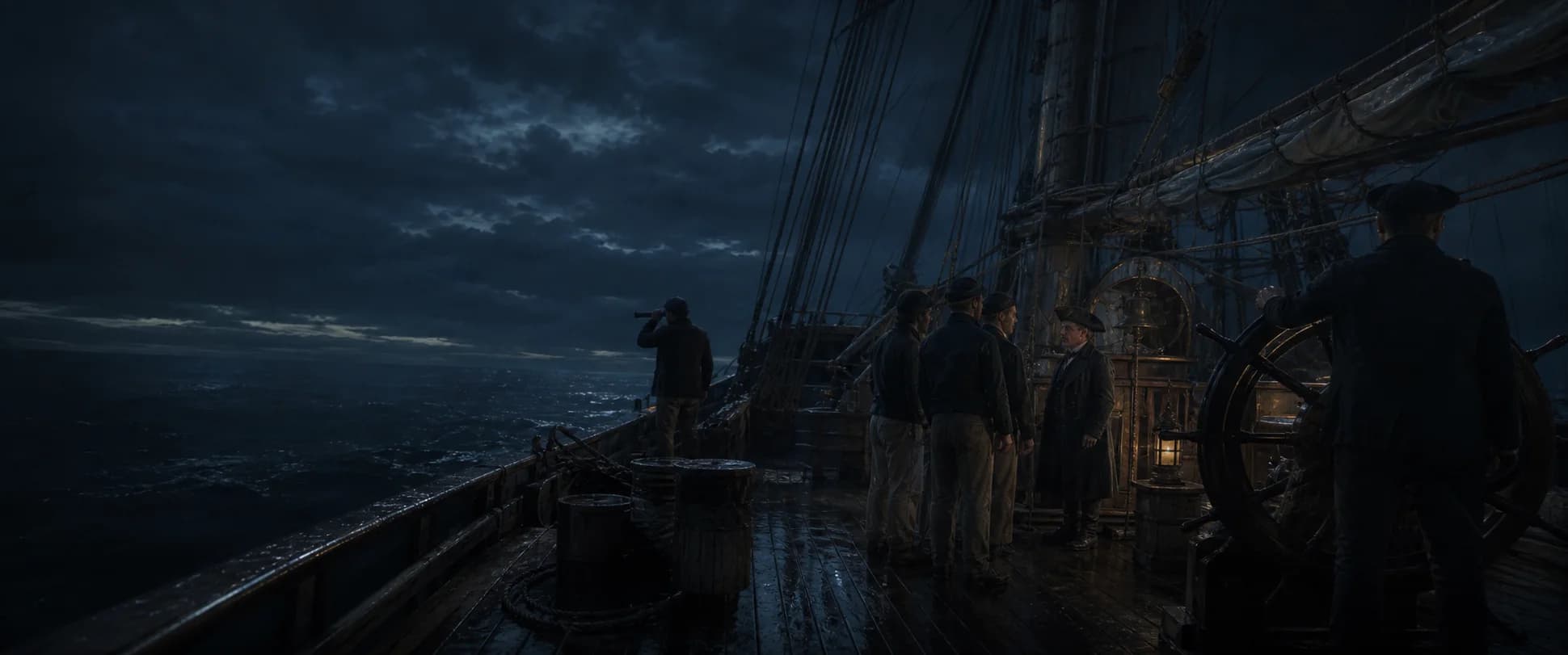 02
02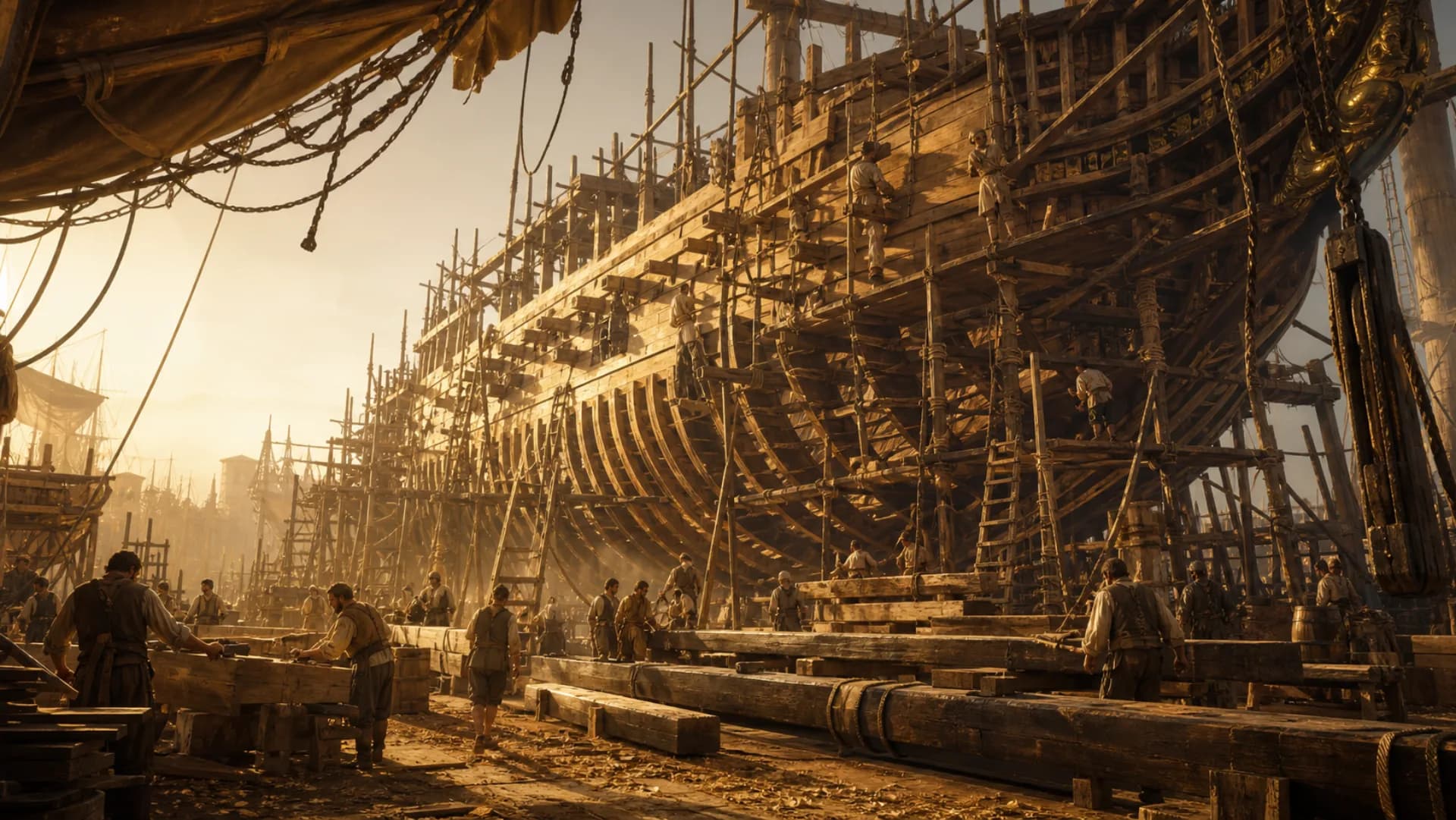 03
03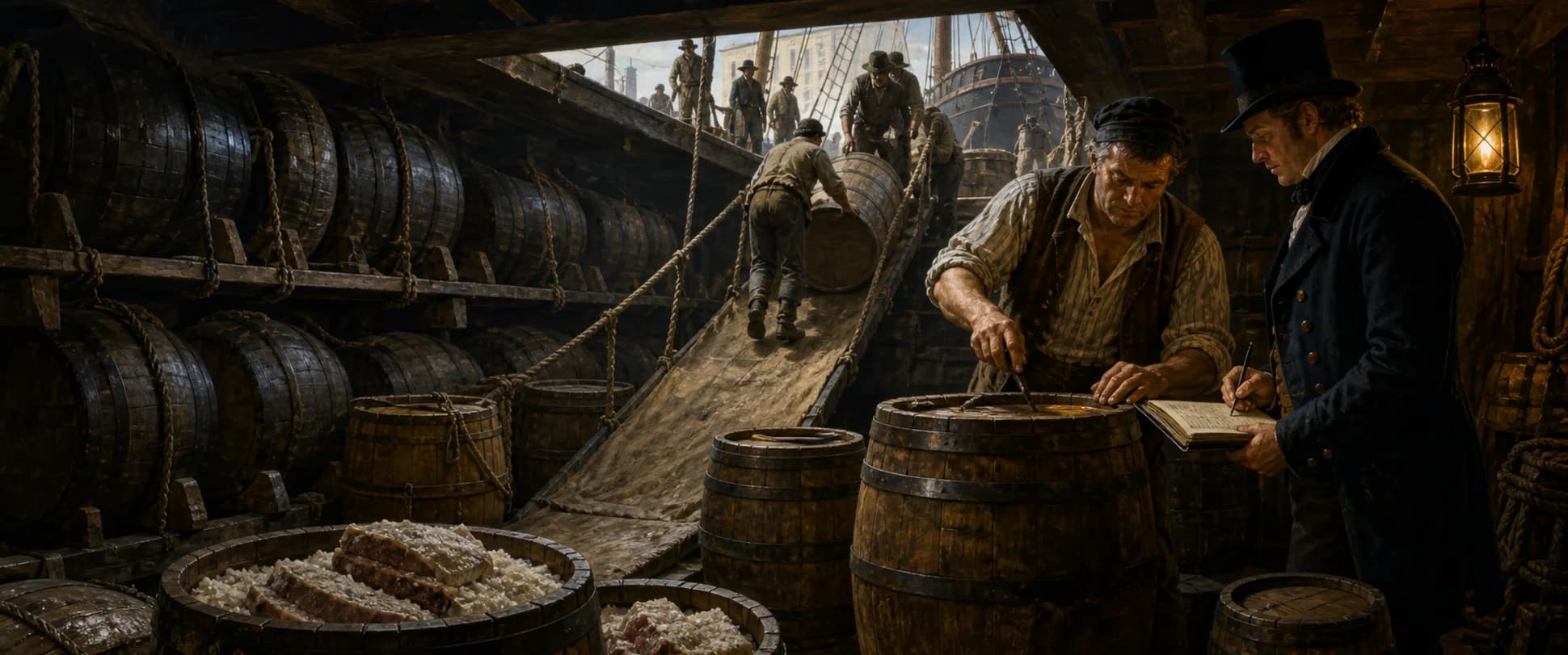 04
04