 crew
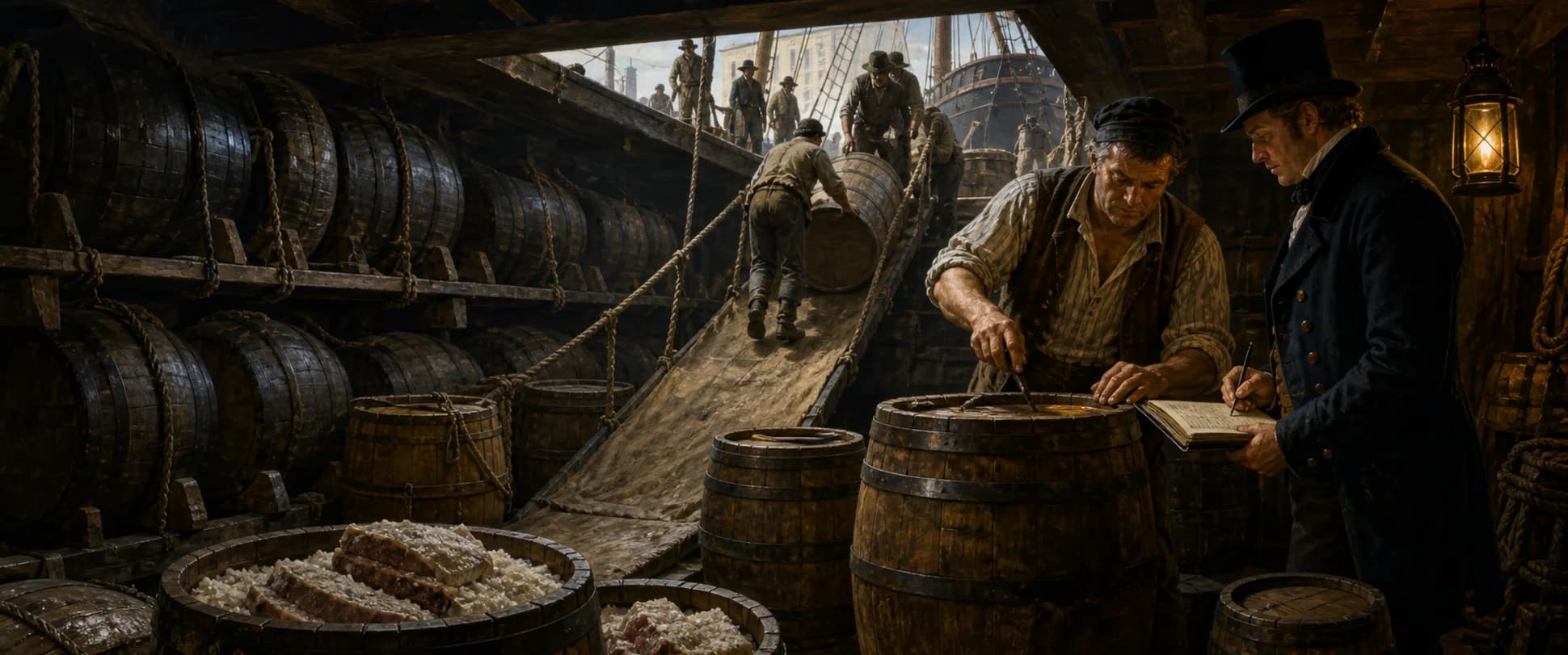
crewThe ledger lists twelve water casks; a loose hoop is dripping in the deepest tier
Sailing
Sail handling, steering and lookout work keep the ship moving.
Maintenance
Carpenters and sail-and-rope specialists continually address wear and damage.
Stores
Food, water, cooking and hygiene determine the voyage’s practical limit.
Cask named the family; barrel often named one particular measure
Historic accounts distinguish barrel, hogshead, butt, firkin and keg, with capacities changing by commodity, place and law. Treating every term as one modern barrel corrupts ration, freight and hold calculations.
Size balanced seams and timber against movement and access. A great water cask economized package material but was hard to handle; small casks multiplied heads and hoops while easing issue. The ship loaded a packaging system fitted to people, voyage and hull.
Curved staves, heads and hoops made a pressure vessel through geometry
A cooper seasoned timber and shaped each stave wider at the middle and angled at its edges. Temporary hoops gathered the shell; heat or moisture helped bend it. A croze cut the inner groove receiving each head, and final hoops kept the assembly compressed.
The repairable structure depended on every stave, joint, groove and hoop. Dry shrinkage, split wood, a loosened hoop or a struck head caused loss. Casks needed inspection and conditioning before filling, while an old contents could taint water unless the vessel was properly cleaned.
Water, drink, salt meat and dry stores imposed different container failures
Fresh water could leak or acquire odour from timber, old cargo and dirty handling. Poor taste did not prove disease, but discouraged drinking. Salt meat depended on its brine; a leaking cask could retain apparent inventory while losing preservation. Drink faced leakage and evaporation.
Dry stores remained vulnerable to damp, insects and rats. Purser or steward controlled quantity and issue, cook used the contents, and cooper maintained the package. Powder could also travel in special casks, but belonged in a separate magazine under dryness, fire and impact precautions—not beside routine provisions.
Stowage managed weight, issue order, ventilation and the motion of every cask
A full cask altered draft, trim and stability. Slopes, tackles and rope lowered it; wedges, dunnage and neighbouring tiers prevented rolling. Heavy stores favoured low positions, while early issue and inspection demanded access. No single rule reduced the plan to lowest is best.
A hidden leak could send water to the bilge or brine across other cargo. Marks, a stow plan and rounds connected ledger to location. When well water rose, the crew still had to distinguish hull ingress, rain and a failed cask before the voyage's drinking water disappeared.
The ship's cooper inspected, opened and repaired casks, then shook empties down
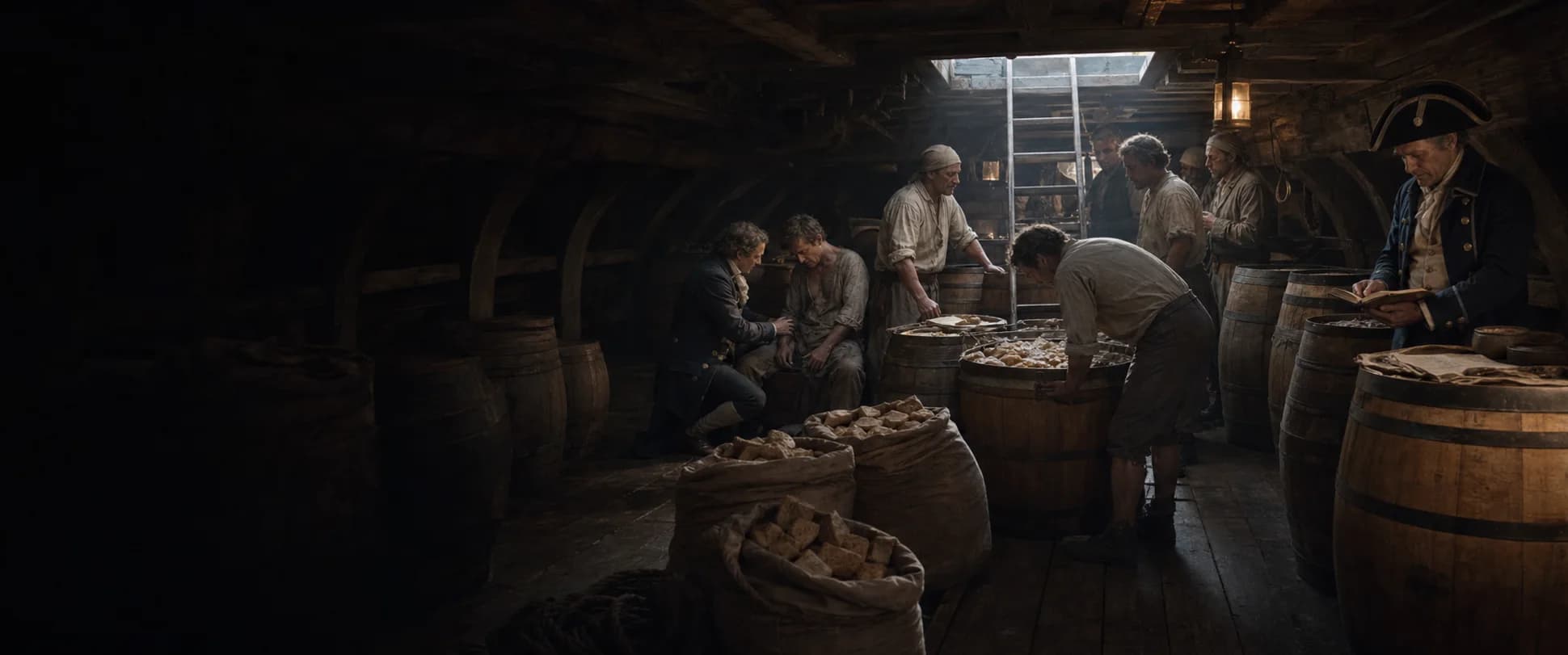
A large warship might carry a cooper. He rarely made its whole supply from raw timber at sea; more often he kept food and water containers tight, opened them for the purser and repaired hoops, staves and heads. Early discovery allowed transfer before a leak forced a new port.
Empty casks consumed hold volume. The cooper could disassemble them into staves, heads and hoops, bundle the pieces and raise them again when watering or loading loose goods. This capacity made the cask a circulating maritime package and kept an empty one valuable.
Questions
Continue exploring this subject
Were barrel and cask the same word?
Cask is the broad container family. Barrel often denoted one regulated size, so butts, hogsheads and firkins should not all be converted into one barrel.
How could a wooden cask hold liquid without glue?
Hoops compressed shaped staves around heads set in croze grooves, and wetted timber swelled. Bad wood, workmanship or hoops could still leak.
Did bad-tasting cask water always mean poison?
No. Timber and storage changed taste, while disease risk depended on source, cleaning and contamination—distinctions historical crews could not reliably make.
Did the ship's cooper build every cask from scratch?
Usually shore coopers supplied most large casks. The shipboard specialist focused on inspection, opening, repair, hoop adjustment and disassembly.
Was gunpowder carried in wooden casks?
It could use specialized containers, but magazine storage required dryness and isolation from flame and impact. It was not handled as an ordinary provision cask.
Sources
Continue the research
- Roll out the BarrelUSS Constitution Museum
- Ranks + Rates: CooperUSS Constitution Museum
- Cooper's CrozeSmithsonian National Museum of American History
- Cooperage East Range, Royal Clarence Victualling YardHistoric England
- Water, water, everywhereUSS Constitution Museum
- Life at sea in the age of sailRoyal Museums Greenwich
 01
01 02
02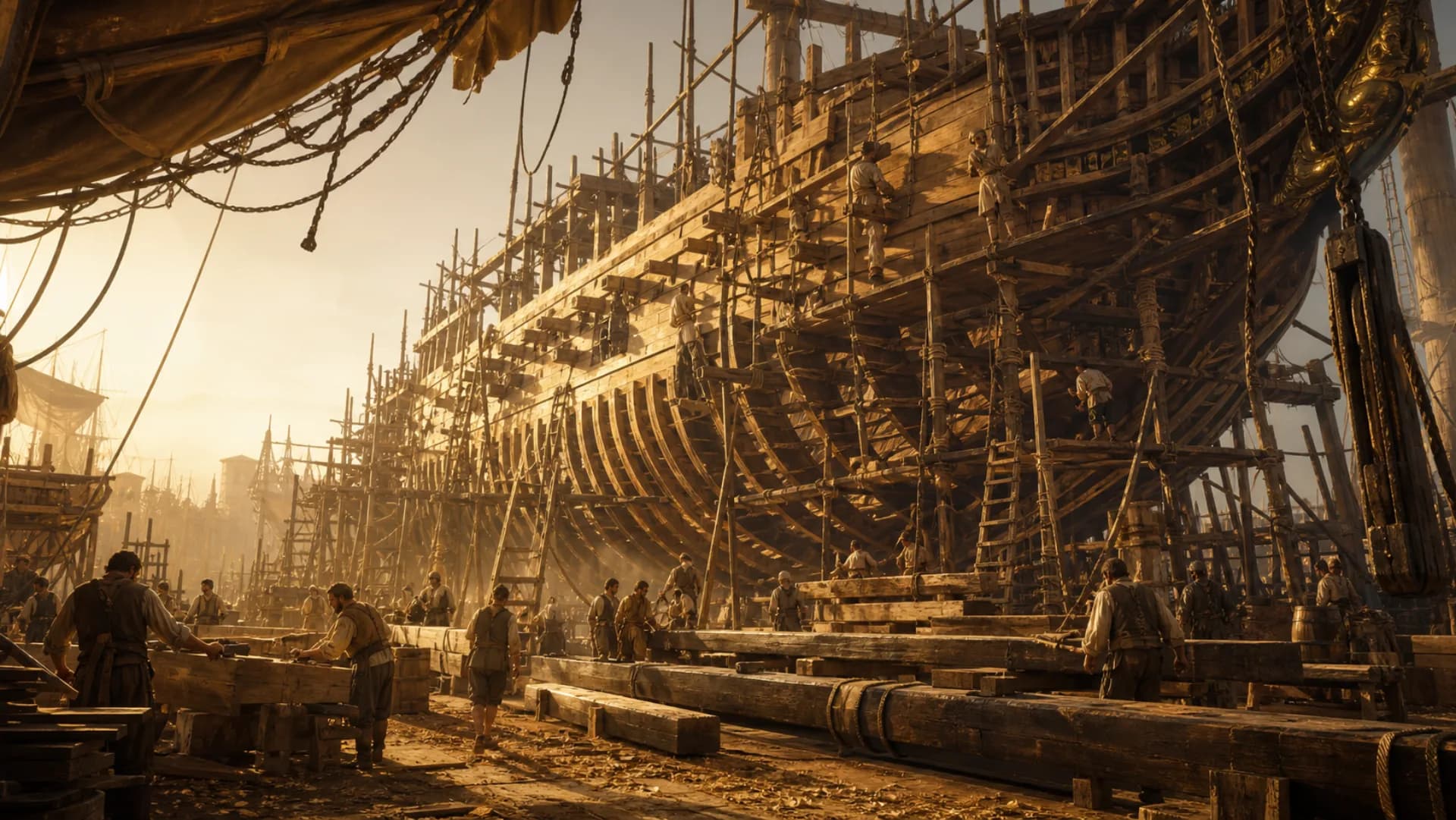 03
03