 crew
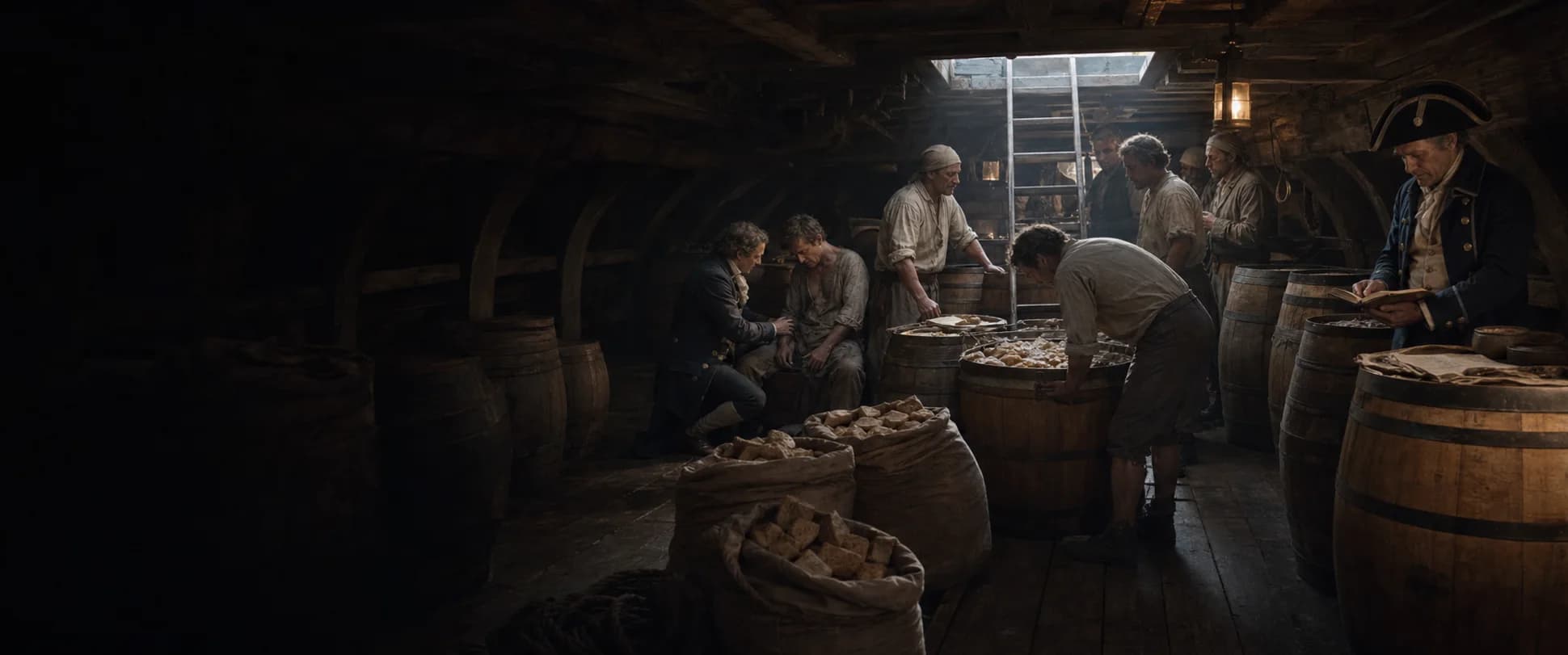
crewThe ledger shows twelve water casks; the two deepest in the hold are leaking
Sailing
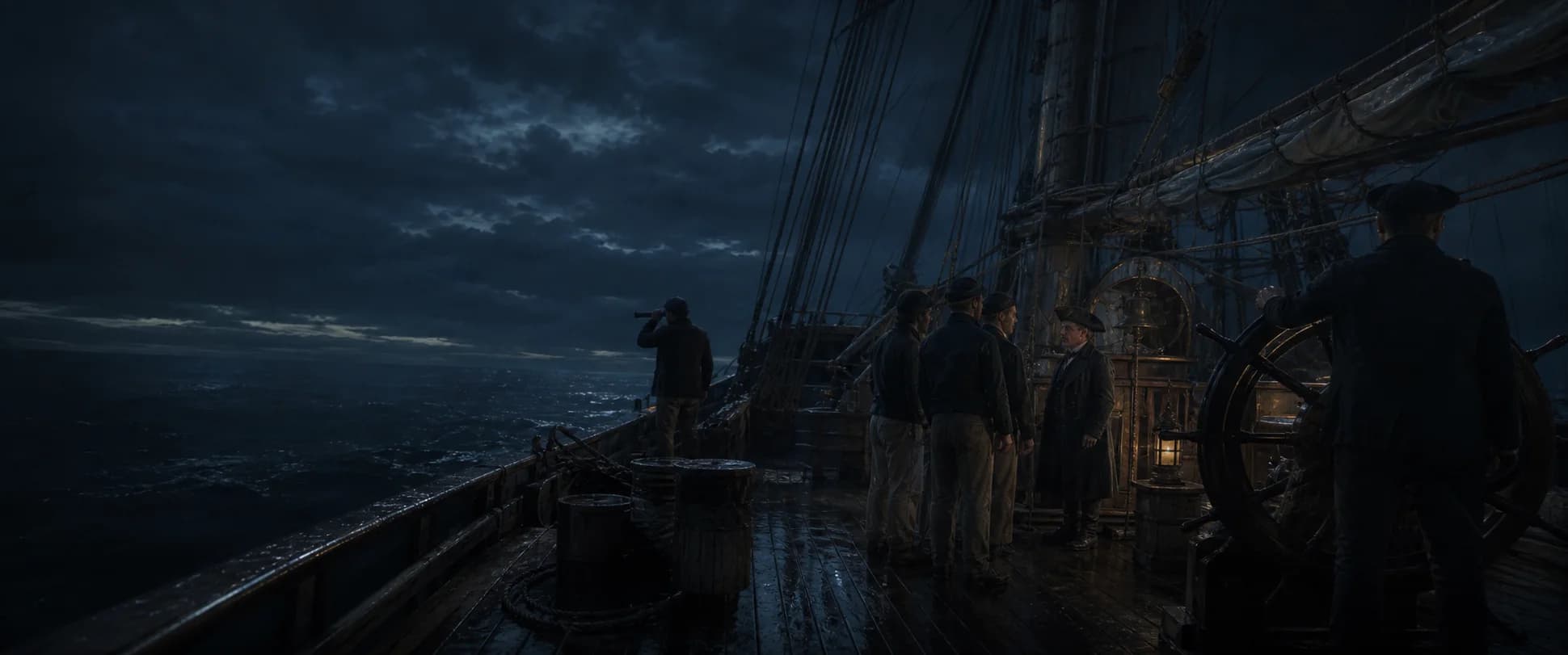
Sail handling, steering and lookout work keep the ship moving.
Maintenance
Carpenters and sail-and-rope specialists continually address wear and damage.
Stores
Food, water, cooking and hygiene determine the voyage’s practical limit.
Durability shaped the ration; institutions decided its issue
Long voyages favoured food that survived without refrigeration. Dried ship's biscuit, salt beef or pork, fish, dried peas, cheese and alcoholic drink recur in European records. Exact scales changed with state, period, navy, merchant service and route. One British table cannot serve as a universal menu for every seafarer.
A ration scale connected people, days and cargo space; issue still relied on pursers, storekeepers, cooks and each mess. Food entered for three months did not automatically become three months of healthy work if its quality was poor, casks leaked or the number aboard changed. Victualling was a nutritional, financial and disciplinary system at once.
Casks carried a voyage while concealing leakage and contamination
Fresh water stored in wooden casks could acquire flavour and odour from timber, previous contents and microbial activity, while loosened hoops allowed loss. Sailors might tolerate unpleasant water, but bad taste, visible change and disease-producing contamination were not identical—and they lacked modern microbiology to distinguish risk consistently.
Stowage, bilge damp, ventilation and access shaped inspection. In steady rain, crew could lead runoff from cleaned canvas into casks after the first water washed away salt and dirt. Heating seawater and condensing vapour also made fresh water, but early stills were constrained by fuel, output, scale and repair and did not create an infinite supply. Bligh's 1789 open-boat narrative records water issued at fixed times, while the da Gama voyage describes cooking in seawater when drinking stores ran short and a port became necessary. Rain and distillation supplemented—not replaced—inventory, sound containers and reachable watering places.
Biscuit and salt meat were durable, not immune to loss
Ship's biscuit baked flour, water and a little salt into a dry product, then often needed soaking in broth or drink before eating. Damp encouraged mould and storage insects including weevils. Salt meat likewise depended on the original material, curing, cask and brine. Preserved meant delayed deterioration, not indefinite safety.
The cook worked with hard, salty and variable stores beside a constrained fire that created its own hazard. Rats and insects consumed calories and contaminated sacks, casks and working spaces. Inspection by lot, isolation of spoiled stores, recorded shortages and early replacement in port were more dependable than discovering on issue day that the ration could not be completed.
Scurvy exposed the delay between practical observation and medical system
Scurvy follows prolonged vitamin C deficiency and can begin with fatigue, gum changes and altered healing before severely disabling a crew. In the seventeenth century, surgeon John Woodall associated long salt diets and voyage illness and gave citrus juice a prominent place, yet that experience did not immediately become uniform, sustained fleet supply.
Citrus had to be bought, preserved, issued and protected from diversion, while medical theory could place useful observation beside ineffective treatments such as bloodletting. The Royal Navy adopted citrus prevention more systematically only around the end of the eighteenth century. Both parts matter: mariners and surgeons recorded the relationship early, while institutional prevention remained slow and uneven.
A missing ration eventually appeared at the wheel and aloft
Insufficient calories, dehydration, diarrhoea, fever and scurvy all reduced available hands. The watch bill still needed filling: steering, lookout, pumping and sail work passed to healthier shipmates, reducing their rest and increasing the chance of a missed report, fall or mishandled rope. Crew health was an operating capacity, not a number confined to the sick berth.
Opaque deductions, discrepancies or conspicuously different food for officers could also damage trust. A captain might shorten the route, seek another watering place, cut nonessential labour or change the ration; each choice altered strength, perceived fairness and arrival odds together. The most reliable system allowed store, galley, medical and watch records to check one another.
Questions
Continue exploring this subject
What did age-of-sail sailors usually eat?
European ocean-going vessels commonly carried ship's biscuit, salt beef or pork, fish, dried peas, cheese and drink. Diet varied with country, period, route, religion and service.
How did cask water, collected rain and seawater distillation work together?
Cask inventory remained the base. Cleaned canvas could collect rain after the first salty runoff, while distillation was limited by fuel, condenser, output and repair. Every source still needed clean handling and ration accounts.
Did sailors simply eat the weevils in ship's biscuit?
Accounts describe crews knocking out or tolerating insects, but infestation represented lost food and poor storage. It should not be romanticized as an ordinary nutrient.
When did sailors know citrus helped scurvy?
Clear recommendations existed by the seventeenth century and relevant experience was older. Consistent fleet-scale preventive policy developed much later, especially around the end of the eighteenth century.
Why did ration failure threaten navigation?
Disease and poor nutrition reduced the people fit for watches, forcing more work onto the rest and weakening steering, lookout, sail handling, pumping and emergency response.
Sources
Continue the research
- Life at sea in the age of sailRoyal Museums Greenwich
- The ship's biscuitRoyal Museums Greenwich
- The surgeon's mate by John WoodallRoyal Museums Greenwich
- Samuel Pepys and the NavyRoyal Museums Greenwich
- Sustaining the Empire: War, the Navy and the Contractor StateRoyal Museums Greenwich
- Two Years Before the MastProject Gutenberg
 01
01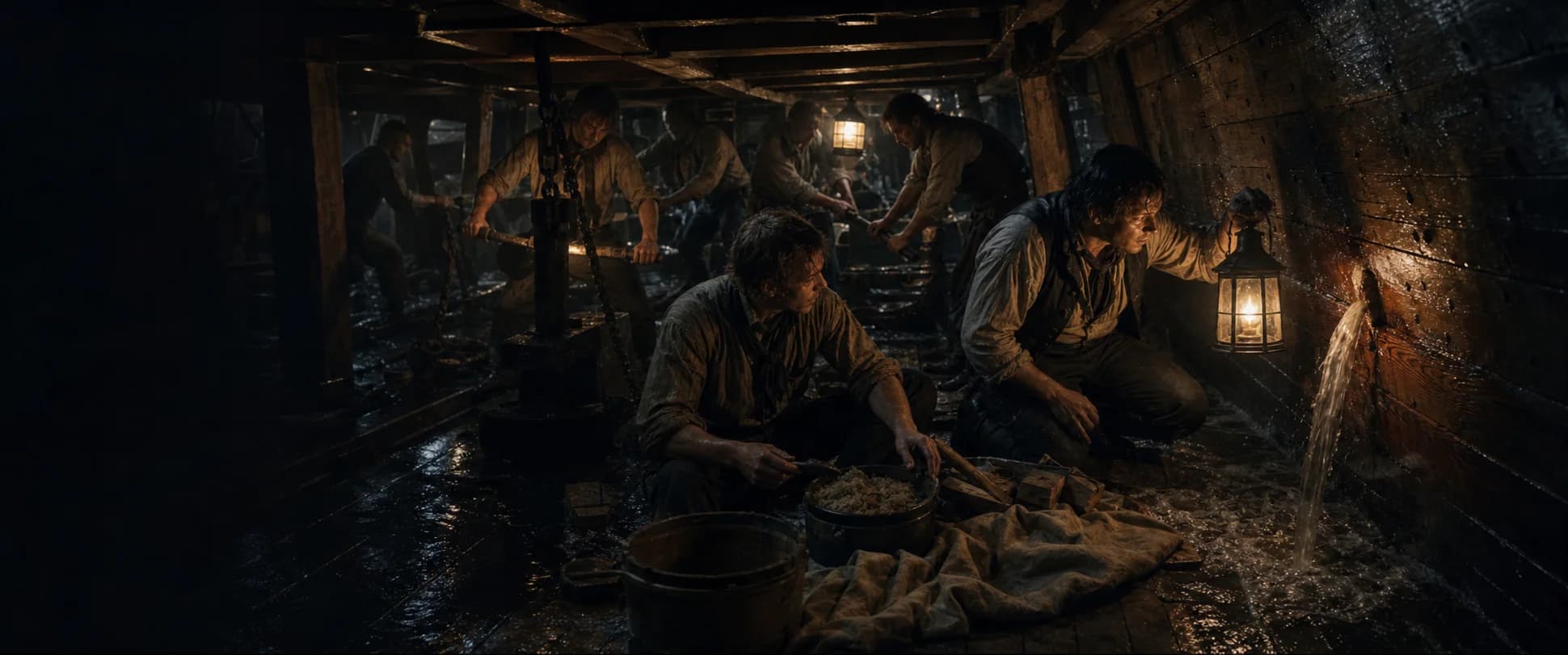 02
02 03
03