INPUT
→Sight the vessel
Read shore signals, incoming ship, weather and meeting point.
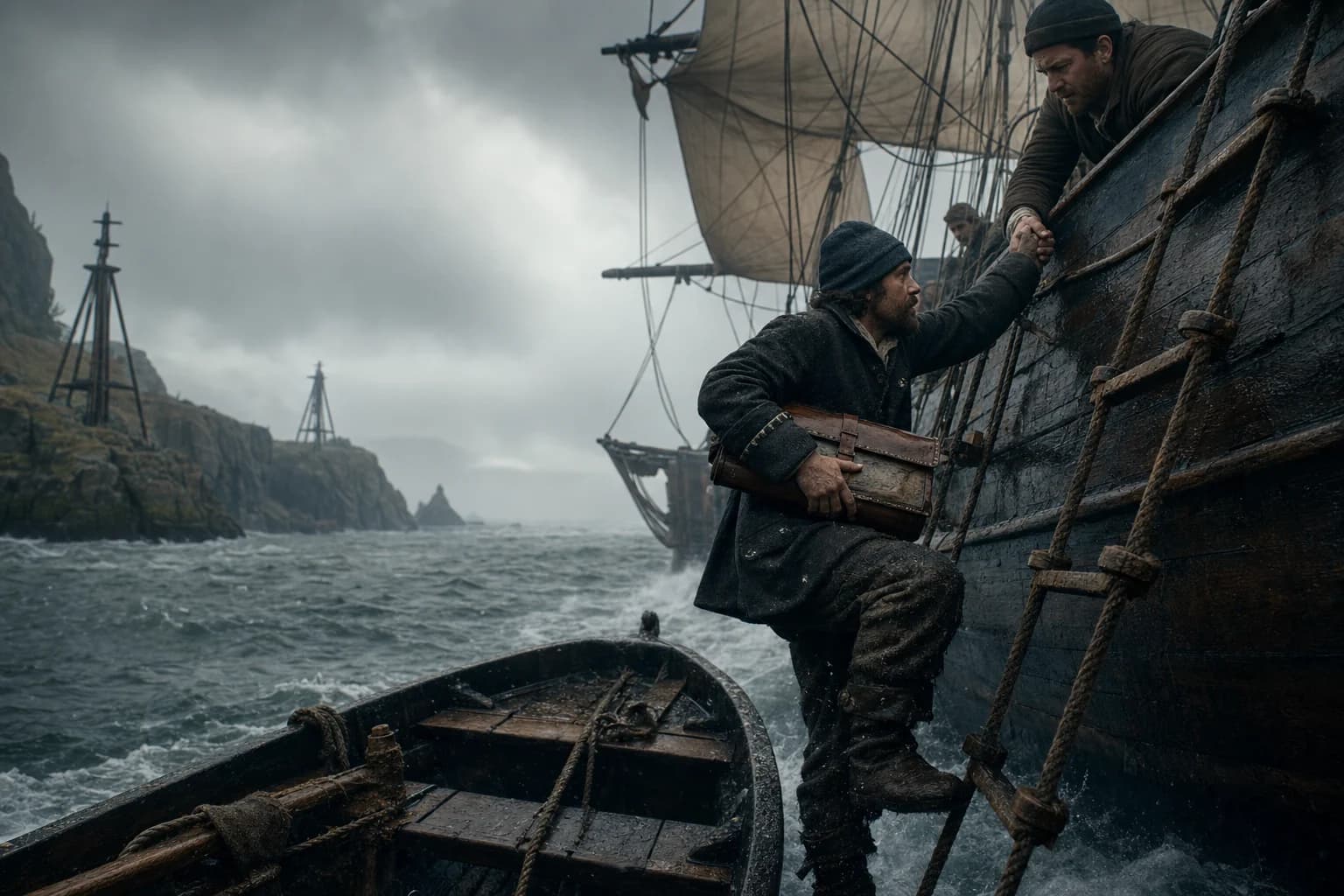
A real Age of Sail career dossier · 03
Harbour Pilot · Loodsman · Pilote
The specialist who carries a changing local waterway in memory and judgment.
A harbour pilot was a local navigation specialist for a particular port, estuary, strait or hazardous coast. Once aboard, the pilot used depth, tide, wind, marks and traffic to guide a vessel through that water. A sailing master managed the ocean passage; a pilot served a limited locality; a helmsman executed helm orders. Taking a pilot aboard did not necessarily remove the captain's ultimate responsibility, which depended on local law and period.
Information arrives, judgment forms, and work passes on through a complete watch.
Read shore signals, incoming ship, weather and meeting point.
Come alongside offshore and exchange information on an unfamiliar deck.
Compress tide, depth, marks, draught and handling into consecutive orders.
Complete responsibility and information transfer at berth, anchorage or sea.
Pilots might race for an incoming ship; first boarding could determine earnings.
A port defined district, tariff, qualification and handover point.
Some vessels had to carry a pilot, while liability still depended on local law.
Know depth, current, bank, landmark and mark changes across the tide.
Read draught, rig, handling, damage and crew condition immediately after boarding.
Convert tide and channel into instructions for helm, mate and sail handlers.
Record conditions, captain's orders and anomalies for collision or grounding disputes.
Institutions, experience, patronage, and opportunity shaped each person’s route.
Build primary experience through repeated passages in one water.
Learn tides, marks, tariffs, vessel types and casualty record.
The institutional threshold varied by port and period.
Experience concentrated its value in the highest-risk movements.
Hazards multiplied as an ocean vessel approached port: banks, reefs, tideways, shifting channels, confined turns, cross-currents and traffic appeared together. A pilot brought accumulated local geography, weather and tide knowledge aboard an unfamiliar ship for the final passage between open water and anchorage or quay.
Royal Museums Greenwich describes Swansea pilots as experienced master mariners with detailed knowledge of particular harbours. Seventeenth-century comparative evidence also shows English vessels hiring pilots for limited portions of a voyage, especially entry and departure. Assignment by locality rather than whole voyage defined the occupation.
A pilot had to judge rig, draught, handling, loading and available crew against tide, visibility and wind. A deep ship had fewer channels; a square-rigger to windward needed room; damage or a weak crew demanded a wider margin. One waterway did not yield one route for every vessel.
Pilots in many districts went offshore in small craft or purpose-built gigs. Historic England's work on the Isles of Scilly documents pilot-gig facilities used for more than three centuries; eighteenth- and nineteenth-century crews could race to reach incoming vessels first. Pilotage therefore depended on shore lookout, boats and boat crews as well as the pilot aboard ship.
Pilots repeatedly cast the lead for depth and bottom, aligned hills, churches, towers and headlands, and watched buoys, beacons, breakers and water colour. Exeter's role comparison specifically records the Dutch loodsman sounding with a plummet while guiding a vessel between river mouth, harbour and sea.
Written knowledge mattered too. Portolans, rutters, waggoners, sailing directions and pilot books preserved coasts, courses and hazards. Yet sandbanks shifted and storms altered channels or aids, so current experience corrected what the printed page could no longer know.
The sailing master navigated the wider passage and maintained charts, position and logs. The pilot temporarily supplied denser local knowledge. The helmsman moved and held the rudder in response to orders. A pilot might issue rapid helm and sail advice, but still worked with the captain and ship's officers.
It is too simple to say that a pilot became captain on boarding. Allocation of responsibility depended on law, compulsory-pilotage rules, contract and precedent. British High Court of Admiralty records place pilotage beside collision and salvage among civil disputes, showing that one harbour movement could produce a later contest over liability.
A dependable pilot knew depths and currents across tidal states, which marks vanished in weather and how different rigs and loads altered turning room. Training grew from repeated local passages and work under experienced pilots, not from reading one harbour guide.
As administration developed, certificates, examinations, districts and tariffs entered the record. Royal Museums Greenwich preserves a Cinque Ports pilot certificate from 1829, and archival guides identify nineteenth-century London pilot registers and examination books. Such evidence establishes requirements in those systems, not a universal licence for every earlier port.
Pilotage was commonly attached to one arrival, departure or hazardous passage, with charges shaped by distance, tonnage, draught and local tariff. Where pilots had to find a ship before securing the job, boat speed, weather and competition affected actual earnings.
There is no responsible single wage for an Age of Sail pilot. Guilds, harbour authorities, open competition and compulsory systems divided fees differently. Sound income history needs a named port and tariff and must separate the customer's charge, boat expense and individual return.
Pilots launched in bad weather, boarded unfamiliar vessels and immediately assessed unknown crews and handling. A mistake could ground a ship, close a channel, destroy cargo or kill people; a correct judgment could still be defeated by a squall, failed rope or slow execution.
That concentrated risk justified a professional service. An ocean navigator could not continuously know every moving shoal and altered buoy. Pilots converted updateable local experience into shared safety infrastructure for the port.
career.harbour-pilot
The sailing master managed the passage, charts, position and logs. The pilot specialized in one port, estuary, strait or coast and joined for that limited section.
Not simply. The pilot supplied or conducted local navigation while the captain and officers remained involved; legal responsibility varied with local rules and period.
A small pilot boat or gig commonly carried the pilot offshore to board, with the meeting point set by local waters and practice.
They combined lead-line soundings, tide, landmarks, leading lines, marks, breakers, water colour and vessel draught with charts and sailing directions.
Some later districts used certificates, examinations and defined jurisdictions; others relied on local recognition, guilds or competition. Requirements were not uniform across early ports.
Ocean experience could not replace current local knowledge of depths, shoals, tides, aids and port rules.