INPUT
→Receive state
Combine navigation, hull, stores, weather and personnel reports.
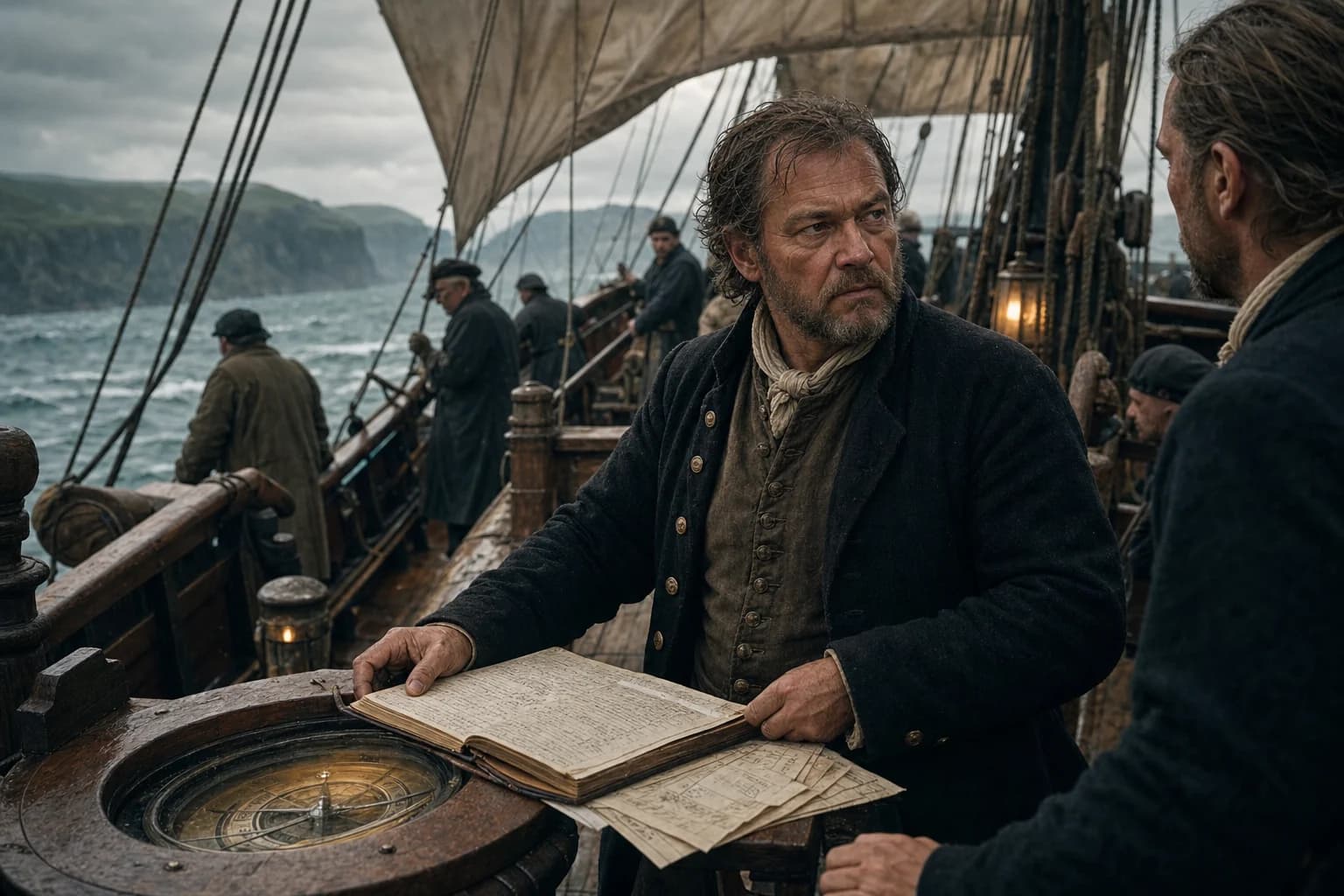
A real Age of Sail career dossier · 01
Captain · Master · Skipper
The person who compresses mission, people, hull and cargo into one final decision.
An Age of Sail captain bore ultimate responsibility for the vessel's mission, discipline and major decisions, but captain was not one identical office across countries and centuries. A merchant master could combine navigation, cargo and an owner's interests; a naval captain exercised military command while a sailing master handled professional navigation; a privateer commander also operated under a commission and prize law. Captains did not personally steer, trim sail or calculate every position.
Information arrives, judgment forms, and work passes on through a complete watch.
Combine navigation, hull, stores, weather and personnel reports.
Test whether mission, time and safety margin can coexist.
Set course, canvas, watch or battle deployment and its execution chain.
Audit execution, record deviation and preserve evidence for later accountability.
Balanced seaworthiness, contract, cargo, cost and owner interests; a master might also own shares.
Centered military mission, readiness and discipline while a sailing master could handle navigation.
Authority came from wartime commission; captures faced prize procedure, profit and litigation.
Set priorities when weather, condition, people and mission conflict.
Turn specialist reports into orders that departments can execute together.
Understand the legal consequences of contract, log, discipline, commission and port papers.
Audit advice without personally taking every observation or trick at the helm.
Institutions, experience, patronage, and opportunity shaped each person’s route.
Social and educational gates varied sharply by service.
Accumulate passages, personnel, records and casualty response.
Technical competence did not create command automatically.
Success could open a larger organization; casualty could end the career.
Modern English encourages us to call every vessel's senior person its captain, but early modern documents used different terms. Comparative research on seventeenth-century Italian, Dutch, English and French merchant shipping finds schipper common in Dutch commerce and master long established in England. The English commercial use of captain as commander, legal superior and chief navigator becomes visible in the 1580s and was especially associated at first with privateering.
A captain in a state navy belonged to a different institutional structure. Large warships could place supreme military command in a captain while assigning technical navigation to a master or sailing master. Master can therefore mean the commander of a merchant vessel in one source and the naval captain's navigation specialist in another. Country, date and service must decide the translation.
Early nineteenth-century United States naval regulations required a newly appointed captain to join the ship, verify departmental stores, oversee preparation and records, and bring the complement into readiness. The USS Constitution Museum summarizes the same framework as recruitment, inventories, account books and supervision of the many tasks required before a cruise.
Merchant preparation served a different mission but demanded similar coordination. The commander had to judge seaworthiness, crew and provisions, cargo stowage, contracts, port papers and route conditions while representing owners or merchants. On a small merchantman without a clerk or purser, the master could also keep cargo and financial records.
The captain decided whether to continue a passage, shorten sail, enter an unfamiliar harbour, or respond to sickness, misconduct, water shortage and structural damage. Reports from the sailing master, mates, carpenter, surgeon and boatswain had to be weighed against mission and time before one course of action was ordered.
Helmsmen and watches steered; a sailing master could organize navigation; mates and the boatswain directed sail handling and deck labour. Portraying the captain as the one person who 'drove' the ship hides the cooperative structure of a large sailing vessel. Ultimate responsibility meant coordinating specialists, not replacing them.
Seventeenth-century evidence shows a master managing navigation, discipline, cargo and finance, sometimes as a part-owner and sometimes as an employee. A supercargo could represent merchants in purchase and sale; without one, more commercial responsibility remained with the master and a small group of senior hands.
From the mid-eighteenth century, masters or owners of most British-registered merchant ships had to maintain crew records, and the Merchant Shipping Act 1850 required masters to keep statutory logs. Compulsory British certification of foreign-going masters and mates also developed only in the mid-nineteenth century. Those later requirements must not be projected onto the fifteenth or seventeenth centuries.
Eighteenth-century descriptions made a warship captain answerable for military government, navigation, equipment and the conduct of subordinate officers. United States regulations of 1814 likewise made the captain responsible for discipline, training, stores and readiness, with preservation and command of the vessel central in action.
The captain directed battle from the quarterdeck, but the gunner controlled ordnance, the boatswain managed rigging and deck hands, the carpenter inspected structure and battle repair, and the sailing master supplied navigational judgment. On USS Constitution's War of 1812 establishment, captain was the highest rank and normally commanded a vessel of at least twenty guns. That is one navy's period-specific arrangement, not a universal threshold.
A privateer was a privately owned armed vessel commissioned in wartime by a sovereign authority. United States archival records for the War of 1812 preserve applications and letters of marque authorizing action against specified enemy shipping. A commander needed to understand the commission, vessel papers, prisoners and the procedure for sending a capture to adjudication.
A capture did not become property because the captain declared it so. Vessel and cargo normally faced prize-court condemnation and sale before proceeds were divided under law or agreement. Pay and prize shares therefore came with the risks of unlawful capture, defective evidence, litigation, defeat and imprisonment. Raiding without a valid commission, or outside it, could place the commander closer to piracy than merchant command.
Merchant command could grow from sea service, work as a mate, navigation, literacy, arithmetic, credit and an owner's trust; some masters owned part of the ship. A more uniform certificate threshold for British foreign-going masters appeared only as examination and certification expanded in the mid-nineteenth century.
State navies awarded independent command through commissioned-officer systems shaped by service, examination, performance and patronage. Technical advancement from ordinary seaman did not automatically lead to captain. A privateer commander also needed owners, investors and a public commission. A credible career tree therefore needs separate merchant, naval and privateering branches.
Naval captains normally received the highest formal officer pay and allowances. For one precise example, the USS Constitution Museum cites an 1812 United States rate of $100 per month and eight rations per day. Merchant commanders might earn wages, voyage pay, commission or ownership and cargo shares; privateer captains could receive a lawful share of condemned prizes.
The other side was shipwreck, combat, disease, mutiny, desertion, cargo loss, arrears, navigational failure, unlawful capture and litigation after return. A subordinate's failure might still expose deficient supervision. Command was a high-authority, high-information and high-liability occupation, not a ceremonial position above practical work.
career.ship-captain
They could in an emergency or aboard small craft, but helmsmen and watches normally steered a large vessel and a sailing master could direct professional navigation. The captain retained final responsibility.
Yes in some contexts, but not by word alone. A merchant master was often the commander, while a naval sailing master normally served below the captain as a navigation specialist.
They often represented owners in cargo, papers and port matters. Where a supercargo sailed, that officer could take primary responsibility for purchase and sale.
A naval captain held a state commission and centered military mission, discipline and combat. A merchant master answered primarily to owners, contracts, cargo and a commercial voyage.
That phrase obscures essential limits. A privateer could capture only under wartime commission and prize law, and captures required adjudication; unauthorized raiding could still be unlawful.
It happened, but was not a universal ladder. Merchant command required experience and trust, while naval command was constrained by commissioned status, education, appointment and social conditions.