INPUT
→Read the order
Confirm vessel, voyage, grade, quantity, budget, deadline and receiver.
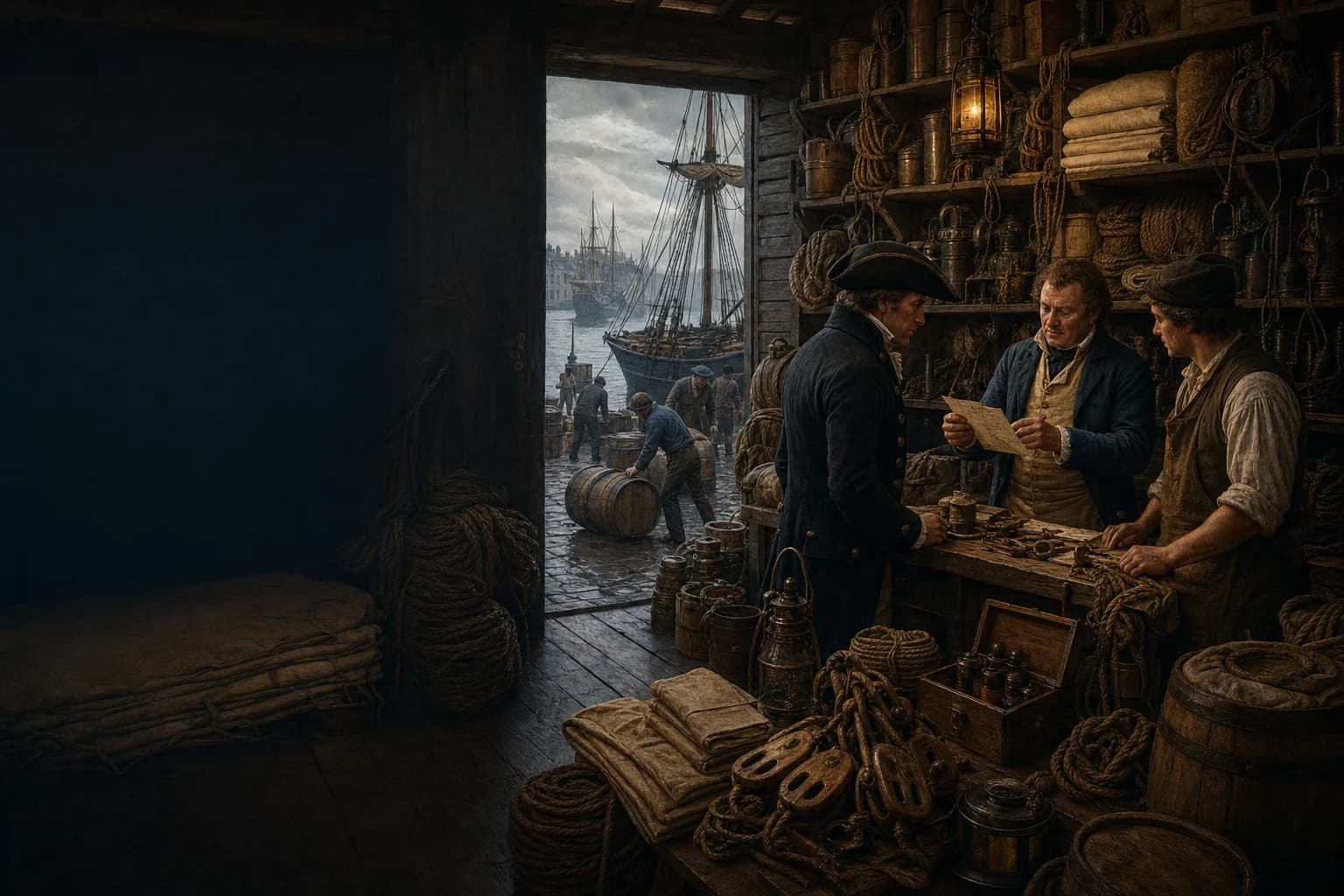
A real Age of Sail career dossier · 22
Ship Chandler · Marine Stores Dealer
The dealer who turns several workshops, warehouses and markets into one usable vessel order before the final tide.
A ship chandler was a port supplier of sea stores, not the purser who administered stores aboard and not the ship's husband who managed the owner's wider affairs. Given a stores list by master, owner or agent, the chandler combined shop inventory with a network of local craftspeople to supply cordage, canvas, blocks, oils, lights, tools, repair material and sometimes provisions. The firm checked specification and quantity, sent goods by cart or lighter and charged an itemized vessel account. The scarce skill was not owning a miscellaneous shop. It was finding the right grade before tide and sailing time, judging quality, coordinating several makers and carrying credit risk.
Information arrives, judgment forms, and work passes on through a complete watch.
Confirm vessel, voyage, grade, quantity, budget, deadline and receiver.
Lock stock and commission missing goods from ropewalk, sail loft, smith and market.
Test grade and size, segregate oils and mark by vessel and lot.
Cross quay and lighter for a counted signature and post every voucher to the vessel account.
Used stock and credit to serve common sea stores and emergencies across many vessels.
Handled larger orders that could include galley stores, medicine, tools and specialist whaling gear.
Supplied against official contract, grade, inspection and voucher without becoming the ship's purser.
Judge substitution by use, dimension, fibre, grade and expected load.
Join inventory, artisan, wholesaler and market into a complete order under time.
Detect damp cordage, adulterated oil, leaking cask, fractured iron and wrong dimension.
Maintain vessel account, signing authority, item price, credit limit and receivable.
Institutions, experience, patronage, and opportunity shaped each person’s route.
Recognize, carry and pack goods while learning grades and port routes.
Handle list, price, maker order, receipt and customer account.
Control quality, stock, delivery time and emergency substitution.
Finance stock and credit and contract whole-vessel or fleet supply.
Chandler originally belonged to candles, fats and lighting supplies. As shipping expanded, waterside dealers gathered rope, canvas, tools, oil and other sea stores in one business. Eighteenth-century London directories list ship chandlers beside ropemakers, anchorsmiths, blockmakers, sailmakers and shipbrokers, marking an identifiable port trade.
That did not create an identical specialist shop in every harbour. A general merchant, grocer, ropemaker or sailmaker might also sell chandlery in a small port, while a factor or agent bought supplies at a distant station. The occupational test is sustained provision for multiple vessels, a stock and artisan network and vessel accounts—not the exact words on a signboard.
An order began with a list from master, owner, ship's husband or agent. The chandler needed vessel, voyage, crew complement, expected duration, spare gear already aboard and budget. Two coils called rope were not substitutes if circumference, length, fibre, lay and intended load differed. Picking by commodity name alone turned a cheap error into a parted line or stopped work at sea.
Royal Museums Greenwich shipping archives place victualling, maintenance, manning, outfit accounts, receipts and voyage accounts in the same business record. Departure supply was therefore a traceable expense chain among owner, master, agent, craft and dealer. A useful list specified quantity, grade, price, delivery point and authorized receiver.
Typical stock could include cordage, small stuff, blocks, hooks, canvas, oakum, tar, pitch, rosin, linseed oil, tallow, paint, lanterns, buckets, brooms, hand tools, pump leather and ordinary fasteners. Historic England found a cask of many iron nails on Rooswijk and interpreted them as ship's chandlery for repair during the outward passage, a vivid example of small consumables shipped by the cask.
An anchor, complete sail, custom block, heavy cable or complex ironwork more often came from anchorsmith, sailmaker, blockmaker, ropemaker or blacksmith. A chandler could stock standard goods and commission, chase, consolidate and deliver the rest. The value was assortment and coordination, not magical production of every maritime object.
A general chandlery might sell flour, salt meat, cheese, tea, coffee, tobacco, water casks, galley utensils and a medicine box, especially in a whaling port or combined store. The ledger of Nantucket chandler John Swain records tools, galley supplies, oils, cordwood, tobacco, doctor's boxes and carpenter and blacksmith labour. Shop boundaries could be wide.
Victualler, however, referred more particularly to provisioning, especially in a naval system. Britain's Victualling Board organized contracts, inspection, preparation, packing and delivery to home and overseas depots and fleets from the late seventeenth century. That official structure cannot be reduced to a navy shopping at a chandlery. Local merchants might serve contracts or emergency purchases, but authority and audit remained distinct.
The chandler checked rope for damp, rot and uneven lay; canvas for width and weight; oil, tar and paint for adulteration; casks for leakage; block sheaves for free movement; and ironwork for fracture and wrong dimension. Packages also had to resist quay rain and handling. Receipt at the shop was not proof of fitness for sea.
When stock failed, the dealer could propose a substitute but not silently pass thin line for cable, a short coil for full length or a low civil grade for a stated requirement. Master or agent needed to see the choice among cost, delay and downgrade and approve it on invoice or receipt. The meaningful decision is the load, weather and maintenance condition under which a substitute fails—not that expensive always wins.
A complete order moved through list, stock check, outside purchase, staged receipt, package mark, cart, dock gate, quay, lighter and shipboard receipt. A waterside address was a real capability. South Street Seaport Museum notes that New York chandler Peter Schermerhorn's store had direct water access from 1799 to 1818.
In a congested port, a late cart, busy hatch, berth shift, turn of tide or customs hold could turn ready into undelivered. The chandler confirmed berth, window, marks, handling charge and receiver. Master, mate, purser or clerk then tallied and signed, recording shortage and damage before goods disappeared into ship's stores.
A surviving chandler transaction log from 1719–1721 uses columns for date, goods or transaction, quantity and cost and ties entries to a person, vessel or captain. Later ship accounts preserve receipt, voucher, outfit account and port disbursement. Chandlery was accounting-intensive trade, not simply cash retail across a counter.
A known owner might receive credit; an unfamiliar master might need cash, an owner's order, agent guarantee or verifiable vessel account. The chandler bore bad debt if ship, owner or unauthorized purchase failed. The vessel suffered if a dealer inflated price, duplicated a bill or paid private inducement. Credit limit, signing authority and itemized price belonged in the order before sailing.
A purser or steward received, preserved, issued and recorded provisions, slops or stores aboard. The ship chandler procured and sold ashore. An agent or ship's husband could represent the owner across berth, fees, repair, crew and supply and choose the chandler. Sailmaker, ropemaker, cooper and smith answered for their particular work.
One firm could combine chandlery, grocery, agency, sail loft or repair and one person might cross roles, but the liabilities still separated by item. Supplying pump leather gave no command over a shipboard repair; administering stores did not turn a purser into a port wholesaler. Keeping the lines creates real negotiation, inspection and dispute.
An apprentice or warehouse hand learned commodity name, dimension, measure, packing and local makers before becoming clerk, buyer or delivery foreman. Judging quality, keeping accurate accounts and finding a night-time emergency supply could lead to management or a partnership. Stock consumed capital, while fire, oil leakage, price shock and customer default could destroy the firm.
War, embargo and colonial trade raised the price of hemp, canvas, tar, timber, food and metal and forced navy contractor, privateer and merchantman to compete. Supply could also depend on impressed labour, slave-produced foods and fibres or predatory commerce. A serious occupation story follows source, contract and beneficiary instead of treating smuggling, grade fraud or supply to violence as a simple profit bonus.
career.ship-chandler
A port supplier who sold or sourced cordage, canvas, blocks, oils, tools, repair material and sometimes provisions from a vessel's list and arranged delivery and account settlement.
The chandler procured, sold and delivered ashore. The purser received, preserved, issued and recorded stores aboard. Lists, receipts and signatures joined their work.
Some firms combined a ropewalk, sail loft or repair shop, but many depended on specialist ropemakers, sailmakers, blockmakers and smiths while coordinating stock, orders and delivery.
Cordage, blocks, canvas, oakum, tar, pitch, oil, paint, lights, buckets, hand tools, pump parts and fasteners were common; a combined shop might add provisions, galley goods, medicine boxes and tobacco.
Not as a general rule. The British navy used boards, yards and contracted systems for victuals, naval stores and ordnance. Local dealers could fill contracts or emergency orders without replacing that administration.
By learning grades, dimensions, measures, accounting, makers, delivery and credit from warehouse, office or a specialist trade, then gaining management responsibility, partnership or capital for stock.