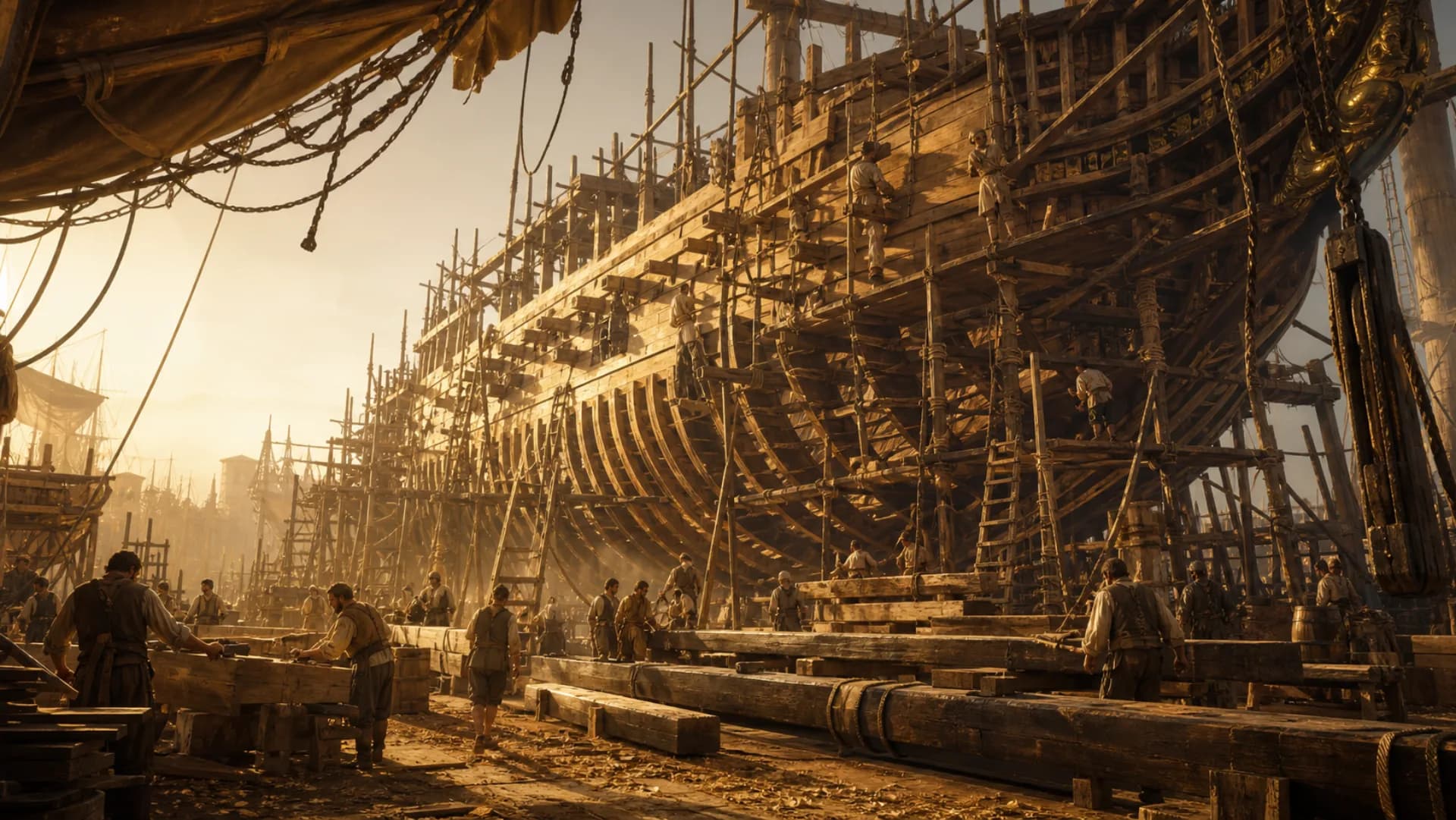
 ship structure
Choose a guardian for the bow
Mast
Masts and rigging transfer sail loads into the hull.
Deck
Deck beams help the hull resist transverse deformation.
Keel
The main longitudinal member forms the structural baseline of many wooden sailing ships.
Before a name could be read, a figure could make it visible
A ship’s name was written in records, contracts and speech, but not everyone at a busy waterfront could read it from a distance. A recognizable figure at the bow translated that identity into shape: a monarch, saint, warrior, animal or character from story.
The carving also let patrons and states place power on the most visible part of the vessel. Heraldry, national emblems and allegorical figures could turn a working hull into a public statement before the crew ever came ashore.
Sailors could treat the carving as more than ornament
The bow meets unknown water first, so a face mounted there easily acquired the role of guardian, witness or personality. Crew beliefs differed by place and period, but a named and represented ship could feel less like timber and more like a companion carrying a shared fate.
That meaning should not be turned into a universal superstition. Some figureheads were chiefly decorative or political; many vessels had none. Symbolism came from the particular name, community and tradition around a ship.
The most conspicuous carving occupied one of the most exposed positions
The bow took spray, impact and weather. A large carving added weight and load, and its joints, paint and projecting parts required repair. Even the strongest symbol had to fit the scale of the hull and the economics of keeping it at sea.
As shipbuilding and taste changed, elaborate groups could shrink into lighter busts or badges and eventually disappear. A figurehead is therefore not a feature of every old sailing ship or a measure of age. It is one historical compromise between identity, imagination and a hard-working bow.
Questions
Continue exploring this subject
Did every old sailing ship have a figurehead?
No. Presence and form varied with period, building tradition, vessel purpose and cost.
Did a figurehead help navigate the ship?
No. Its main roles were identity, display and symbolism; it was not an instrument for direction or position.
Why are female figureheads common?
Myth, allegory and ship names made female figures prominent, but animals, rulers, warriors, saints and heraldic devices were also widespread.
Sources
Continue the research
- Cutty Sark's figurehead 'Nannie'Royal Museums Greenwich
- Friar TuckRoyal Museums Greenwich
 03
03