 crew
crewAn unfamiliar bird has landed on deck
Sailing
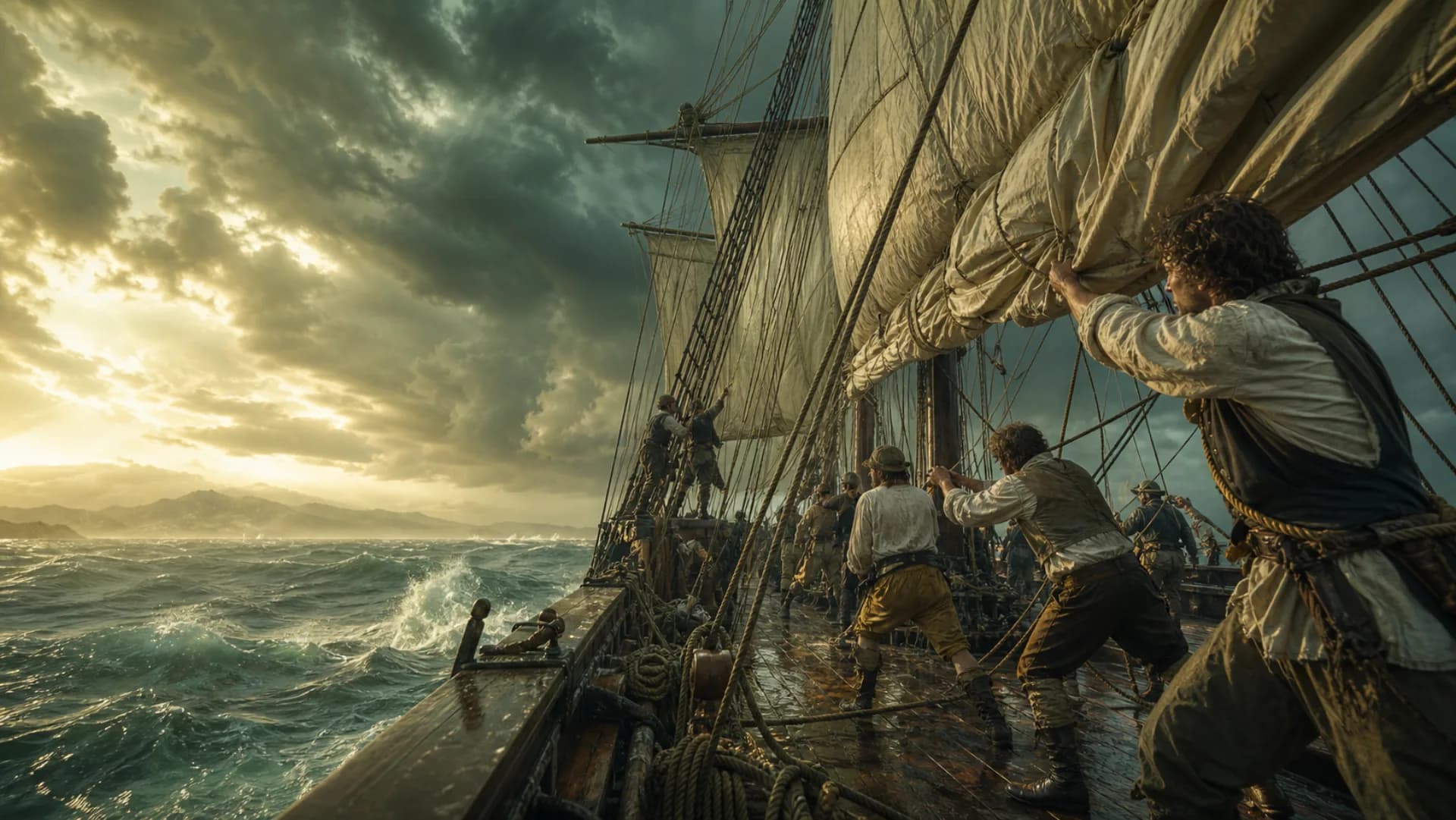
Sail handling, steering and lookout work keep the ship moving.
Maintenance
Carpenters and sail-and-rope specialists continually address wear and damage.
Stores
Food, water, cooking and hygiene determine the voyage’s practical limit.
Before distant forecasts, weather experience had to fit inside a memorable line
Sailors watched cloud colour, halos, wind shifts, swell and small changes on the water. Some signs did precede particular weather patterns, but the observation had to survive memory, pass to newcomers and be spoken quickly on a working deck.
Rhymes and prohibitions compressed experience into portable form. When one happened to be followed by the predicted weather, its authority grew; probability, practical knowledge and supernatural explanation became intertwined. A useful saying on one coast or in one season did not automatically become a universal law.
Shared taboos helped turn strangers into this ship’s company
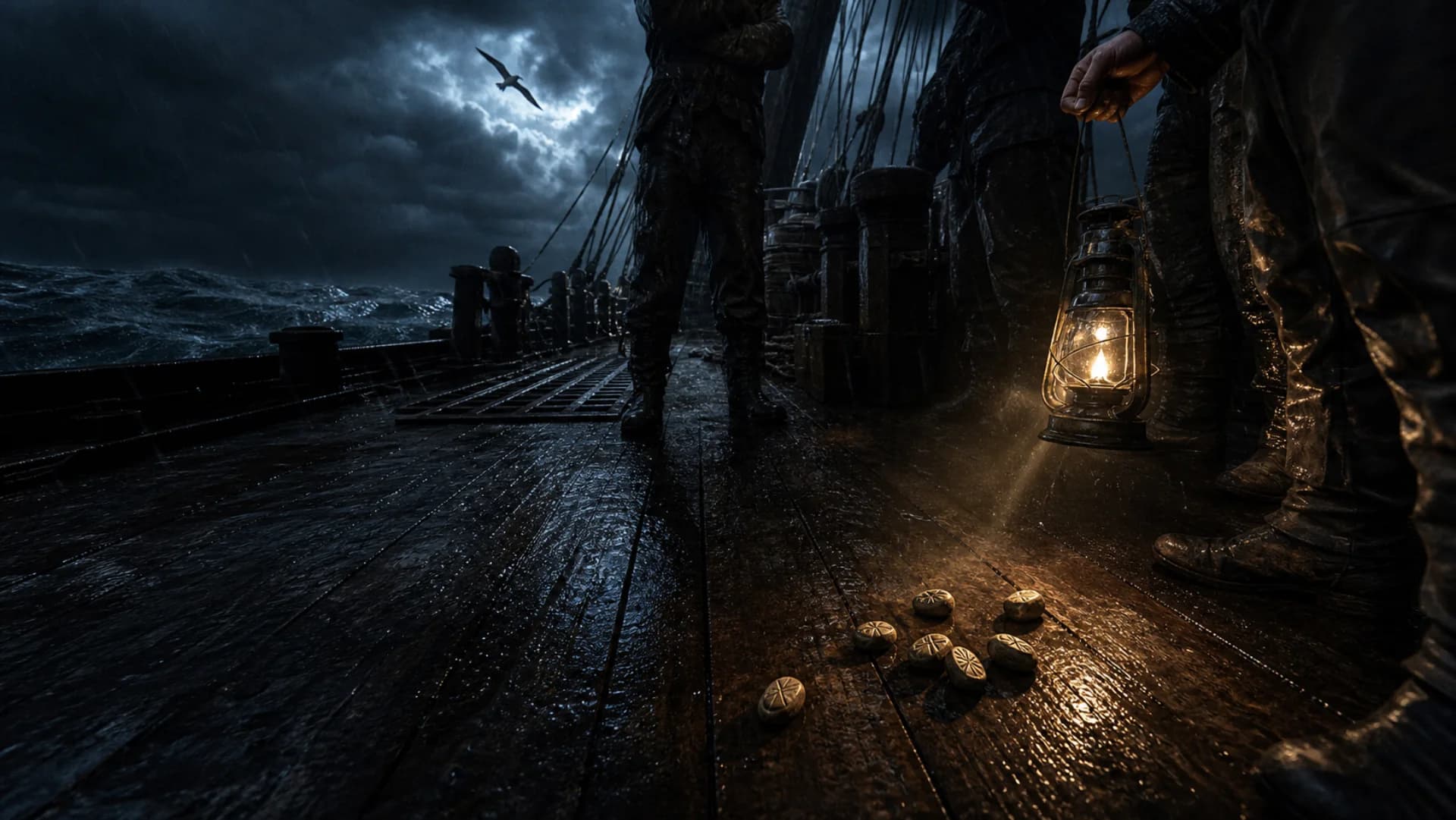
A voyage enclosed people in one hull, where one person’s mistake could endanger everyone. Launching customs, names, figureheads and beliefs about animals gave the group a common language for respect, danger and response.
A taboo could reinforce discipline by making certain actions or objects socially untouchable. It could also do harm. When storm, illness or disappearance lacked a single cause, a crew might place blame on an outsider, an animal or someone said to have broken a rule. Belief made disorder intelligible, sometimes by creating a scapegoat.
Once a belief leaves its port, ‘all sailors believed’ becomes doubtful
Modern lists often combine several centuries, countries and maritime communities. The tidy collection may contain rules that no historical crew ever knew together. Birds, women aboard, renaming ships, whistling and departure days all appear in conflicting accounts and exceptions.
The better question is not simply whether sailors believed a claim. Ask which sailors, in what period and waters, who recorded it, and what work the belief performed aboard. Returned to a community, superstition becomes part of social history instead of a cabinet of curiosities.
Questions
Continue exploring this subject
Were women really forbidden aboard ships?
Some male crews held such prejudices or taboos, but women travelled by sea for centuries as passengers, migrants, family members, workers and, at times, disguised sailors.
Why is the albatross considered unlucky?
Literature greatly strengthened that association. Historical attitudes toward seabirds were more varied than the famous version preserved by one poem.
Did any maritime superstition have a scientific basis?
Some weather sayings may preserve practical observation. Their supernatural explanations are not thereby scientifically validated.
Sources
Continue the research
- Beliefs — Documenting Maritime FolklifeLibrary of Congress
- Life at sea in the age of sailRoyal Museums Greenwich
 01
01 03
03