INPUT
→Inspect the plan
Check cargo, weight, marks, destination, hold condition and available gear.
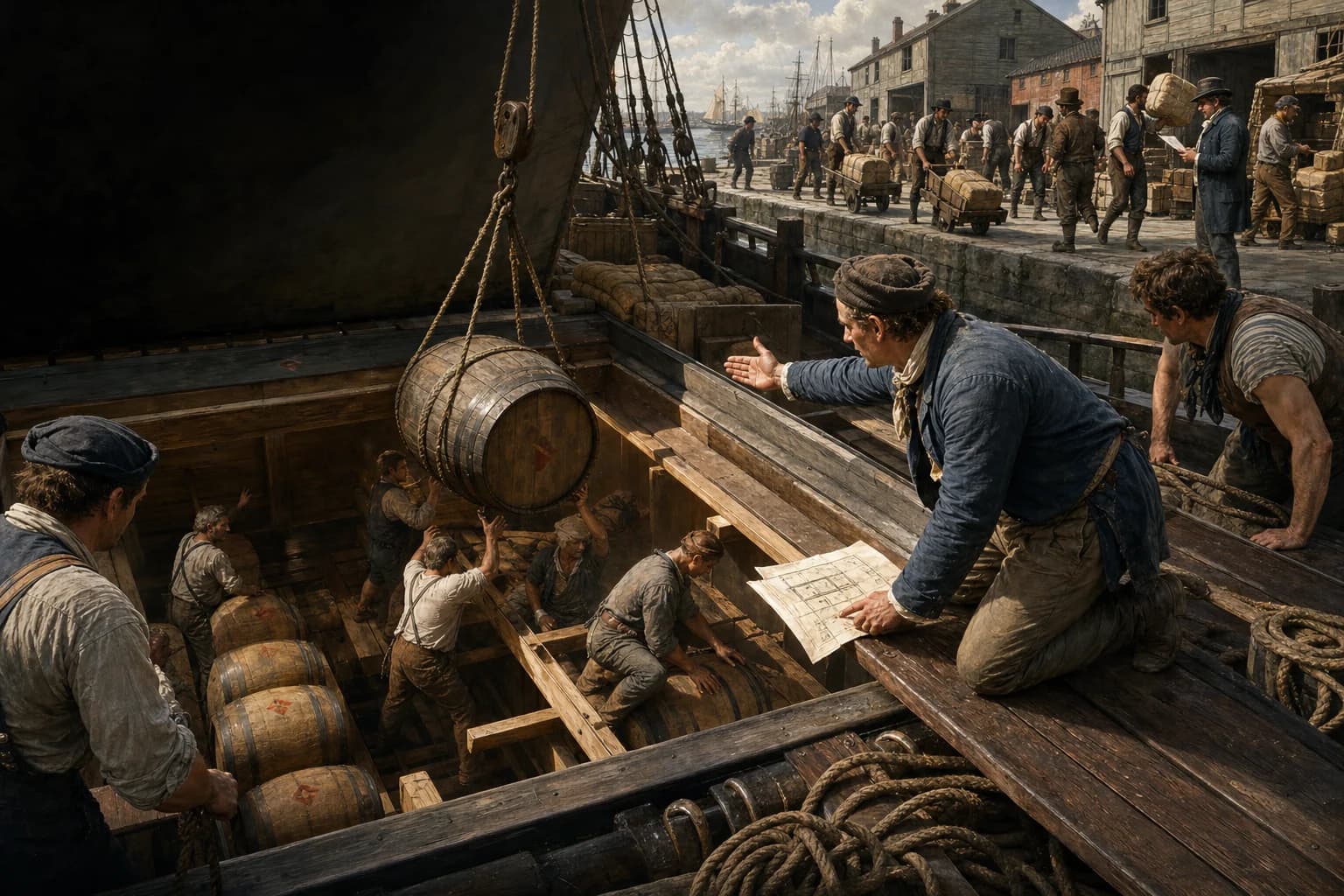
A real Age of Sail career dossier · 21
Stevedore · Lumper · Master Lumper
The specialist who turns packages on a list into a hold structure that can move safely and come apart in port order.
Dockworker is a broad modern search term, not one occupation used consistently by every Age of Sail port. Eighteenth-century British sources more often distinguish lumpers, porters, coalheavers, lightermen and gangsmen; stevedore and its specialist boundary become clearer in late-eighteenth- and nineteenth-century evidence. A stevedore or lumper in the narrow sense worked aboard and especially inside the hold: selecting gear, directing lifts, laying dunnage, distributing weight, wedging casks and preserving discharge order. A porter more often received, carried, sorted and stacked ashore. Both required strength, but shipboard stowage also affected stability, cargo damage and the whole passage.
Information arrives, judgment forms, and work passes on through a complete watch.
Check cargo, weight, marks, destination, hold condition and available gear.
Set gang, signal, sling and safe load path and clear the hatch danger zone.
Hoist in sequence, separate, chock, lash and preserve pump and passage.
Reconcile count, condition, exception and next location with clerk.
Worked inside the ship and handed cargo to shore porters or lighter crews.
Emphasized export loading, hold plan, securing and stable sequence.
Crew, porter and casual hands might cross the ship-shore boundary together.
Translate weight, shape, taint, drainage and discharge order into a working layout.
Select sling, control load path and synchronize hoist, steady and landing.
Use board, chock, wedge and lashing while preserving pumps and access.
Recognize mark, breakage, wet damage, shortage and surplus and stop for witness.
Institutions, experience, patronage, and opportunity shaped each person’s route.
Carry ashore, clear, deliver dunnage and learn beside a gang.
Master gear, command, cargo property and hold landing.
Plan sequence, lead labour and answer for speed and damage.
Take a whole-vessel job, recruit gangs, quote and settle with agent or dock company.
Eighteenth-century English port records did not consistently collapse waterfront labour into one dockworker occupation. Studies list lumpers, coalheavers, lightermen, barge men, keelmen, carters and general labourers. London also regulated Tacklehouse and Ticket Porters, whose jurisdiction could decide which body had the right to move a particular import.
Stevedore is the canonical career here because it best represents specialist shipboard loading and stowage, not because the word belongs everywhere. A sixteenth- or seventeenth-century character should use a documented local title or cargo labourer or porter; later British settings may support lumper, master lumper or stevedore according to port evidence.
London Museum's account of the later dock division calls stevedores more skilled workers who operated aboard rather than on the dock and chiefly loaded exports with care. Nineteenth-century accounts likewise put lumpers in the vessel discharging to quay or lighter and shore porters receiving, sorting, stacking or warehousing afterward.
That boundary was not universal. A small port might use the crew, one gang might work to the shore when a vessel berthed directly, and a merchant, agent or master could hire casual hands. The evidence is employer, work location, responsibility for final placement and the point of custody transfer—not the sight of one man carrying a cask.
The gang inspected hold, bilge, hatch and lift path, then planned heavy goods low, lighter goods above and weight without dangerous concentration or list. Casks needed bilge-aware rows and chocks; dunnage separated packages from damp and preserved drainage and inspection. Wet-sensitive, tainting, flammable or odorous goods could not be mixed casually.
Stowage also ran backward from discharge. First-port cargo buried below created an entire rehandling operation; a blocked hatch or access route could obstruct pumps, gear or emergency work. The stevedore translated a cargo plan into lift sequence and stopped when real package dimensions contradicted the list.
Before steam winches, ports used ship's tackle, yards, capstan, windlass, manual hoist or a simple shore crane. The quay gang rigged the sling, a signal synchronized hoisting hands, hatch workers controlled swing and the hold gang used tag line, handspike, chock and dunnage to land the load. One misunderstood command could strike a beam, part a rope or crush a worker.
Gear followed cargo: a cask sling differed from bale handling, while timber, coal and grain demanded other systems. Skill was not catching a suspended load by force. It was clearing the load path, checking rope, block, hook and sling, excluding idle hands and allowing one foreman to signal.
During loading the master, agent or supercargo supplied cargo and destination requirements and the stevedore made a stable, retrievable arrangement. An 1830 set of sailing orders required the master to oversee stowage, showing that specialist labour executed and advised without automatically replacing the master's final responsibility for vessel and passage.
On discharge, seals, marks, wet damage, broken casks, shortage and shift had to be observed before the hold was disturbed. Sweeping, mixing or restacking first could destroy evidence needed by clerk, insurer and owner. A foreman knew when to pause and call the clerk, surveyor or master.
A manifest might list bill numbers, package marks, shipper, consignee and destination; a tally clerk counted each item across hatch or quay. The stevedore moved by mark and lot and reported damage, unmarked packages and surplus rather than altering paper to make totals agree.
Cargo could pass hold, quay, lighter, transit store and final warehouse. Historic England notes that warehouses set back from the quay forced goods to move once ship-to-quay and again quay-to-warehouse. Each handoff needed count, condition and custodian to separate handling loss from voyage damage and record error.
Suspended load, rolling cask, parted rope, hatch fall, crush point, dust, leakage, poor light and fatigue combined. Tide, sailing deadline and piece rate rewarded speed while the hold left little escape from a swinging lift. Before modern protection, clear signals, maintained gear, secure landing and open passage mattered even more.
Employment could be equally unstable. Master lumpers, foremen, merchants and intermediaries assembled gangs for piece or day work, drink, food or recognized perquisites. From 1802 the West India Docks used a permanent nucleus plus day extras and displaced part of that older network. Enclosed docks reorganized hiring, pay and access as well as architecture.
Some eighteenth-century London workers treated sweepings, leakage and remnants as established perquisites while merchants and dock companies could define the same act as theft. Gates, direct company employment and searches suppressed older earnings as open river work moved into enclosed docks.
That does not make theft automatically just or company books neutral. Career records should separate contracted wage, customary allowance, damage, confiscation and cash actually received, while showing how master lumper, publican, foreman or employer controlled access to work. Labour power belongs inside the cargo system.
Historic England lists sugar, rum, coffee, mahogany and cotton among West India Dock cargoes and directly connects the complex to Atlantic slavery and goods made by enslaved labour. Poor and heavily exploited dock workers could still be employed in a larger system of colonial violence.
A game must never make enslaved people an ordinary cargo type or reward efficient stowage as approval of the chain. The occupation should expose worker livelihood, origin of goods, coerced labour and beneficiary institution together. Refusal, exposure, sabotage or participation must affect real stakeholders, not commission or reputation alone.
career.stevedore
Dockworker is a broad modern label for many waterfront jobs. A stevedore in the narrow sense worked aboard and in the hold on specialist loading and stowage. Terms varied by port and period.
In records from London and other British ports, lumpers commonly worked aboard loading or discharging cargo, organized in gangs by a master lumper and foreman. Exact jurisdiction varied by commodity and port.
Their usual work faces differed: porters received, carried, sorted and stacked ashore; stevedores or lumpers worked aboard. A small port or temporary hiring system might combine the work.
Weight, stability, damp, taint, securing, pumps, access and discharge sequence had to work together. Bad stowage could damage goods, strain the vessel or endanger the passage.
A master lumper, foreman, merchant, agent or dock company might hire by day, piece or fixed wage, sometimes with drink, food or customary benefit. There was no universal historical rate.
Through repeated competence with gear, signals, cargo properties, hold layout and gang coordination, followed by responsibility from a gang leader, master lumper, agent or dock company.