 logbook
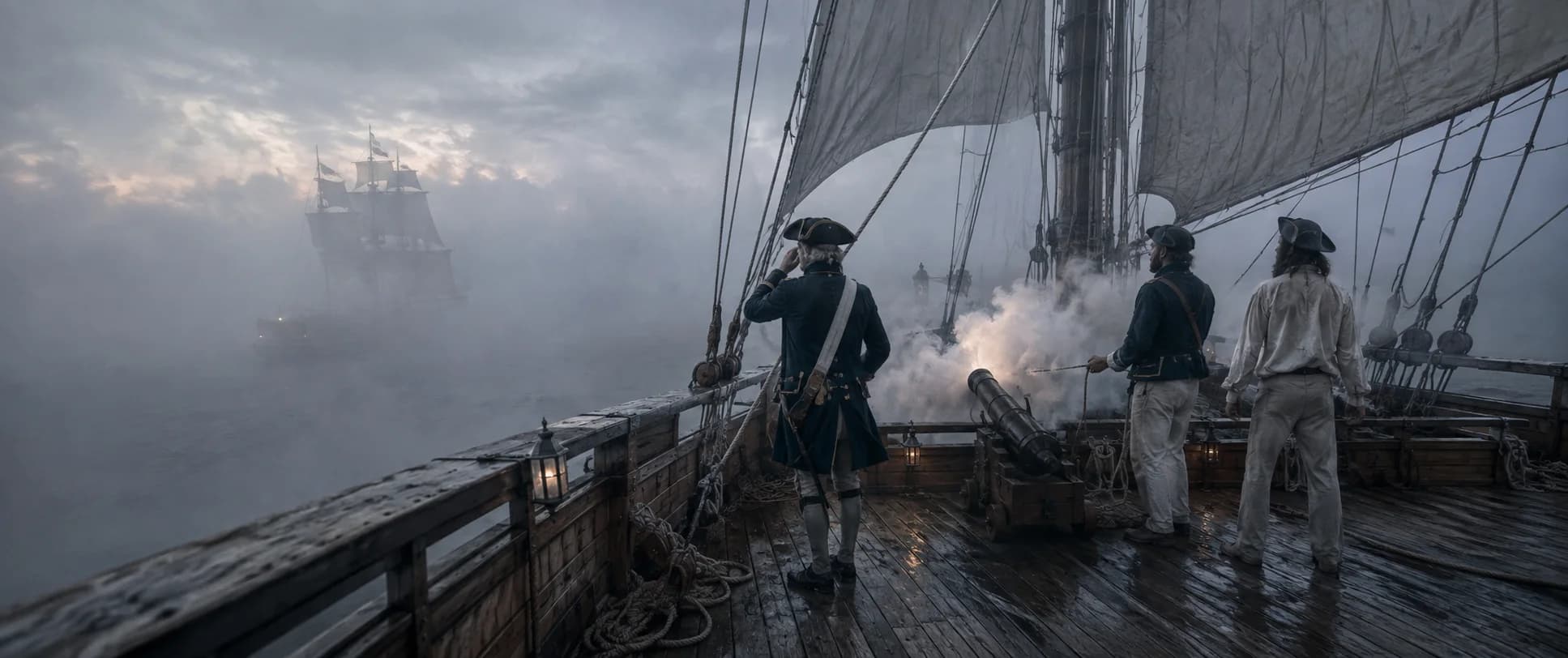
A third report reaches you through the fog, farther toward the bow than the last
Course WNW
A continuous course record supports dead reckoning.
Speed 6 kn
The knot comes from the historical use of a log line and timer.
Wind rising
Changing weather alters sail handling and watch decisions.
Fog removed the visual chain while sound preserved only a rough clue
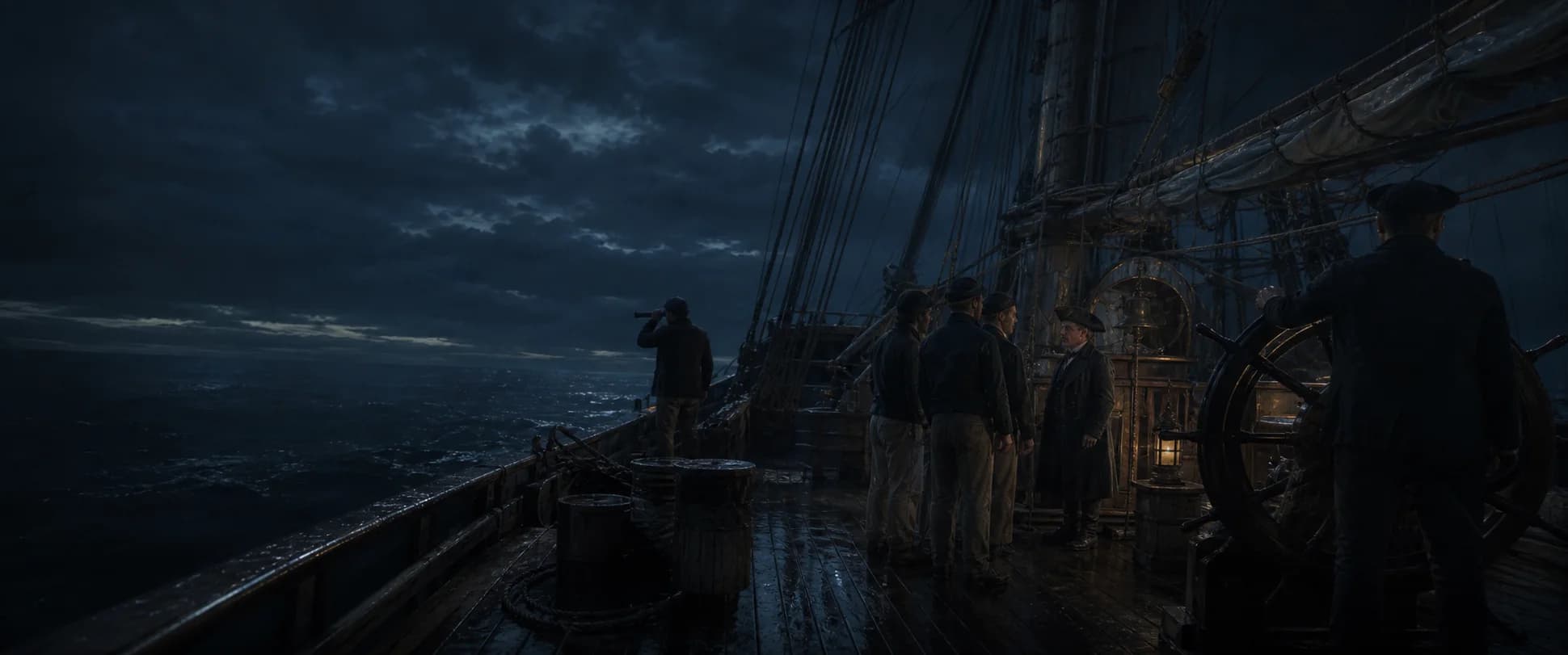
In clear weather, ships in company could read flags, sails, lanterns and the leading vessel’s turn. Dense fog might erase a hull only a short distance away. A lookout could still hear a gun, bell, horn, rigging or breaking sea, but wind, waves, echoes and the structure of the fog altered how sound arrived. A report suggested that a ship existed somewhere; it did not provide a trustworthy range, course or identity.
Communication and collision avoidance therefore became the same problem. A commander might shorten sail, post more listeners, quiet unnecessary work and combine sound with a previously agreed course, time to tack or rendezvous. None of those measures restored sight. An impulsive turn toward an ambiguous gun could be more dangerous than preserving a predictable movement that the missing consort also understood.
Cook’s hourly guns in 1773 preserve a procedure that still failed
On 8 February 1773, Resolution and Adventure met a brisk gale and thick fog in the southern Indian Ocean. Cook’s published account says that he kept on the larboard tack and fired a gun every hour until noon. He then made the signal to tack and tacked. Sound, a maintained tack and a timed fleet manoeuvre formed one connected attempt to keep the two ships in a known relationship.
Adventure answered neither the noon signal nor the earlier signals, so Cook concluded that separation had occurred. The passage does not define what each gun meant, record bells, describe a universal fog code or say that he reduced sail. It is strong evidence for what this expedition tried and for the method’s failure. It is not permission to turn one ship’s orders into an eighteenth-century international rule.
A useful local code joined a sound to a time and a promised action
A gun without a shared interpretation was additional noise. Squadron or convoy instructions could assign meaning to the number and spacing of reports—position, recall, preparation to tack or another movement. If visibility briefly returned, flags could confirm the order; lanterns might serve at night. Most importantly, each captain needed to know whether to hold course after the report, tack to a named side or proceed to a designated meeting place.
The watch wrote the system into the log. Times, wind, sail carried, reports heard, answers and estimated positions allowed the next watch to inherit the last dependable contact and later investigators to reconstruct a separation. A log still records one sensory position. ‘No answer heard’ is not proof that no answer was made, and a captain’s later narrative does not recover what listeners aboard the other ship believed they heard.
Nineteenth-century rules standardized part of the problem long after Cook’s voyage
Steam propulsion, rising speed and denser traffic made restricted-visibility collisions an urgent regulatory problem. The International Maritime Organization’s history of collision regulations notes that the rules adopted in 1858 required steamships to use a steam whistle and sailing vessels to use a fog horn or bell. Later agreements made collision rules increasingly international. A prescribed rhythm let strangers infer a vessel’s condition without sharing squadron orders.
Modern COLREG Rule 35 specifies sound signals in restricted visibility, while Rule 37 separately addresses distress signals. Those categories clarify the development of standardization; they do not travel backward to 1773. Cook’s hourly gun should not automatically be labelled either a modern fog signal or a distress call. Date, intended audience and the expedition’s own signal instructions remain essential evidence.
Reconstruct a fog separation from the last reliable contact outward
Begin with the last visual contact, its time and relative bearing. Add the wind, tack, estimated speed and planned evolution, then plot each report, answer and non-answer. That sequence separates at least three hypotheses: no signal was made, this ship did not hear it, or the consort had already moved into a different sector. When both logs survive, disagreement between them may explain more than either polished narrative.
For decision-making, sound should narrow uncertainty rather than pretend to erase it. Predictable motion, limits on how long to search, avoidance of sudden cross-course manoeuvres and a rendezvous after separation can be safer than chasing an apparent bearing. A game event compresses this uncertainty into a choice; the historical record should preserve the missing information on which that choice had to be made.
Questions
Continue exploring this subject
Did sailing ships fire guns in fog?
Some did, particularly ships trying to remain in company. Cook recorded hourly guns in 1773, but their meaning belonged to that expedition’s procedure rather than a universal Age of Sail code.
Could sailors estimate distance from a gun report?
Not reliably. Wind, sea state, echoes and atmospheric layers affected loudness and apparent direction. A report gave a rough clue, not radar-like range.
Why not steer directly toward the sound?
The bearing might be distorted and the other ship was moving too. If both vessels turned toward one another, collision risk increased. Agreed courses and rendezvous instructions reduced that ambiguity.
When did horns and bells become formal fog signals?
Mid-nineteenth-century collision rules began specifying them. The 1858 rules already distinguished a steamship’s whistle from a sailing vessel’s horn or bell; international standards developed afterward.
Was a gun in fog necessarily a distress signal?
No. Guns served communication, tactical and distress purposes. Number, interval, standing orders and context are needed to interpret a particular report.
Sources
Continue the research
- A Voyage Towards the South Pole, vol. I · 8 February 1773Internet Archive
- A Voyage Towards the South Pole, and Round the WorldProject Gutenberg
- Safety of Navigation: historical development of collision regulationsInternational Maritime Organization
- Convention on the International Regulations for Preventing Collisions at SeaInternational Maritime Organization
- Royal Navy ships’ voyages: log booksThe National Archives
- Trafalgar Tales: signals and communicationRoyal Museums Greenwich
 01
01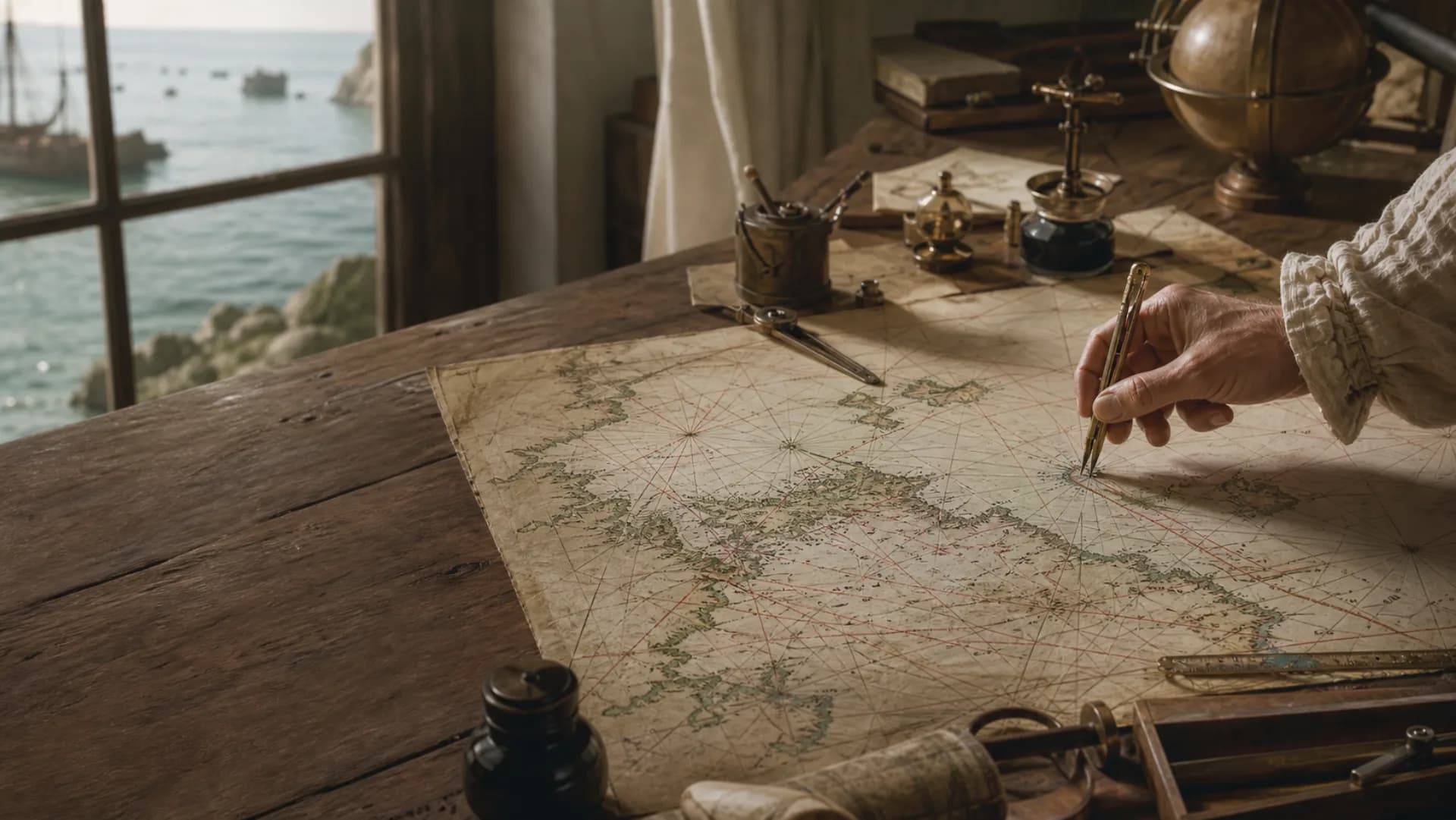 02
02 03
03