 chart
chartThe convoy is two weeks late and the underwriter withdraws his quote at sunset
Soundings
Depth numbers and contours describe navigable water together.
Hazards
Reefs, shoals and wrecks determine where a safe route can pass.
Aids
Lights and buoys turn open water into a recognizable route.
Insurance did not remove sea risk; it divided one ruinous loss among more capital
A shipowner stood to lose hull, outfit and perhaps freight; a cargo owner stood to lose goods. They need not be the same person or use the same policy. In return for premium, an insurer answered only for the interest, voyage or period, perils and amount written in the contract. Hull, cargo, freight and another legitimate interest could be insured separately, with value tied to an explainable stake in the property.
That differed from ship shares and maritime loans. A policy did not normally make its underwriter a part-owner entitled to the voyage's trading profit. General average was separate again: when an extraordinary sacrifice or expense preserved the common adventure, saved ship, cargo and freight interests contributed by value. Insurance might reimburse one party's contribution, but did not create the adjustment.
Price came from a vessel, a route and a news network—not one permanent danger table
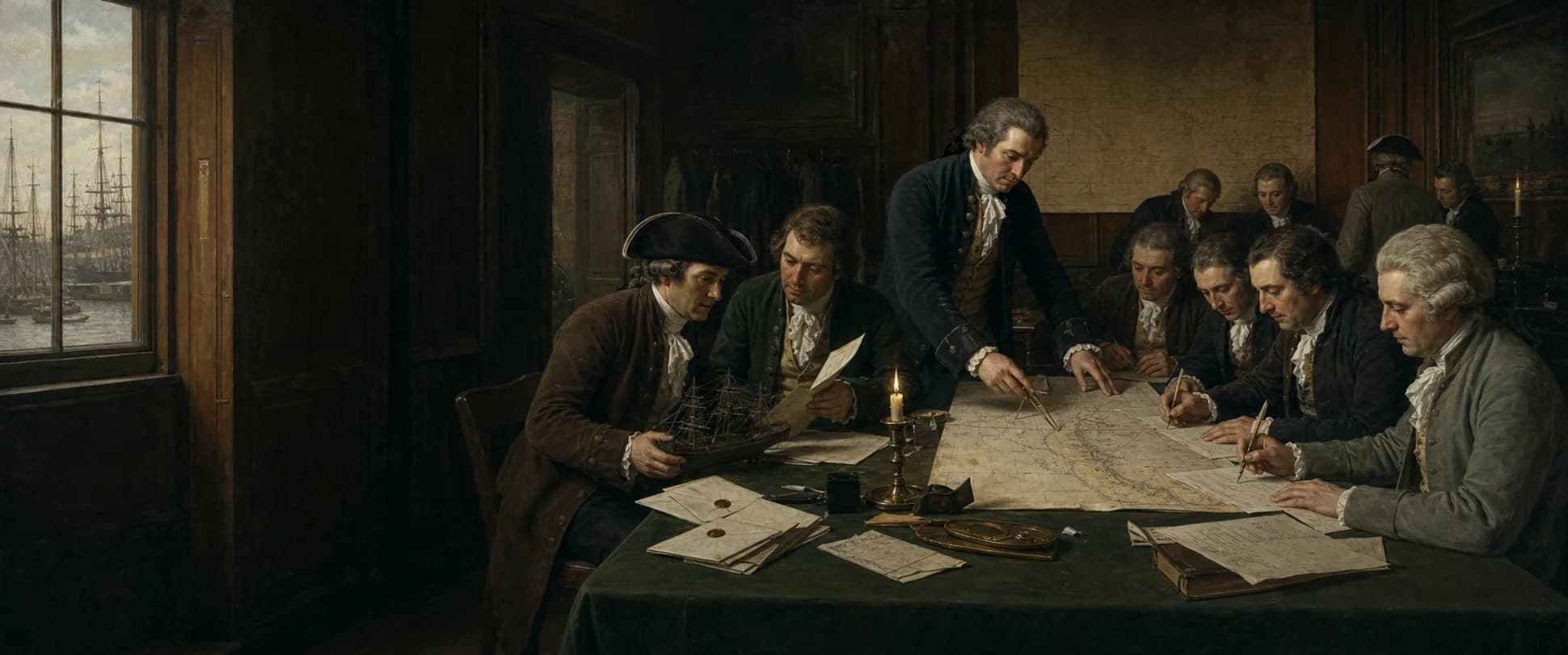
A merchant or broker supplied vessel and master, build and condition, goods, loading and destination ports, season and value. The underwriter weighed war, privateers, piracy, weather, blockade, convoy and prior loss. Lloyd's Coffee House mattered because captains, owners, merchants and capital met around shipping intelligence. Lloyd's List, first published under that name in 1734, made arrivals, cargo and danger into subscribed information.
News travelled slowly and interested parties knew different things. A ship might already be lost beyond the horizon of the market. The assured knew more about a leak, overload or planned deviation; the underwriter might overprice a rumour. The bargain therefore depended on disclosure of material facts and good faith, while rates changed with fresh reports. A summer voyage in peace and a winter departure in war were not the same risk.
Several names beneath one policy sliced a vessel's value into acceptable subscriptions
An eighteenth-century London underwriter could write his name and amount beneath the policy wording, with another taking the next portion. That physical act gives underwriting its name. A broker found enough capital until the desired sum was subscribed. Each insurer answered for his share and used premiums across many voyages to absorb the smaller number that became claims.
The British market was larger than Lloyd's and was not a universal national model. Chartered companies and private subscribers coexisted after 1720, while North American ports developed from wealthy individual subscriptions toward incorporated companies. Mystic Seaport records preserve cover on a named vessel for a voyage or period, its cargo, or a named parcel travelling in portions by “any good vessel.”
After casualty, logs, protests, surveys and title papers determined whether a claim survived
After stranding, collision, capture, jettison, fire or disappearance, the master and agent protected life and remaining property, recorded time, place, weather, orders and damage, and obtained survey, sea protest, repair bills, inventories and witness evidence in port. Salvaged value or proceeds entered the account. Abandonment of property to insurers required conditions; a captain's bare declaration did not manufacture a total loss.
Insurers asked whether the peril was covered, the assured owned the interest, valuation and disclosure were sound, the vessel was seaworthy at departure, and damage came from something other than excluded decay, delay or bad trade. The Mills Frigate litigation of 1764 sharpened the seaworthiness issue. An American marine-insurance case in 1813 likewise put age, tonnage, representation and a valued policy before a court. Insurance priced danger and converted casualty into an inquiry about evidence.
The same instrument that enabled commerce also financed slavery and imperial violence
Insurance sustained longer and more hazardous voyages, including colonial expansion, wartime trade and the transatlantic slave trade. Lloyd's own historical research places consolidation of its marine market alongside Britain's rise as the largest eighteenth-century slave-trading power. Long-distance premiums could dominate financially even when most policy counts concerned European and coastal routes.
A 1787 policy at Royal Museums Greenwich insured rum and sugar from Jamaica to London, ordinary commodities inseparable from plantation slavery. The Zong litigation exposed still more brutally a system that treated enslaved people as insurable “cargo.” An honest history of risk innovation must ask how insured property was produced, who was denied personhood in the contract, and how claims transformed death into a dispute between owners and insurers.
Questions
Continue exploring this subject
Did marine insurance cover only the whole ship?
No. Hull, cargo, freight and other legitimate interests could be covered separately, with policy wording defining vessel, voyage or time, sum and perils.
Why is the insurer called an underwriter?
Private insurers wrote their names and the amount they accepted beneath the policy. Several subscriptions could combine to cover a larger interest.
Did a sinking guarantee full payment?
No. Coverage, interest, valuation, disclosure, seaworthiness, salvage and the distinction between partial and total loss still had to be established with evidence.
Was Lloyd's the first marine insurance company?
No. Marine insurance long predated Lloyd's. Lloyd's developed from a late-seventeenth-century coffee house into a major information and subscription market, and it was not the only channel even in Britain.
Is general average another name for insurance?
No. General average allocates a qualifying common sacrifice or expense across saved ship, cargo and freight interests. Insurance is a separate contract that may reimburse one participant's contribution.
Sources
Continue the research
- Coffee and commerce, 1652–1811Lloyd's
- Lloyd’s, marine insurance and slaveryLloyd's
- Insurance policy on rum and sugar, 1787Royal Museums Greenwich
- Records of the Warren Insurance CompanyMystic Seaport Museum
- Marine Insurance collection guideMystic Seaport Museum
- Marine Insurance Company of Alexandria v. Hodgson, 1813Library of Congress
 01
01 03
03