INPUT
→Reconcile rig and cloth
Confirm spars, stays, grade, old pattern and alterations.
A real Age of Sail career dossier · 30
Sailmaker · Sail Maker · Master Sailmaker
The craftsperson who organized fibre direction, seam and rope edge into controllable wind force.
A sailmaker converted woven sailcloth into sails and other canvas articles for a specific rig. From mast, yard, gaff, boom and stay dimensions, the sailmaker calculated head, foot, leech, hoist, bunt and cloth count, allowing for seams, tablings, gores and local slack. In an open sail loft, the gang laid out and cut narrow cloths, hand-sewed panels, added reef bands, linings and corner patches, then used heavy needles and a sailmaker's palm to fit bolt rope, cringles and eyelets. Upstream sailcloth weavers made graded bolts from hemp or flax yarn; ropemakers supplied bolt rope and twine; riggers fitted the finished sail. A ship's sailmaker inspected, aired, repaired and stored sails and produced tarpaulins, awnings, hammocks and other canvas work. Organization varied, so this page concentrates on seventeenth- to early-nineteenth-century European and North American evidence.
Information arrives, judgment forms, and work passes on through a complete watch.
Confirm spars, stays, grade, old pattern and alterations.
Calculate cloths, gores and allowances and cut on the loft floor.
Complete seams, tablings, bands, patches, bolt rope and cringles.
Check dimension, weight and mark, then inspect actual fit and shape with riggers.
Centered complete suits, standard cloth, multi-person panel work and formal acceptance.
Answered directly to owner, chandler, fishery or merchant orders; the master might own the shop.
Managed inventory, airing, routine repair, battle damage and many canvas articles.
Translate spars and stays into cloth count, gores, seams, tabling and reinforcement.
Drive palm and needle through layered canvas with continuous stitch spacing.
Control bolt-rope slack and form clues, earings, cringles and reinforced holes.
Use chafe, mildew, tear and seam state to air, repair, downgrade or condemn.
Institutions, experience, patronage, and opportunity shaped each person’s route.
Begin with thread wax, tools, folding, basic seams and opening old sails.
Complete panel, patch, tabling, roping and ordinary repair independently.
Control inventory or gangs and certify component and suite delivery.
Control design interpretation, purchase, cutting economy, people and customer liability.
Historic England defines sailmaking works as a place where boat sails were manufactured from processed cloth. Sailcloth weavers controlled fibre yarn, weave, width and bolt inspection; sailmakers received bolts and cut for one rig; ropemakers supplied twine and bolt rope; riggers bent and hoisted the product.
Navies might further separate a dockyard loft, contractors and a shipboard warrant or petty officer. The latter inspected, aired, repaired and stored sails and made hatch tarpaulins, hammocks, awnings, windsails and bags. Small merchant crews combined repairs, but that does not erase the trade.
Vasa's surviving seventeenth-century sails use hemp and flax; nineteenth-century British and American shipping increasingly adopted cotton duck. Transition was uneven, and no fibre was superior under every moisture, abrasion and pressure condition. An 1829 U.S. Navy report preserves owners' and sailmakers' competing claims about cotton durability, speed, price and mildew.
British eighteenth-century canvas bolts carried numbers and prescribed weights; in Steel's table No.1 was heaviest and No.8 lightest. That system cannot be projected onto every country or later brand. The Master Sailmaker examined weave, broken warp or weft, width, weight, stamp and origin, then assigned heavy cloth to courses, storm sails or loaded zones and lighter cloth aloft.
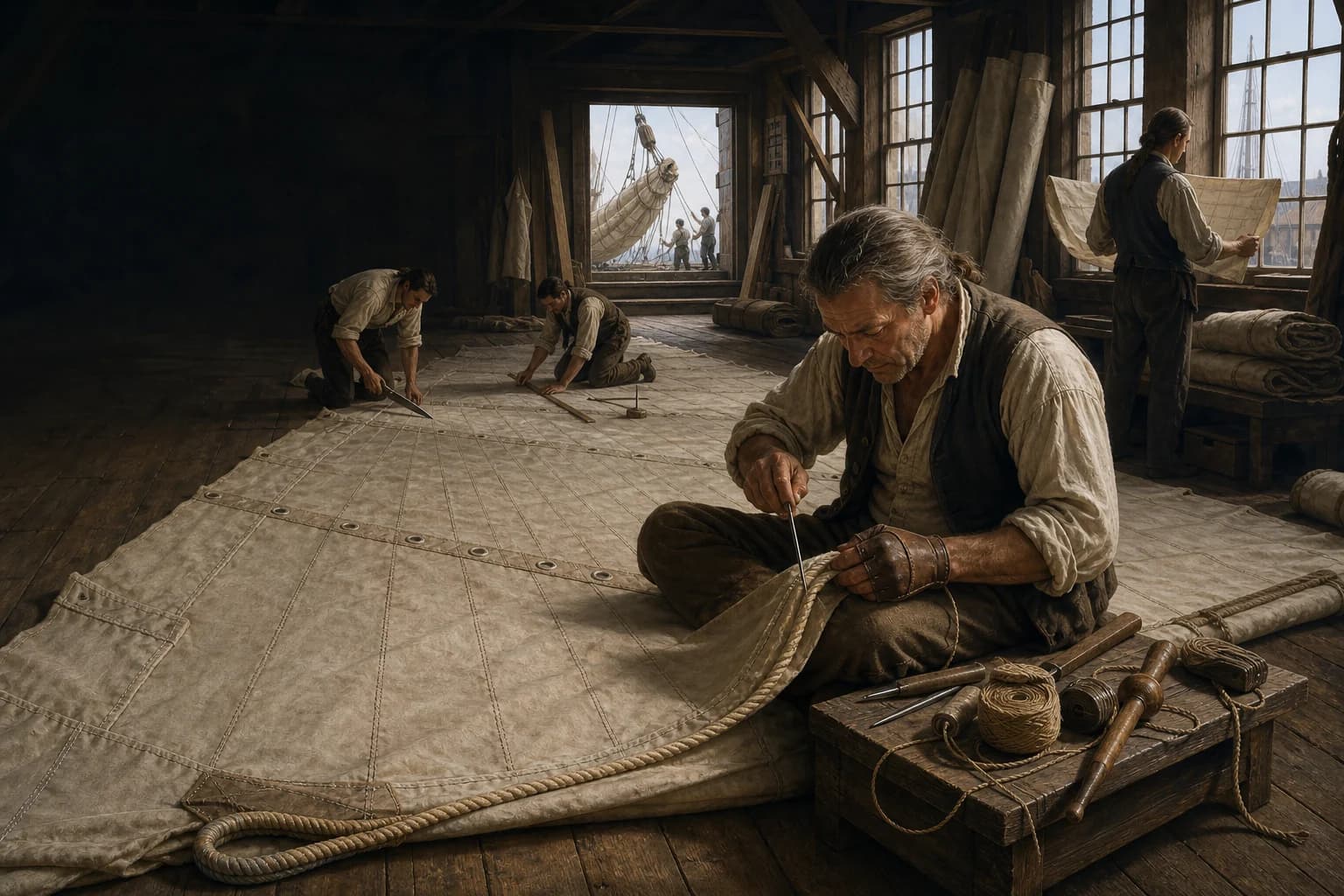
A sail loft commonly occupied a well-lit open upper floor where hundreds of square yards of canvas could lie flat. Surviving Devonport and London lofts emphasize their broad plans. The loft was a combined measuring, cutting, sewing, inspection and folding floor, not merely an attic store.
The gang reconciled sail plan, spar and rigging dimensions, old patterns and alterations, then used chalk line, rule, square, dividers and battens to establish head, foot, leeches, bunt, clues and reefs. Copying an old table after a yard, mast rake or stay changed postponed the error until fitting.
Historic canvas was supplied in narrow widths, so a great sail comprised many longitudinal cloths. Spar or stay set width, mast and rig geometry set depth, and the maker calculated seams, head and foot tabling, linings and pieces. Each cloth was cut before assembly.
A gore removed a calculated taper from one or both ends of selected cloths to form leech, head, foot and bunt. Seam allowance and deliberate slack could add fullness. Misoriented warp, aligned seam endings or excessive gore produced stretch, flutter and concentrated load. The cutting ticket tracked cloth number, direction, length and panel.
Sailmakers sat on the floor or a low bench, driving heavy needles with a leather palm and waxed twine. Long seams joined cloths in membrane load; folded tabling strengthened the perimeter for bolt rope; reef bands distributed reef-point load across panels.
Clue, earing, buntline, bowline, reef-tackle and chafe zones received patches or linings, but reinforcement added mass and stiffness. Needle spacing, backstitch, tension and cloth direction had to remain consistent. An over-tight beautiful seam could cut yarns and become a perforated tear line, so inspection turned the sail over for skips and puckers.
Bolt rope prevented sail edges from rending: vertical or sloping edges carried leech-rope, the bottom foot-rope and the top head-rope. The sailmaker used a roping palm, needle and heaving mallet to sew flexible cordage onto tabling. Rope could not simply be stretched straight because rope and cloth elongated differently under load.
Steel gave sail-specific allowances for taking slack cloth into each yard or cloth and left final judgment to the maker. Clues took sheets, earings held upper corners, and reef, buntline and bowline cringles connected point loads to bolt rope. Cringles were worked through rope strands, spliced and cross-stitched, not merely metal holes punched through canvas.
Loft inspection checked identity, cloth grade, edge dimensions, diagonals, reef spacing, reinforcement, holes, cringles, bolt-rope size, stamp and weight. Canvas had to lie fair without being stretched to meet the rule, and paired or suite sails invited comparison.
Trial bending or hoisting with riggers checked lace or robands, hanks, earings, sheets, tacks, clewlines, buntlines and reef tackles. Seams and patches could not foul blocks, yards or tops. Plans, proportions, old sails, floor layout and hoisted observation formed a feedback system long before digital sail design.
Salt, rain, sunlight, mildew, chafe, shot and flogging attacked canvas. The sailmaker tracked sails in use, spare and under repair, chose weather for airing, dried them fully, and folded and stowed them by identity. One damp compressed sail could heat and mildew an entire reserve suit.
Small tears were stopped and patched along appropriate cloth directions. A worn bolt rope, loose cringle and split seam required different work. Crew might make an emergency repair; the specialist judged whether a sail could still carry load, should move to lighter duty or must be condemned. Constitution's William Widgeon also made tarpaulins, windsails, hammocks, awnings and other canvas articles.
An apprentice, loft hand or seaman learned stitch, cutting, roping, repair, measurement and inventory before journeyman, ship's sailmaker, foreman or Master Sailmaker. A large loft allocated cloth batches and panel gangs, controlled waste, stamp, schedule, inspection and rework.
A naval sailmaker could be a consequential warrant specialist without standing in command succession; NHHC's warrant-officer study makes that distinction explicit. Private loft masters might own their shops and employ men and women. Family shops, women's sewing, apprentices and colonial fibre supply belong in the result, not only one male officer's name.
career.sailmaker
A sailmaker cut graded sailcloth for a specific rig, joined panels, reinforced loaded areas, fitted bolt rope and cringles, and inspected and repaired sails and canvas articles.
The weaver made cloth bolts with specified fibre, weave, width and weight. The sailmaker converted those bolts into one sail's geometry and load path.
Usually not. The sailmaker manufactured and repaired sails; the rigger bent them to yards, gaffs or stays and connected their handling lines.
Sailcloth came in narrow bolts, so large sails were assembled from many panels. Panel and fibre direction also organized shape and load.
Bolt rope reinforced the sail perimeter and carried loads from clues, earings and cringles. The maker controlled relative slack between rope and canvas while sewing it on.
He inspected, aired, dried, folded, stored and rotated sails and made or repaired tarpaulins, awnings, windsails, hammocks, bags and related canvas work.