INPUT
→Inspect
Check rig, sail, cable, boat and reserve material.
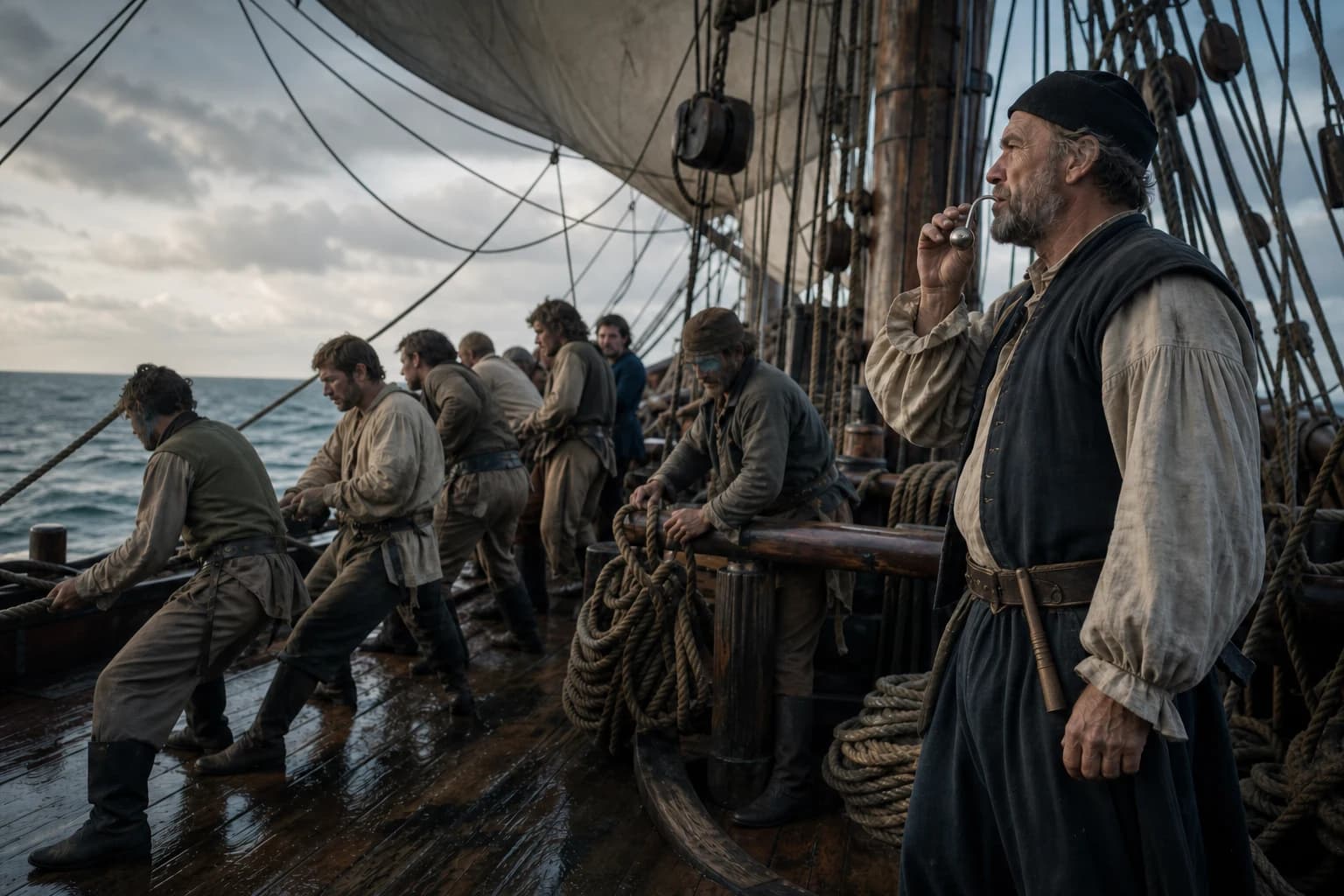
A real Age of Sail career dossier · 05
Boatswain · Bosun
The specialist who converts a sailing order into ropes, stations and synchronized deck labor.
An Age of Sail boatswain—commonly pronounced bosun—was the deck specialist responsible for keeping and inspecting rigging, cordage, anchors, sails, boats and associated stores. He mustered the crew and supervised sail, anchor and routine deck work under the ship's officers. He was not the commander of the vessel and was distinct from the subordinate boatswain's mate.
Information arrives, judgment forms, and work passes on through a complete watch.
Check rig, sail, cable, boat and reserve material.
Receive the mate's order and deploy stations through assistants, call and voice.
Supervise sail, yard, anchor, boat and rigging work.
Record expenditure, schedule restoration and report unresolved risk.
Often a warrant officer keeping specialist stores and organizing many hands through assistants.
Comparable work could be more direct and less staffed, with status varying by vessel and owner.
Restored damaged rigging, anchor readiness and minimum manoeuvring power.
Read load, chafe, slack and replacement priority across standing and running rigging.
Synchronize dispersed hands through calls, voice and assistants.
Keep, issue and account for cordage, blocks, sail gear and cables by specification.
Place hands safely around height, yards, anchors and loaded rope.
Institutions, experience, patronage, and opportunity shaped each person’s route.
Master sail, anchor, boat, knot and work-aloft fundamentals.
Learn calls, work parties, inspection and stores issue.
Take the whole rig through practical reputation, departmental skill and service appointment.
Alternatively continue as specialist aboard a larger vessel.
Boatswain is an old seagoing title whose common modern pronunciation is bosun. An ancient name does not prove unchanged duties from the Middle Ages to the nineteenth century. This dossier centers late-eighteenth- and early-nineteenth-century sailing-warship regulations, with merchant boundaries, rather than imposing one establishment on every coast and century.
The boatswain was the professional head responsible for rigging and deck equipment. Boatswain's mates served beneath him, helping muster hands, transmit orders and keep particular work moving. On a large warship the two could belong to warrant-officer and petty-officer levels. Calling both simply bosun conceals the difference between a department head and his working assistants.
United States regulations of 1814 explicitly placed rigging, cables, cordage, anchors, sails and boats in the boatswain's charge. The USS Constitution Museum also includes the ship's colors. Standing rigging supported masts, running rigging controlled yards and canvas, while anchors, cables and boats carried their own ropework and fittings. This was a shipwide operating system, not a small tool locker.
Boundaries remained. The carpenter owned the hull, caulking and structural repair; a sailmaker could make and mend canvas; captains, watch officers and sailing masters decided course and sail plan. The boatswain needed to understand those departments without becoming carpenter, sailmaker, navigator and first mate at once.
The boatswain checked standing rigging for slack, running rigging for chafe, sails for secure bending and furling, cables for a clear run and boats for readiness. The Constitution Museum makes the rig his principal concern, while a second museum account describes daily rounds followed by reports to the sailing master and first lieutenant.
Inspection anticipated failure rather than merely reporting a parted rope. Salt, sun, friction, load, damp and vermin consumed hemp and canvas. Knots, splices, blocks and rope ends could turn a small defect into heavy-weather failure. The boatswain scheduled setting up, splicing, protection, airing or replacement while preserving reserve material.
Turning, making or reducing sail, anchoring and handling boats required men across the deck and aloft to act together. Regulations ordered the boatswain and mates to assist and relieve the watch, bring men on deck and make the working of the ship as free from confusion as possible. He functioned as a foreman who knew line sequence, manpower and danger.
He did not choose the voyage objective or normally alter course and canvas on his own. A first mate, first lieutenant, watch officer or sailing master stated the required manoeuvre; the boatswain deployed its physical execution through assistants and experienced seamen. A clear chain prevented wrong lines, fouled rope and work parties obstructing one another.
A boatswain's call or pipe produced a sharp signal that carried through wind, water, canvas and deck work. The Constitution Museum quotes an 1826 account in which boatswain and mates answered long pipes at the hatch, called all hands, ordered hammocks up and cleared the decks. Pipe and voice formed repeatable shipboard communication.
Crews needed training to associate patterns with actions, and assistants had to signal at the right time. A silver call was also a badge of office; whistles recovered from the sixteenth-century Mary Rose show an older tradition. Modern naval call tables, however, cannot simply be projected onto every early merchantman.
Hemp rope and canvas were critical voyage consumables. Regulations forbade the boatswain from cutting cordage or canvas without a written captain's order and the master's inspection, and required small woven protectors for cables. A bad cut could turn a useful long piece into short lengths before the ship needed an irreplaceable span.
The boatswain recorded issue, expenditure and conversion for audit by captain and master; a boatswain's yeoman could manage the storeroom and distribution. Craft and account were inseparable. A crew that could splice but could not explain its consumption—or an inventory that hid unusable sizes—still lost repair capacity at sea.
Boatswains and mates mustered hands, drove the pace and saw work completed, and historical accounts record boatswain's mates striking slow hands with starters. Coercion belonged to the period's disciplinary system but does not explain the occupation by itself. Officers issued orders, the master-at-arms handled security and some discipline, and formal punishment remained tied to captain and naval law.
The boatswain's durable authority came from expertise: reading a loaded rig, choosing a splice, placing men aloft and around anchors, and keeping them clear of recoil. Fear could hurry a hand but could not select the right line, control tension or preserve a safe path when rope parted.
The Constitution establishment stationed the boatswain on the forecastle in battle, where his department kept anchors, rigging and forward-deck work functioning and cleared or replaced damaged rope. Storm work likewise demanded rapid reefing, secured boats, cleared fouls and replacement of essential running rigging. The goal was not tidiness but the power to steer, carry sail and anchor.
Hazards included falls, swinging yards and canvas, recoiling loaded rope, entanglement in cables, tar, wet and cumulative heavy labor. The boatswain decided which defect needed immediate repair, which could be isolated and when both watches were necessary. Delay could lose a weather window; haste could spend lives on the wrong repair.
British and American warships commonly treated the boatswain as a warrant officer: a long-service specialist heading a department outside the ordinary commissioned-lieutenant promotion line. U.S. naval history lists boatswain among the warrant officers established in 1794. The National Archives preserves boatswain passing certificates for selected nineteenth-century years, not evidence of one examination system across all earlier service.
A credible route ran through able seamanship and rigging, perhaps service as boatswain's mate, before appointment by captain, naval administration or merchant management. Constitution evidence gives an 1811 U.S. rate of $20 per month and two rations, only one establishment and date. Reusable game systems are rig condition, material stock, synchronized calls and emergency recovery—not one transhistorical wage.
career.boatswain
The boatswain's job was to inspect and manage rigging, cable, anchors, sails, boats and associated stores, then organize the deck crew to carry out manoeuvring and maintenance orders from the ship's officers. He was the deck specialist, not the vessel's commander.
No. The boatswain directed professional rigging, anchor, boat and deck execution. The captain owned the voyage and major decisions, while mates or watch officers deployed people through the command chain.
They normally represent the formal spelling and common pronunciation or shortened spelling of the same title. Historical records usually spell boatswain.
The first mate organized watches, personnel and deck priorities and could act in command. The boatswain specialized in rigging, cables, boats, stores and physical deck execution under the officers.
No. The boatswain headed the department; boatswain's mates transmitted calls, mustered hands and supervised tasks. Large warships also placed them at different status and pay levels.
It carried muster and action signals through deck noise, provided the crew knew the patterns and heard the accompanying order. It supported rather than replaced the command.
The route required reliable able-seaman work, shipwide rigging and anchor knowledge, splicing, stores and leadership, followed by assistant service or long experience and appointment. Examination and warrant rules varied by service and date.