 cannon
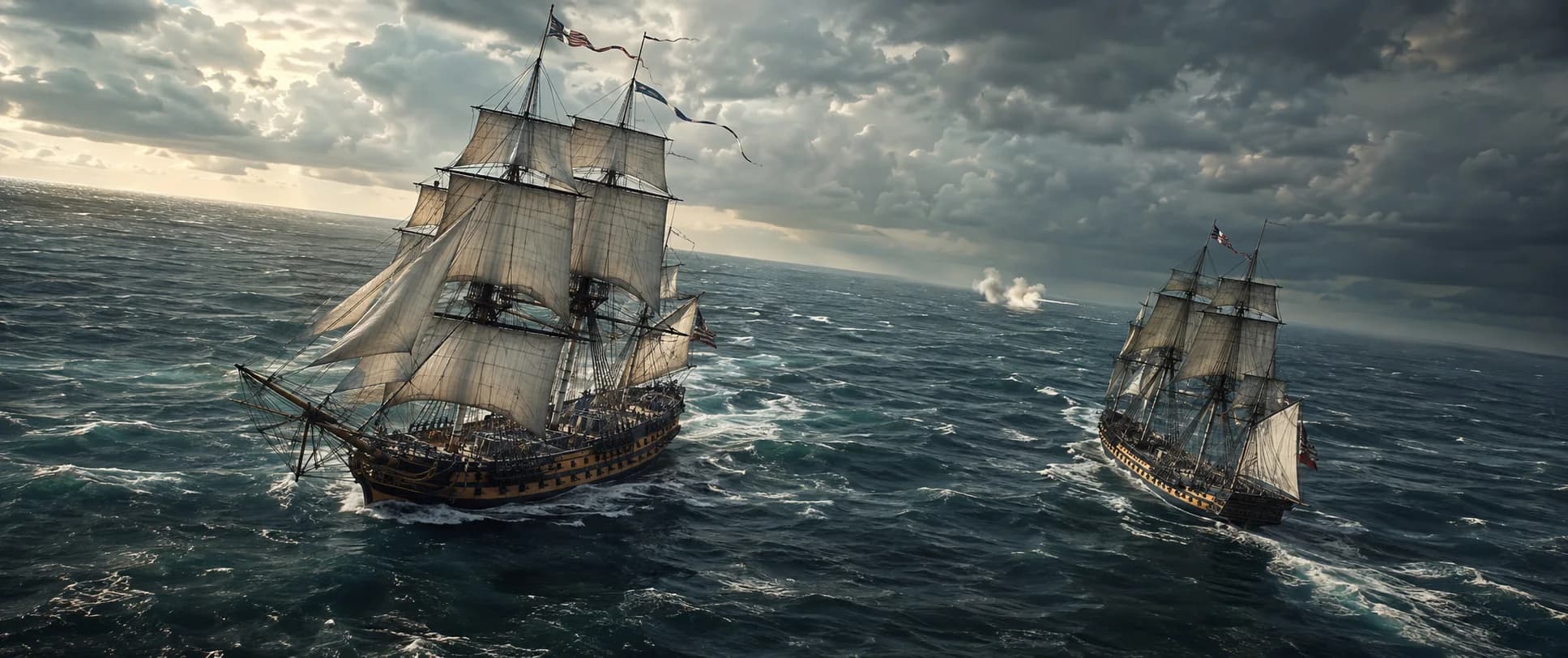
The enemy is pinching to windward as a squall darkens the water between you
Hull
Round shot concentrates damage on timber planking and structure.
Rigging
Chain shot is better suited to attacking masts, sails and rope.
Crew
Grapeshot spreads its effect across an exposed deck at close range.
The weather gauge was a relationship to the wind and enemy, not a fixed side of the chart
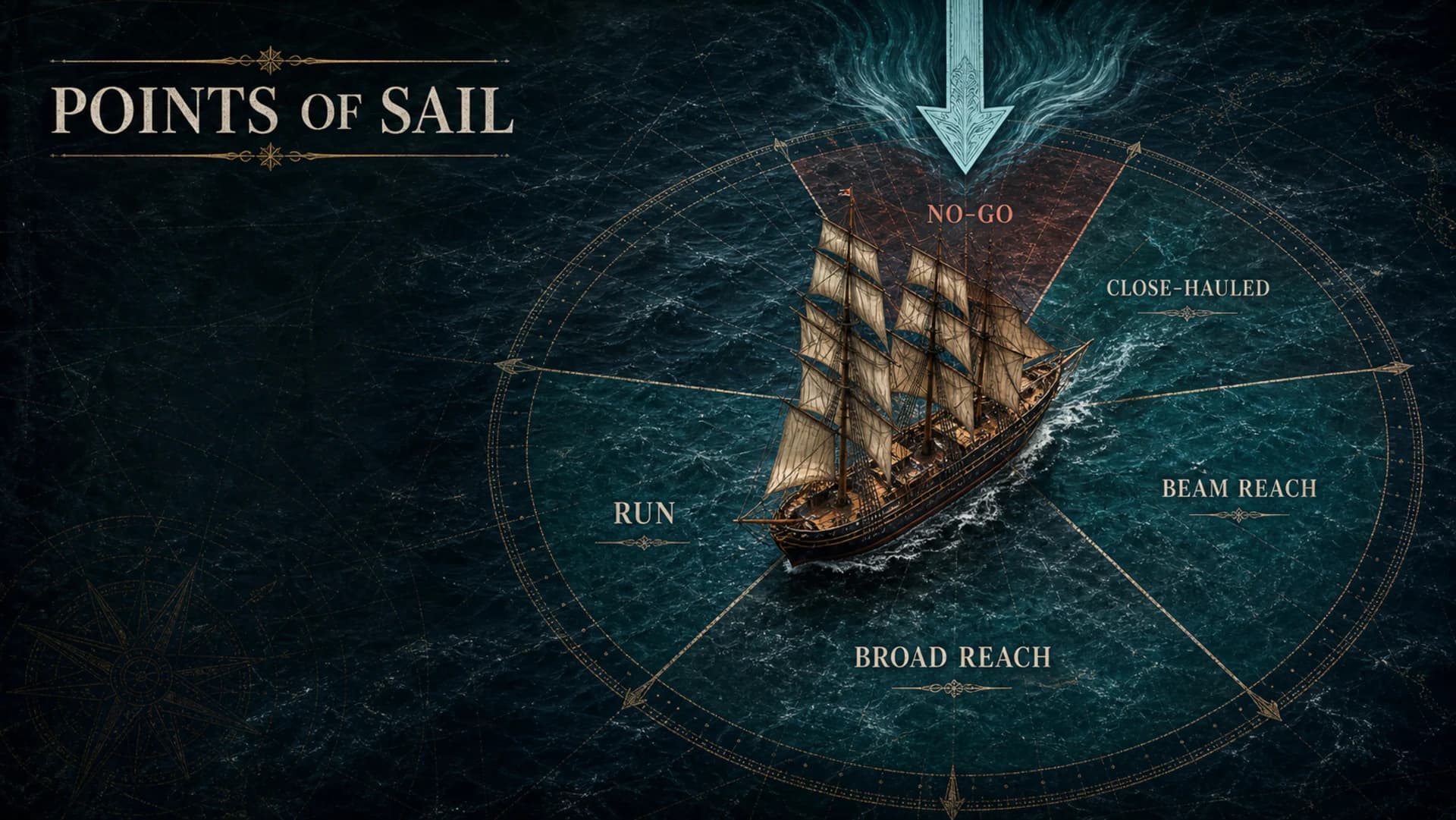
If the wind reached Ship A before it reached Ship B, A lay to windward and held the weather gauge relative to B; B held the leeward or lee position. The relationship changed with each ship’s movement and with the wind. One shift could remove a position that a squadron had spent hours gaining. A useful diagram starts with the wind arrow, then compares positions along the crosswind axis.
The phrase ‘windward advantage’ can blur position into outcome. It is more accurate to establish who held the windward position and then identify the choices it created under those conditions. Hull form, damage, sea room and mission could lead a commander to surrender the gauge deliberately for a better firing position, an escape route or protection of a convoy.
Its central benefit was initiative in the approach, not an automatic increase in firepower
A windward sailing ship could bear away toward a leeward target, bringing the wind farther aft. A leeward ship trying to close in the opposite direction normally had to sail close-hauled and perhaps make repeated tacks. If speed and handling were otherwise comparable, the windward commander therefore had greater scope to choose when to shorten distance, how to angle the approach or whether to remain apart.
That initiative was spent as the ship descended. Every mile sailed downwind exchanged windward separation for contact and could be difficult to recover. During the approach, the bow brought fewer guns to bear than a full broadside and might be vulnerable to raking fire. The gauge enabled a manoeuvre; it did not skip the exposed manoeuvre and apply a permanent combat bonus.
The leeward side retained options, while heel, smoke and sea state changed the bargain
A leeward ship might run farther downwind, draw out a pursuit or force the windward opponent to spend position in closing. If the mission was escort, delay or fleet preservation, that space could matter more than initiating action. In strong wind, heel and gunport height depended on tack and engaged side; ‘windward’ alone is not enough to decide which battery could safely open its lower ports.
Gun smoke tended to travel downwind and could obscure observation to leeward, though formation, firing rhythm and weather shaped the actual effect. Waves, rolling, damaged rigging, crew drill and effective range continued to govern hits. Reducing all of this to a higher windward accuracy statistic turns a tactical relationship into a physical law it never was.
Fleet tactics embedded the gauge in line, signals and concentration
A single frigate might seek a raking position across an opponent’s bow or stern. A battle fleet also had to preserve a line, prevent mutual obstruction and avoid arriving in fragments. Eighteenth-century tactical writing examined both attack from windward and attack from leeward. John Clerk’s Essay on Naval Tactics devoted major parts to each, evidence that neither side supplied one universally correct solution.
Signals narrowed the commander’s freedom further. Once the leader bore away, following ships had to see the order and execute in sequence; differences in wind, speed or smoke could stretch the formation. A usable weather gauge therefore included sea room, ships capable of manoeuvre and signals that the line could carry out—not merely icons placed above an enemy on a diagram.
Constellation’s 1799 chase shows wind position being rewritten by a squall and spar damage
On 9 February 1799, the French L’Insurgente sailed close-hauled during Constellation’s pursuit. Truxtun’s log says that she was attempting to gain the wind of him. A heavy squall then carried away the French frigate’s main topmast and she bore before the wind. Constellation pressed on under sail and at 3:15 p.m. reached her larboard quarter. A contest for wind position became a speed and damage problem within minutes.
The primary entry does not convert the weather gauge into a score, and it does not explain the exact purpose of the French gun fired to windward. Its supportable claim is narrower and more useful: the ships contested relative wind position, then a squall’s effect on rig and speed gave the pursuer its close position. A battle reconstruction should connect time, wind, sail and bearing before turning to the exchange of fire.
Questions
Continue exploring this subject
What exactly did weather gauge mean?
It meant being on the windward side of an opposing ship or fleet. Also spelled weather gage, it was a changing relationship, not a permanent quality of a vessel.
Did holding the weather gauge guarantee victory?
No. It often improved control of the approach, but speed, sea state, formation, gunnery, damage, mission and wind shifts still governed the result.
Why could the windward ship close more easily?
It could bear away toward the leeward target. The leeward ship trying to approach in reverse usually had to sail close-hauled or tack, imposing more distance and time.
Could the leeward position be useful?
Yes. It could offer a downwind withdrawal, delay contact and make a pursuing windward enemy spend its positional advantage while approaching bow-on. Its value depended on the mission.
Was the weather gauge a single-ship or fleet term?
Both. In single-ship action it shaped chase and approach; fleets also had to account for line order, signal transmission and whether every ship could execute the manoeuvre.
Sources
Continue the research
- Naval Documents Related to the Quasi-War, vol. II · Constellation logU.S. Government Printing Office · ibiblio
- An Essay on Naval Tactics, Systematical and HistoricalInternet Archive · Open Library
- Historic Ships of the Navy: ConstellationU.S. Naval Institute Proceedings
- Commodore Thomas Truxtun, U.S. NavyU.S. Naval Institute Proceedings
- Constellation and L’Insurgente historical printLibrary of Congress
- Trafalgar Tales: fleet signals and battle contextRoyal Museums Greenwich
 01
01 02
02 03
03 05
05