 ghost ship
The disaster has ended. The voyage has not.
The disturbing thing about a derelict is not merely that nobody remains aboard. The vessel may still be performing the motions of a voyage: sails draw, an engine idles, ice carries a steel hull north. Investigators can document how the ship looked when found and locate the last moment when people were known to be aboard. The sea between those two records is the real mystery.
The human record stops. The ship's position keeps updating.
After the people leave, the hull's clock keeps running
In maritime use, a derelict is a vessel left without care while still afloat or aground. It needs no phantom and no table laid for a meal. Its real power comes from two timelines parting: the human record stops at a call, a frame of film or a log entry, while wind, current and sea ice continue to write positions for the ship.
A boarding party therefore meets the vessel after the event, not the vessel at the instant of crisis. Gear has shifted, sails may have torn, flooding may have changed and current may have carried the hull hundreds of miles. Every object can be genuine without still belonging to its original moment. The investigator has to walk backward through this moving scene toward the last decision made on deck.
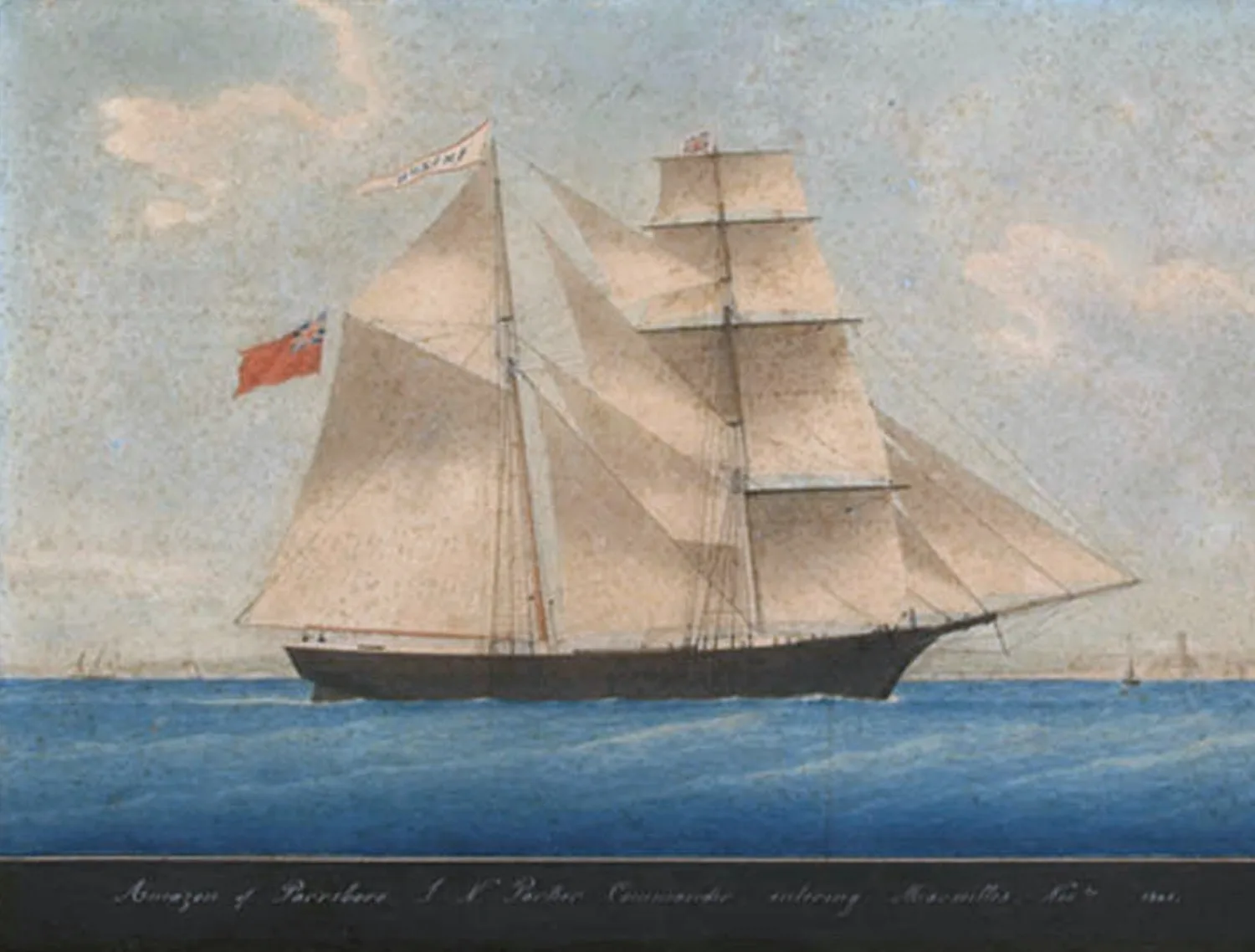
On 25 November 1872, Mary Celeste recorded her last human position
Mary Celeste left New York for Genoa on 7 November 1872. Aboard were Captain Benjamin Briggs, his wife Sarah, their two-year-old daughter Sophia and seven crew; the hold carried 1,701 barrels of industrial alcohol. On the morning of 25 November, the log slate placed the ship near Santa Maria in the Azores. Human notation then stopped. Over the following ten days, the ship crossed roughly four hundred miles of ocean.
On 5 December, Dei Gratia found her yawing across the sea. When Oliver Deveau boarded, the ship's boat was gone, together with the sextant, chronometer, navigation book and vessel papers. One pump had been taken apart, a sounding rod lay nearby, hatches were off and water was aboard. Personal possessions and almost all the cargo remained. The things removed—boat, instruments and papers—look less like disappearance than a hurried, deliberate departure.
One sounding rod preserves the captain's problem
GIBRALTAR · SWORN EVIDENCE · 1872TRANSCRIPT ↗ The galley was in a bad state, the stove displaced and utensils scattered. The whole ship was thoroughly wet.
That three salvors later sailed Mary Celeste to Gibraltar does not mean Briggs had seen the same safe ship when he left. A modern reconstruction reported by Smithsonian offers one plausible chain: heavy weather, an increasingly wrong position and a fouled or failing pump may have left the captain unable to judge water in the hold. When Santa Maria finally appeared, he may have treated landfall as the one opportunity to wait in the boat. If its line parted, the faster hull would sail away without them.
The Gibraltar salvage court found no evidence sufficient to establish violence. Sworn evidence described a disordered galley, a displaced stove, scattered utensils and wet accommodation. The steaming tea and half-eaten breakfast arrived in later retellings. In 1884, Arthur Conan Doyle changed the name to Marie Celeste and invented a sole survivor. Reality left a sounding rod on deck; fiction furnished an empty dining room that would wait forever.
In 1921, a five-masted schooner grounded the investigation on Diamond Shoals
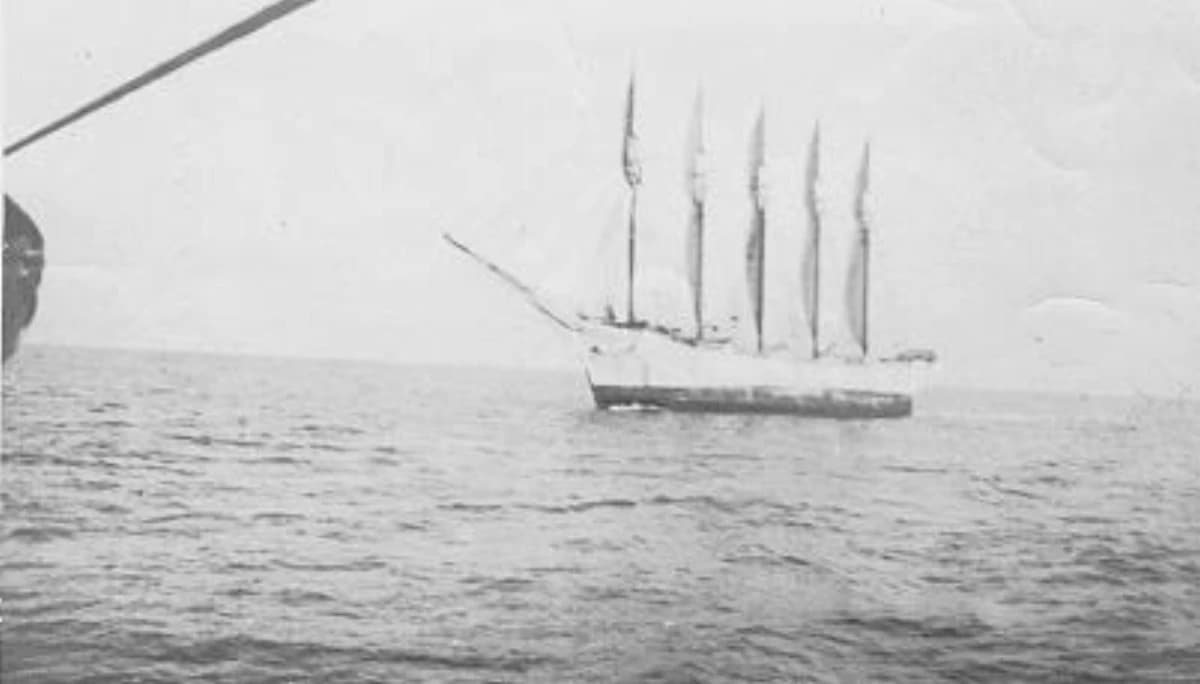
THE WASHINGTON HERALD · 03 FEB 1921LIBRARY OF CONGRESS ↗ Like a ‘Flying Dutchman,’ Deering loomed through the mist, all sails set, but unmanned.
Carroll A. Deering was returning from Rio de Janeiro in ballast by way of Barbados. On 29 January 1921, as she passed the Cape Lookout lightship, a man who did not appear to be the captain hailed that both anchors were lost and asked that the owner be notified. Two days later the five-masted schooner ran onto Diamond Shoals under full sail. Heavy weather delayed the Coast Guard until 4 February; only three starving cats remained aboard.
The log, navigation equipment, personal effects, two main anchors, motorboat and dory were gone; food stood in preparation in the galley. Five federal departments investigated while newspapers offered pirates, mutiny, rum-running and Soviet agents. A message in a bottle appeared to confirm an attack, until its finder, Christopher Columbus Gray, confessed to forging it. The Hoover files preserve correspondence, reports and photographs—and an uncomfortable fact: a dossier may grow while its evidence does not.
 28 JAN31 JAN
At 10:05 in 2007, all three men of Kaz II were still in frame
STATE CORONER · VIDEO RECORD · 10:05FINDINGS · P.9 ↗ The sea is choppy with occasional whitecaps. A squall can be seen ahead. None of the men is wearing a life jacket.
Kaz II was a 10.6-metre catamaran. On the morning of 15 April 2007, Derek Batten, Peter Tunstead and James Tunstead departed Airlie Beach in Queensland. At 10:05 a.m., James filmed the last known scene: Batten at the helm, Peter fishing from the port stern steps, a blue mug beside the wheel. Safety wires to the low stern platforms were open on both sides, a long white rope trailed astern, whitecaps crossed the sea, a squall stood ahead and none of the men wore a life jacket.
The recording gives Kaz II something no nineteenth-century file possesses: a whole deck less than an hour before the likely accident. The coroner reconstructed the most plausible sequence. One brother may have fallen while retrieving fishing line from the rudder and the other gone to help; Batten started the engine and moved to lower sail before turning back, where an uncontrolled gybe could have swept him overboard. No monumental wave was required—only three linked actions, and the entire human timeline ended within minutes.
When a rescuer swam toward her, the engine was still idling in neutral
STATE CORONER · GPS FINDINGFINDINGS · P.12 ↗ No conscious evasive action helped the vessel avoid the reefs; chance, shallow draught and tide carried it over.
On 17 April, reef fishermen watched Kaz II pass through channels and assumed she was crewed because she appeared to navigate. GPS data later showed that shallow draught, tide and chance alone had carried her across the reefs. A surveillance aircraft found her about eighty nautical miles offshore on 18 April. The next afternoon rescuer Corrie Benson was lowered into the sea and had to swim hard toward the yawing boat, where trailing fishing line caught him at the stern.
Benson boarded to find the engine idling in neutral, a 15 April newspaper undisturbed on the table, the blue mug upright aft, orderly cabins and all life jackets aboard. Headlines made the scene look like a weekend still in progress. The official inquiry instead connected cup, line, open safety wires, raised swim ladder, torn headsail and GPS track into a rapidly unfolding man-overboard accident. The boat had not mysteriously taken three men. It had simply failed to stop.
Baychimo was abandoned in ice and extended the voyage by thirty-eight years
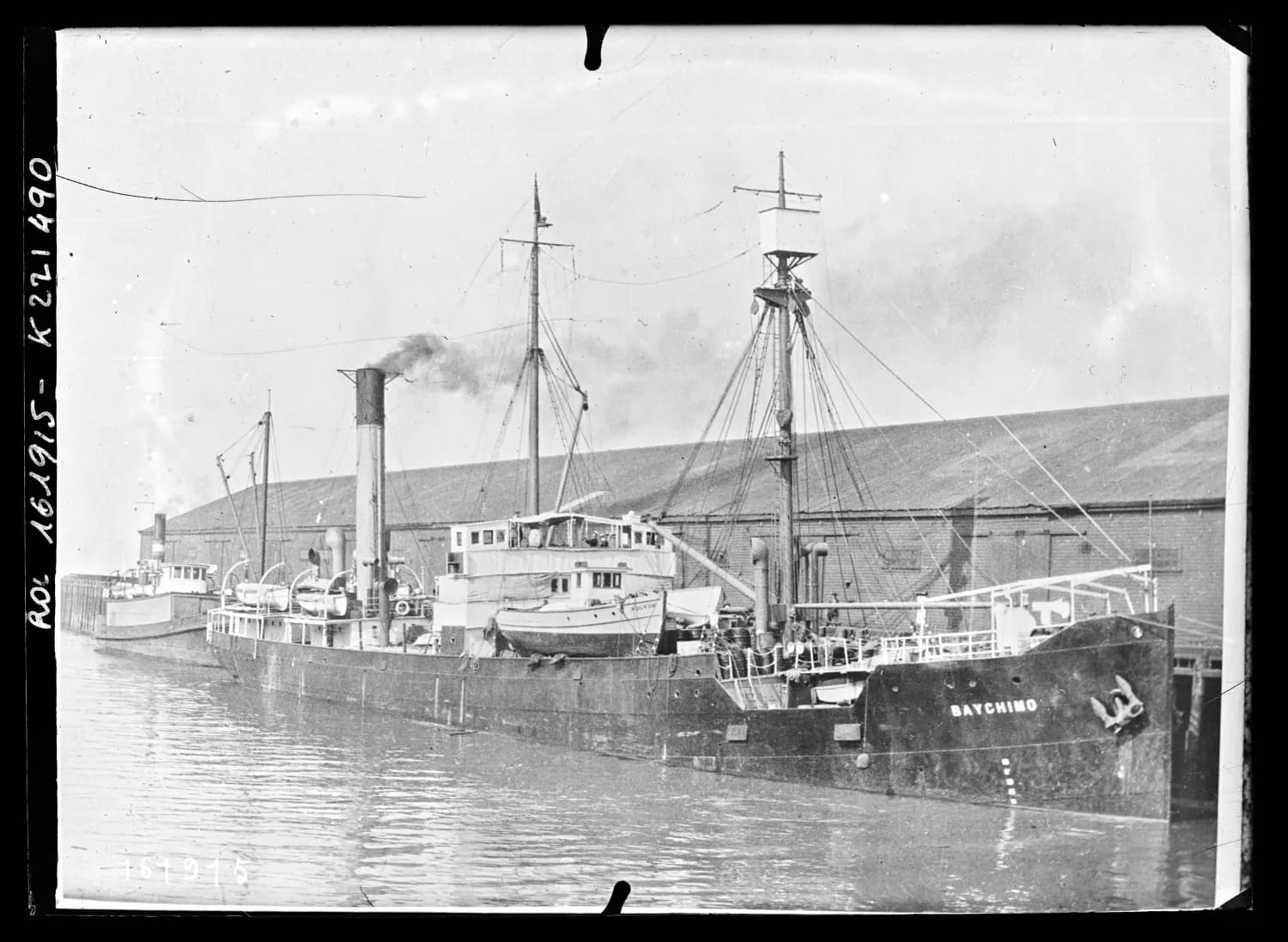
ISOBEL WYLIE HUTCHISON'S PARTY · 1933MANITOBA MUSEUM ↗ She was hurrying north in her private ice pan.
Baychimo was a steel steamer built in 1914 and later bought by the Hudson's Bay Company to supply Arctic posts and carry furs. In October 1931, ice trapped her near Point Barrow. Some people evacuated while a remaining party built winter quarters ashore and cleared ice from the rudder each day. After a blizzard on 26 November, the ship vanished. The crew assumed she had sunk until an Inuk hunter reported her in ice roughly seventy-two kilometres away.
Captain Cornwell returned, removed a large cargo of furs and abandoned the damaged ship for the last time. Sea ice turned her into a moving island. In 1933, Indigenous Alaskans boarding her were trapped for ten days; that summer botanist Isobel Wylie Hutchison's party saw her ‘hurrying north in her private ice pan.’ A salvage attempt followed in 1939. Hudson's Bay Company Archives record the last sighting in 1969—thirty-eight years after abandonment. The human file was closed; the hull refused to sign its own ending.
An empty ship seems to choose because the sea preserves momentum
The four vessels retained four forms of motion. Mary Celeste had sails, rudder surface and days of wind, and could proceed like an uncrewed but roughly balanced machine. Diamond Shoals stopped Deering. Kaz II's engine, sails, shallow draught and reef tide created the appearance of deliberate pilotage. Baychimo surrendered agency most completely: frozen into a floe, she travelled wherever the ice travelled.
We read motion as a trace of intention and instinctively search for a helmsman. Motion at sea does not require a story. Wind pressure, current, buoyancy, rudder angle, waves and ice drift can carry an object across coordinates without a person aboard. That calm physical continuation makes a finished disaster look like a voyage still happening.
The hull can return to port; the last decision remains at sea
Mary Celeste reached Gibraltar, Deering was dynamited as a hazard, Kaz II was towed to Townsville and Baychimo likely rests beneath the Beaufort Sea. Each hull acquired an ending. The water last seen by the missing people never entered the archive. Investigation can discard some stories, reconstruct actions from film and objects, and mark the border of inference honestly. It cannot summon a vanished instant.
This is the derelict's particular epic scale: not a monster, but the proportion between one small human act and oceanic time. Someone unclips a safety wire, takes up a sextant or steps off an icebound deck; the vessel continues for ten days, three days or thirty-eight years. The ship returns. The decision does not. Every later boarding takes place on the far side of that break.
Between the two timelines
01How does a derelict differ from a ghost ship?+
A derelict is first a physical maritime condition that can be boarded, towed and investigated. A ghost ship may be a supernatural apparition or a real empty vessel transformed by legend. They overlap in storytelling, not in evidentiary standards.
02Was Mary Celeste found on 4 or 5 December?+
Authoritative accounts use both dates, owing to nautical dating and later records. This narrative follows the Gibraltar transcript site and Smithsonian's 5 December date while retaining Royal Museums Greenwich's 4 December account among the sources.
03Was food still hot aboard Mary Celeste?+
The court evidence does not support that famous scene. Testimony describes a displaced stove, scattered utensils and wet accommodation. The interrupted breakfast and steaming drink are later additions.
04Were Mary Celeste's people ever found?+
No. None of the ten people or the missing boat was reliably recovered. A precautionary abandonment followed by separation from the ship fits several clues, but remains a reconstruction rather than a judicial finding.
05Was the Carroll A. Deering bottle message genuine?+
No. Investigators obtained a confession from the finder that he had forged it. Its role in the story shows how quickly an apparent missing clue can turn an accident file into a pirate narrative.
06What happened to the three men on Kaz II?+
The Queensland coroner found that they died at sea off George Point on 15 April 2007, most likely by drowning. The linked fall, rescue attempt and accidental gybe are the most plausible reconstruction from video, vessel condition and track data.
07Did Baychimo really drift for thirty-eight years?+
The Hudson's Bay Company record gives abandonment in 1931 and the last archived sighting in 1969. She was not watched continuously; the thirty-eight years measure the span between records of repeated disappearance, sighting and boarding.
08Why can an empty vessel look as if it is being steered?+
A sailing vessel can keep moving under a particular sail and rudder balance, an engine may keep idling, and wind, tide, waves or ice can alter direction. Movement along a channel, viewed at a distance, does not prove a crew is aboard.
Begin each vessel with its own record
- 01The mystery of the Mary CelesteRoyal Museums Greenwich
- 02Abandoned Ship: The Mary CelesteSmithsonian Magazine
- 03The Mary Celeste salvage hearing at GibraltarMinistry for Heritage · Gibraltar
- 04Oliver Deveau gives evidence on oath — court transcript archiveMary Celeste · Facts not Fiction
- 05J. Habakuk Jephson’s Statement (1884)HathiTrust · The Cornhill Magazine
- 06The Wreck of the Carroll A. DeeringHerbert Hoover Presidential Library · U.S. National Archives
- 07The Mysterious Disappearance of Ghost Ship Carroll A. Deering’s CrewLibrary of Congress
- 08Findings of inquest: Batten, Tunstead and TunsteadQueensland Courts · Office of the State Coroner
- 09Baychimo — vessel history and archival referencesHudson’s Bay Company Archives · Archives of Manitoba
- 10Baychimo: The Adventures of the Ghost Ship of the ArcticManitoba Museum
- 11From Ayrshire to the Arctic — Bayeskimo & BaychimoScottish Maritime Museum
- 12Mary Celeste as Amazon in 1861 — public-domain paintingWikimedia Commons
- 13Carroll A. Deering off Cape Lookout — U.S. Coast Guard photographWikimedia Commons · Public domain
- 14Le Baychimo — 1932 press photographBibliothèque nationale de France · Public domain
Related signals
Along the same route
 01
01Ghost ships: the hail that received no answer
From the first printed Flying Dutchman reference in 1790 to the empty Mary Celeste and ships distorted in fog: why does the ghost ship appear when someone hails and no one answers?
Continue along the route ↗ 02
02The Flying Dutchman: a letter sixty years late, a ship delayed until Judgment Day
From a one-line storm apparition in 1790 to a slave ship, Vanderdecken's late letters, Heine's seven-year reprieve, Marryat's filial quest and Wagner's red-sailed finale: how each retelling made the Flying Dutchman eternal.
Continue along the route ↗ 03
03Curses at sea: when the storm demands a name
From Jonah's lot and the cattle of Helios to the shot fired in 1719 and the albatross hung around a mariner's neck: how omen, transgression, name and disaster became a verdict at sea.
Continue along the route ↗