AGE OF SEASAcquiring signal
World chapter · 04
Sea Monsters, Ghost Ships and Legends.
Sea legends preserve more than old beliefs. They show how people explained the unknown, warned of danger and narrated the cost of crossing a boundary.
01Is Leviathan an animal or a symbol?02Did the Flying Dutchman have a real model?03Why do abandoned ships become ghost stories?04Are chart monsters eyewitness records?
Chapter missions
Start with these missions
Trace Leviathan, ghost ships and chart monsters through texts and images while separating disaster, nature, literature and later invention.
 01
01Ancient texts · Leviathan
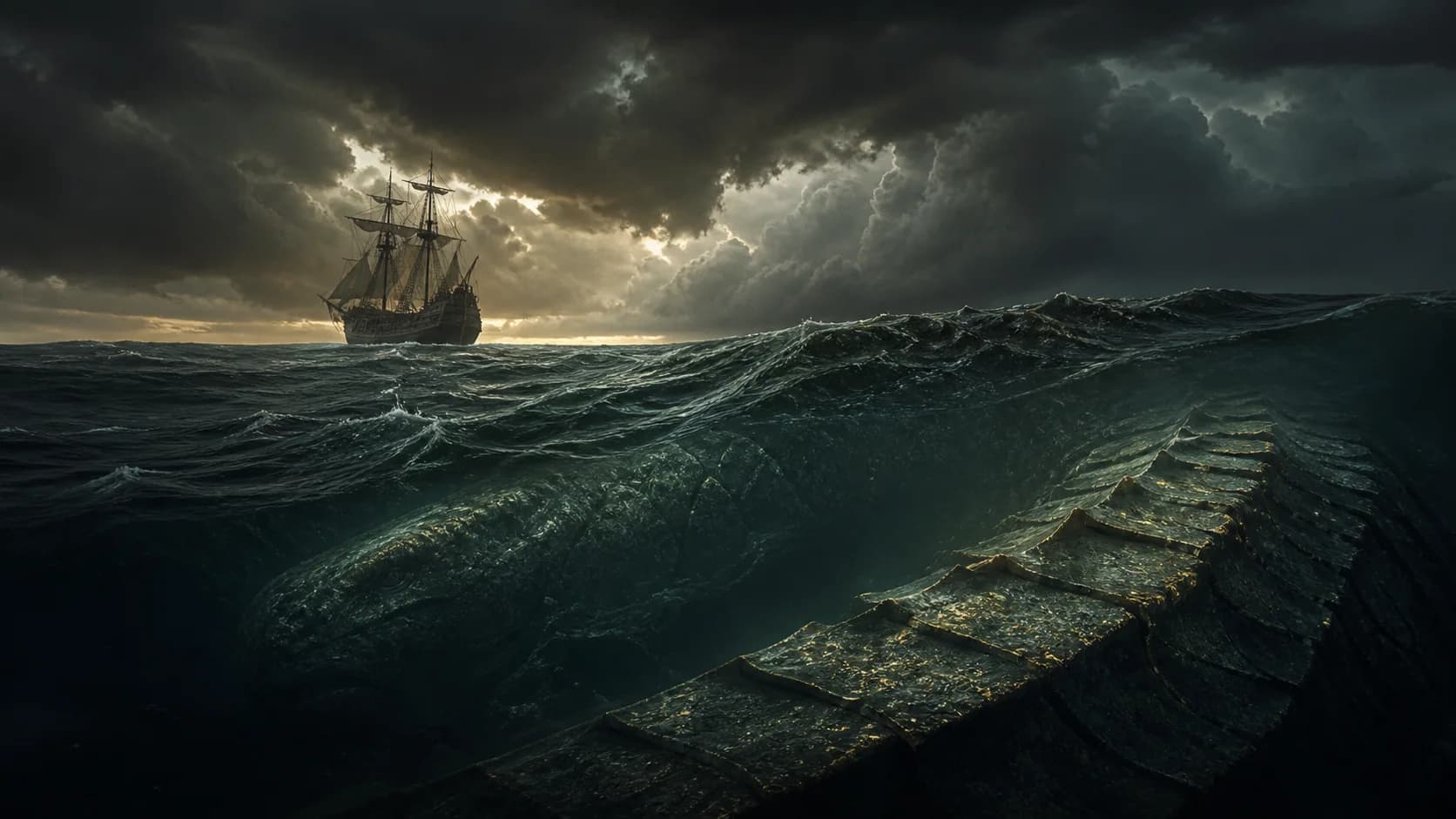
Leviathan: the sea monster humanity could never hook
From the fishhook challenge in Job to a monster both shattered and playful in the Psalms: why did Leviathan acquire no fixed body, yet become the sea's most enduring name for the unknown?
14 MIN ↗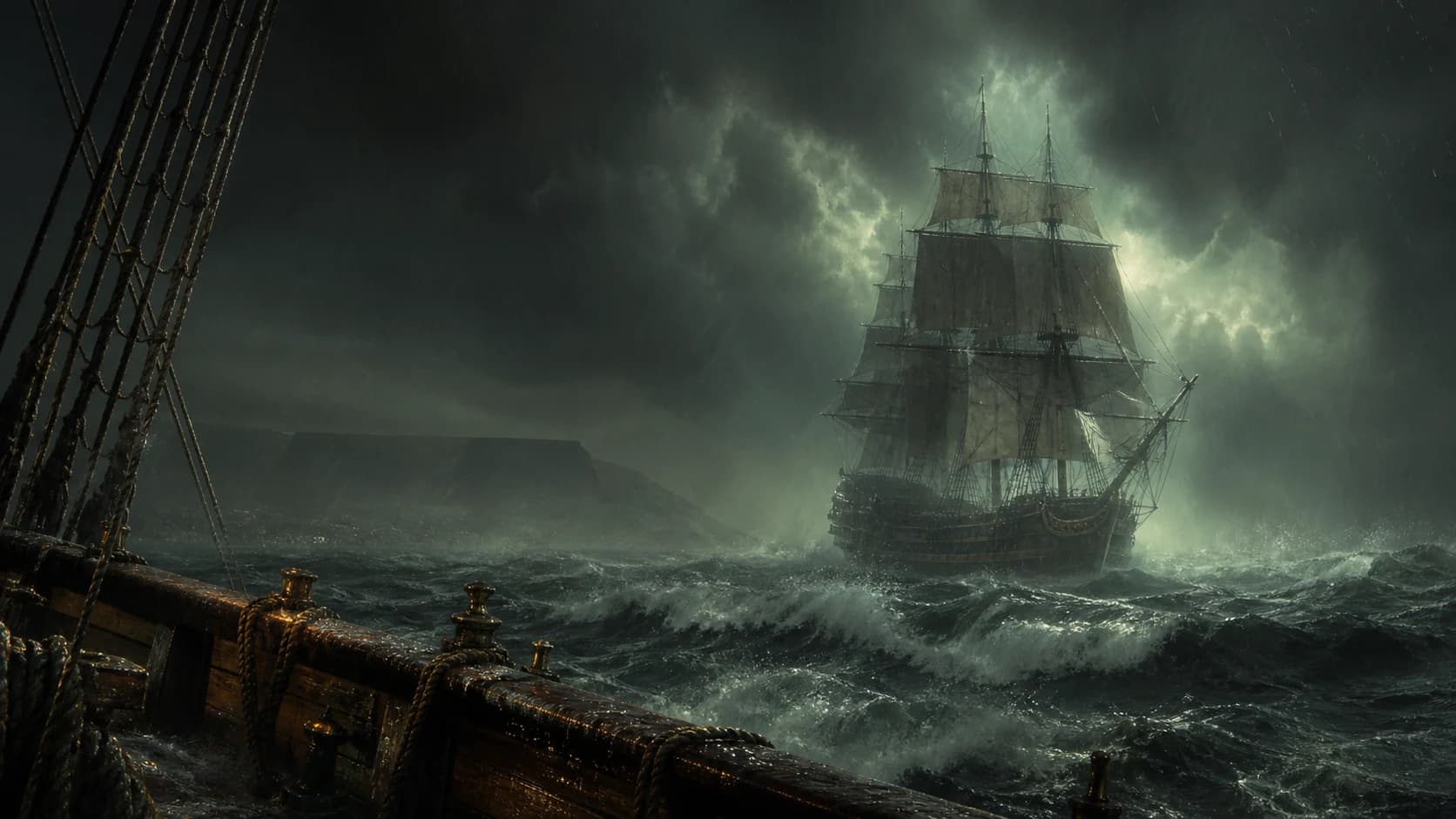 02
02Tracks in fog · Ghost ships
Ghost ships: the hail that received no answer
From the first printed Flying Dutchman reference in 1790 to the empty Mary Celeste and ships distorted in fog: why does the ghost ship appear when someone hails and no one answers?
15 MIN ↗Route archive · Later missions
08 SIGNALS03
Four centuries of sightings · THE GREAT SEA SERPENT
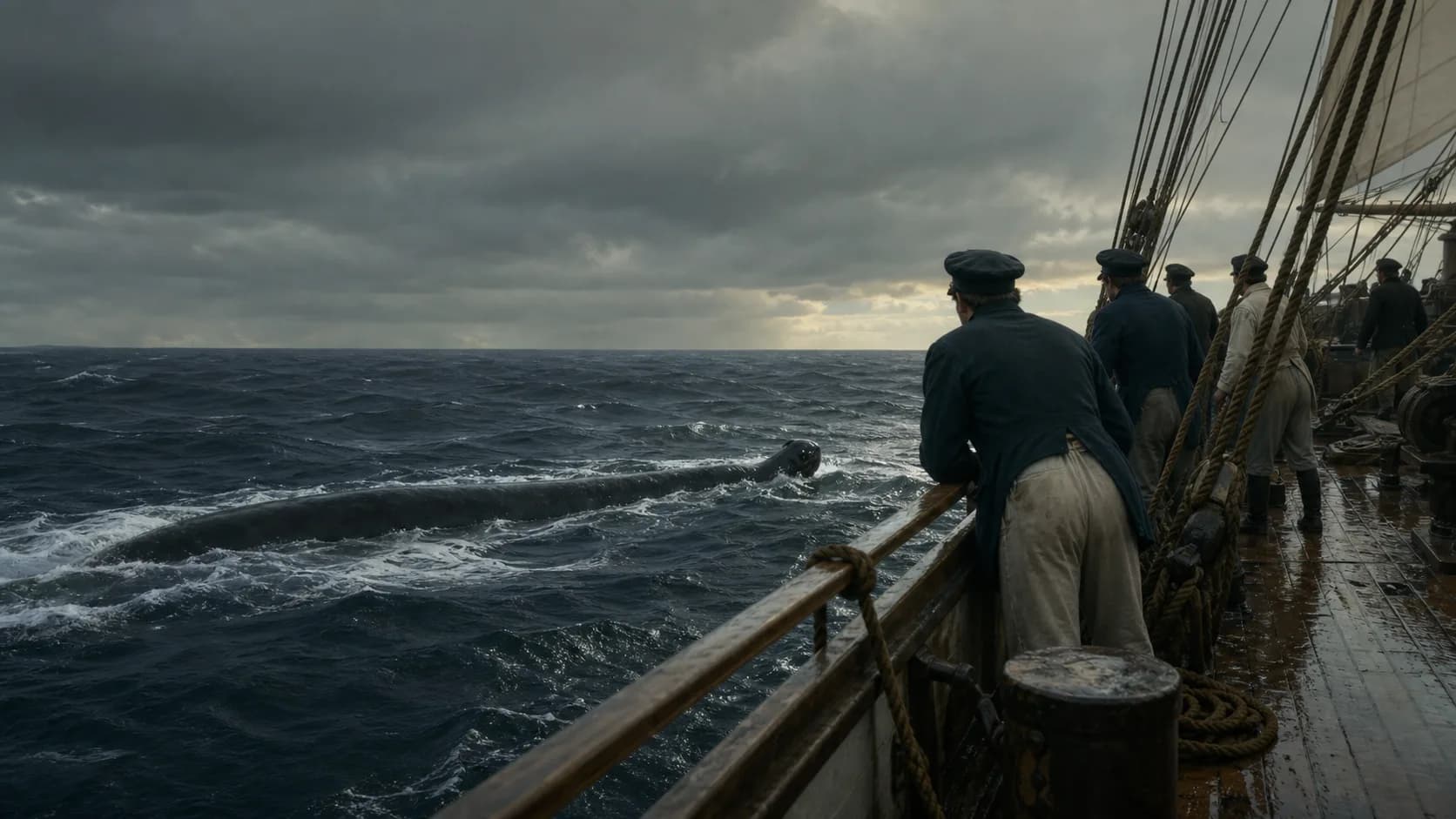
16 MIN ↗04The Sea Serpent: Every Witness Saw a Different Length of Body
From a Norwegian woodcut of 1555 and a Greenland voyage of 1734 to sworn Gloucester testimony and the HMS Daedalus report: how a sea serpent acquired its body through incomplete sightings.
TWO ABYSSES · KRAKEN / LEVIATHAN
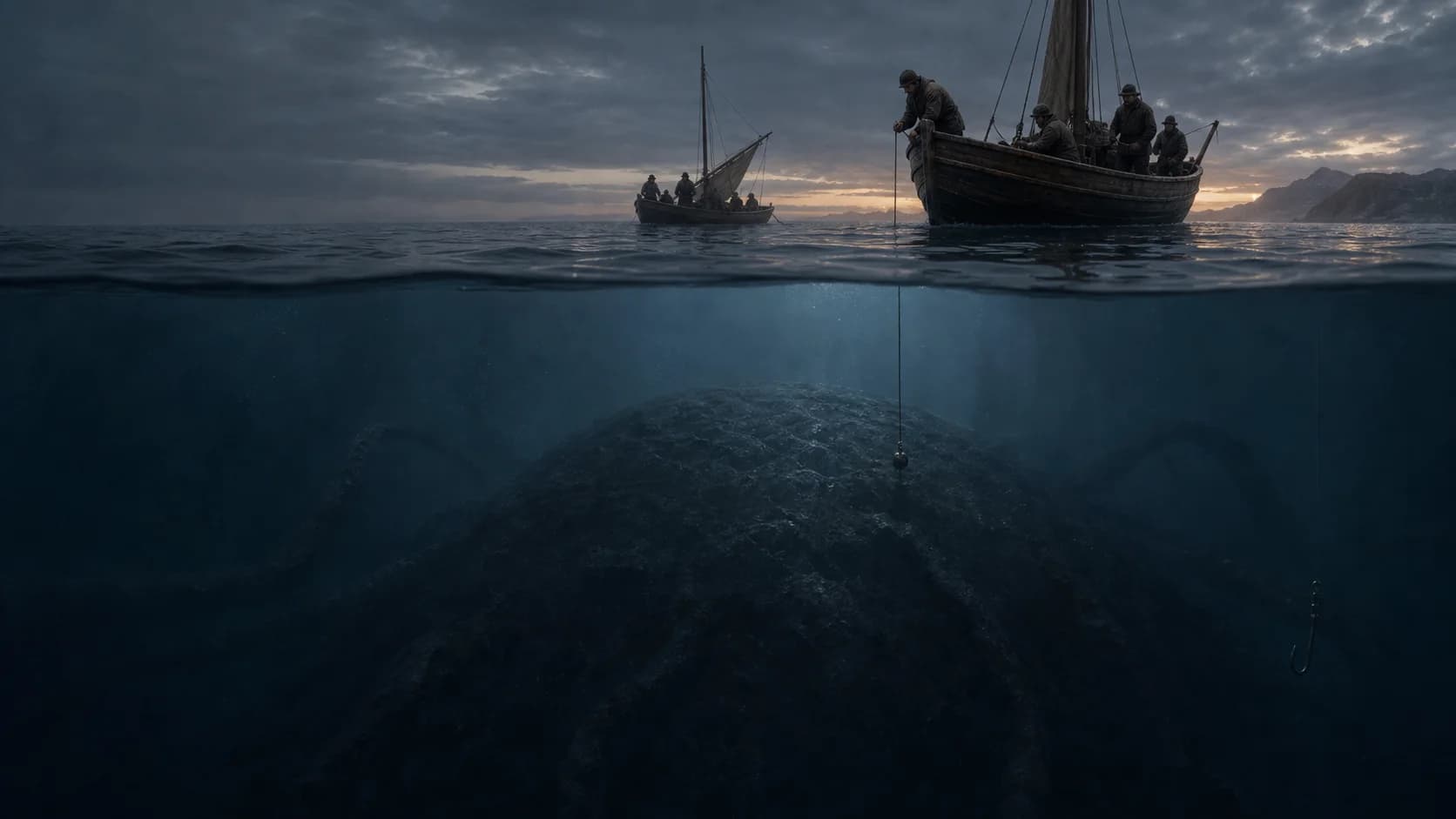
17 MIN ↗05Kraken and Leviathan: the seabed rises, the fishhook fails
From the hafgufa of The King’s Mirror and Pontoppidan’s sounding lead to Job’s fishhook, Montfort’s octopus and Tennyson’s sleeping deep: how Kraken and Leviathan became two different measures of the epic sea.
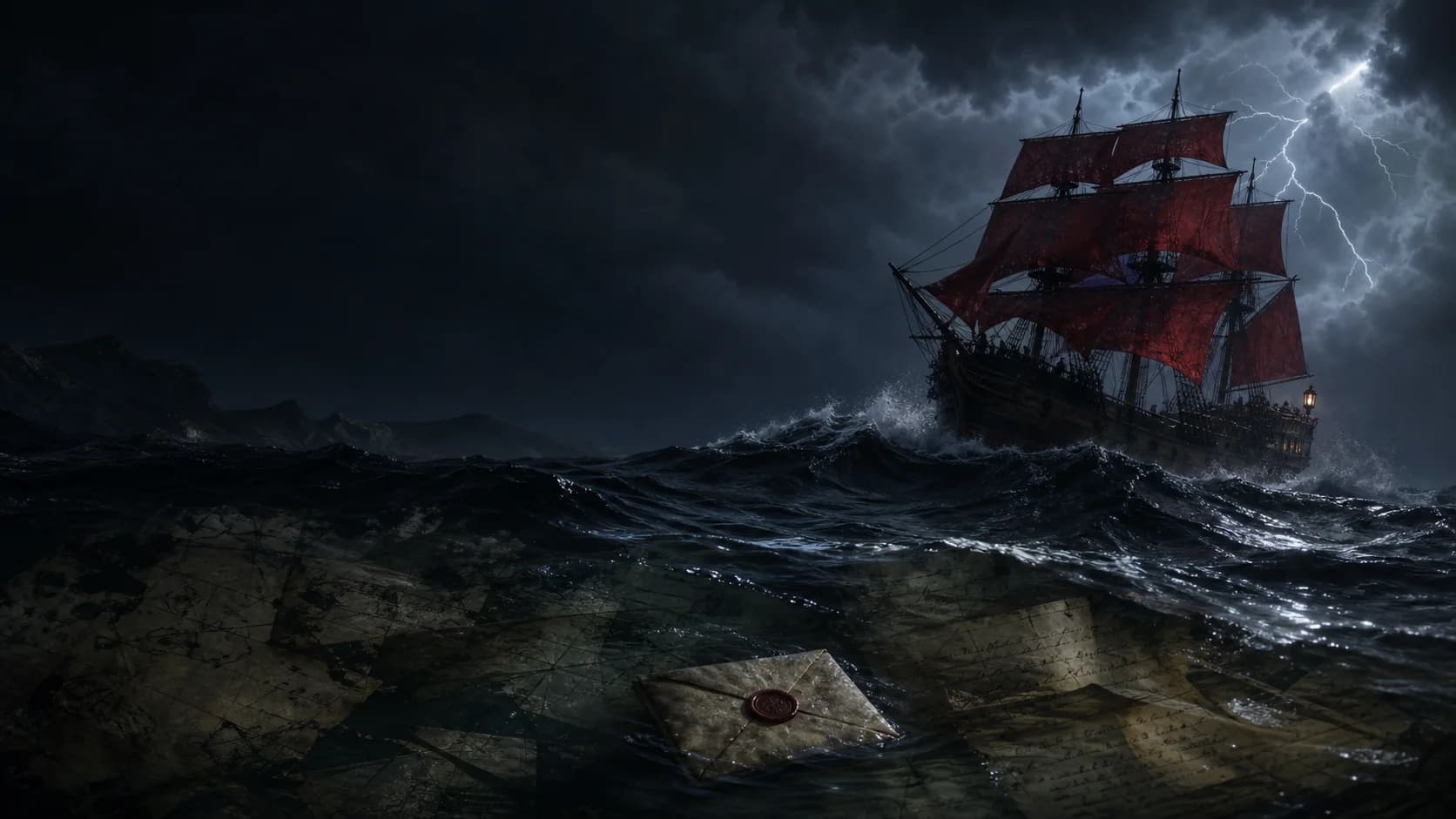
AN OVERWRITTEN SHIP'S LOG · THE FLYING DUTCHMAN
18 MIN ↗06The Flying Dutchman: a letter sixty years late, a ship delayed until Judgment Day
From a one-line storm apparition in 1790 to a slave ship, Vanderdecken's late letters, Heine's seven-year reprieve, Marryat's filial quest and Wagner's red-sailed finale: how each retelling made the Flying Dutchman eternal.
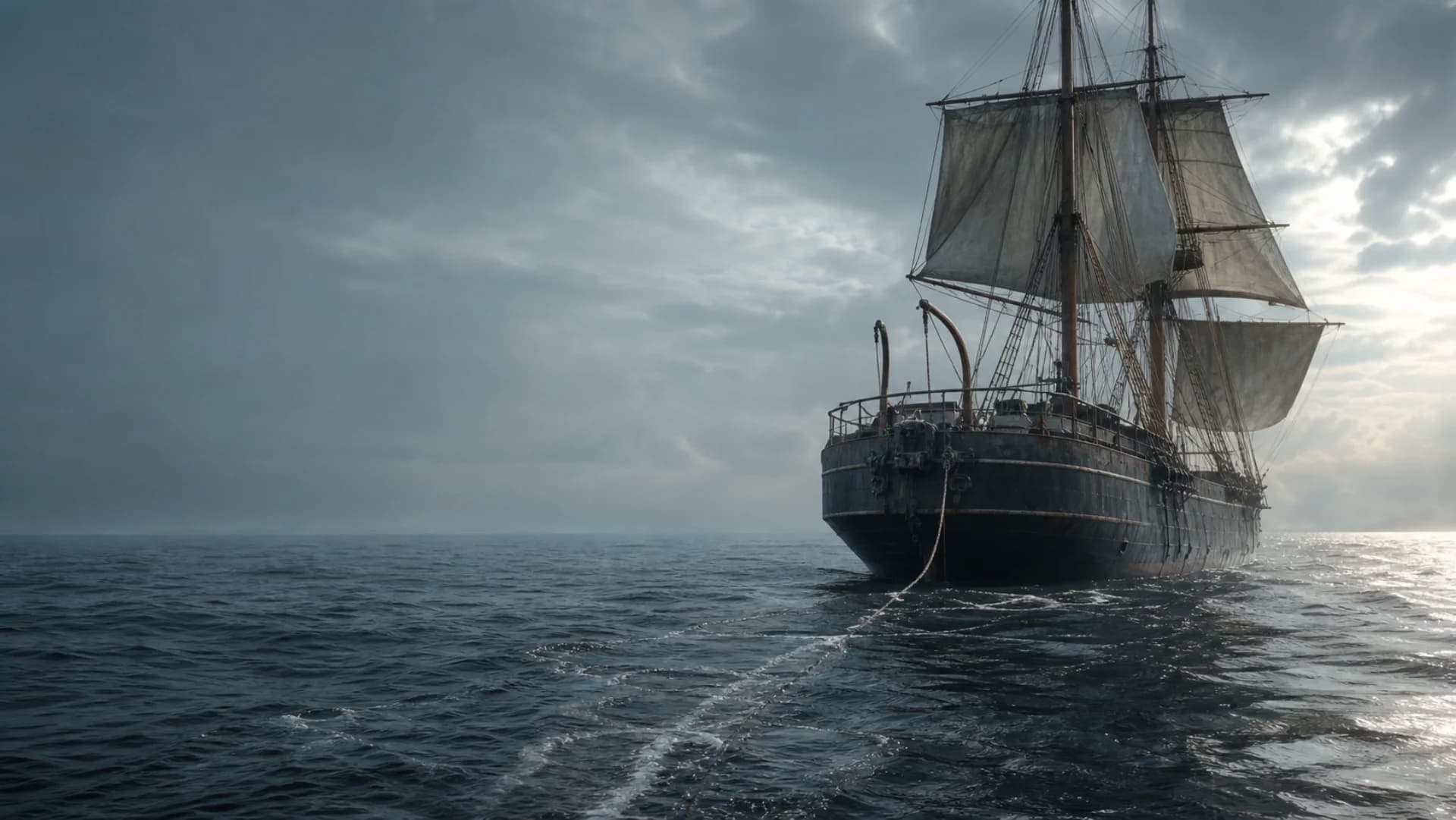
REAL MARITIME FILES · DERELICT VESSELS
19 MIN ↗07Derelict ships: the vessel sailed on after the last human decision
From Mary Celeste, Carroll A. Deering and Kaz II to Baychimo's thirty-eight-year afterlife: four hulls that kept moving after their human timelines stopped.
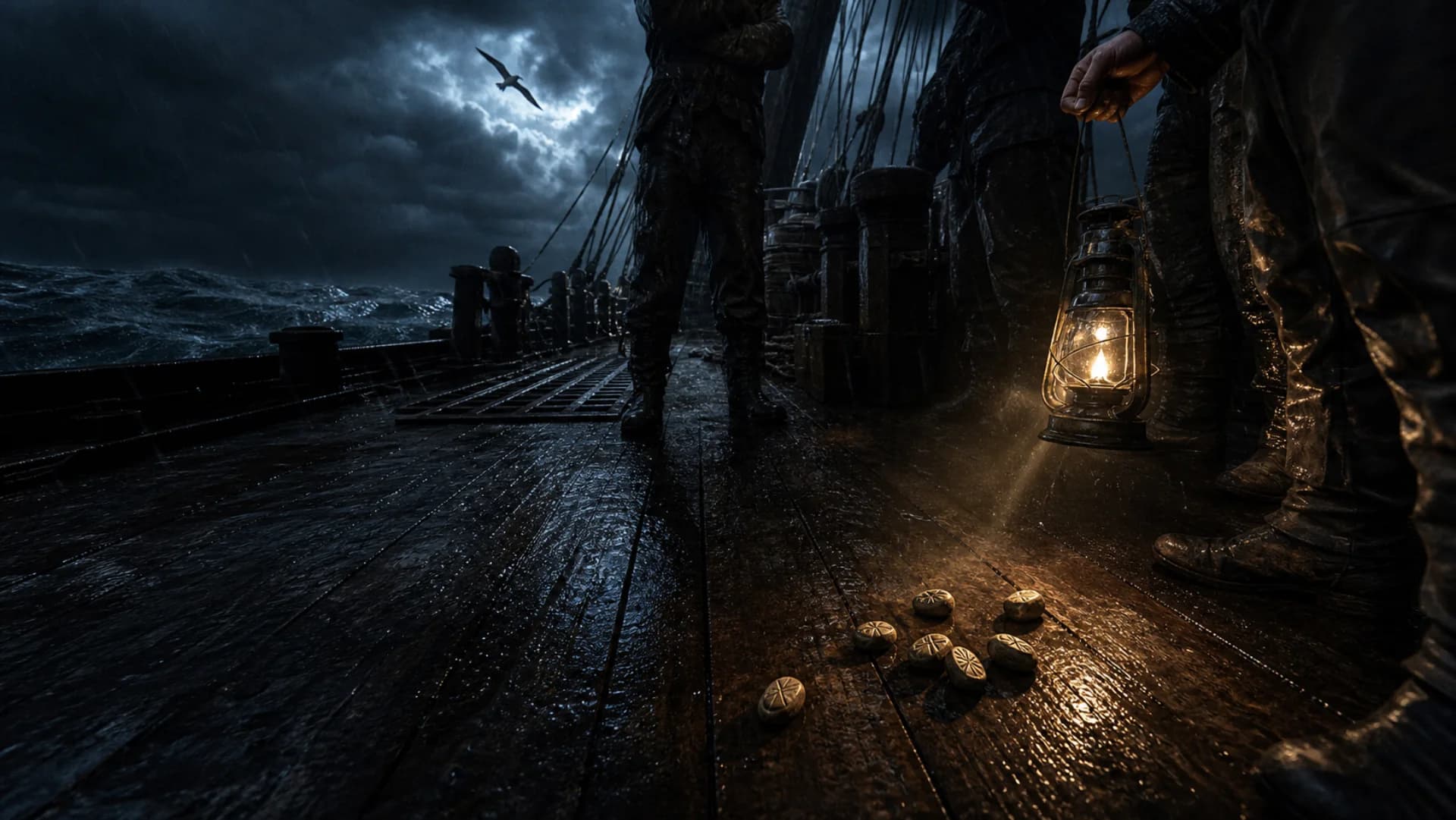
SHIPBOARD TRIBUNAL · CURSES AT SEA
19 MIN ↗08Curses at sea: when the storm demands a name
From Jonah's lot and the cattle of Helios to the shot fired in 1719 and the albatross hung around a mariner's neck: how omen, transgression, name and disaster became a verdict at sea.
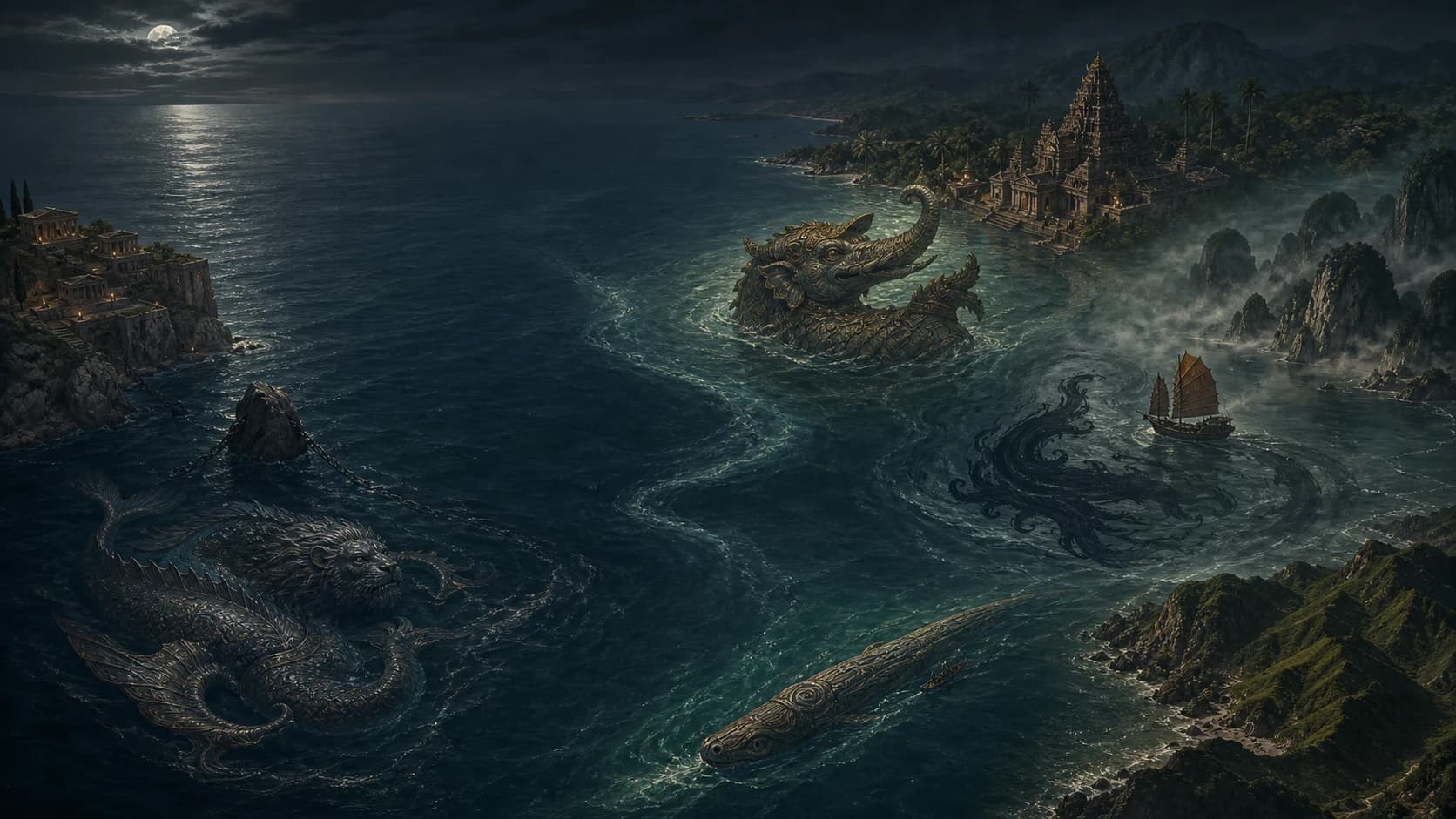
SIX COASTS · A WORLD ATLAS OF MONSTERS
20 MIN ↗09Sea monsters of the world: every coast gives deep water a different verb
From the Greek ketos that consumes a sacrifice and the Indian makara that carries a water deity to China's Album of Sea Oddities, Hokusai, Māori taniwha and Mami Wata across the African Atlantic: monsters that demand, guard, guide and bestow.
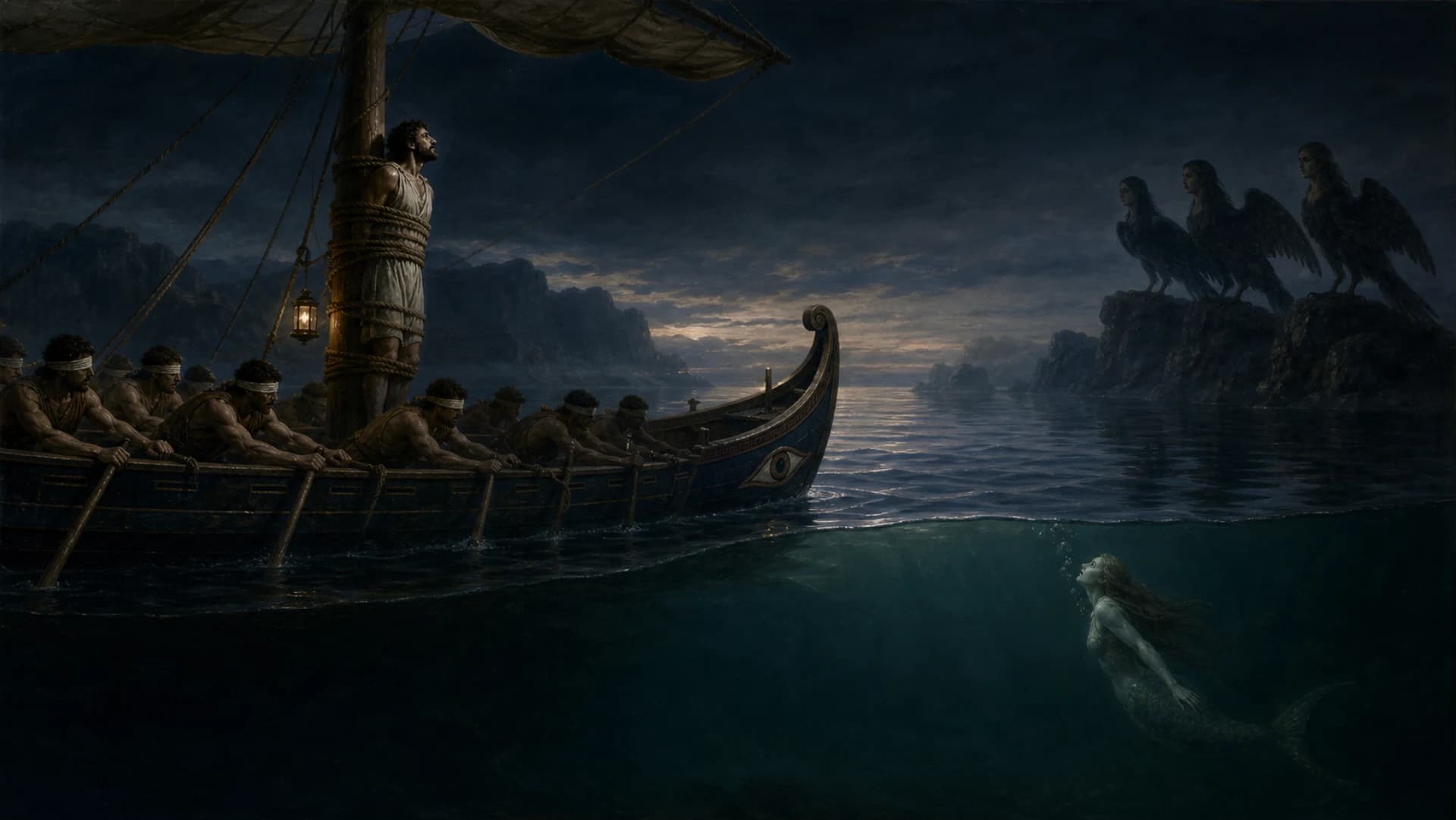
VOICE AND SILENCE · SIRENS / MERMAIDS
21 MIN ↗10Sirens and mermaids: one steals a course with song, one gives her song to the shore
From the bodiless fatal song in the Odyssey and the bird-bodied Siren of Greek art to the medieval fish tail, Columbus's three surface sightings and Andersen's tongueless Little Mermaid: two traditions meet through the price of a voice.
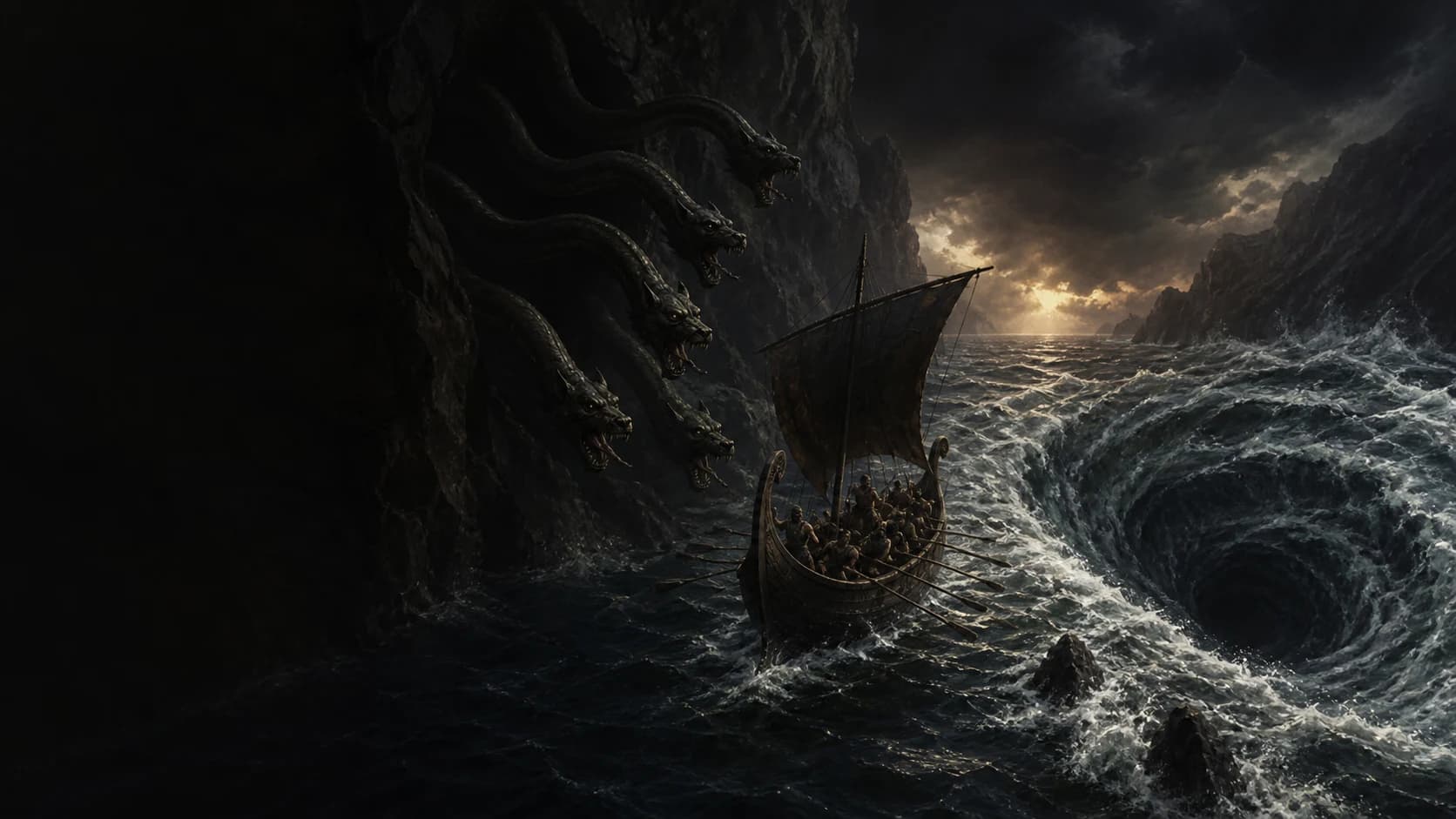
ONE BOWSHOT · SCYLLA / CHARYBDIS
22 MIN ↗Scylla and Charybdis: six men, or the whole ship
From the six sailors taken during the first passage in Odyssey 12 to Odysseus hanging from a fig tree on the second: this is not a balanced dilemma but a channel that charges a price.