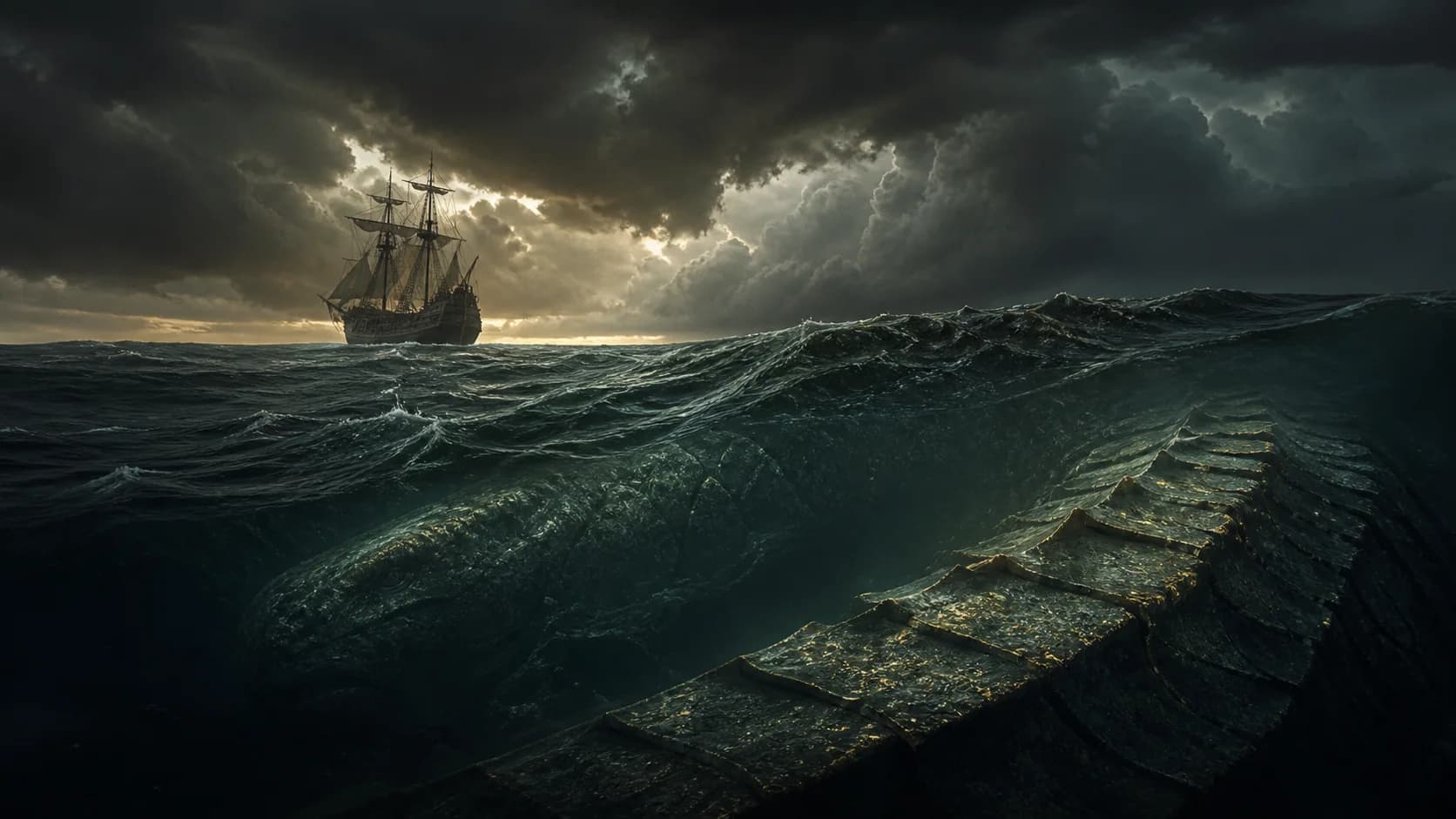
 leviathan
Before it became a monster, it was a question.
The name has coiled beneath the water for three thousand years.
Leviathan is not a zoological report pointing to one species. It is a sea monster in ancient Hebrew poetry. In Job, human weapons and techniques of capture fail before it; one psalm remembers it crushed, another lets it play in the sea; Isaiah presents the twisting serpent as an enemy still to be punished. Its epic power comes from refusing to fit inside one picture, one animal or one meaning.
One name surfaces four times.
Hook, rope and weapon fail one after another.
The many-headed monster remains on an ancient battlefield.
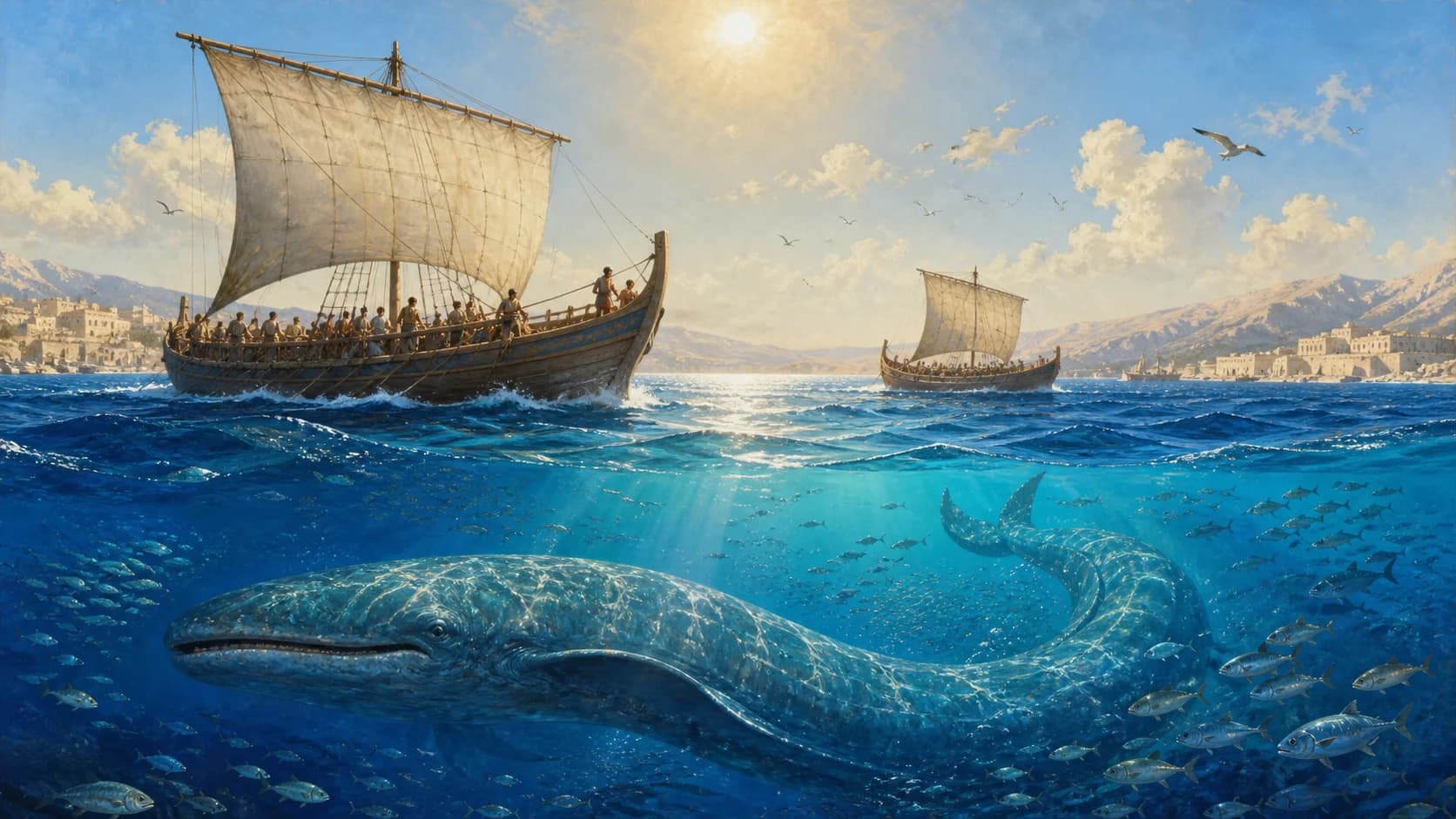
Ships pass while Leviathan moves through an abundant ocean.
The twisting serpent still awaits a final reckoning.
The story begins not with a roar, but with a fishhook
JOB · 40:25Source ↗ Can you draw Leviathan from the deep with a hook, or press down its tongue with a cord?HEBREWתִּמְשֹׁךְ לִוְיָתָן בְּחַכָּה וּבְחֶבֶל תַּשְׁקִיעַ לְשֹׁנוֹ׃
Hebrew versification gives Job 40:25; many modern Christian editions number it 41:1.
When Job brings Leviathan before the reader, it gives no length and names no sea. A voice from the whirlwind asks Job whether he can draw it out with a hook, tie down its tongue, make it plead, enter a covenant with it, or turn it into a pet for children. Fishing, binding, trade and domestication—the familiar instruments of human control—are raised one by one and made to fail.
That makes Leviathan more disturbing than an animal of exceptional size. It is not a final opponent waiting for a hero to discover its weakness. It measures the human boundary. Job has asked why an innocent person suffers; the answer opens onto a vast and wild cosmos that is not arranged around human needs. Leviathan stands at the far end of that change in scale.
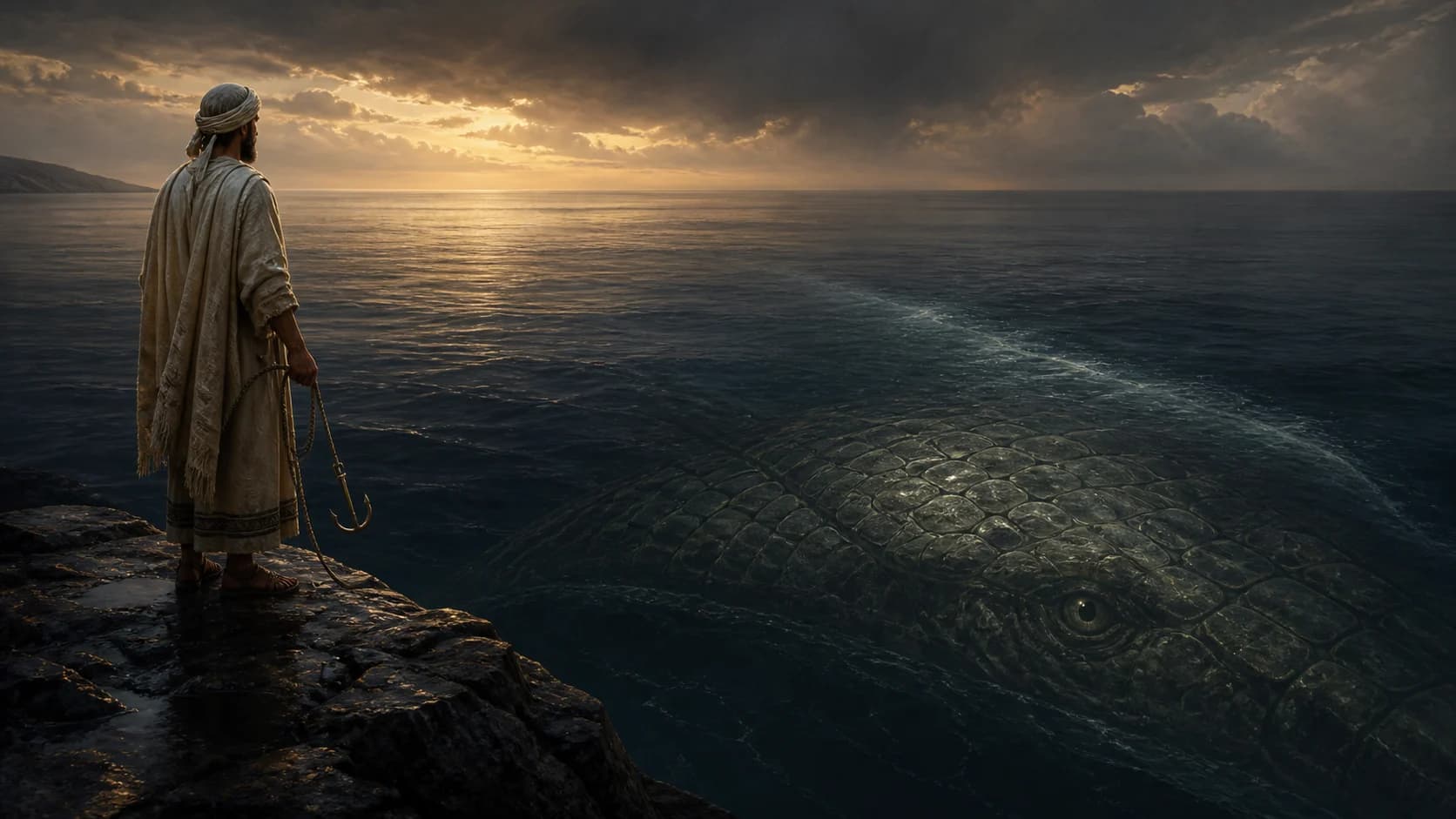
Job gives it armor, fire and a shining wake
JOB · 41:11Source ↗ Torches go from its mouth; sparks of fire escape.HEBREWמִפִּיו לַפִּידִים יַהֲלֹכוּ כִּידוֹדֵי אֵשׁ יִתְמַלָּטוּ׃
The line carries the creature beyond zoological description and into mythic scale.
The poem makes its back a row of sealed shields and surrounds its teeth with terror. Sword, spear, javelin and arrow lose their force. A sneeze flashes with light; smoke leaves its nostrils and flame its mouth. The water behind it shines and the deep seems white-haired. At the close it is king over all the proud. This is a sequence of hyperbole, metaphor and mythic imagery, not an ancient field description.
A crocodile helps explain some details: armored scales, teeth, a belly moving over mud, and the experience of large reptiles in the Nile world. Yet flame, the abyss and royal status keep returning the creature to poetry. Calling the whole chapter an account of a crocodile misses its crucial effect—the body of a known animal and the old chaos monster overlap in the same poem.
One name receives four different fates
PSALM · 74:14Source ↗ You crushed the heads of Leviathan.HEBREWאַתָּה רִצַּצְתָּ רָאשֵׁי לִוְיָתָן
Heads is plural here; Leviathan stands with the marine chaos that has been defeated.
PSALM · 104:26Source ↗ There ships pass; there is Leviathan, whom you formed to play there.HEBREWשָׁם אֳנִיּוֹת יְהַלֵּכוּן לִוְיָתָן זֶה־יָצַרְתָּ לְשַׂחֶק־בּוֹ׃
The final בו can also be read as ‘to play with it,’ producing a strikingly different relation in translation.
Psalm 74 remembers God breaking the sea and its monsters; there Leviathan has more than one head and lies defeated as an enemy of chaos. Isaiah 27 moves it into the future, naming the fleeing serpent, the twisting serpent and the dragon in the sea, all awaiting punishment. Both preserve the enormous composition of divine power confronting marine chaos.
Psalm 104 changes the atmosphere. Countless creatures fill the broad sea, ships travel through it, and Leviathan plays there. A figure once large enough to represent cosmic threat becomes a free creature within an abundant world. No definition works everywhere: Leviathan can be enemy, defeated monster, wild king or living part of the sea. What persists is its existence beyond human command.
Behind it coils an older serpent called Lotan
ISAIAH · 27:1Source ↗ Leviathan, the fleeing serpent; Leviathan, the twisting serpent.HEBREWלִוְיָתָן נָחָשׁ בָּרִחַ · לִוְיָתָן נָחָשׁ עֲקַלָּתוֹן
ltn bṯn brḥ · bṯn ʿqltnClosely related Ugaritic epithets make the echo between the two poetic traditions visible.
Ugaritic texts excavated and deciphered in the twentieth century showed that Leviathan did not appear from nowhere. The Canaanite monster Lotan is likewise serpentine and carries epithets resembling ‘fleeing serpent’ and ‘twisting serpent’ in Isaiah. Many ancient Near Eastern cultures told of powers of order confronting sea and dragon, although they were not merely translating one identical myth.
It is safer to place these poems within an environment of shared images and long revision. Hebrew poets inherited a language of sea monsters their audiences could recognize, then assigned it new theological and poetic work. Job is especially striking: Leviathan is not displayed as a corpse after a creation battle. It remains alive, free and dangerous under the creator's gaze. An old enemy of myth becomes a life through which humans must reimagine the world.
Later traditions did not fix its shape—they made it larger
Jewish interpretation continued Leviathan's ending. Bava Batra imagines the righteous sharing a feast from the monster, while its skin becomes shelter and radiance for Jerusalem. The untamable creature changes within eschatological imagination into food, light and protection. It is no longer danger alone, but a promise deferred into the future.
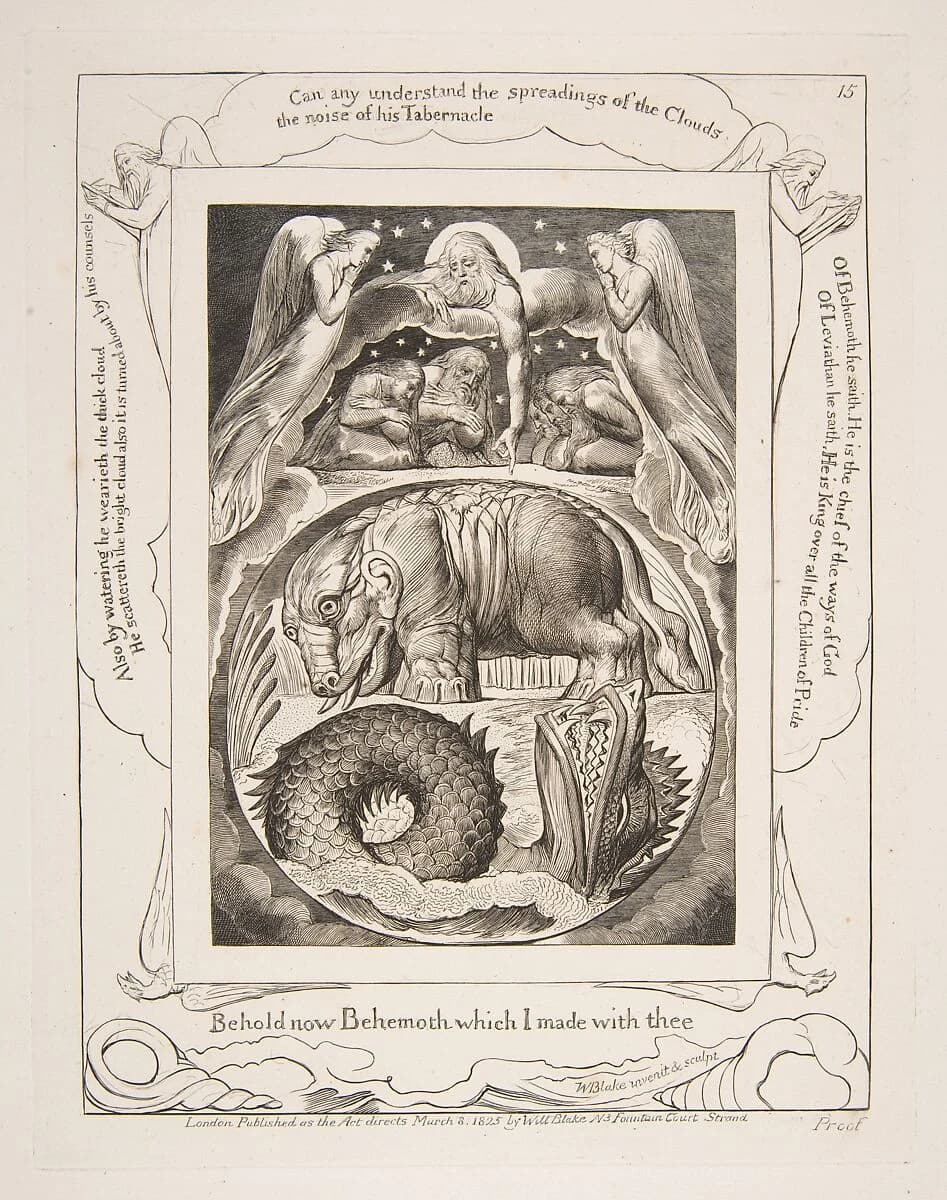
In 1651 Thomas Hobbes made Leviathan the name of the state. His introduction calls the commonwealth an ‘Artificial Man’ created by covenant, larger and stronger than a natural person. The monster's body consists of a multitude; sovereignty becomes its soul. In 1825–26 William Blake enclosed Leviathan in a submarine abyss opposite Behemoth on land. Every redrawing asked a new question: who possesses power beyond the individual, and who can restrain it?
Moby-Dick carried the ancient monster into the whaling age
Herman Melville repeatedly calls whales leviathans in Moby-Dick. The term no longer names only Job's mythic figure; it conveys the scale, remoteness and resistance to classification of whales. Melville parodies natural-history systems while exposing the gaps in a whaler's knowledge. A harpoon replaces the fishhook, but the human posture before the great body remains familiar.
The name even returned to scientific taxonomy. In 2010 researchers described a giant raptorial sperm whale from a Miocene skull found in Peru, later named Livyatan melvillei. Its roughly three-metre head and enormous teeth belonged to a real apex predator. The genus uses a Hebrew form of Leviathan; the species honors Melville. It proves a fossil whale, not the zoological identity of Job's monster. Here a cultural name and a natural body meet without replacing one another.
Leviathan feels epic because it refuses to shrink to human scale
Many monster stories turn uncertainty into a task: locate the lair, learn the weakness, kill the creature and return with proof. Job does the opposite. It sends no one to sea and promises no victory. It asks Job to imagine himself at the water's edge holding a line that cannot work. The monster does not become smaller; the human world must become larger.
That is why Leviathan retains its force after more than two millennia. Crocodile, whale, serpent, state, deep-sea monster and prehistoric predator have all borrowed its outline, but none owns it. Its most durable form is not a tentacle, scale or tooth. It is a boundary: beneath the surface exists a power that can be narrated, pictured and named without becoming ours.
The beast sinks; the questions remain.
01Was Leviathan a real animal?+
The evidence does not identify the textual Leviathan with one species. Its body draws on knowledge of animals such as crocodiles, while its role belongs to the ancient Near Eastern tradition of marine chaos monsters.
02Is the Leviathan in Job simply a crocodile?+
A crocodile explains some armor, teeth and mud imagery. Fire, the abyss, ineffective weapons and royal status exceed zoological realism; the chapter works by overlapping a real animal body with a mythic monster.
03Why does Leviathan breathe fire?+
Job uses smoke, torches and burning coals to create superhuman force. These are first of all poetic images; naturalistic suggestions do not reduce the entire passage to an observation report.
04How many heads did Leviathan have?+
Psalm 74 speaks of Leviathan's heads in the plural. Job does not make the number of heads important, so the texts do not share one anatomical diagram.
05Are Leviathan and Lotan the same figure?+
Their names, serpent imagery and epithets show a clear cultural and linguistic relationship, but they belong to different textual traditions. Continuity and rewriting are more accurate than one fixed character biography.
06Why did Hobbes call the state Leviathan?+
Hobbes imagined the commonwealth made by many people through covenant as a gigantic Artificial Man, using the name to convey a collective power beyond any individual and to ask how sovereignty sustains order.
07Is Moby Dick Leviathan?+
Melville often uses leviathan for whales and their vast scale. The white whale inherits the aura of an unconquerable sea creature, but it is not a direct retelling of Job's monster.
08Does Livyatan melvillei prove the legend was real?+
No. It is a Miocene raptorial sperm whale known from fossils. Its name honors the biblical monster and Melville, demonstrating cultural influence rather than proving a mythic animal.
Where this story comes from
- 01Job 40–41Sefaria Library · Revised JPS
- 02Psalms 74:13–14Sefaria Library · Revised JPS
- 03Psalms 104:25–26Sefaria Library · Revised JPS
- 04Isaiah 27:1Sefaria Library · Revised JPS
- 05Creation in the Old TestamentSt Andrews Encyclopaedia of Theology
- 06A New Translation of the Book of JobSociety of Biblical Literature
- 07Bava Batra 74b–75aSefaria Library · William Davidson Talmud
- 08Leviathan (1651)Project Gutenberg
- 09Behemoth and LeviathanThe Metropolitan Museum of Art
- 10Moby-Dick; or, The WhaleProject Gutenberg
- 11The giant bite of a new raptorial sperm whale from the Miocene epoch of PeruNature
Related signals
Along the same route
 01
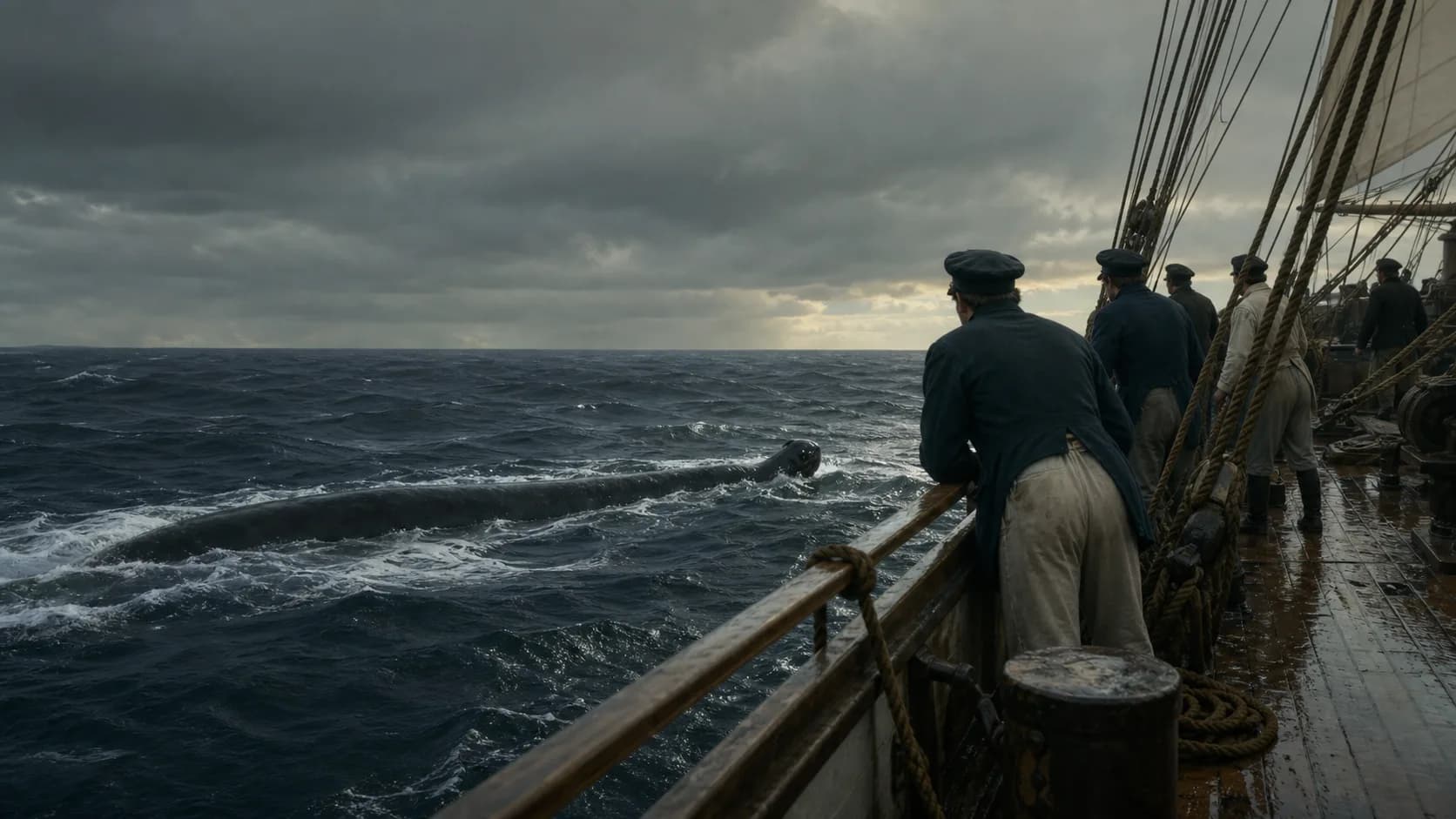
01The Sea Serpent: Every Witness Saw a Different Length of Body
From a Norwegian woodcut of 1555 and a Greenland voyage of 1734 to sworn Gloucester testimony and the HMS Daedalus report: how a sea serpent acquired its body through incomplete sightings.
Continue along the route ↗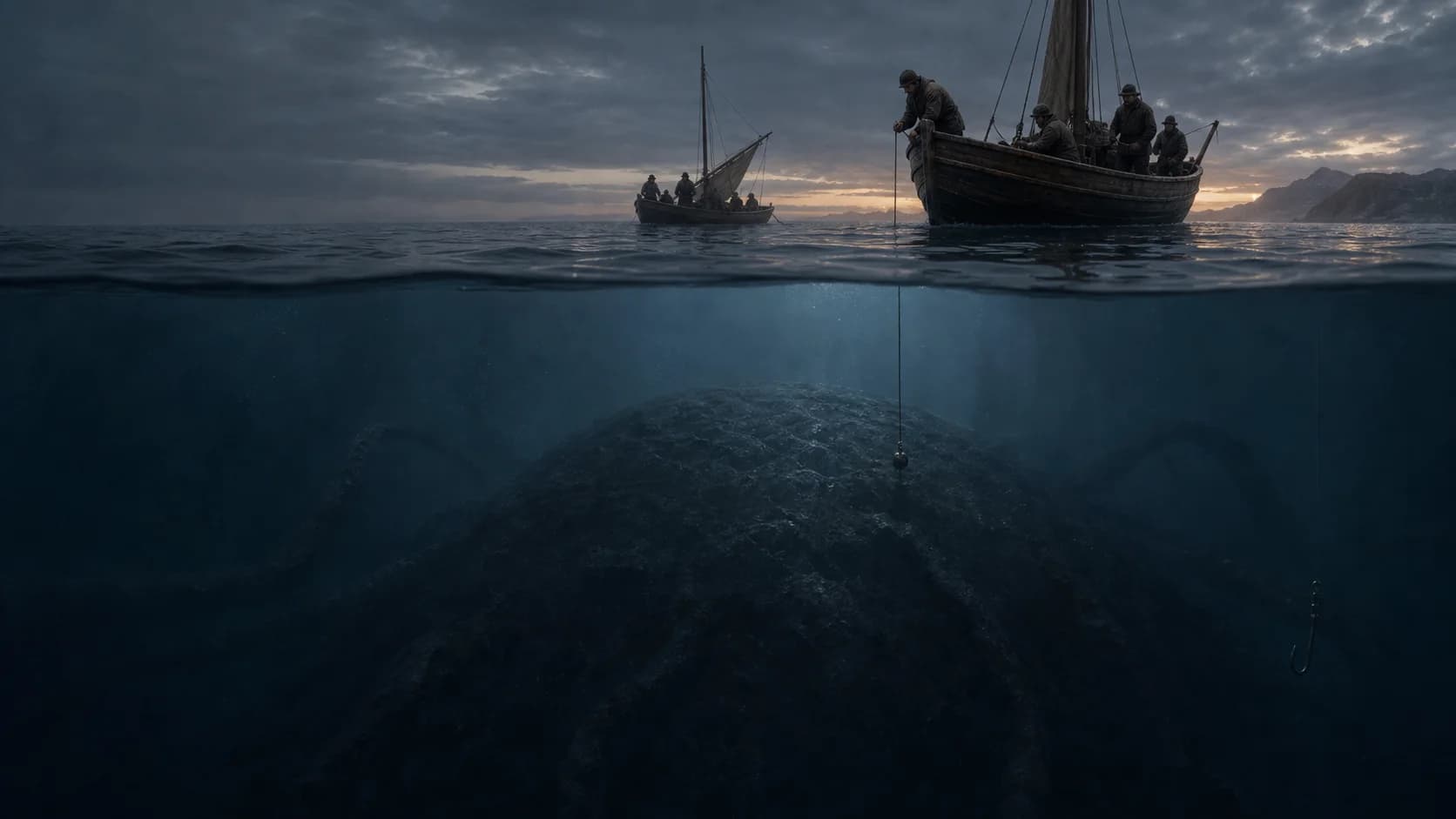 02
02Kraken and Leviathan: the seabed rises, the fishhook fails
From the hafgufa of The King’s Mirror and Pontoppidan’s sounding lead to Job’s fishhook, Montfort’s octopus and Tennyson’s sleeping deep: how Kraken and Leviathan became two different measures of the epic sea.
Continue along the route ↗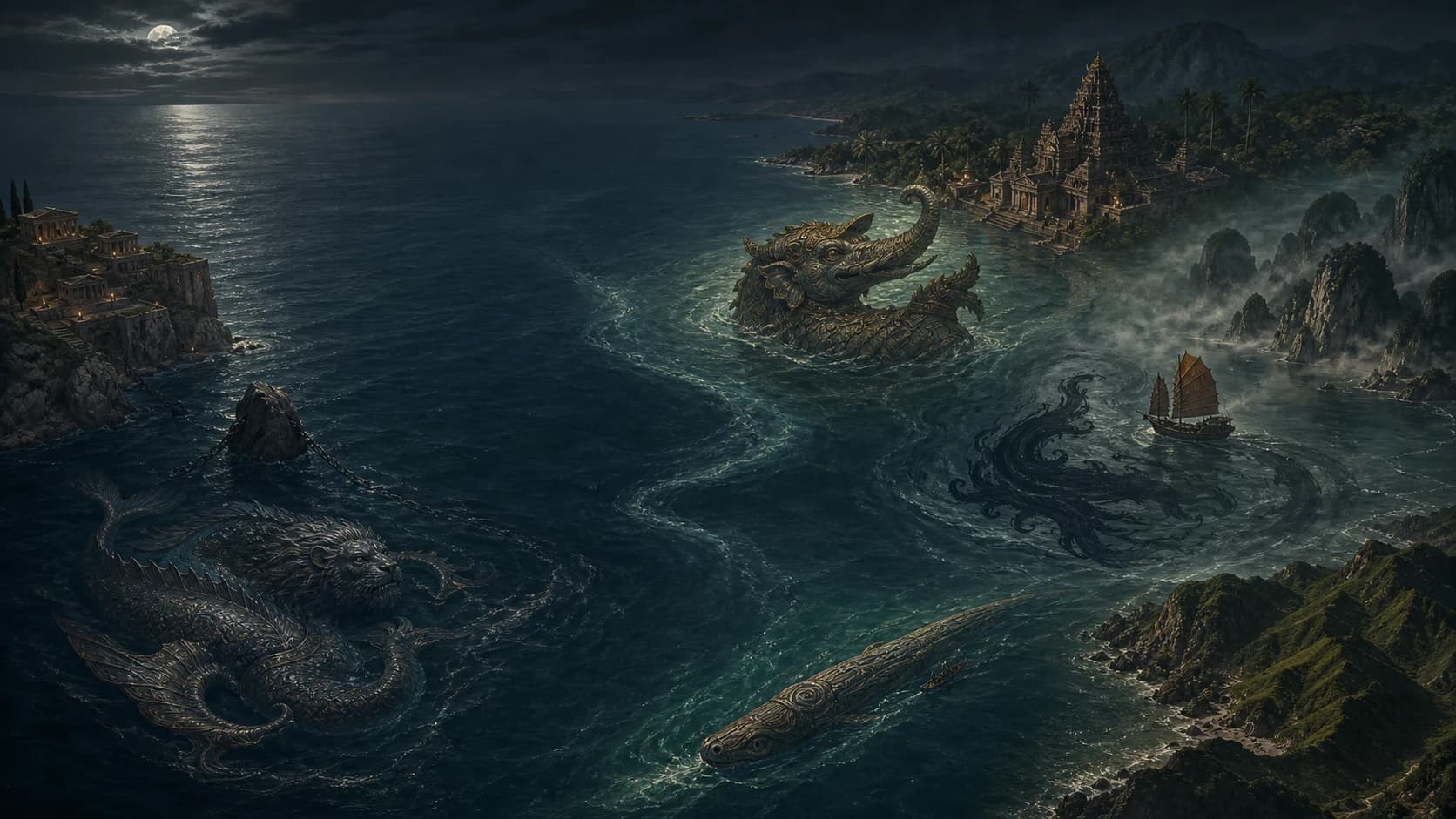 03
03Sea monsters of the world: every coast gives deep water a different verb
From the Greek ketos that consumes a sacrifice and the Indian makara that carries a water deity to China's Album of Sea Oddities, Hokusai, Māori taniwha and Mami Wata across the African Atlantic: monsters that demand, guard, guide and bestow.
Continue along the route ↗