 crew
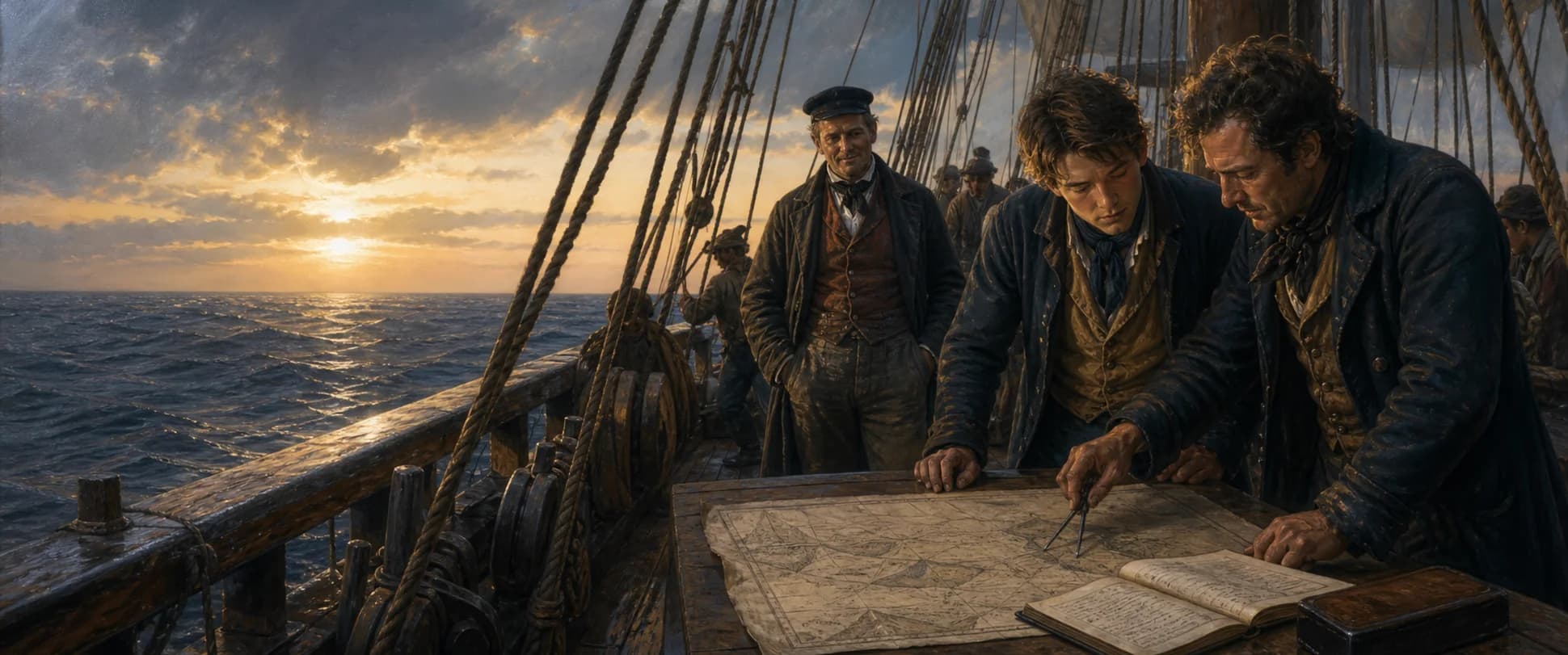
crewThe master is incapacitated and the lee shore will close before dawn
Sailing
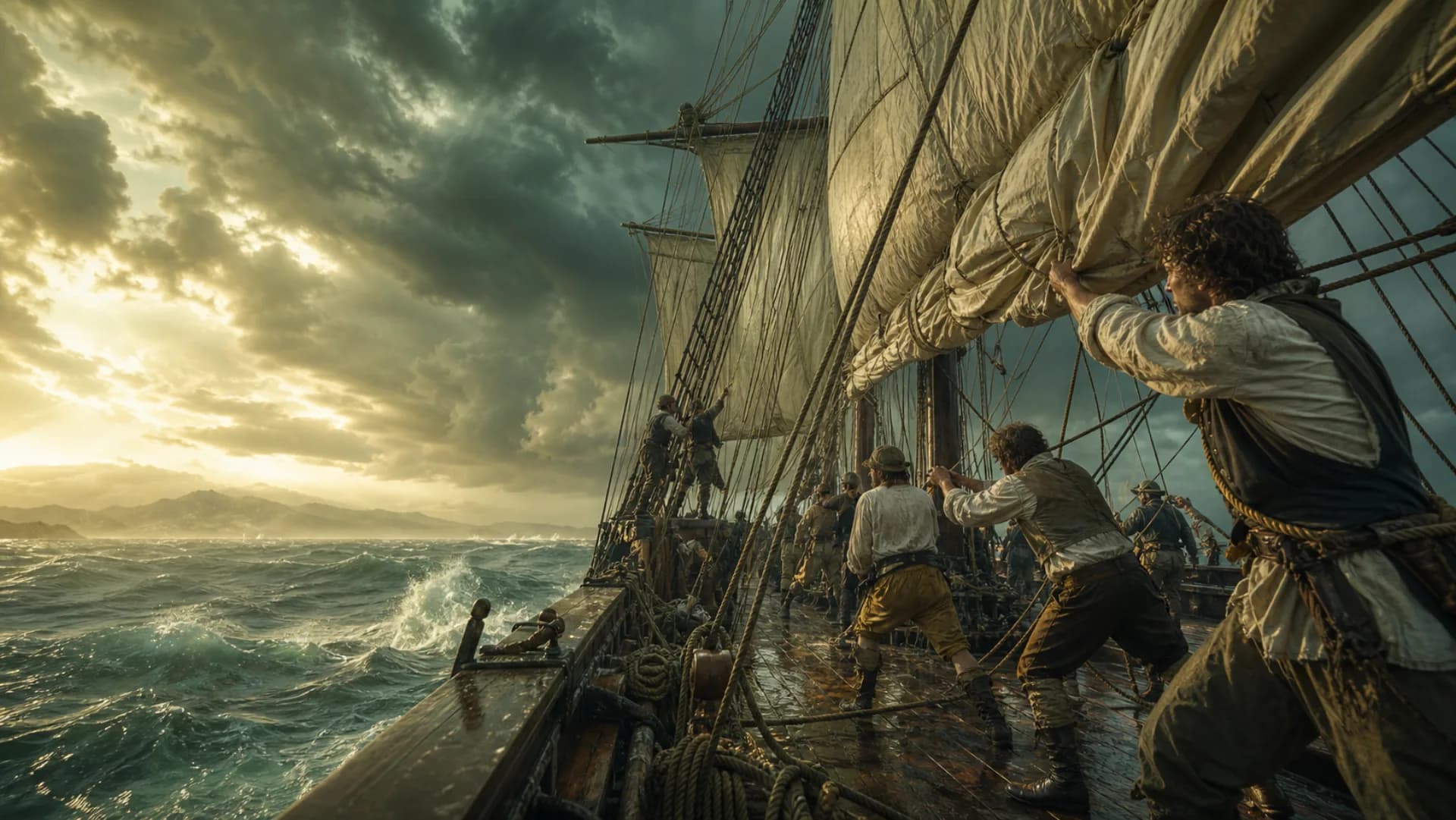
Sail handling, steering and lookout work keep the ship moving.
Maintenance
Carpenters and sail-and-rope specialists continually address wear and damage.
Stores
Food, water, cooking and hygiene determine the voyage’s practical limit.
Merchant master, naval captain and the person actually giving orders were not one office
A merchant master represented owners across navigation, crew, cargo, accounts and port business. A naval captain stood in a commissioned hierarchy governed by one state, where seniority, patronage and wartime vacancies shaped advancement. A sailing master could be the ship's navigation specialist without holding the captain's commission.
An owner-master, mate or capable hand might command a small coaster, whaler or private vessel in practice. That did not automatically transfer him into another service's rank. Any answer must therefore name the country, date, vessel and branch before drawing its ladder.
Deck service first established that a person could be trusted with one working station
A newcomer learned through cleaning, carrying, following orders and identifying ropes before steering, lookout, sail and boat work. An ordinary seaman performed routine duties; an able seaman was expected to hold demanding positions in heavy weather and complex evolutions. The labels varied, but the practical question remained whether a task could be handed over without step-by-step rescue.
That reliability did not confer command, yet it created evidence for later supervision. Safe work aloft, correct helm orders, early notice of chafe and a useful watch handover showed how well a person understood the vessel as a connected system. Overrating oneself might bring higher wages at signing and dangerous exposure at the first squall.
A mate moved from doing the work to organizing, recording and checking it
A mate still needed seamanship, but a watch required him to combine lookout, helm, weather, canvas and standing orders into a decision. Cargo, stores, discipline, harbour labour and repairs could also fall under his supervision. Dana noted that a chief mate succeeded an incapacitated master by law and therefore needed enough navigation to finish the passage.
Literacy, arithmetic, charts and logs now mattered beside practical skill, as did a captain's or owner's confidence in the candidate's judgment. Merchant third, second and chief mates were not uniform across all vessels; naval midshipmen, lieutenants and master's mates belonged to other structures. In each case, responsibility widened from one line to a watch and an evidential record.
Appointment and recommendation preceded the certificates that spread after the 1840s
Owners long chose masters through voyage record, reputation, kinship, investment and prior performance. Some rose from before the mast, some entered officer work through education or capital, and many expert sailors never received a command. James Cook's path from coal-trade apprentice to naval master, surveyor and commander demonstrates possibility, not an average career.
Britain introduced voluntary competency examinations for masters and mates from 1845 and expanded compulsory certification from 1850–51; the Merchant Shipping Act 1854 consolidated the system. Examination formalized evidence of navigation, law and sea service without retroactively licensing earlier centuries or removing unequal access to preparation and appointment.
Vacancy, class, casualty record and appetite for commercial liability constrained the final step
Knowledge alone did not produce a ship. A candidate needed documented service, recommendation, an open berth and an employer willing to transfer authority. Naval commissions added their own quotas and seniority. Race, nationality, class, coerced status and access to literacy barred many technically able people from formal power.
Command also concentrated liability for casualty, debt, cargo loss and death. Some mates remained on familiar routes; some masters moved into pilotage, ownership, agency or harbour work. The durable outcome was not wearing a hat once, but earning the next ship through safe passages, intelligible accounts and credible handling of failure.
Questions
Continue exploring this subject
Could an ordinary sailor really become captain?
Yes, particularly in merchant service through able-seaman and mate work, but education, vacancy, recommendation, owner trust and social barriers made it possible rather than typical.
Did a captain have to serve as chief mate first?
Chief mate was the usual preparation and legal successor on many large merchant ships. Small vessels, early practice and special appointment did not always follow one sequence.
Could a naval seaman simply rise to captain?
An enlisted rating was not the same ladder as a commissioned officer career. Transfers and exceptional appointments existed, but rules differed sharply by navy and period.
Did every Age of Sail captain pass an examination?
No. British merchant competency examinations became institutional in the mid-nineteenth century. Earlier masters and many other regions relied on appointment, service, recommendation or local rules.
Was navigation enough for command?
No. A master also organized watches, discipline, stores, cargo, repairs, port documents and casualties and had to explain the result to owners, state or court.
Sources
Continue the research
- Merchant Navy officersThe National Archives
- Merchant Navy seamen 1835–1857 and officers 1835–1913The National Archives
- The Seaman's FriendProject Gutenberg
- Captain James Cook timelineRoyal Museums Greenwich
- Merchant Shipping Act 1854UK Legislation
- Ranks + RatesUSS Constitution Museum
 01
01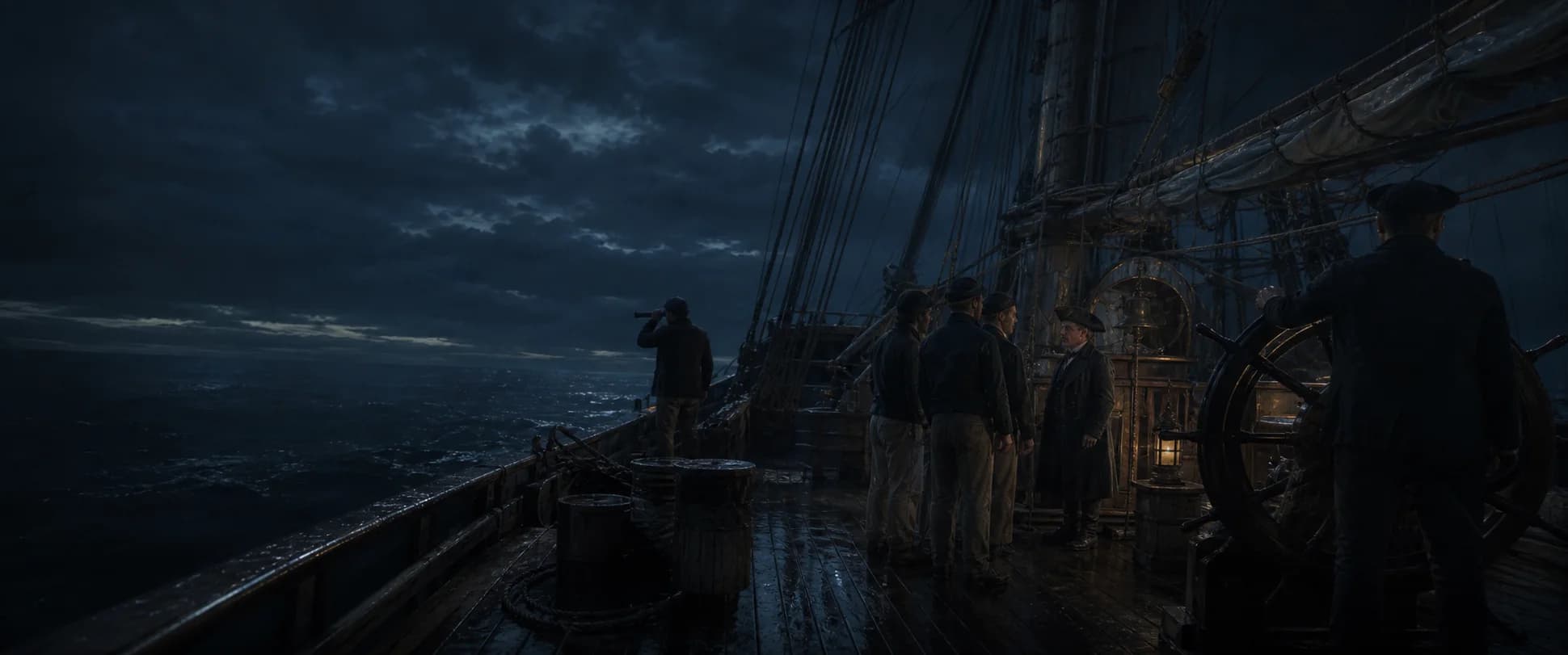 04
04