INPUT
→Inspect
Reconcile barrel, carriage, breeching, tools and ammunition state.
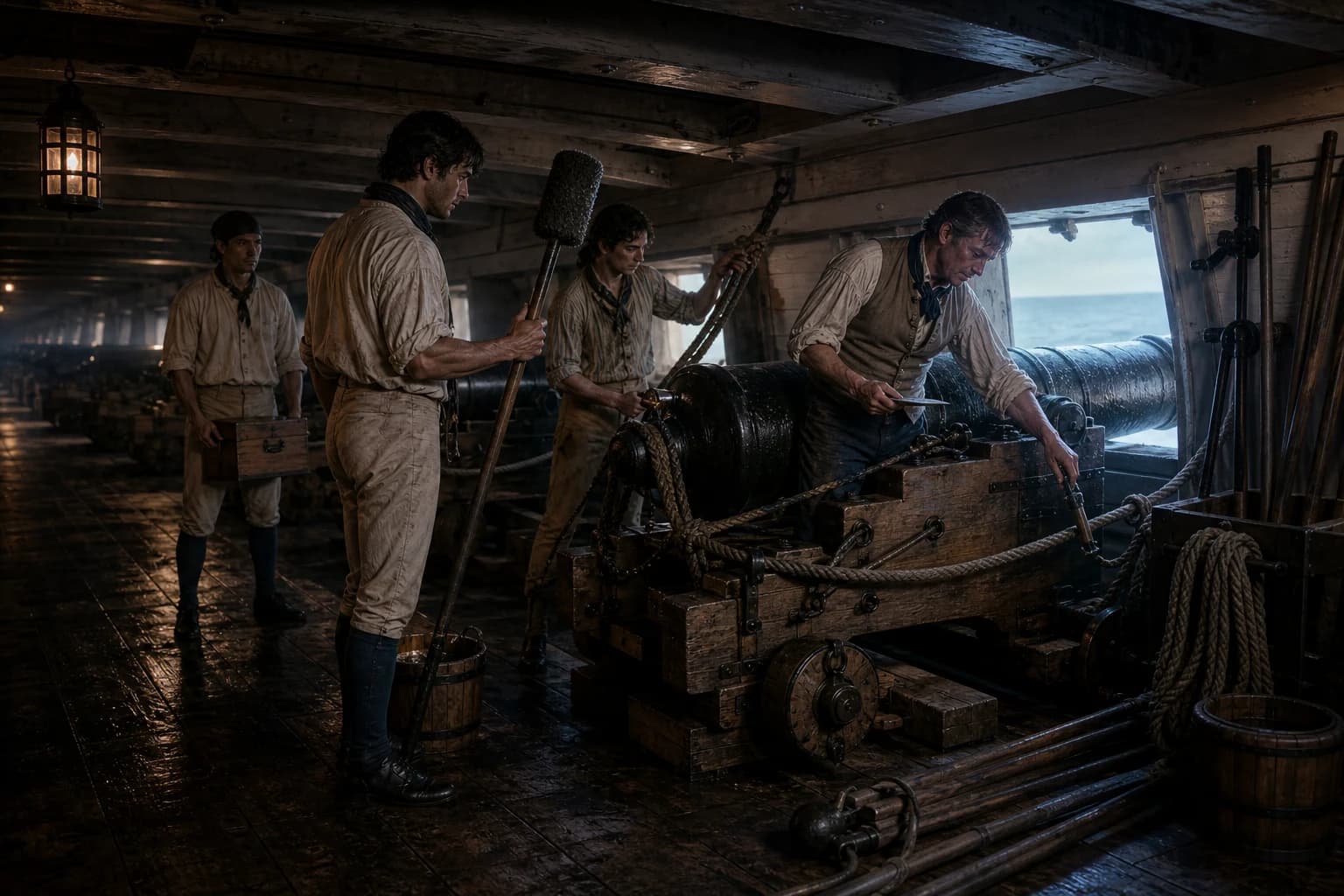
A real Age of Sail career dossier · 07
Master Gunner · Gunner
The specialist who keeps dozens of dangerous weapons serviceable, controlled and repeatable.
An Age of Sail gunner or master gunner was the warship's technical head of ordnance. He received and inspected cannon, carriages, powder, shot, small arms and tools, kept the magazines safe and trained gun crews. In battle he often remained below the waterline overseeing cartridge preparation and supply. Each gun captain aimed and fired one piece, while commissioned division officers directed the tactical fire.
Information arrives, judgment forms, and work passes on through a complete watch.
Reconcile barrel, carriage, breeching, tools and ammunition state.
Train crews through one safe loading and recoil-control language.
Pass the correct dry cartridges steadily from the magazines in battle.
Clear bores, count stock, isolate failed pieces and record damage.
A warrant officer managing multiple calibres, magazines, assistants and whole-ship drill.
The office could merge, leaving a few skilled hands to maintain weapons and train temporary crews directly.
Most gun hands remained watchkeeping and sail-working seamen who went to quarters by bill for action.
Inspect bore, vent, carriage, breeching and implements for serviceability.
Control flame, traffic, damp, spill, cartridge quantity and keys.
Make run-in, sponge, load, run-out, aim and fire a stable cycle.
Match calibre, charge, shot, implement and physical gun station.
Institutions, experience, patronage, and opportunity shaped each person’s route.
Master watch discipline, shipboard orders and basic gun stations.
Own the state, implements and hands of one or several pieces.
Enter ordnance accounts, cartridges, magazines and shipwide drill.
Take the ordnance department through skill, service and warrant.
A gunner or master gunner headed the whole ship's ordnance specialty. A gun captain was the senior seaman of one gun crew, responsible for that piece's checks, aim and fire. Both may be rendered as cannon chief in translation, but their scales of authority differed: one managed the shipwide system, magazine and training; the other managed the cycle at one carriage.
Gunnery remained inside commissioned command. The captain decided engagement and broad intent, a lieutenant directed a division, a midshipman might command a subdivision, the master gunner and assistants maintained technical readiness, and the gun captain led the hands at one piece. Giving the master gunner every target and firing decision erases both officer and crew.
United States regulations of 1814 required the gunner to receive ordnance, ammunition, small arms and voyage stores by indent and report defective material for survey and return. The USS Constitution Museum also names shot and magazine tools. A barrel alone was not a gun system: carriage, breeching, tackle, sponge, rammer and ignition gear all had to work.
The gunner saw cannon mounted on proper carriages and at the correct height for the ports, protected them from damp and rust, inspected bore and vent, maintained sights, and kept breeching and side tackles ready for recoil and roll. A ship was not a fixed battery. A multi-ton carriage moving on a heeled deck could become a weapon against its own crew and hull.
Salt air corroded metal, damp spoiled powder and entered bores, and rolling worked carriages, rope and securing points. Gunners and quarter-gunners cleaned and covered pieces, examined carriage and breeching, and laid out sponge, rammer, worm, handspike, quoin and tackle where each crew could reach its proper equipment.
Inventory also ran by specification. Calibres needed matching shot, cartridge and tools; a large total of the wrong size was not readiness. Damage, firing, exercise expenditure and spoiled stock entered accounts for officer audit. Technical condition, physical location and the numbers in the book had to describe the same ship.
The 1814 regulations ordered the powder room secured before loading, copper-hooped barrels stowed low, doors and scuttles locked, and keys delivered to the captain. Entry required permission and no object that might strike a spark. Powder movement also required extinguished flame, sentinels and limits on the number of cartridges filled at once.
This was not ceremony. Historic England records that the warship London exploded and sank in 1665 after fire reached powder stored aboard. A magazine still had to work rapidly in action, so the gunner controlled traffic, light, spilled grains, cartridge quantity and the passing route at once. Higher speed made repeatable safety more—not less—important.
Constitution evidence assigns roughly twelve men and a powder boy to one 24-pounder, while another crew description names gun captains, tacklemen, swabbers, loaders and powder passers. Number and station changed with calibre, vessel and whether both sides had to be fought, but no one person safely completed the cycle alone.
After firing, breeching checked recoil; hands secured and ran in the carriage, a wet sponge extinguished residue, and a worm removed cartridge fragments. Powder, shot and wad were rammed, then side tackle, handspikes and quoin ran out, trained and elevated the piece. Repeated drill allowed the crew to continue through smoke, noise, roll and casualties.
The Constitution Museum stations the gunner in the magazine, supervising the filling and passage of cartridges; Asa Curtis's record likewise describes the acting gunner maintaining safe, smooth powder distribution in battle. Below-waterline isolation controlled flame but denied the gunner a view of the enemy.
Fire orders passed from captain through division officers to individual pieces. A gun captain used the ship's roll and the target's passage across the port to aim and fire. The master gunner's combat value was reliable ammunition, serviceable guns and trained replacements across the ship, not possession of one firing lanyard.
Close action rewarded rapid repeated fire, but speed could not omit wet sponging, seating the charge, controlling recoil or clearing loose powder. Constitution drill ordered a damp cartridge reported and insisted that one effective shot was better than a hurried broadside. The gunner made speed from correct actions without hesitation, not from deleting them.
Target also changed ammunition and timing: hull, rig and crowded deck invited different shot and tactical intent from captain or division officer. The gunner reported material state and technical constraint. Mismatched charges, dangerous double shot or firing before the carriage was secured could produce burst gun, failed breeching or a loose cannon first.
The National Archives lists gunner among historical Royal Navy warrant officers, and the early U.S. Navy likewise treated the office as a technical appointment. Large warships also carried gunner's mates and quarter-gunners; an eighteenth-century duty description allowed roughly one quarter-gunner to four cannon. Most gun crews were not lifelong artillerymen. Seamen worked watches and sails in ordinary time and reported to guns by quarter bill for action.
A route could begin with reliable seamanship and powder passing, move through gun captain, quarter-gunner or gunner's mate, and culminate in appointment after ordnance and magazine experience. The Constitution Museum cites an 1811 U.S. estimate of $20 a month and two daily rations for a seventy-four's gunner. That rate belongs to one navy, vessel class and date, not the whole Age of Sail.
career.master-gunner
The master gunner managed shipwide ordnance, magazines, maintenance and training. A gun captain was the senior hand who aimed and fired one piece. Similar translations can conceal two levels of work.
The captain and division officers controlled engagement and general fire orders. The master gunner ensured technical readiness and supply, while each gun captain executed the shot under those orders.
Every gun depended on a safe, continuous cartridge supply. From the magazine he controlled powder, people and passing procedure against spark, spill and the wrong charge.
Many warship seamen handled sails and watches in ordinary service, then reported to fixed gun stations by quarter bill in action. Gunners and assistants trained them into coordinated crews.
It varied by calibre, weapon, vessel and whether both sides fought. One Constitution 24-pounder establishment used about twelve seamen plus a powder boy, a specific example rather than a universal number.
A likely route progressed through reliable seamanship, gun-crew stations and offices such as gun captain, quarter-gunner or gunner's mate, followed by mastery of maintenance, stores, cartridges and magazine safety and formal appointment.