 crew
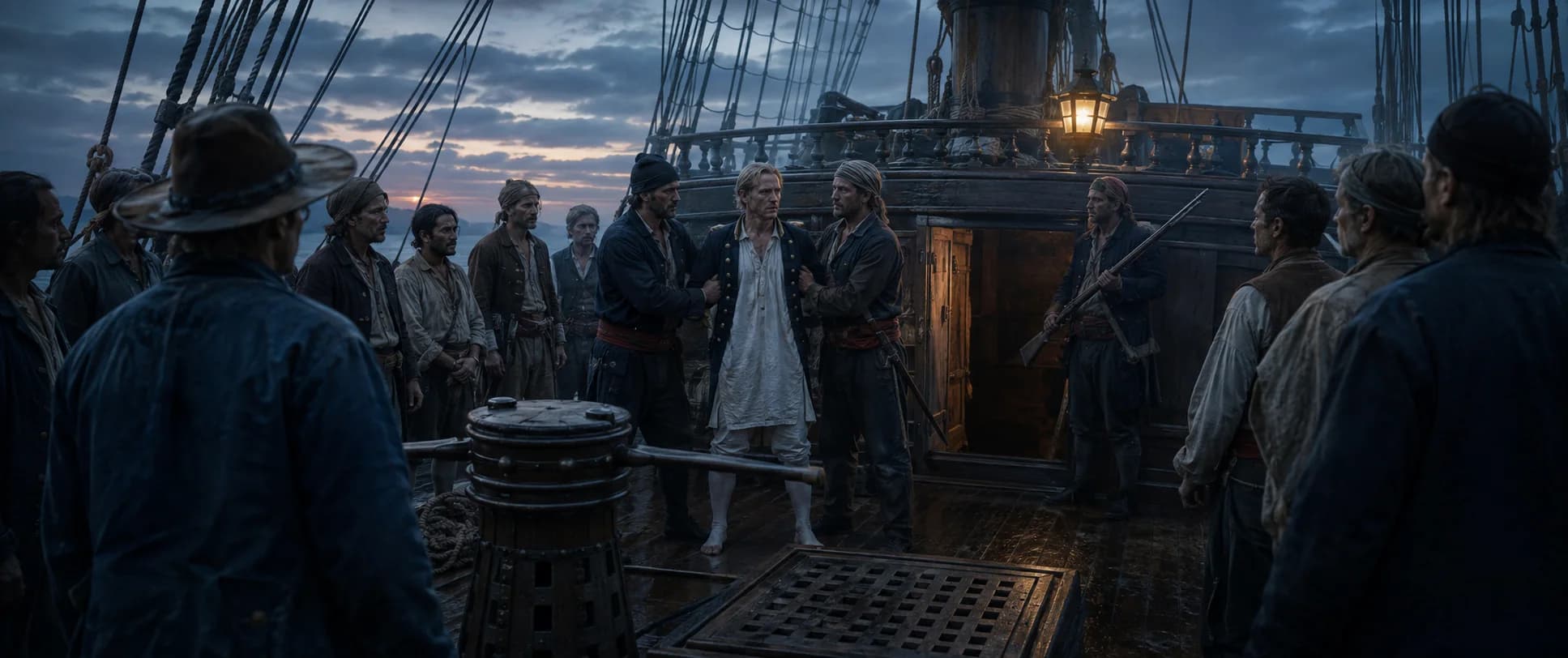
crewBefore sunrise, unfamiliar sentries appear outside the officers’ cabins
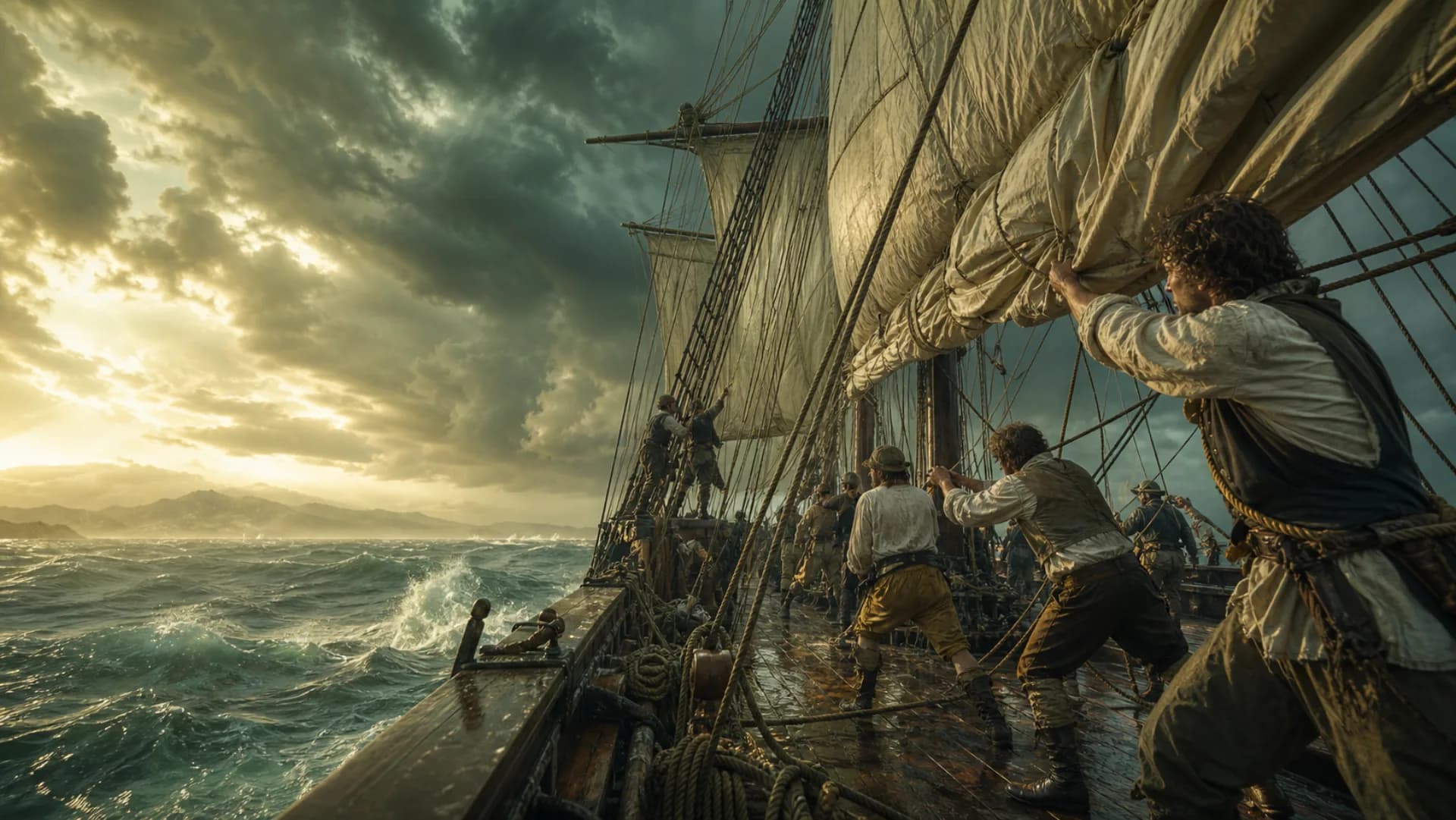
Sailing
Sail handling, steering and lookout work keep the ship moving.
Maintenance
Carpenters and sail-and-rope specialists continually address wear and damage.
Stores
Food, water, cooking and hygiene determine the voyage’s practical limit.
Mutiny named a collective challenge to command, not every conflict at sea
A sailor might complain about provisions, refuse a hazardous order, leave a station, strike a superior or desert. Legal systems classified those acts differently. Mutiny more often described concerted resistance to lawful orders or authority, at its most severe extending to confinement of the captain and seizure of the vessel. The precise offence depended on country, date, naval or merchant status and the law applied; one navy’s articles cannot define every maritime society.
Surviving language is rarely neutral. Captains, courts and survivors had reasons to present an episode as treacherous conspiracy, necessary self-preservation or coercion by a minority. Analysis should begin below the label: who formed an agreement, who carried arms, who held the helm and hatchways, and when orders ceased to work? Only then should it ask why a recorder chose the word mutiny.
Hardship created pressure; a trusted alliance made action seem possible
A long voyage could combine dwindling food and water, delayed wages, sickness, crowding, punishment and an uncertain return. Impressment or visibly unequal distribution weakened the legitimacy of command. Yet most ships enduring hardship did not mutiny. Grievance had to meet organizing relationships, an exploitable watch, an estimate of likely support and a trigger that moved undecided men into one camp.
In 1611, Hudson-voyage survivor Abacuk Pricket wrote that conspirators entered his cabin at night and proposed putting the master and sick men into the shallop. They invoked fewer than fourteen days of provisions, three days without food and the master’s failure to move. Pricket composed a defensive account years later. The figures report what plotters told him, not an independent stores survey, but the scene clearly shows scarcity being used to recruit consent.
A ship’s narrow spaces made doors, weapons, watches and boats instruments of power
Authority afloat depended on narrow passages and continuous watches. Plotters who seized the captain around dawn or a watch change, posted guards at uncooperative officers’ doors, and controlled deck, helm, armoury and signals could replace the source of orders before the rest understood the situation. If officers retained an armed loyal watch or access to the upper deck, the same attempt might collapse quickly.
William Bligh wrote that, before sunrise on 28 April 1789, Christian and several men entered his cabin, bound his hands and threatened him. Guards had already been placed at the doors of officers outside the conspiracy. This is the deposed captain’s published account, not an impartial voice for the whole company. It nevertheless captures a central mechanism: the takeover synchronized control of people and space instead of beginning as a full-crew debate on deck.
Musters, standing orders and courts sustained discipline alongside punishment
Articles of War, a captain’s orders, musters and logs linked duties, absence and penalties. Eighteenth-century British provisions could prescribe death for fomenting mutiny, failing to suppress it or concealing a plot; a court martial then determined status, conduct and evidence. Merchant crews also lived under contracts, maritime law and port courts, but their authority and process should not be copied from the Royal Navy without evidence.
Severe punishment could deter open resistance, but fear alone could not operate a ship that required initiative during storms and action. Visible rationing, legible pay and prize accounts, credible complaint channels and officers who followed the work system themselves all shaped compliance. Discipline was therefore both coercive power and a set of expectations about how orders would be given and how burdens and rewards would be distributed.
After seizure, command had to be rebuilt immediately and rarely produced a simple freedom
Those holding a vessel had to choose a course, ration stores, set watches, treat illness and decide what to do with the captain, opponents and boats. Hudson and others disappeared after being cast adrift. Bounty’s mutineers and Bligh loyalists separated into several histories: the open-boat voyage, pursuit and trials, lives in Tahiti, and settlement on Pitcairn. ‘The crew’ did not remain one political body after the seizure.
Fleet mutinies could pursue different goals and methods. At Spithead and the Nore in 1797, seamen raised pay, provisions, pardon and representative demands amid negotiation, blockade and political fear. Treating every episode as another Bounty adventure erases differences in scale, claims and outcome. Treating every collective complaint as mutiny merely repeats the broadest language of those whose authority was challenged.
Questions
Continue exploring this subject
Was one sailor refusing an order a mutiny?
Not necessarily. Individual disobedience, assault or desertion could be serious offences, but mutiny usually required concerted resistance to or seizure of authority. The governing law supplied the exact definition.
Did hunger automatically cause mutiny?
No. Shortage raised pressure, but organizers, trust, opportunity and a belief that action could succeed were also needed. Many starving crews did not mutiny.
Did Bounty mutiny only because Bligh was unusually cruel?
That single-cause story is inadequate. Voyage design, the Tahiti stay, personal relations, conflicts over authority and individual choices interacted, and surviving accounts were written from opposed positions.
Why did takeovers often exploit dawn or a watch change?
Some men were asleep, personnel were dispersed and duties were changing. A small group could coordinate control of the captain, officers’ doors, deck and weapons before resistance formed, though not every mutiny followed this pattern.
Who commanded after mutineers took a ship?
They had to create a new watch, rationing and command structure at once. A chosen leader or conspiracy core might take charge, but faction and further violence were persistent risks.
Sources
Continue the research
- A Voyage to the South Sea · William Bligh, 1792Library of Congress
- Mutiny and Other Crimes, Part 1: the Articles of War and the Bounty trialsLibrary of Congress
- Henry Hudson the Navigator · Pricket narrative, p. 117Internet Archive
- Mutiny on the BountyRoyal Museums Greenwich
- The Nore Mutiny in the Royal Navy Captains’ LettersThe National Archives
- Royal Navy ships’ voyages: log booksThe National Archives
 01
01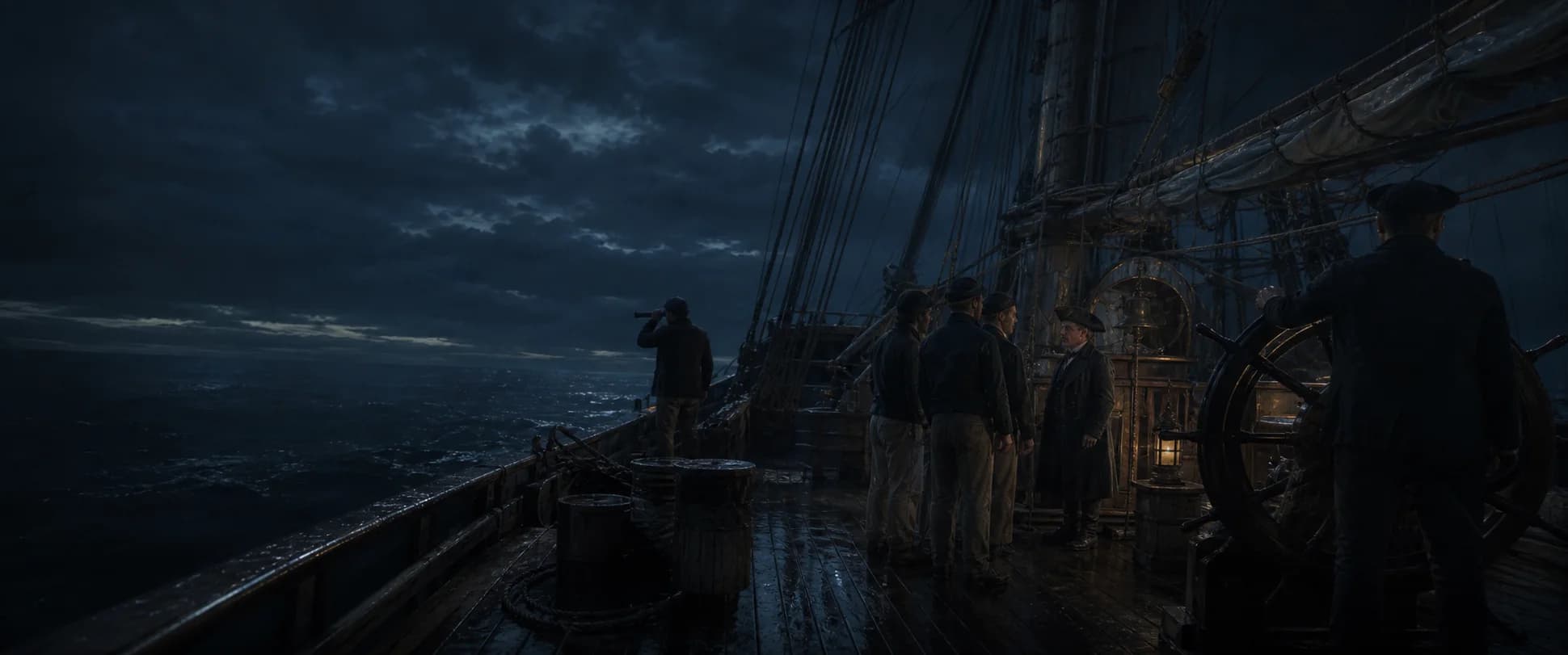 02
02 04
04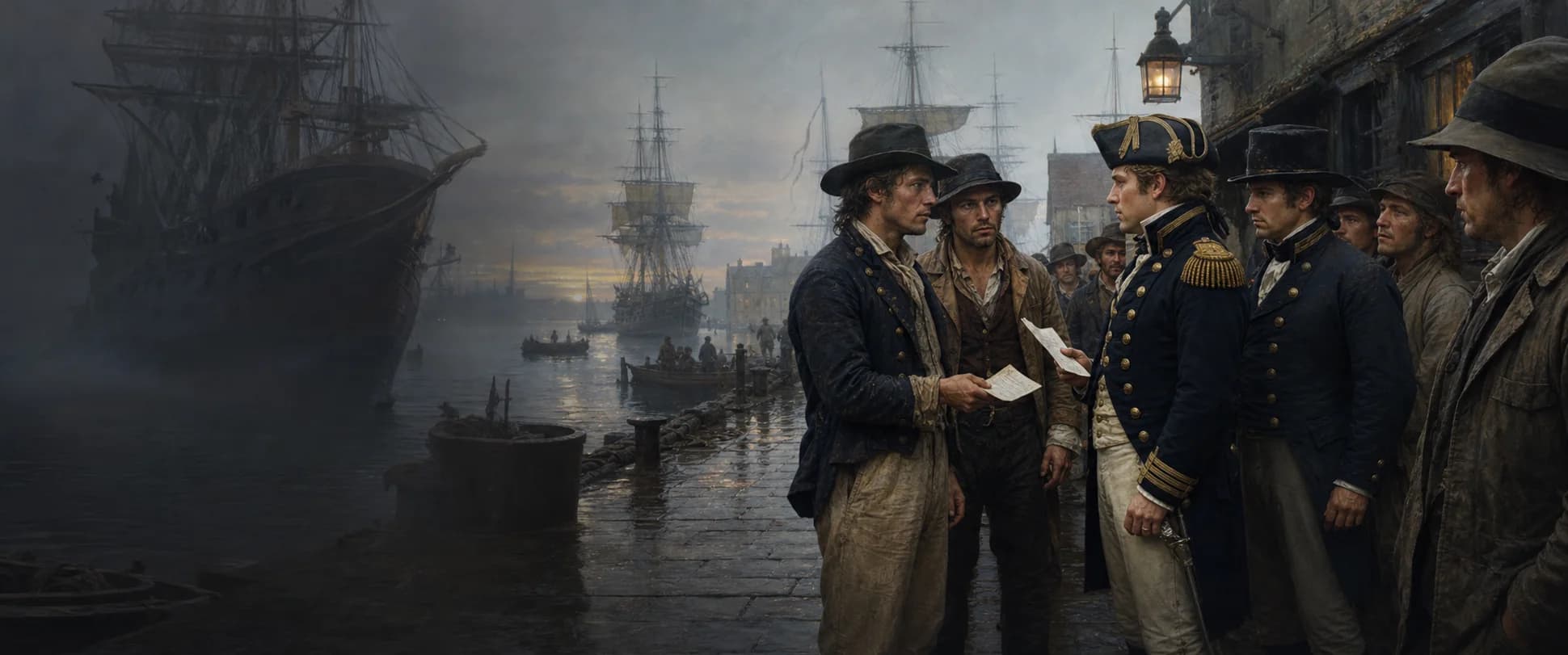 05
05