AGE OF SEASAcquiring signal
Event archive · 1415—1763
Not eighteen isolated dates.
A record of routes becoming power.
Enter by period or mechanism to see how war, navigation, treaties, trade and companies drove one another. Each dossier expands the participants, local powers, immediate results, long-term effects and limits of the evidence.
- Event dossiers
- 24
- Historical phases
- 05
- Reading mode
- Phase × mechanism
Event matrix
Every change operates at a specific level.
Routes explain how oceans became continuously navigable; conquest and sea power trace violence; treaties show claims entering law; trade reveals how capital, labour and ports made control durable.
By historical phase
By mechanism
1415—1763 · All mechanisms
 01.01
01.01Strait of Gibraltar · Conquest
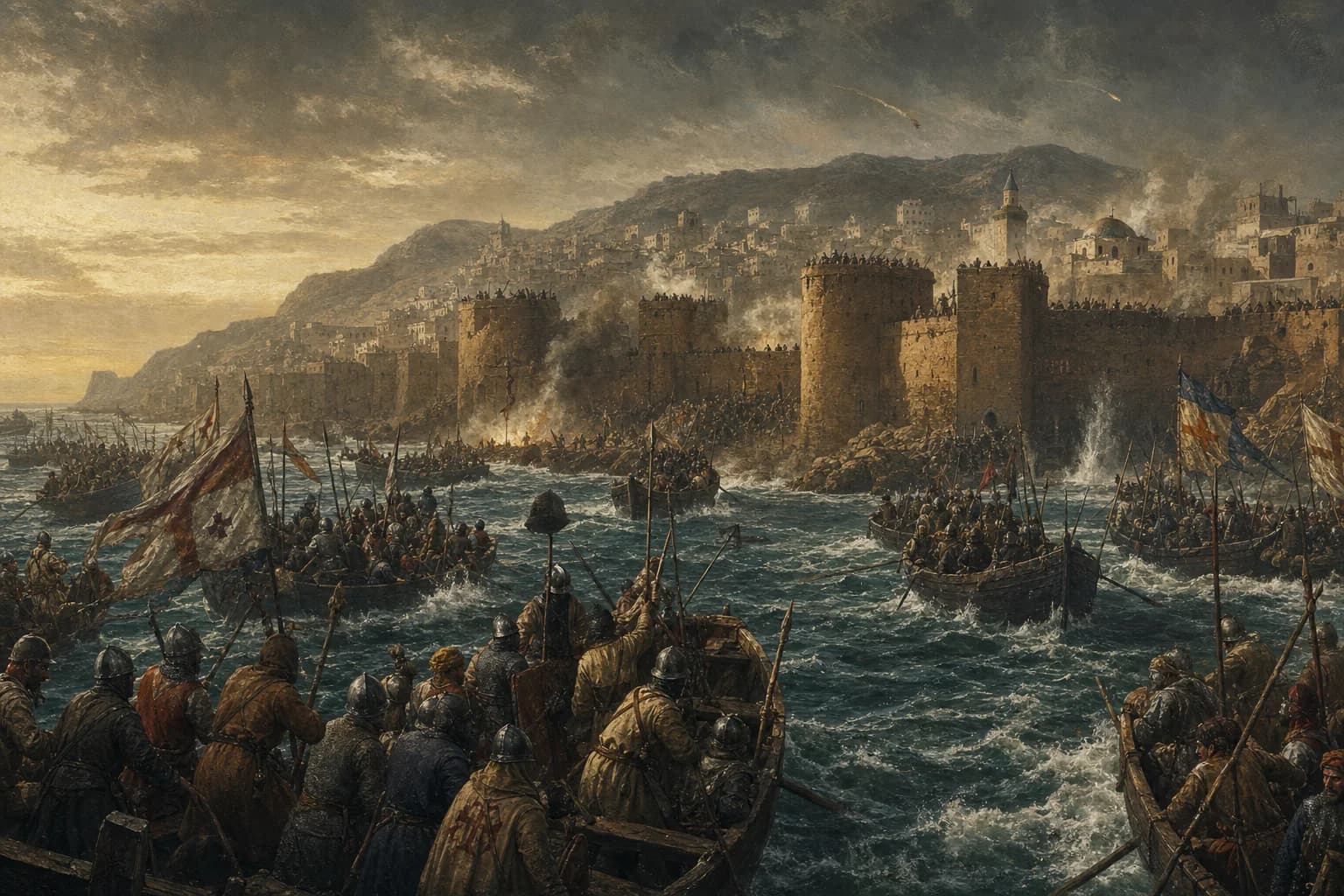
Portugal takes Ceuta; expansion begins with conquest
A large royal expedition captures the North African port, joining crusading war, commercial hopes and the first durable Portuguese overseas garrison.
 01.02
01.02West African coast · Route
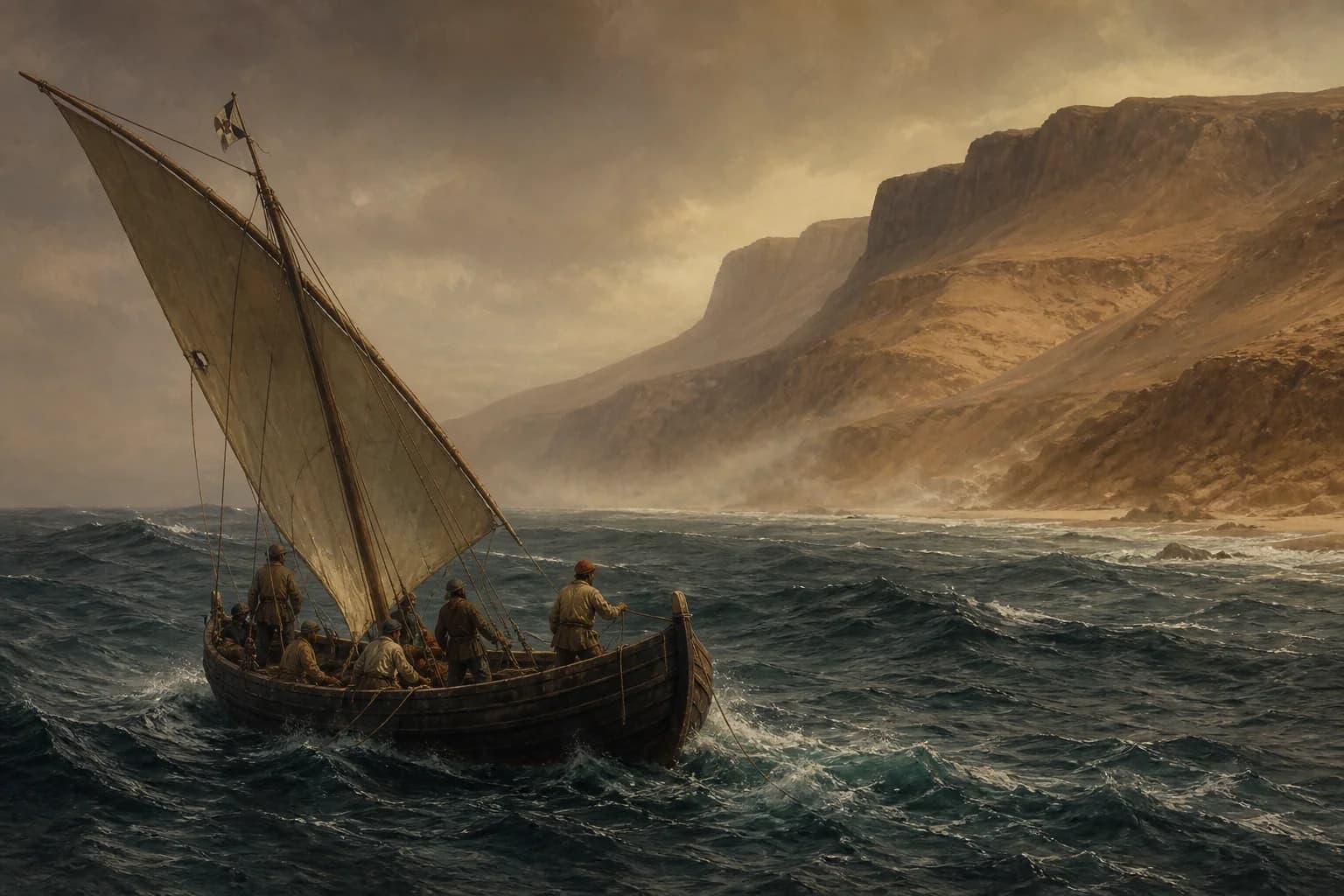
Gil Eanes passes Cape Bojador
A recorded passage and return past a difficult cape accelerate Portuguese reconnaissance along the West African coast.
 01.03
01.03Cabo Verde / Upper Guinea · Trade
Ribeira Grande develops an early Kriolu society
Forcibly transported West Africans, free Africans, European migrants and locally born people form a new language and society in a slave-trading port; cultural creation does not remove colonial power.
 01.04
01.04Cabo Verde / West African waters · Route
Harmattan dust veils the waters around Cabo Verde
Dry continental flow carries Sahara and Sahel dust hundreds of kilometres over the ocean; it signals regional weather while obscuring coasts, the horizon and celestial observations.
 01.05
01.05Sierra Leone / Upper Guinea · Trade
Sierra Leone's coastal artists carve Sapi-Portuguese ivories
Temne, Bullom and related artists reorganize commissioned European saltcellars, horns and heraldry through local figural, animal and geometric languages; the works enter royal gifts and collections.
 01.06
01.06Madeira / West Africa · Trade
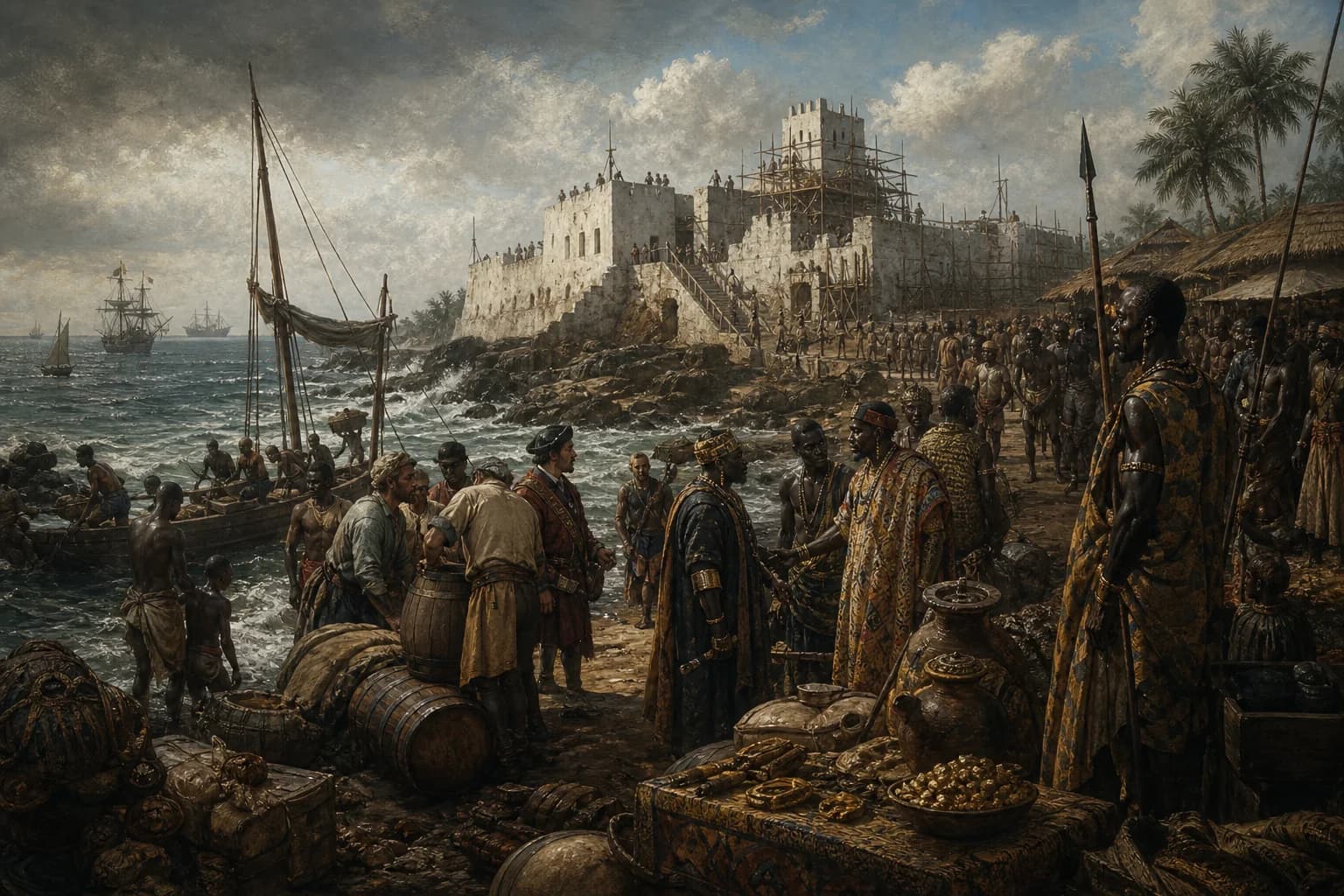
Sugar, gold and enslavement enter one Atlantic system
Madeira's sugar economy expands with enslaved labour, while the 1482 fort at Elmina anchors Portuguese access to West African gold networks.
 01.07
01.07Canary Islands · Trade
Gran Canaria manages harvests in cliff granaries
Indigenous communities join granaries, terraces, water, paths and seasonal herding into a cultural landscape that Castilian conquest then violently transforms.
 01.08
01.08Southern Africa · Route
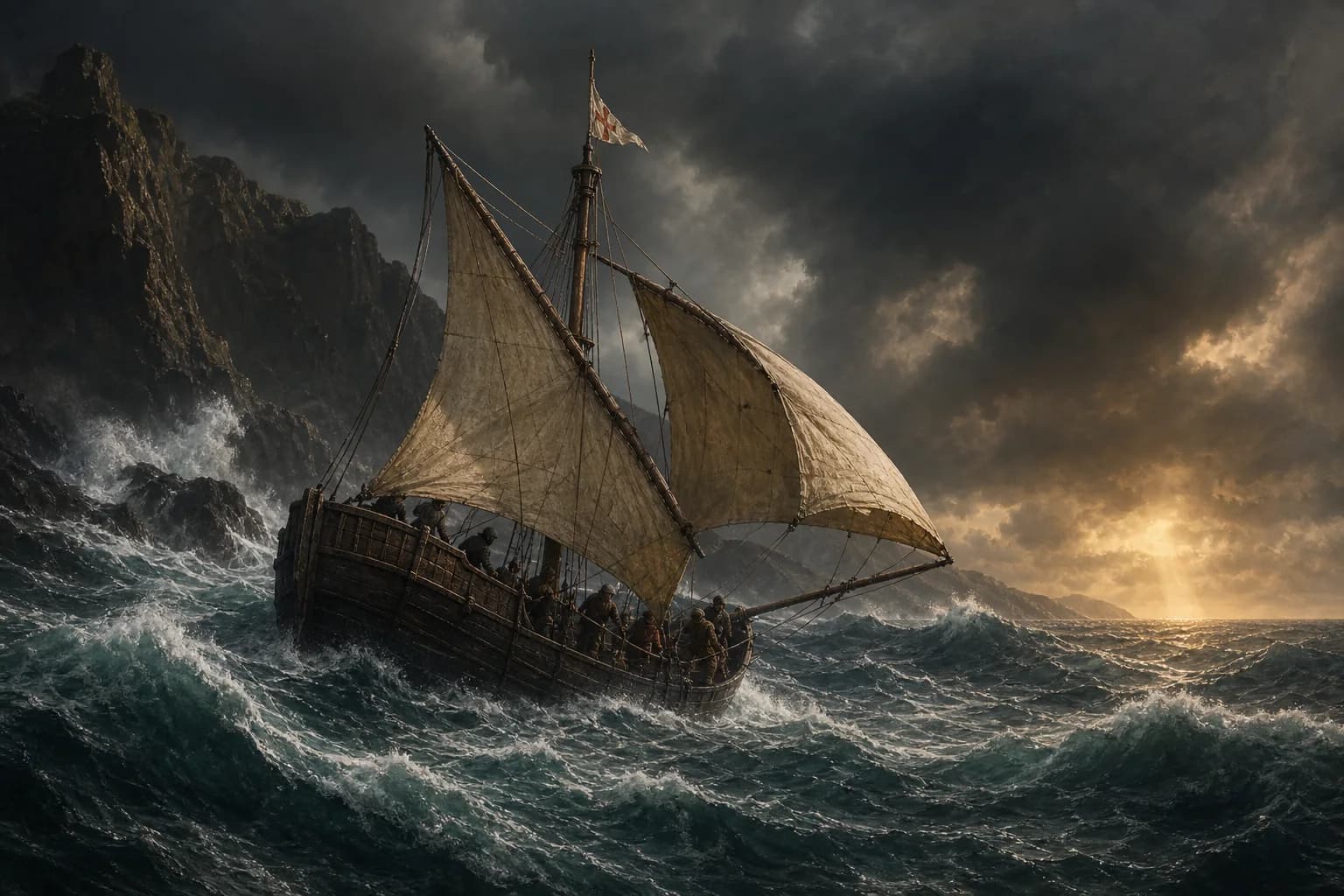
Dias rounds southern Africa
The first recorded European expedition around Africa's southern turn demonstrates a navigable connection from the Atlantic toward the Indian Ocean.
 02.01
02.01Canary Islands · Conquest
A conquest lasting almost a century closes in the Canaries
The seigneurial and royal conquests begun in 1402 end on La Palma and Tenerife while resistance, constrained alliances, enslavement and land redistribution coincide with Atlantic crossings.
 02.02
02.02Atlantic / Caribbean · Route
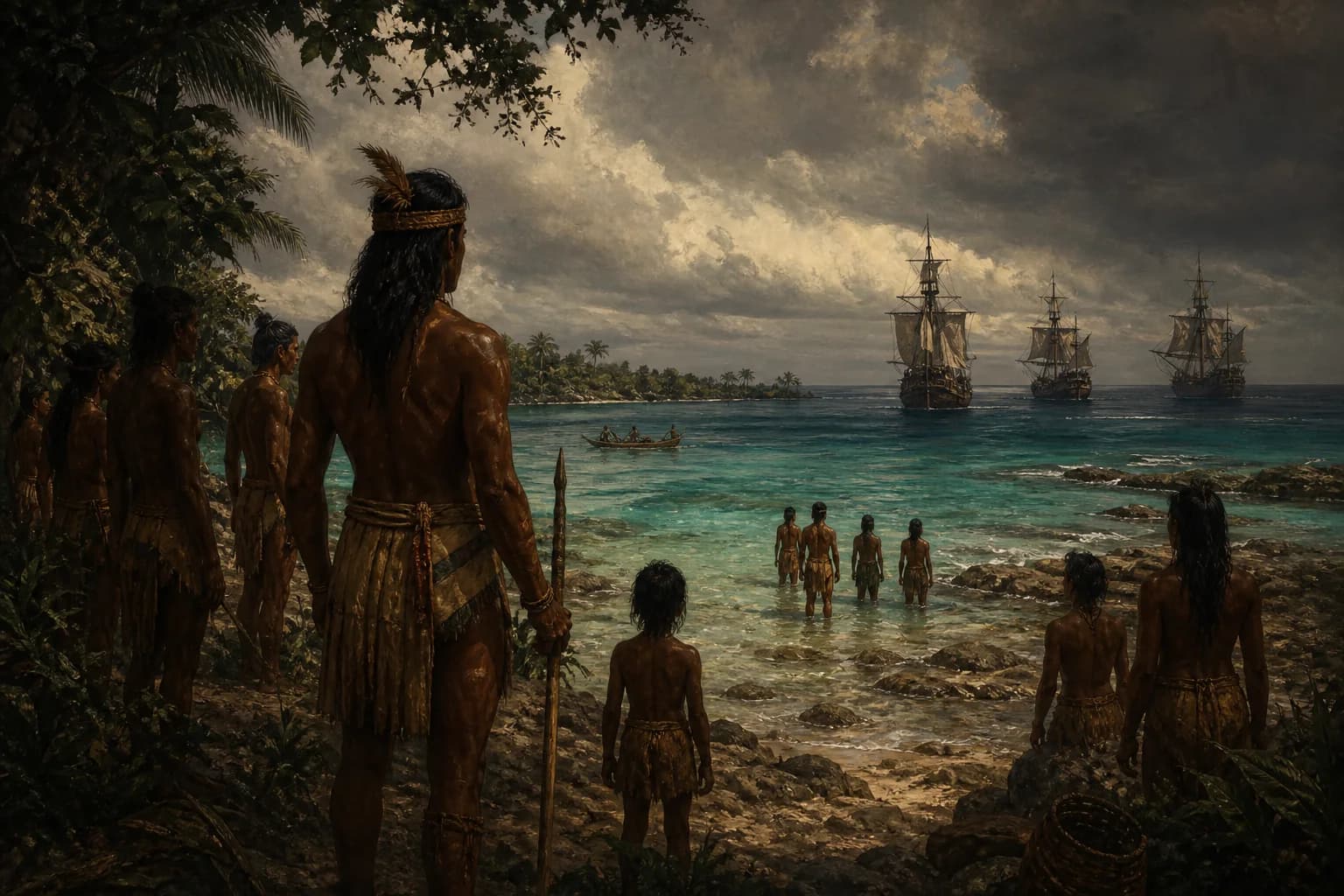
Columbus reaches the Caribbean
A voyage seeking Asia reaches inhabited Caribbean islands and begins sustained Atlantic contact, followed quickly by colonization, forced labour and disease.
 02.03
02.03Atlantic world · Treaty
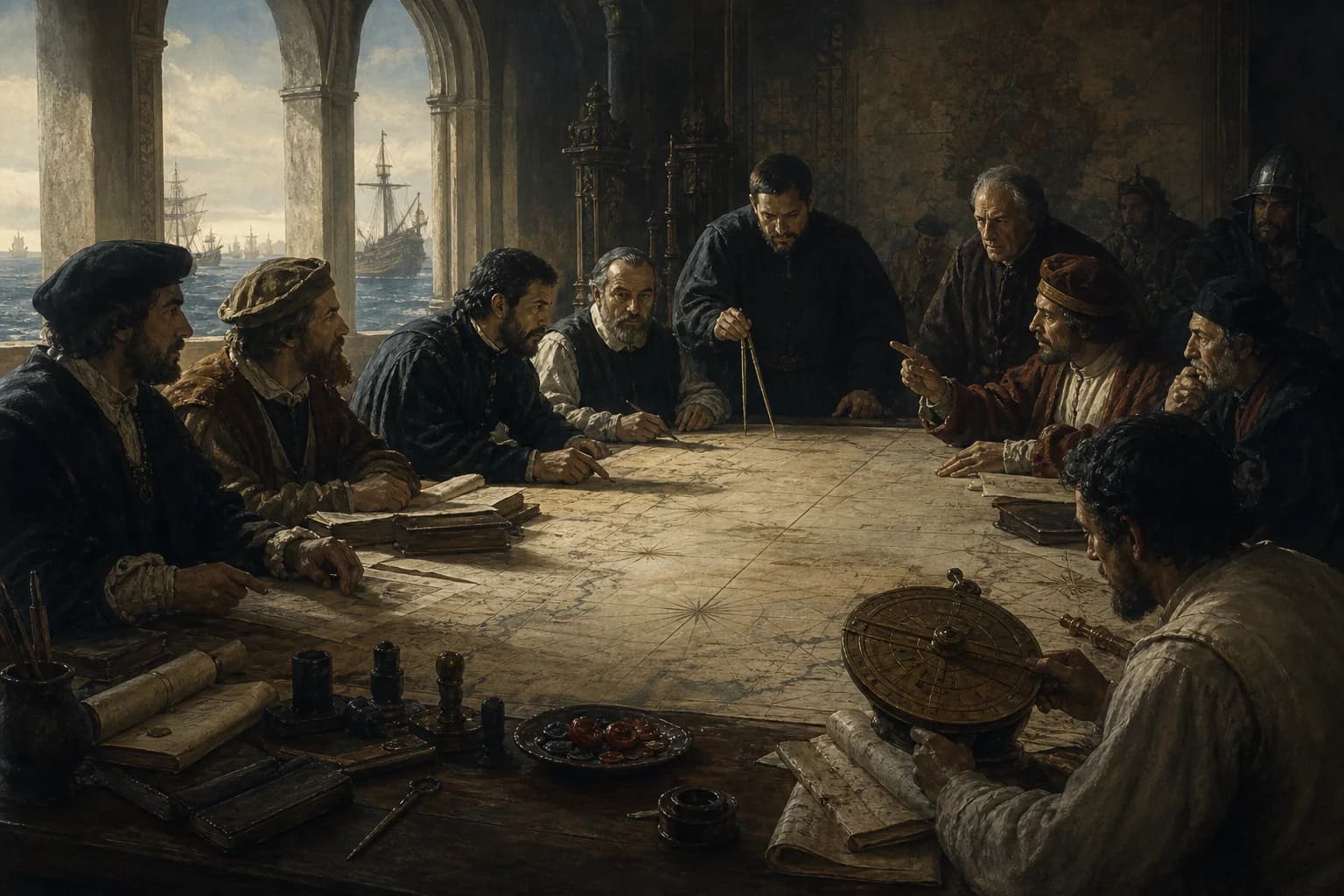
Tordesillas turns an uncertain line into an imperial claim
Castile and Portugal divide their overseas claims on paper, assigning inhabited lands and seas without the consent of the societies concerned.
 02.04
02.04East Africa / India · Route
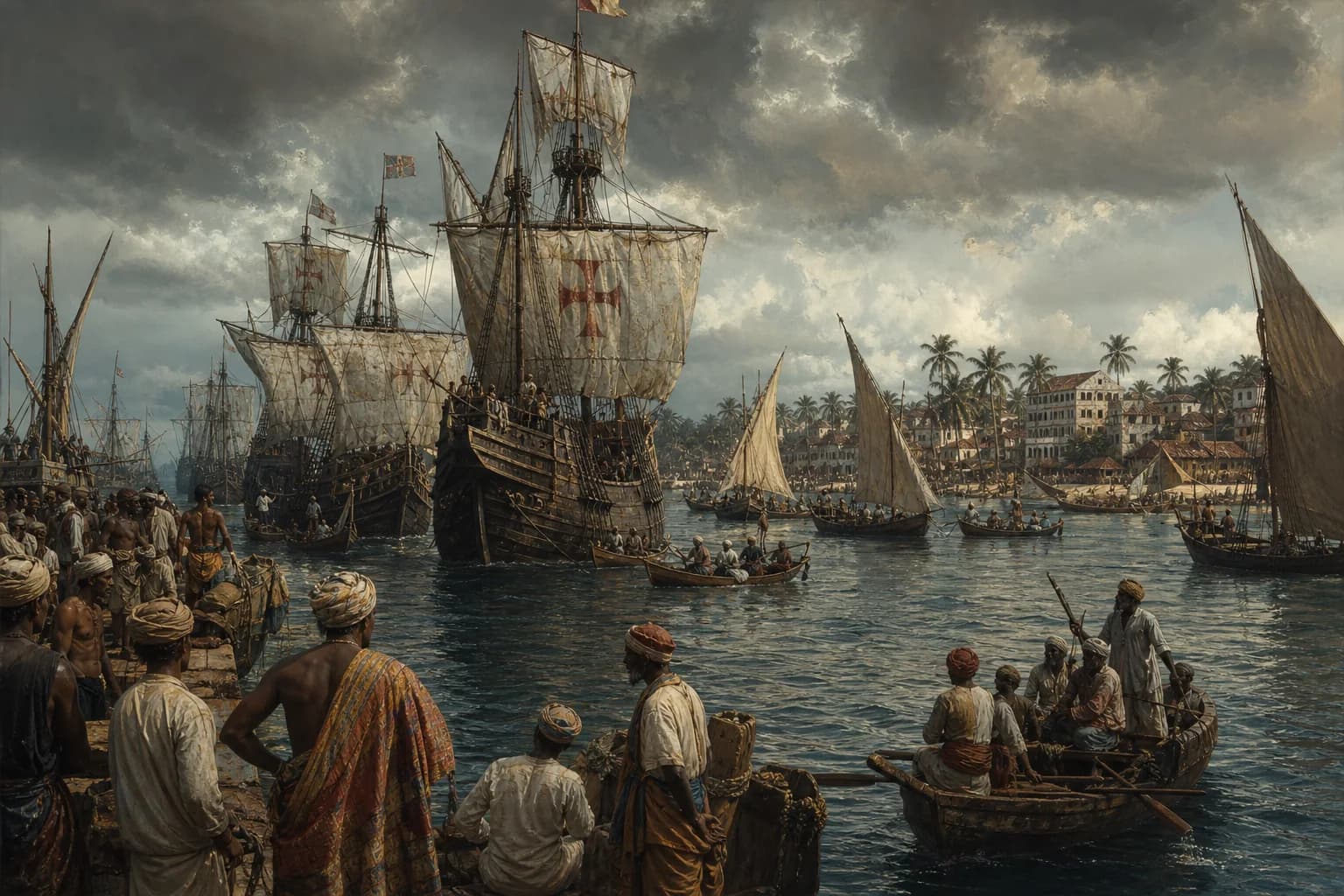
Da Gama reaches India by sea
The Cape route connects to Swahili ports and the monsoon network, completing the first recorded European fleet voyage around Africa to India.
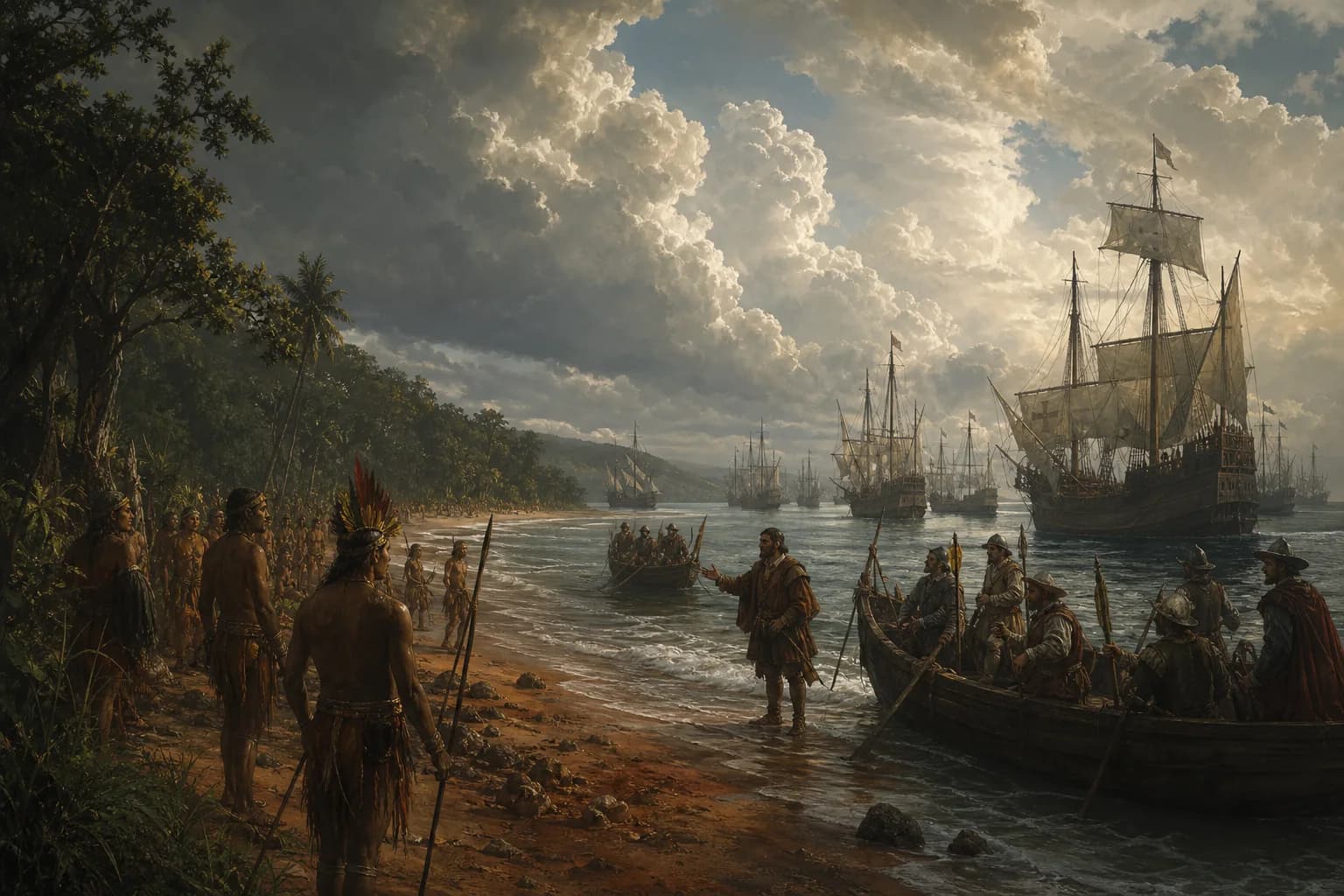 02.05
02.05Brazil / Indian Ocean · Route
Cabral reaches Brazil, then continues to India
One fleet joins a Portuguese land claim in South America to armed commercial intervention in the Indian Ocean.
 03.01
03.01Cabo Verde / Atlantic · Trade
Cabo Verde becomes a testing ground for transoceanic crops
West African staples, Mediterranean fruit, Asian crops and American maize are moved and cultivated on Santiago; African expertise and enslaved labour sustain victualling and onward transfer.
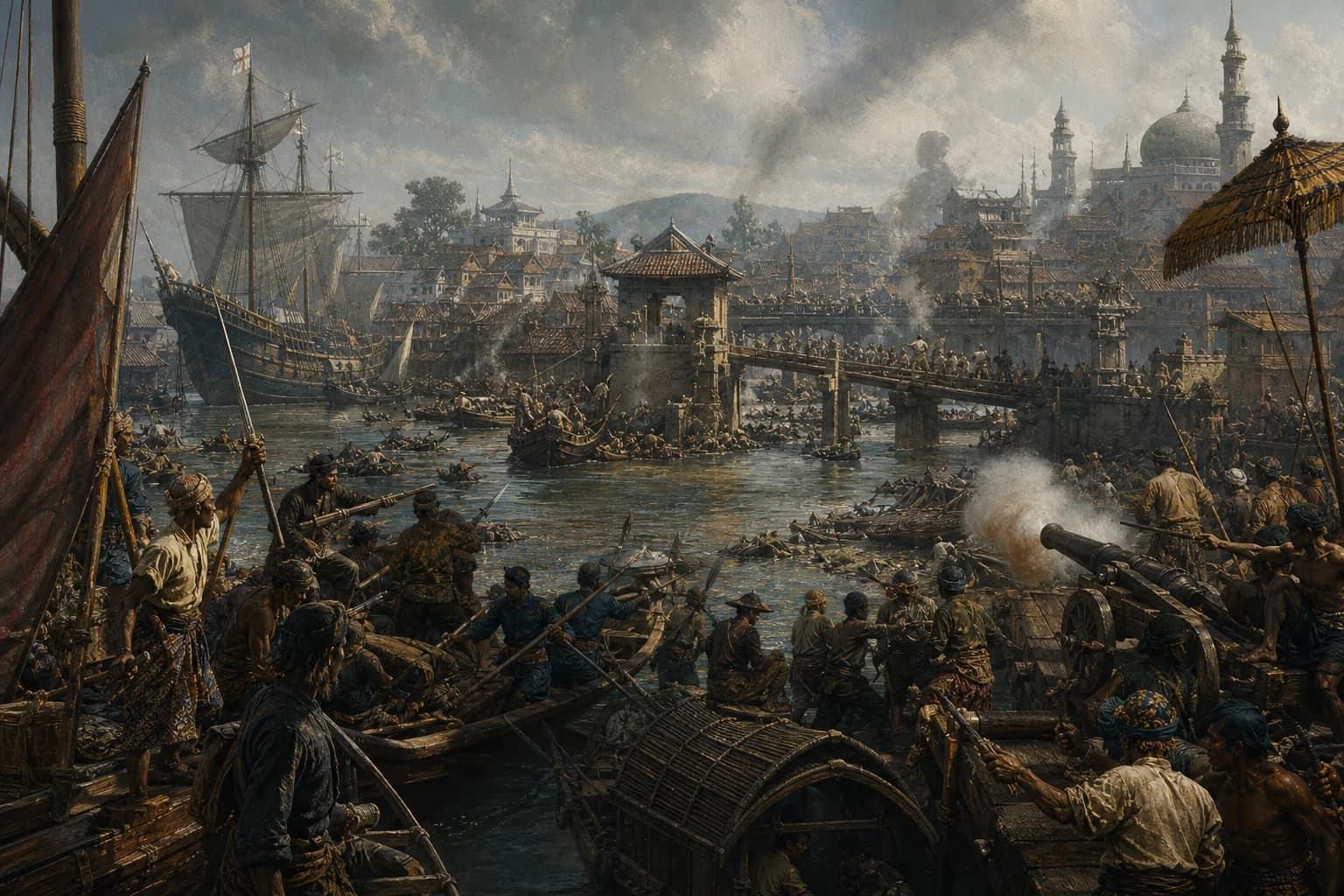 03.02
03.02Indian Ocean / Southeast Asia · Conquest
Goa and Malacca become Portuguese strongholds
Albuquerque's forces seize two strategic ports, combining access to trade with local alliances and maritime violence.
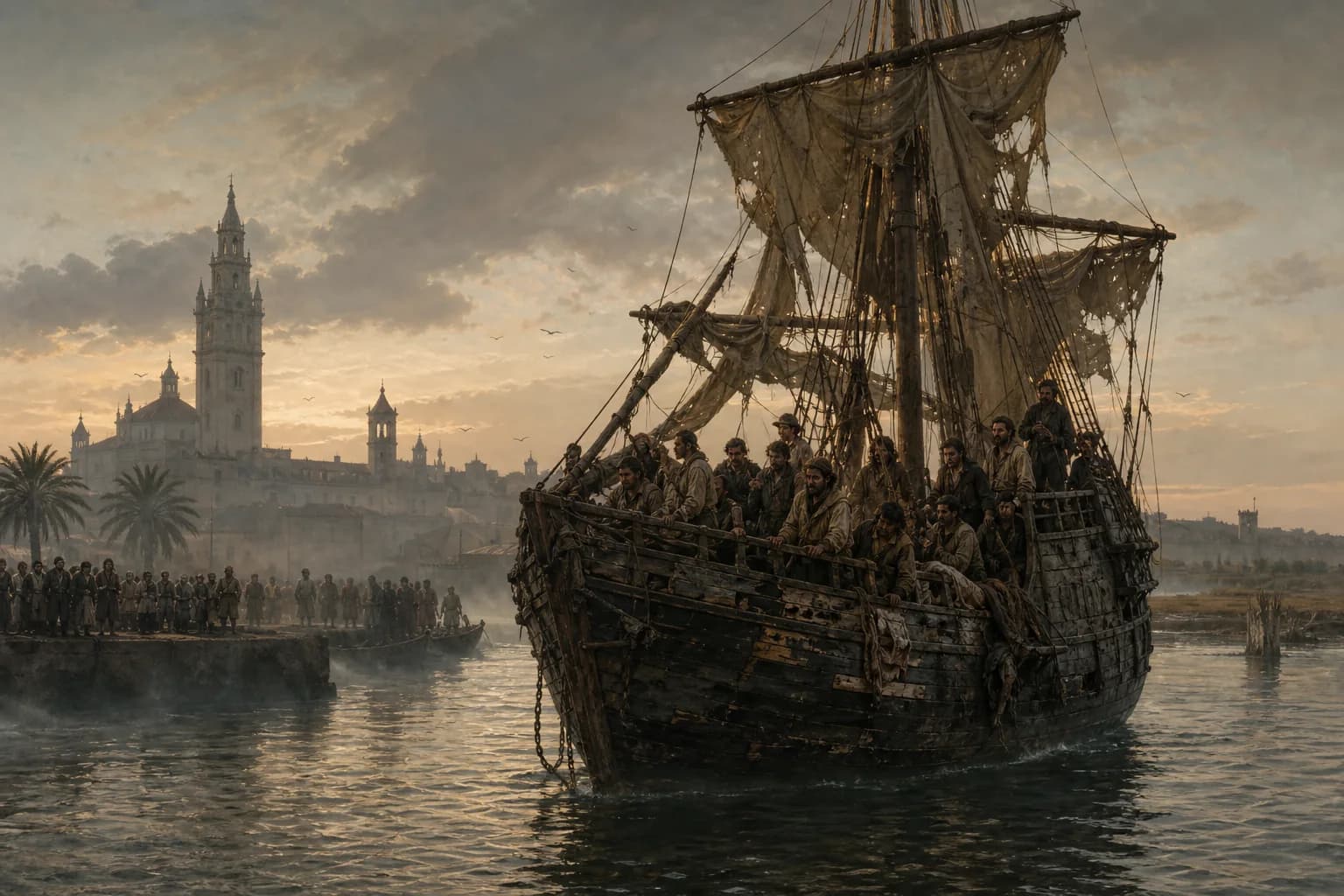 03.03
03.03Global oceans · Route
Magellan's expedition begins; Elcano closes the circuit
Magellan leads the strait and Pacific stages before dying in the Philippines. Elcano brings Victoria home to complete the first recorded circumnavigation.
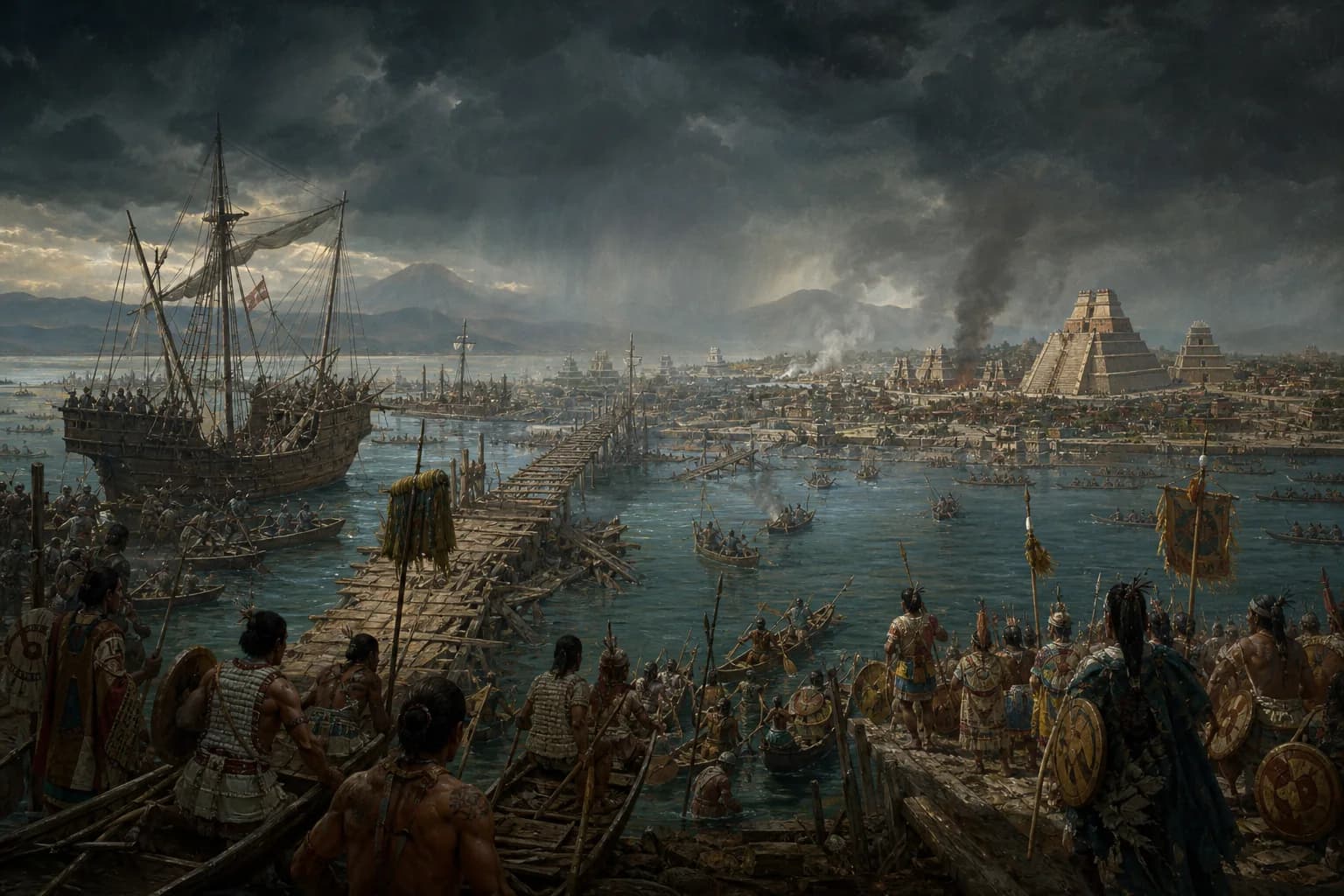 03.04
03.04Mesoamerica / Andes · Conquest
Tenochtitlan falls; Cusco is occupied
Cortés and Pizarro take two imperial capitals through local alliances, violence and epidemic disease. Indigenous resistance continues as Spanish colonization moves inland.
 03.05
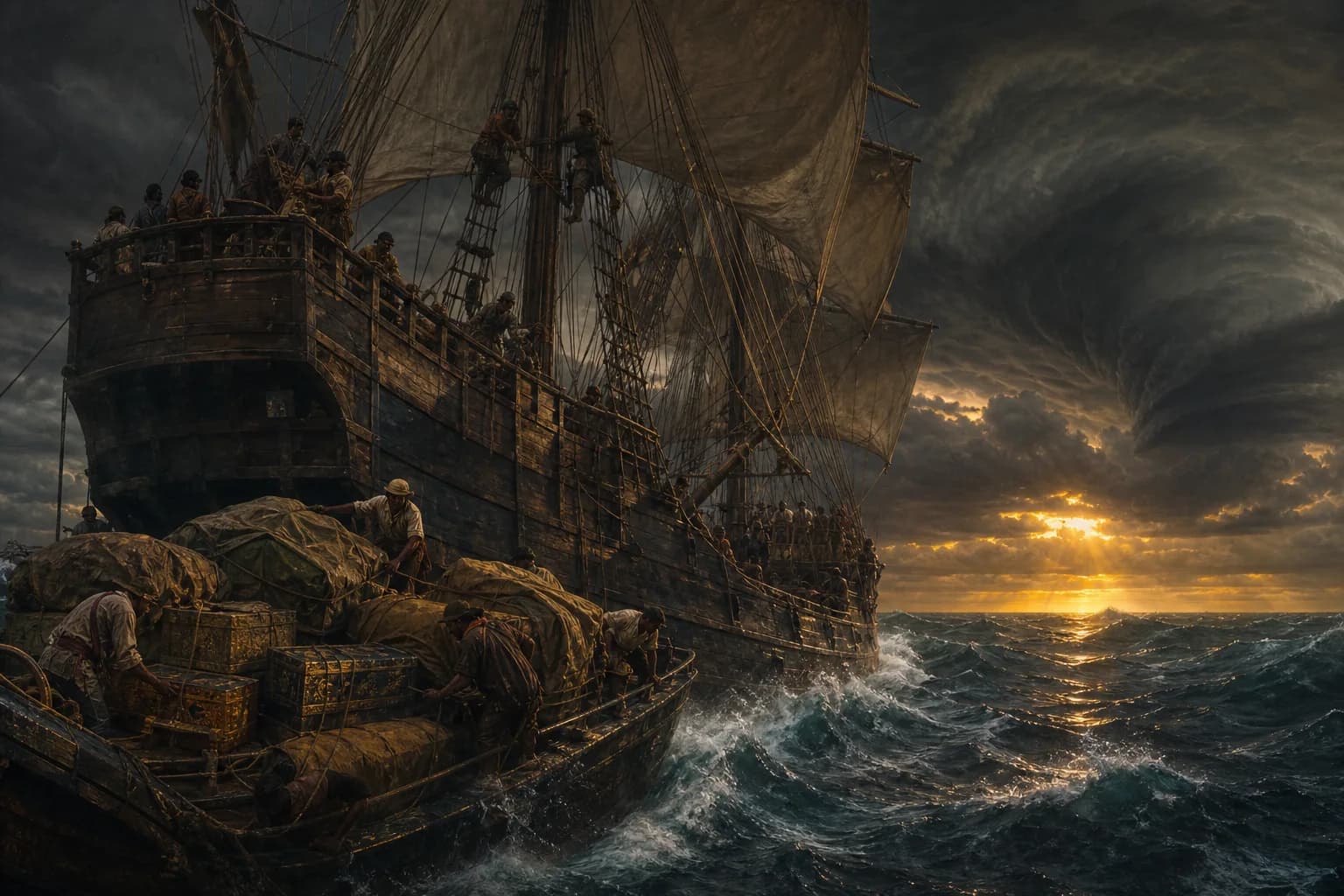
03.05Pacific · Trade
The Manila–Acapulco route joins the Pacific
A workable eastward return across the Pacific and Spanish control of Manila connect American silver to Chinese and other Asian goods.
 04.01
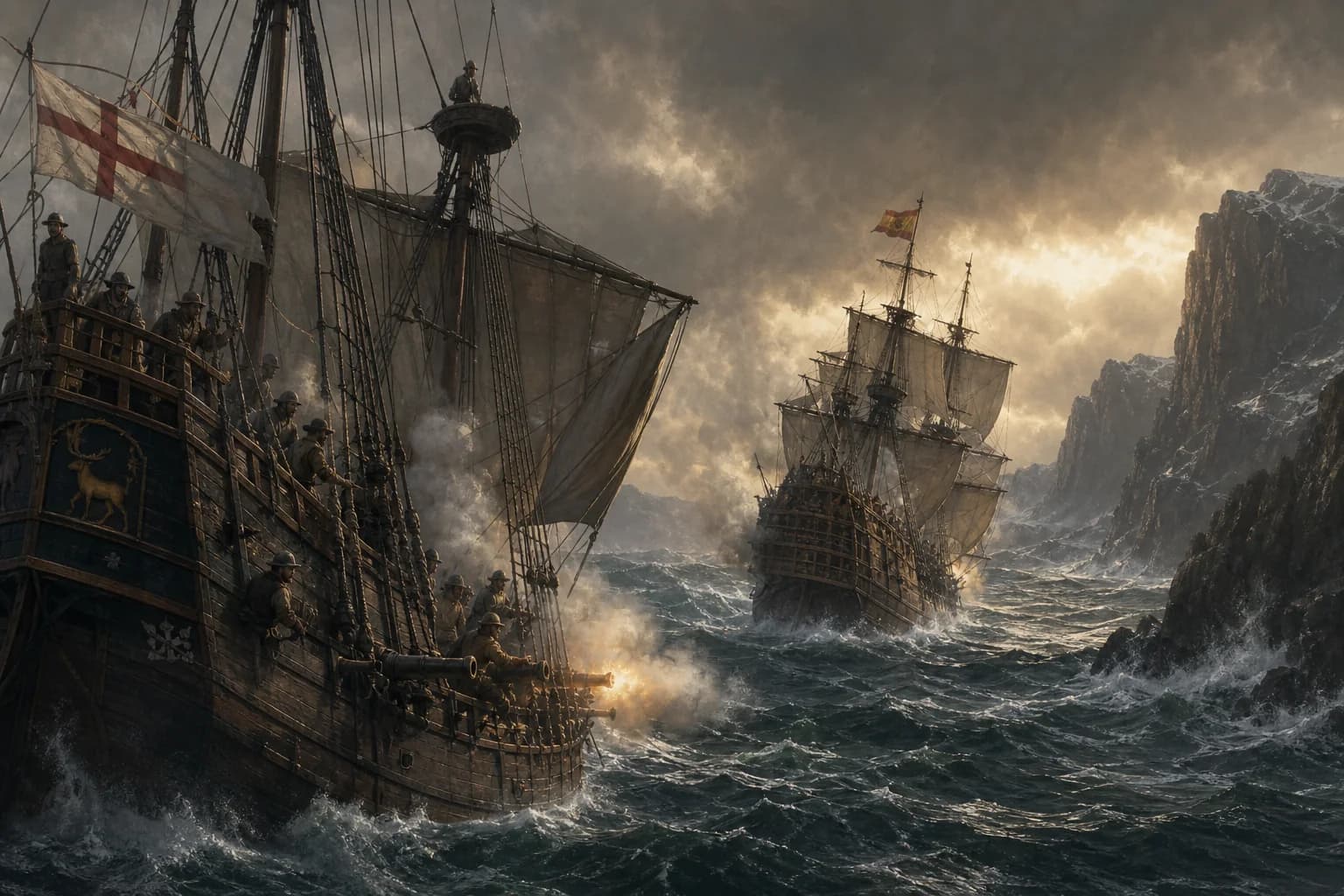
04.01Atlantic / Pacific · Sea power
Drake completes a privateering circumnavigation
The second recorded completed circumnavigation is also a Crown-protected campaign against Spanish shipping and ports in the Pacific.
 04.02
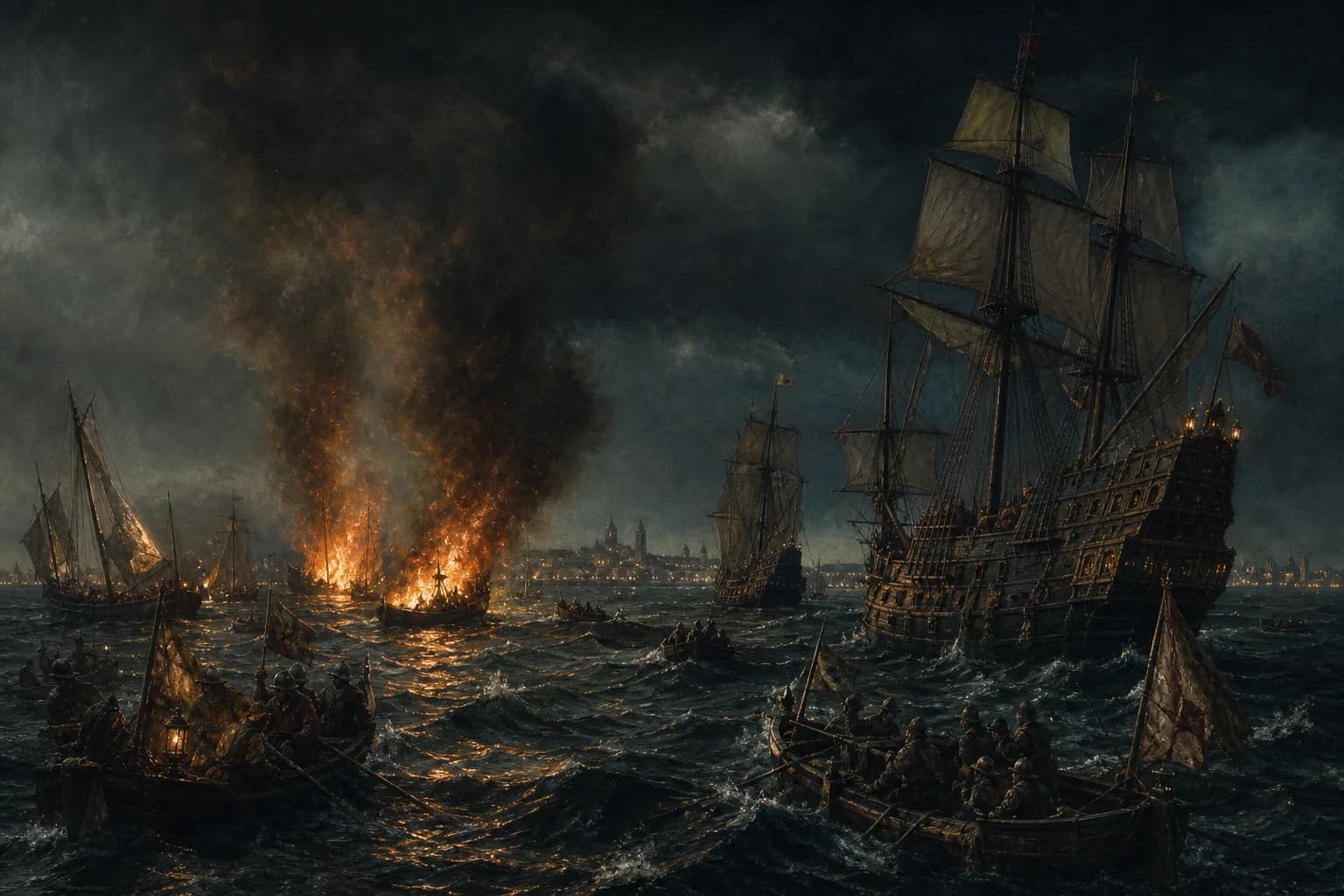
04.02English Channel / North Sea · Sea power
The Spanish Armada fails to invade England
Spain's invasion plan collapses through failed coordination, combat, wind and return losses. Spanish maritime power does not end overnight.
 04.03
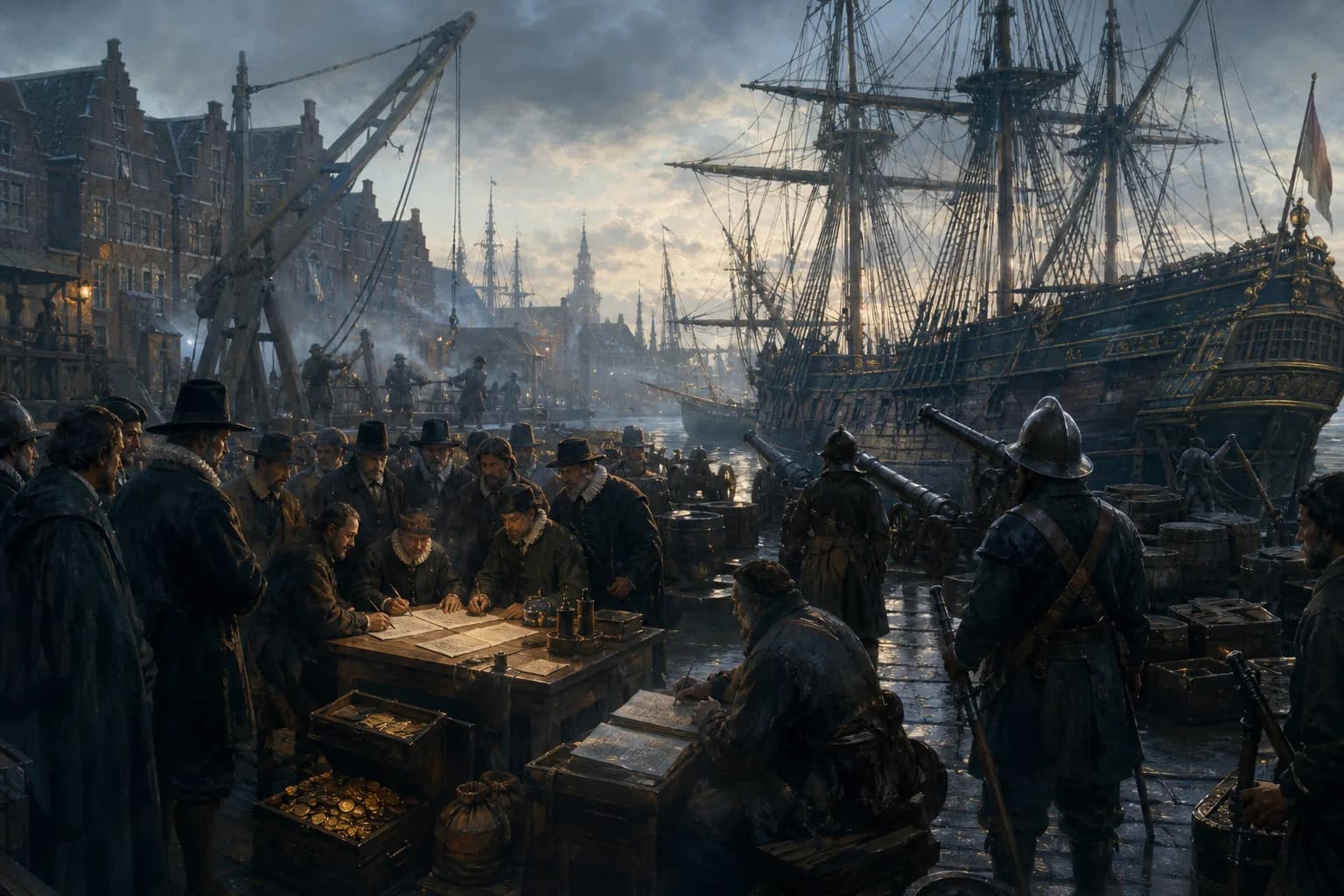
04.03Europe / Asia · Trade
The EIC and VOC receive their charters
State monopolies and corporate capital join armed fleets, treaties and overseas strongholds inside organizations pursuing shareholder return.
 04.04
04.04Java / Asian seas · Trade
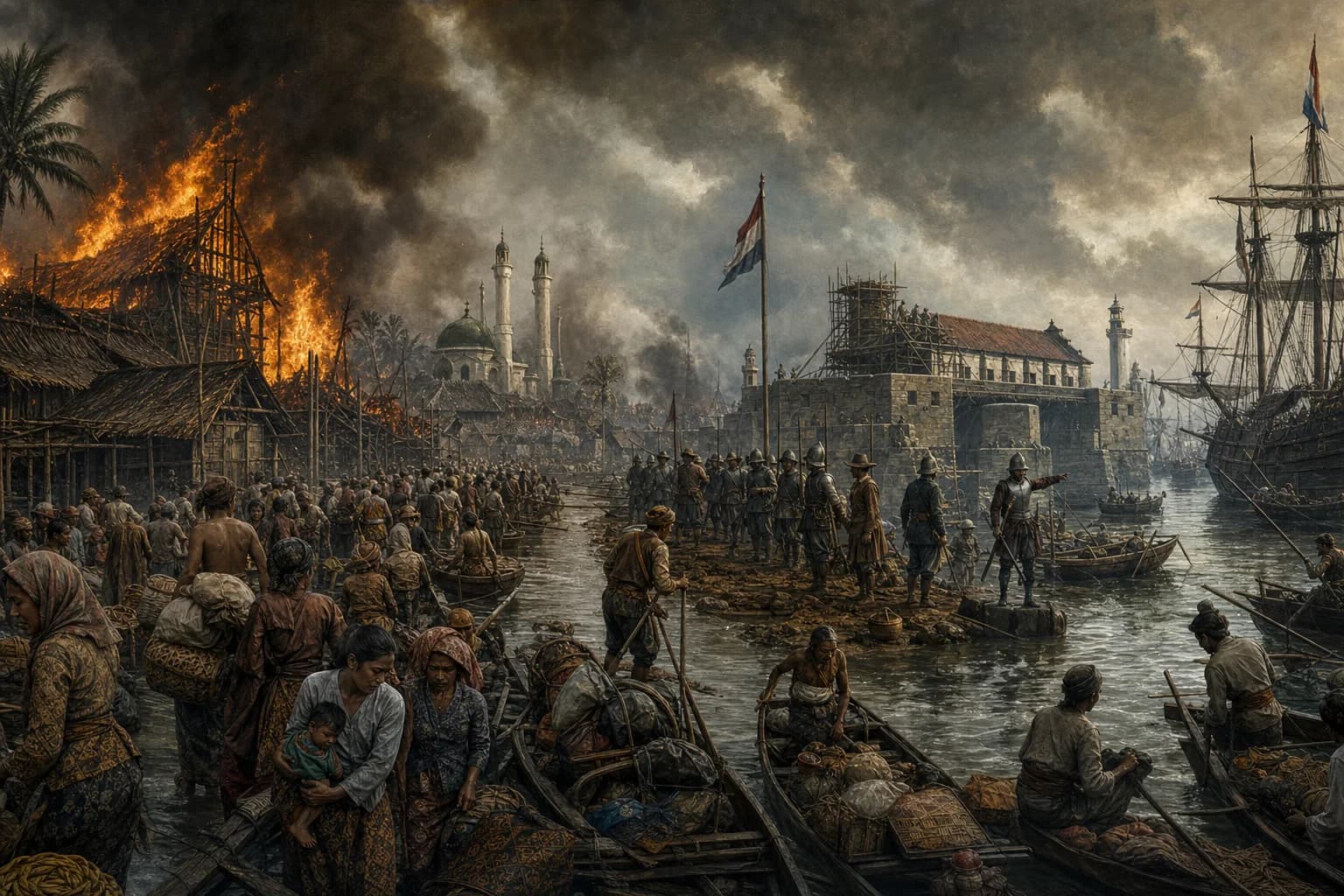
The VOC destroys Jayakarta and builds Batavia
A company headquarters rises on a destroyed port, using conquest, monopoly and Asian labour to coordinate a widening network.
 05.01
05.01Southern Africa · Trade
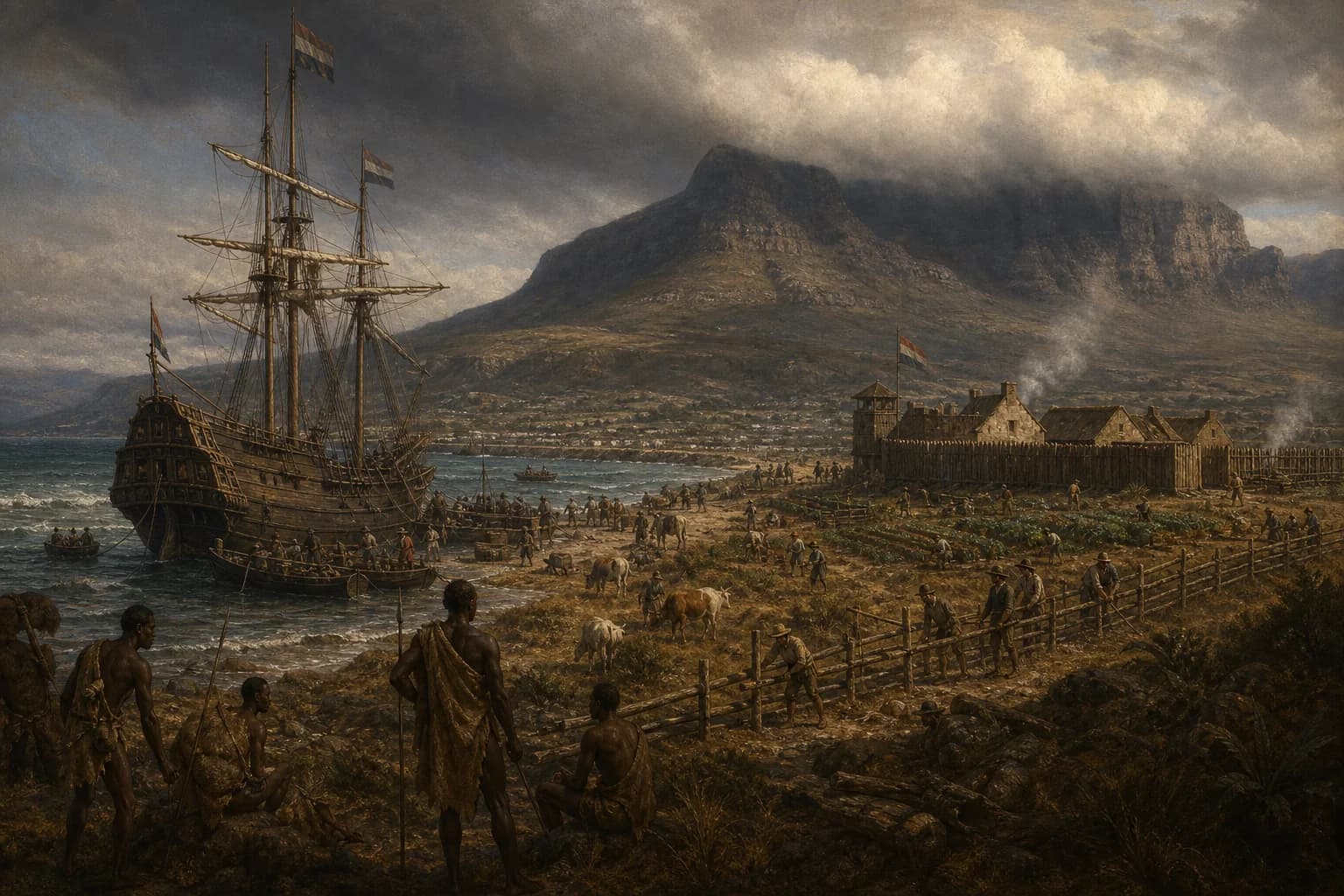
The VOC establishes a station at the Cape
A fixed stop on the Europe–Asia route quickly expands from provisioning into a colony built through Khoikhoi dispossession and imported enslaved labour.
 05.02
05.02Global · Sea power
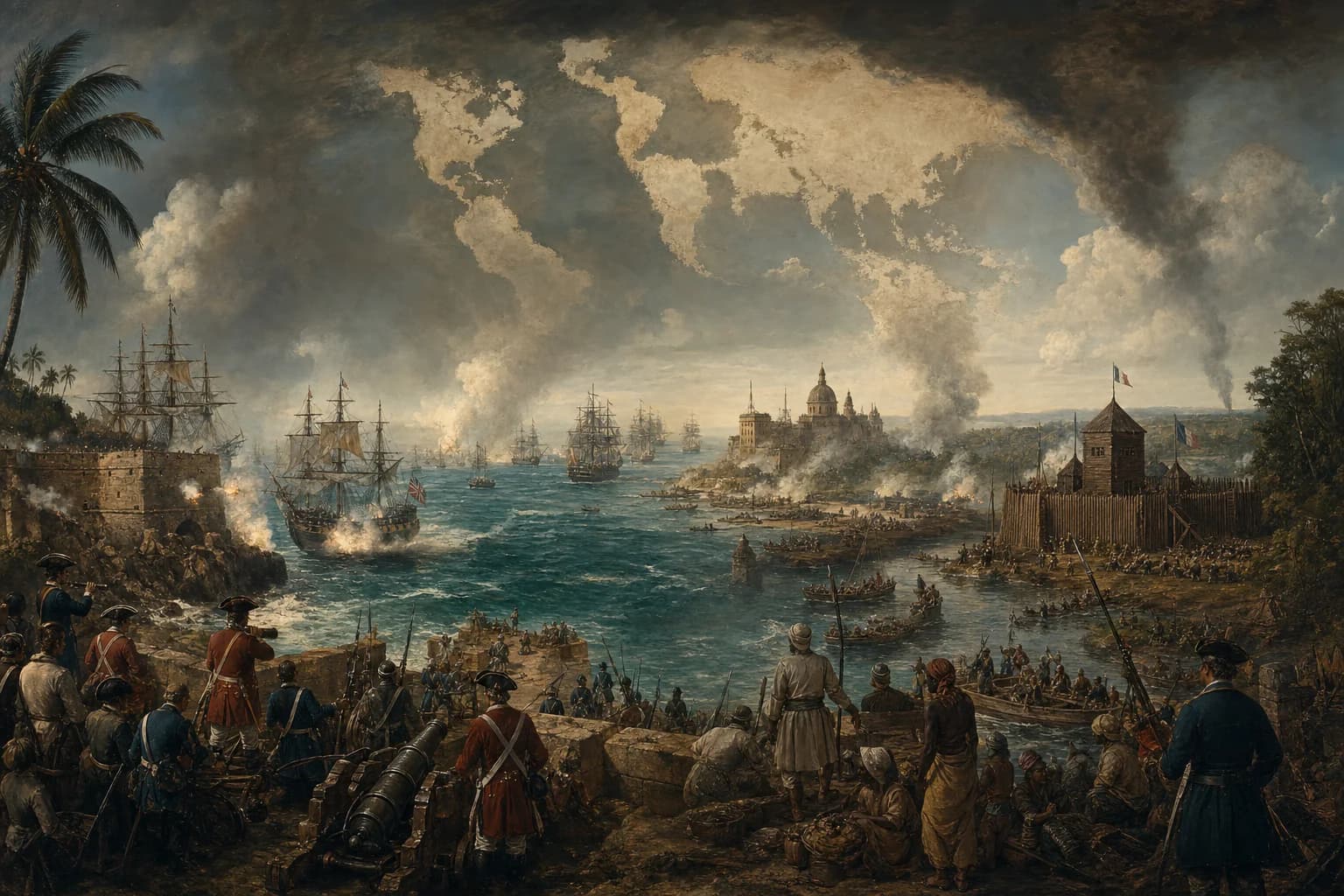
The Seven Years' War connects imperial theatres
War in Europe, North America, the Caribbean, Africa, India and the Philippines shifts the colonial balance while creating new debt and resistance.